Does Soda Stain Your Teeth? The Truth About Sugary Drinks and Dental Health

We all enjoy the occasional fizzy refreshment, whether it is a classic cola on a hot summer day or a sparkling citrus drink with lunch. These beverages are ubiquitous in modern society, often marketed as fun, energizing, and essential companions to our meals. However, beneath the bubbly surface lies a hidden cost to one of our most visible assets: our smile. If you have ever looked in the mirror after a week of heavy soda consumption and noticed a dullness or yellowing hue, you might be asking yourself, does soda stain your teeth? The answer is not just a simple yes or no; it is a complex interplay of chemistry, biology, and habit that affects the structural integrity of your enamel.
Understanding the relationship between carbonated beverages and dental health is crucial for anyone who wishes to maintain a bright, healthy smile without completely sacrificing their favorite treats. While many people associate tooth discoloration primarily with coffee, red wine, or tobacco, soda plays a surprisingly significant role in both extrinsic staining (surface discoloration) and intrinsic damage (structural weakening). The dual threat of high acidity and potent pigments makes soda a formidable opponent to dental aesthetics. In this comprehensive guide, we will delve deep into the science of how soda interacts with your teeth, differentiate between the effects of various types of sodas, and provide actionable, evidence-based strategies to mitigate damage. By the end of this article, you will have a clear understanding of the risks and the tools necessary to protect your enamel while navigating a world filled with sugary, acidic temptations.
The Chemistry of Carbonation: How Soda Attacks Enamel
To understand why soda is detrimental to dental health, we must first look at the chemical composition of these beverages. Soda is not merely flavored water; it is a complex solution containing carbon dioxide, sweeteners, flavorings, and, most critically, acids. The primary culprit in the degradation of tooth structure is acid. Most sodas have a pH level ranging from 2.5 to 3.5, which is highly acidic. For context, pure water has a neutral pH of 7, and tooth enamel begins to demineralize, or dissolve, when exposed to environments with a pH below 5.5 [1]. This means that almost every sip of soda places your teeth in a zone of active erosion.
Free calculatorBMI CalculatorCalculate Body Mass IndexOpen the calculatorThe process begins the moment the liquid touches your teeth. The acids in soda, primarily phosphoric acid in colas and citric acid in fruit-flavored sodas, react with the calcium and phosphate minerals that make up your enamel. This reaction strips away the mineral content, a process known as demineralization. Over time, this leads to enamel erosion, where the hard, protective outer layer of the tooth becomes thinner and weaker. As the enamel thins, the underlying layer, called dentin, becomes more visible. Dentin is naturally yellowish in color, so as the white enamel wears away, the teeth appear more yellow or dark. This is a fundamental reason why the question "does soda stain your teeth" often yields a confusing answer: the yellowing may not be a stain on the surface, but rather the exposure of the darker layer beneath due to acid erosion [2].
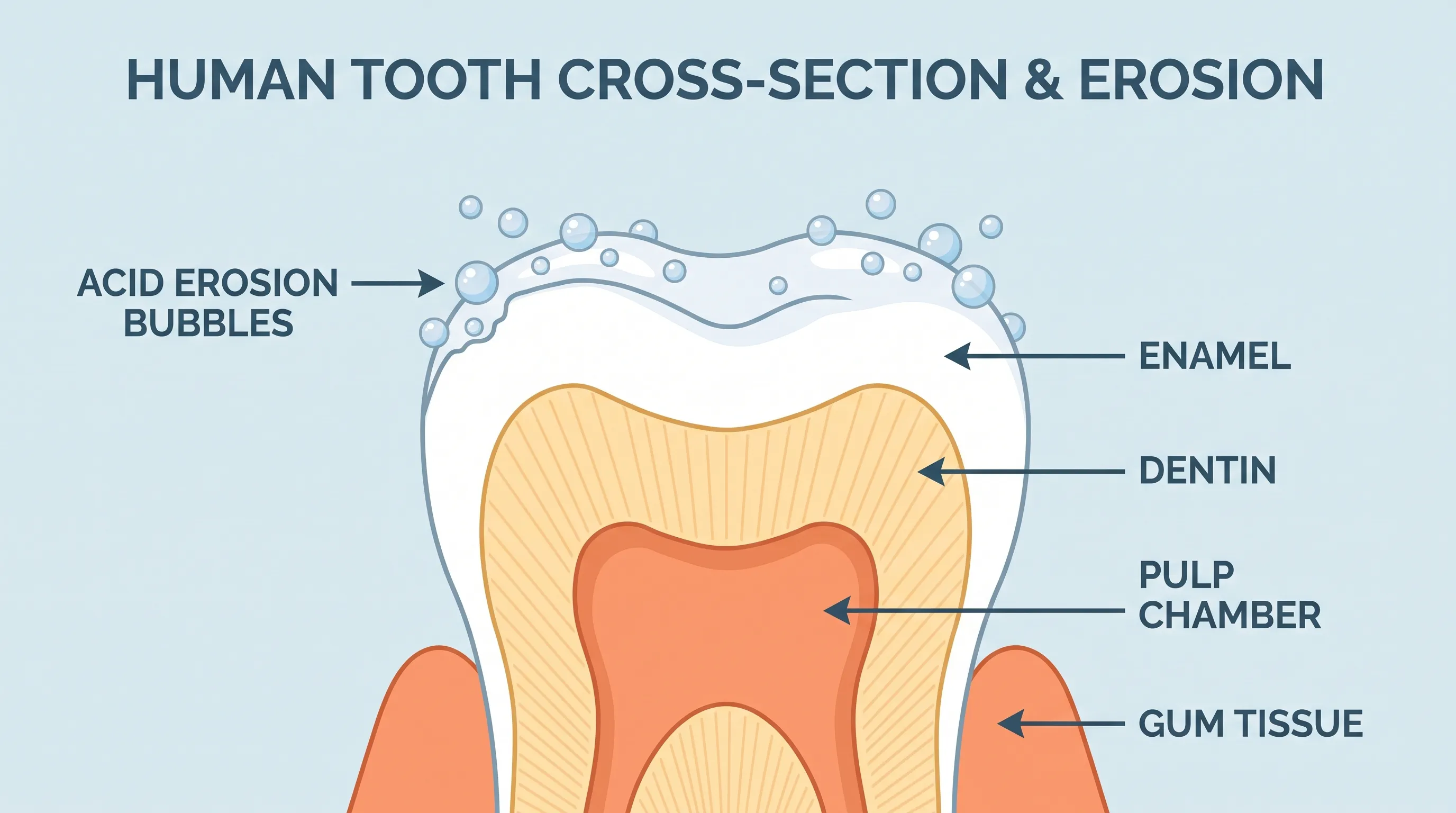
Furthermore, the carbonation itself contributes to the problem. Carbon dioxide is dissolved in water under pressure to create carbonic acid. While carbonic acid is weaker than phosphoric or citric acid, it still lowers the pH of the beverage. When you drink soda, you are essentially bathing your teeth in a mild acid bath. Saliva, the mouth's natural defense mechanism, works to neutralize this acid and wash away food particles. However, saliva needs time to work. If you are sipping soda continuously throughout the day, your saliva never gets a chance to restore the pH balance, leaving your teeth in a state of constant vulnerability. This continuous acid attack not only weakens the enamel but also creates a rougher surface texture on the tooth. A rough surface is much more prone to trapping pigment particles from food and drink, leading to faster and more stubborn staining.
Dark Sodas vs. Clear Sodas: A Comparative Analysis
When discussing dental staining, it is important to distinguish between different types of sodas, as their potential for causing discoloration varies significantly. The most notorious offenders are dark-colored sodas, such as colas. These beverages contain caramel coloring, a potent chromogen. Chromogens are intensely pigmented molecules that easily attach to the enamel of your teeth. Because dark sodas combine high acidity with strong pigments, they present a double threat: they erode the enamel, making it more porous, and then immediately deposit dark pigments into those microscopic pores. This synergy makes cola one of the most staining beverages available.
On the other hand, clear sodas, such as lemon-lime flavors or ginger ales, do not contain caramel coloring. Many consumers assume that because these drinks are transparent, they are safe for teeth. While it is true that clear sodas do not directly deposit dark pigments like colas do, they are far from harmless. Clear sodas are still highly acidic, often containing citric acid, which is particularly effective at chelating calcium from the enamel. This erosion creates a rough, pitted surface on the teeth. Even though the clear soda itself does not stain, the damaged enamel becomes a magnet for other staining agents. If you drink clear soda and then eat berries, drink coffee, or consume curry, the compromised enamel will absorb those colors much more readily than healthy, smooth enamel would. Therefore, when asking does soda stain your teeth, the answer for clear soda is indirect but significant: it prepares the canvas for staining by other substances.
| Feature | Dark Sodas (Colas) | Clear Sodas (Lemon-Lime) | Diet Variants | Zero Sugar Variants |
|---|---|---|---|---|
| Primary Acid | Phosphoric Acid | Citric Acid | Phosphoric/Citric | Phosphoric/Citric |
| Pigment Level | High (Caramel Color) | None/Low | High | High |
| Sugar Content | High | High | Low/None | Low/None |
| Enamel Erosion Risk | Very High | High | High | High |
| Direct Staining Potential | Very High | Low | Very High | Very High |
| Indirect Staining Risk | High | Very High | High | High |
This table illustrates that while the mechanism of damage may differ slightly, the end result—compromised dental aesthetics—is a common thread across all carbonated soft drinks. The absence of sugar in diet or zero-sugar variants does not eliminate the acid content, meaning the erosive potential remains intact. Consequently, switching from regular cola to diet cola may reduce the risk of cavities caused by sugar-feeding bacteria, but it does not significantly reduce the risk of erosion and subsequent staining [3].
The Role of Sugar and Bacteria in Tooth Discoloration
While acid is the primary driver of enamel erosion, sugar plays a critical supporting role in the overall degradation of dental health and appearance. Regular sodas are loaded with refined sugars, such as high fructose corn syrup or sucrose. When you consume these sugars, they do not just sit passively in your mouth. The bacteria that naturally reside in your dental plaque feed on these sugars. As they metabolize the sugar, they produce acids as byproducts. This adds another layer of acid attack on top of the acid already present in the soda itself.
This bacterial activity leads to the formation of plaque, a sticky, colorless film of bacteria that coats the teeth. If plaque is not removed regularly through brushing and flossing, it hardens into tartar (calculus). Tartar is porous and rough, making it highly susceptible to staining. The pigments in dark sodas bind easily to tartar, resulting in visible brown or yellow deposits near the gum line. This is a common scenario for individuals who consume soda frequently but may not have perfect oral hygiene routines. The combination of sugar-fueled plaque buildup and soda pigments creates a stubborn form of discoloration that cannot be removed by brushing alone and requires professional dental cleaning [4].
Moreover, the presence of sugar exacerbates the environment for tooth decay. Cavities, or dental caries, begin as small holes in the enamel. These holes can trap food particles and pigments, leading to localized dark spots on the teeth. While these are technically signs of decay rather than simple stains, they contribute to the overall uneven and discolored appearance of the smile. Therefore, the question does soda stain your teeth must also consider the indirect effects of sugar-induced decay and plaque accumulation. The visual impact of untreated decay and tartar buildup is often mistaken for simple staining, but it represents a more serious underlying health issue that requires immediate dental attention.
Long-Term Effects: Erosion, Sensitivity, and Aesthetics
The effects of soda on teeth are not immediate; they accumulate over time. Occasional consumption may have minimal impact if followed by good oral hygiene, but regular, daily consumption can lead to significant long-term consequences. One of the most prevalent long-term effects is dental erosion. As mentioned earlier, this is the irreversible loss of tooth structure due to chemical processes. Once enamel is gone, it does not grow back. This loss leads to changes in the shape and appearance of the teeth. Teeth may appear shorter, rounded, or translucent at the edges. The translucency is particularly noticeable in the front teeth, where the thinning enamel allows light to pass through differently, often giving the teeth a grayish or darkened appearance [2].
Along with aesthetic changes, erosion leads to increased tooth sensitivity. As the enamel wears away, the dentin tubules become exposed. These tubules lead directly to the nerve of the tooth. When exposed to hot, cold, or sweet stimuli, individuals may experience sharp pain or discomfort. This sensitivity can affect dietary choices and quality of life. Furthermore, weakened enamel is more prone to cracking and chipping. A cracked tooth can harbor bacteria and stains deep within the fracture lines, leading to further discoloration and potential infection.
The aesthetic impact extends beyond just color. Eroded teeth lose their natural luster and shine. Healthy enamel is smooth and reflective, giving teeth their characteristic brightness. Eroded enamel is rough and matte, reflecting light poorly and appearing dull. This dullness is often what people perceive as "staining," even if there is no external pigment involved. The loss of structural integrity can also affect the alignment of the bite, leading to further wear and tear on the remaining tooth structure. Thus, the long-term answer to does soda stain your teeth involves a holistic view of dental health, where structural loss and functional impairment go hand in hand with visual discoloration.
Practical Strategies to Minimize Staining and Damage
Knowing the risks is the first step, but implementing practical strategies is key to protecting your smile. You do not necessarily have to give up soda entirely, but you can modify how you consume it to minimize harm. Here are several evidence-based tips to reduce the impact of soda on your teeth.
First, limit the frequency of exposure. It is better to drink a whole can of soda in one sitting than to sip it slowly over several hours. Sipping prolongs the acid attack, keeping the pH in your mouth low for an extended period. Drinking it quickly allows your saliva to begin the neutralization process sooner. Second, use a straw. Drinking through a straw directs the liquid toward the back of the mouth, bypassing the front teeth which are most visible and prone to staining. While this does not protect all teeth, it significantly reduces the contact time for the anterior teeth.
Third, rinse with water immediately after drinking soda. Swishing water around your mouth helps to wash away residual sugar and acid, restoring the pH balance more quickly. This is a simple yet effective habit that can be done anywhere. Fourth, avoid brushing immediately after consumption. As noted earlier, the enamel is soft after acid exposure. Brushing right away can abrade the softened surface. Wait at least 30 to 60 minutes before brushing to allow the enamel to reharden. During this waiting period, you can chew sugar-free gum containing xylitol, which stimulates saliva flow and helps neutralize acid [4].

Finally, incorporate regular dental check-ups into your routine. Professional cleanings remove tartar and surface stains that home care cannot address. Your dentist can also apply fluoride treatments to strengthen enamel and sealants to protect vulnerable areas. If you are concerned about existing stains, discuss professional whitening options. However, note that whitening treatments work best on natural enamel and may not be effective on exposed dentin or restorations. Always consult with your dental professional before starting any whitening regimen, especially if you have signs of erosion or sensitivity.
Frequently Asked Questions
Does clear soda stain teeth?
While clear sodas lack the chromogens found in dark colas that cause direct pigmentation, they are highly acidic. This acidity erodes tooth enamel, making teeth more porous and susceptible to staining from other foods and drinks. Therefore, clear soda indirectly contributes to staining and dental damage.
How long does it take for soda to stain teeth?
Staining is a cumulative process rather than an immediate event. However, the acid in soda begins to soften enamel within minutes of consumption. Visible yellowing or discoloration typically develops over weeks or months of regular consumption, depending on individual oral hygiene habits and genetic factors.
Is diet soda better for teeth than regular soda?
Diet soda eliminates sugar, which reduces the risk of cavities caused by bacterial fermentation. However, diet sodas still contain significant amounts of acid (such as phosphoric and citric acid) that erode enamel. Therefore, while diet soda may be slightly less harmful regarding decay, it still poses a significant risk for enamel erosion and subsequent staining [3].
Can brushing immediately after drinking soda prevent stains?
No, brushing immediately after consuming soda can actually harm your teeth. The acid in soda softens the enamel temporarily. Brushing while the enamel is soft can wear it away faster. It is recommended to wait at least 30 to 60 minutes after drinking soda before brushing to allow saliva to neutralize the acid and remineralize the enamel [4].
What is the best way to remove soda stains from teeth?
Professional dental cleaning is the most effective way to remove extrinsic stains caused by soda. At home, maintaining rigorous oral hygiene, using whitening toothpaste with mild abrasives, and avoiding further exposure to staining agents can help. For deep intrinsic staining, professional whitening treatments provided by a dentist are recommended.
Conclusion
The question does soda stain your teeth reveals a multifaceted reality that goes beyond simple surface discoloration. Soda attacks dental health through a combination of high acidity, which erodes the protective enamel, and potent pigments, which lodge in the resulting microscopic imperfections. Whether you prefer dark colas or clear citrus sodas, the risk to your enamel is significant. Dark sodas offer a direct staining threat through caramel coloring, while clear sodas weaken the enamel, making it vulnerable to stains from other sources. The addition of sugar further complicates the issue by fueling bacterial growth and plaque formation, leading to tartar buildup and decay.
Protecting your smile does not require complete abstinence, but it does demand mindfulness and proactive care. By limiting the frequency of consumption, using straws, rinsing with water, and waiting to brush, you can significantly mitigate the damaging effects of these popular beverages. Regular dental visits remain the cornerstone of maintaining oral health, allowing for early detection of erosion and professional removal of stubborn stains. Ultimately, understanding the science behind soda's impact empowers you to make informed choices that balance enjoyment with long-term dental wellness. Your enamel is a precious, non-renewable resource; treating it with care ensures that your smile remains bright, strong, and healthy for years to come.
References
[1] National Institutes of Health (NIH). Dental Erosion. nidcr.nih.gov
[2] Mayo Clinic. Tooth erosion: Can your diet damage your teeth? mayoclinic.org
[3] Cleveland Clinic. Is Diet Soda Bad for Your Teeth? health.clevelandclinic.org
[4] Centers for Disease Control and Prevention (CDC). Oral Health: Preventing Cavities, Gum Disease, Tooth Loss, and Oral Cancers. cdc.gov
How we work
Researched and drafted with AI assistance, then reviewed by a human editor against the cited sources.
This article is general health information, not medical advice. Consult a qualified healthcare professional about your own situation.