Do Tartar Cause Bad Breath? The Definitive Guide to Oral Hygiene and Halitosis

Key points
- Rough Texture: Run your tongue along your teeth, especially near the gums. If you feel a rough, sandy, or bumpy texture, that is likely tartar. Healthy enamel should feel smooth and slick.
- Bleeding Gums: If your gums bleed when you brush or floss, it is a strong indicator of gingivitis caused by tartar buildup. The inflammation associated with this condition is a major source of bad breath.
- Persistent Odor: If you brush, floss, and use mouthwash, but the bad breath returns within an hour or two, the source is likely deeper than surface plaque. It suggests that bacteria are hiding in tartar or periodontal pockets.
- Bad Taste: A persistent metallic or bitter taste in the mouth can be associated with gum disease and the presence of pus from infected gums.
Have you ever leaned in for a close conversation, only to pull back abruptly due to an unpleasant odor? Or perhaps you’ve noticed a persistent taste in your mouth that no amount of minty gum seems to fix? Bad breath, medically known as halitosis, is more than just a social embarrassment; it is often a critical warning signal from your body regarding your oral health. While many factors contribute to this condition, one of the most significant and overlooked offenders is tartar. If you have found yourself searching online asking, "do tartar cause bad breath," you are addressing a fundamental question in dental hygiene. The short answer is a resounding yes, but the mechanism behind it is complex, involving a intricate dance of bacteria, mineralization, and gum inflammation.
Understanding the relationship between tartar and halitosis requires looking beyond the surface of your teeth. It involves understanding how soft, sticky plaque transforms into hard, calcified deposits that harbor millions of odor-causing bacteria. This comprehensive guide will delve deep into the science of dental calculus, explore why it smells, and provide you with actionable, evidence-based strategies to combat it. We will draw upon insights from authoritative sources such as the Mayo Clinic, the National Institute of Dental and Craniofacial Research (NIDCR), and the American Dental Association (ADA) to ensure you have the most accurate information possible. By the end of this article, you will not only understand the answer to "do tartar cause bad breath" but also possess the knowledge to reclaim your confidence and your oral health.
The Science Behind Plaque and Tartar Formation
To understand why tartar is so detrimental to your breath, we must first distinguish between two commonly confused terms: plaque and tartar. While they are related, they are distinct stages of bacterial accumulation, and treating them requires different approaches.
Free calculatorBMI CalculatorCalculate Body Mass IndexOpen the calculatorWhat is Dental Plaque?
Dental plaque is a soft, sticky, colorless film of bacteria that constantly forms on your teeth. It is a biofilm, meaning it is a complex community of microorganisms embedded in a self-produced matrix. When you eat, especially foods containing sugars and starches, the bacteria in plaque produce acids. These acids can attack tooth enamel, leading to cavities. More importantly for our discussion, these bacteria thrive in the warm, moist environment of the mouth. If plaque is not removed regularly through brushing and flossing, it remains on the teeth and begins to mature. The bacteria within mature plaque are often anaerobic, meaning they thrive in environments with little oxygen, such as deep under the gumline. These specific types of bacteria are prolific producers of volatile sulfur compounds (VSCs), the primary chemicals responsible for the rotten egg smell associated with bad breath.
The Transformation into Tartar (Calculus)
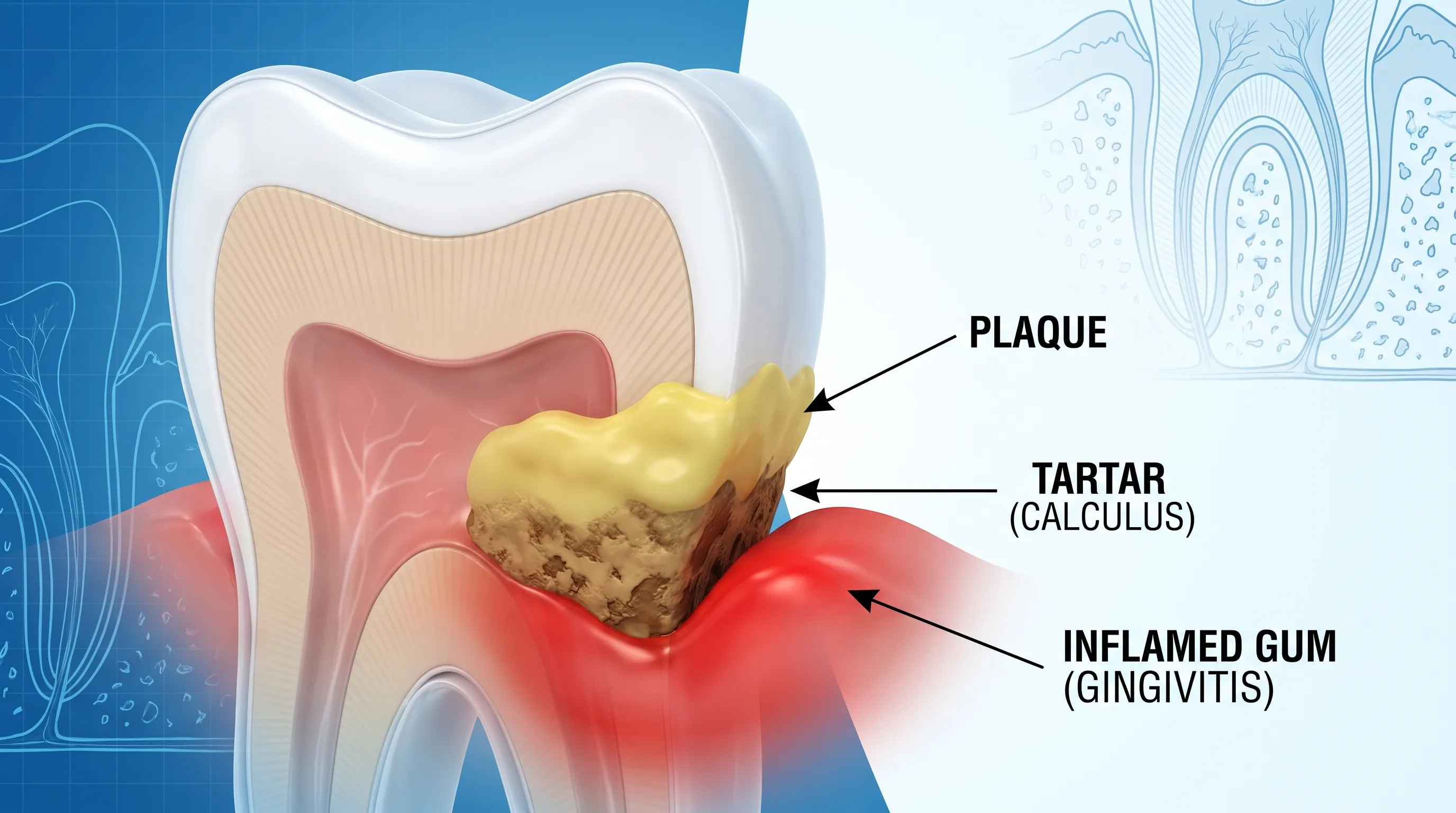
If plaque is not removed within 24 to 72 hours, it begins to harden into tartar, also known as dental calculus. This process is called mineralization. Saliva contains calcium and phosphate ions, which deposit into the plaque biofilm, crystallizing it into a hard, cement-like substance. Unlike plaque, which can be brushed away, tartar bonds strongly to the tooth enamel and extends below the gumline.
This transformation is critical when asking, "do tartar cause bad breath?" because tartar is not just hardened plaque; it is a permanent housing structure for bacteria. The surface of tartar is rough and porous, providing an ideal breeding ground for more plaque to accumulate. This creates a vicious cycle: tartar attracts more plaque, which mineralizes into more tartar, creating larger reservoirs of odor-causing bacteria that are impossible to remove with a toothbrush. According to the National Institute of Dental and Craniofacial Research, this buildup is a primary driver of periodontal disease, which is inextricably linked to chronic halitosis.
How Tartar Directly Contributes to Halitosis
Now that we understand what tartar is, let’s address the core question: do tartar cause bad breath? The answer lies in the biological activity occurring within and around these calcified deposits. Tartar contributes to bad breath through three primary mechanisms: bacterial colonization, gum inflammation, and food entrapment.
Bacterial Colonization and Volatile Sulfur Compounds
The human mouth is home to hundreds of species of bacteria. While many are harmless, some are pathogenic and produce foul-smelling gases as byproducts of their metabolism. Tartar acts as a shield for these bacteria. Because tartar is porous, it protects anaerobic bacteria from the mechanical action of brushing and the oxygen-rich environment of the rest of the mouth. These bacteria break down proteins found in food debris, saliva, and dead cells. During this breakdown process, they release volatile sulfur compounds (VSCs), such as hydrogen sulfide and methyl mercaptan.
Hydrogen sulfide smells like rotten eggs, while methyl mercaptan has a scent akin to decaying cabbage or feces. When tartar buildup is significant, the concentration of these bacteria increases exponentially, leading to a continuous release of these gases. This is why people with heavy tartar buildup often suffer from chronic bad breath that returns shortly after brushing or using mouthwash. The source of the odor is not just on the surface; it is embedded in the calculus itself.
Gingivitis and Periodontal Disease
Tartar is not inert; it is an irritant. When tartar builds up along the gumline, it pushes against the soft tissue of the gums, causing inflammation. This condition is known as gingivitis. Symptoms include red, swollen, and bleeding gums. If left untreated, gingivitis can progress to periodontitis, a more severe form of gum disease that damages the bone and tissues supporting the teeth.
Inflamed gums create pockets between the tooth and the gum line. These periodontal pockets are deep, dark, and oxygen-poor—perfect conditions for anaerobic bacteria to thrive. The bacteria in these pockets produce pus and other waste products that have a distinctly foul odor. Furthermore, the inflammation itself can cause bleeding, and the breakdown of blood cells can contribute to a metallic or bloody taste and smell in the mouth. Therefore, when investigating do tartar cause bad breath, one must consider that the tartar is often the root cause of the gum disease that exacerbates the odor. The Mayo Clinic notes that persistent bad breath can be a sign of gum disease, which is directly caused by the irritation from plaque and tartar.
Food Entrapment and Decay
The rough texture of tartar makes it a magnet for food particles. Unlike smooth enamel, where food might slide off, food gets stuck in the crevices of tartar. These trapped food particles begin to decompose almost immediately. As they rot, they add another layer of foul odor to the mix. Additionally, the acids produced by the bacteria in tartar can lead to tooth decay (cavities). Decayed teeth have holes where food and bacteria can hide, further contributing to bad breath. Thus, tartar creates a multi-layered problem: it harbors smelly bacteria, causes gum disease that produces pus, and traps rotting food.
Identifying the Signs: Is Tartar the Culprit?
How can you tell if your bad breath is caused by tartar rather than something else, like diet or dry mouth? There are several visual and sensory clues you can look for. While a definitive diagnosis requires a dentist, these signs can help you determine if you need to schedule an appointment.
Visual Inspection
Tartar is visible to the naked eye, although it can be tricky to spot in its early stages. It typically appears as a yellow or brown crust along the gumline, particularly on the lower front teeth and the upper molars. If you see a hard, rough deposit that does not come off when you brush, it is likely tartar. In some cases, especially in smokers, tartar can appear black or dark brown due to staining from tobacco and tar.
Sensory Clues
- Rough Texture: Run your tongue along your teeth, especially near the gums. If you feel a rough, sandy, or bumpy texture, that is likely tartar. Healthy enamel should feel smooth and slick.
- Bleeding Gums: If your gums bleed when you brush or floss, it is a strong indicator of gingivitis caused by tartar buildup. The inflammation associated with this condition is a major source of bad breath.
- Persistent Odor: If you brush, floss, and use mouthwash, but the bad breath returns within an hour or two, the source is likely deeper than surface plaque. It suggests that bacteria are hiding in tartar or periodontal pockets.
- Bad Taste: A persistent metallic or bitter taste in the mouth can be associated with gum disease and the presence of pus from infected gums.
Differentiating from Other Causes
It is important to note that not all bad breath is caused by tartar. Other common causes include:
- Dry Mouth (Xerostomia): Saliva helps wash away food particles and neutralize acids. Lack of saliva can lead to bad breath.
- Diet: Foods like garlic, onions, and coffee can cause temporary bad breath.
- Medical Conditions: Sinus infections, acid reflux (GERD), diabetes, and liver or kidney problems can cause halitosis.
However, if you have visible tartar and gum inflammation, it is highly probable that these oral health issues are contributing significantly to your bad breath. Addressing the tartar is the first step in resolving the issue.
Professional Treatments: Removing the Source
Since tartar is hardened and bonded to the tooth, you cannot remove it with a toothbrush or floss. This is a crucial point for anyone wondering, "do tartar cause bad breath, and can I fix it myself?" The answer to the second part is no. Professional intervention is required. Here is what you can expect during a dental visit.
Scaling and Root Planing
The primary method for removing tartar is a procedure called scaling. During a scaling appointment, a dental hygienist or dentist uses specialized instruments to scrape away tartar from above and below the gumline.
- Ultrasonic Scalers: These devices use high-frequency vibrations to break up large pieces of tartar and flush away debris with water. They are efficient and less traumatic to the gums than manual scraping.
- Hand Scalers: For finer work and smoothing the root surfaces, dentists use manual hand instruments.
If gum disease is present, the dentist may perform root planing. This involves smoothing the root surfaces of the teeth to remove any remaining tartar and bacterial toxins. Smooth roots make it harder for plaque and tartar to reattach in the future. This deep cleaning is often done in quadrants and may require local anesthesia if the gums are sensitive.
Antibiotic Therapy
In cases of severe periodontitis, where the infection has spread deep into the gum pockets, your dentist may prescribe antibiotic therapy. This can be in the form of oral antibiotics, antimicrobial mouth rinses, or localized antibiotic gels placed directly into the gum pockets. These treatments help control the bacterial infection that causes both the gum disease and the associated bad breath.
Regular Maintenance
After the initial deep cleaning, maintaining the results is key. Your dentist will likely recommend more frequent cleanings, possibly every three to four months instead of the standard six. This regular maintenance prevents tartar from building up again to levels that cause bad breath and gum damage. The American Dental Association emphasizes that regular professional cleanings are essential for preventing the recurrence of periodontal disease and maintaining fresh breath.
Prevention Strategies: Stopping Tartar Before It Starts
While you cannot remove tartar at home, you can prevent plaque from turning into tartar. Prevention is the most effective way to answer the question "do tartar cause bad breath" with a permanent "no." Here are evidence-based strategies to keep your teeth tartar-free.
Effective Brushing Techniques
Brushing twice a day is non-negotiable. However, technique matters more than frequency.
- Use a Soft-Bristled Brush: Hard bristles can damage gums and enamel, creating niches for bacteria. Soft bristles are effective at removing plaque without causing harm.
- Angle Correctly: Hold your toothbrush at a 45-degree angle to the gums. This allows the bristles to reach under the gumline where plaque accumulates.
- Two Minutes Minimum: Spend at least two minutes brushing, ensuring you cover all surfaces of every tooth. Many electric toothbrushes have timers to help with this.
- Tartar-Control Toothpaste: Look for toothpastes containing pyrophosphates or zinc citrate. These ingredients help prevent the mineralization of plaque into tartar. While they won't remove existing tartar, they can slow down new formation.
The Critical Role of Flossing
Brushing alone cleans only about 60% of tooth surfaces. The remaining 40%—the spaces between teeth—are where tartar often begins. Flossing once a day removes plaque from these interdental spaces before it can harden. If you find traditional floss difficult to use, consider water flossers or interdental brushes. Studies show that water flossers can be highly effective at reducing gingivitis and plaque, thereby reducing the risk of tartar formation and bad breath.

Mouthwash and Adjuncts
Antimicrobial mouthwashes can help reduce the bacterial load in the mouth. Look for mouthwashes containing cetylpyridinium chloride (CPC) or essential oils like eucalyptol, menthol, and thymol. These ingredients have been shown to reduce plaque and gingivitis. However, mouthwash is a supplement to, not a replacement for, brushing and flossing. It cannot remove physical plaque or tartar.
Dietary Adjustments
What you eat affects your oral health.
- Limit Sugars and Starches: Bacteria feed on sugar. Reducing sugary snacks and drinks starves the bacteria, reducing plaque formation.
- Eat Crunchy Fruits and Vegetables: Apples, carrots, and celery act as natural toothbrushes, helping to scrub away plaque and stimulate saliva production. Saliva is nature’s defense against bad breath and tartar.
- Stay Hydrated: Drinking plenty of water keeps the mouth moist and helps wash away food particles and bacteria. Dry mouth is a major contributor to bad breath.
Lifestyle Changes
- Quit Smoking: Smoking is a major risk factor for tartar buildup and gum disease. Tobacco products stain teeth and promote the growth of harmful bacteria. Quitting smoking can significantly improve breath and oral health.
- Manage Stress: High stress can lead to dry mouth and neglect of oral hygiene routines. Managing stress through exercise, meditation, or adequate sleep can indirectly support oral health.
Comparison: Plaque vs. Tartar
To clarify the differences and why the distinction matters for bad breath, refer to the table below.
| Feature | Dental Plaque | Dental Tartar (Calculus) |
|---|---|---|
| Texture | Soft, sticky, slimy | Hard, rough, cement-like |
| Color | Colorless or pale yellow | Yellow, brown, or black |
| Removability | Can be removed by brushing/flossing | Requires professional dental cleaning |
| Formation Time | Forms continuously, matures in 24-72 hours | Forms from plaque over weeks/months |
| Impact on Gums | Causes mild irritation | Causes significant inflammation and recession |
| Role in Bad Breath | Produces VSCs, but easily managed | Harbors deep bacteria, causes gum disease, major cause of chronic halitosis |
Frequently Asked Questions
Can you remove tartar at home?
No, you cannot safely remove hardened tartar (calculus) at home. Once plaque mineralizes into tartar, it bonds strongly to the tooth enamel and requires professional dental tools, such as scalers and ultrasonic devices, used by a dentist or hygienist to remove without damaging the gums or enamel. Attempting to scrape it off yourself can lead to serious gum injury and infection.
Does brushing twice a day prevent tartar buildup?
Brushing twice a day is crucial for removing soft plaque before it hardens, but it cannot remove existing tartar. To effectively prevent tartar formation, you must combine brushing with daily flossing to clean between teeth and regular professional cleanings every six months. Using a tartar-control toothpaste can also help inhibit the mineralization process.
Why does tartar smell so bad?
Tartar has a porous, rough surface that acts as a sponge for bacteria and food particles. These bacteria produce volatile sulfur compounds (VSCs) as they break down proteins, which release the foul odor associated with bad breath. Additionally, tartar irritates gums, leading to infection and pus, which further worsens the smell. The deeper the tartar goes under the gumline, the worse the odor tends to be.
Is bad breath always caused by tartar?
No, while tartar is a leading cause, bad breath can also result from dry mouth, certain foods, smoking, sinus infections, acid reflux, or systemic conditions like diabetes. However, if oral hygiene is poor, tartar and gum disease are the most likely culprits. If you maintain good oral hygiene and still have bad breath, consult a doctor to rule out other medical issues.
How often should I see a dentist to remove tartar?
Most dental professionals recommend visiting a dentist for a professional cleaning and examination every six months. However, individuals prone to rapid tartar buildup or those with gum disease may need to visit every three to four months. Your dentist will assess your risk factors and recommend a schedule tailored to your needs.
Conclusion
The question "do tartar cause bad breath" is answered with a clear and scientifically supported yes. Tartar is not merely a cosmetic issue; it is a active reservoir of bacteria that produces foul-smelling gases, irritates the gums, and leads to periodontal disease. The porous nature of calculus allows it to trap food and harbor anaerobic bacteria, creating a persistent source of halitosis that cannot be resolved with superficial cleaning methods.
Addressing this issue requires a two-pronged approach: professional intervention to remove existing tartar and diligent home care to prevent its recurrence. Regular dental cleanings are non-negotiable for removing hardened calculus, while consistent brushing, flossing, and healthy lifestyle choices are essential for keeping plaque at bay. By understanding the link between tartar and bad breath, you empower yourself to take control of your oral health. Do not ignore persistent bad breath; it is a signal from your body that requires attention. Schedule a dental appointment, commit to a rigorous hygiene routine, and enjoy the confidence that comes with a healthy, fresh smile.
For more information on maintaining optimal oral health, visit the Centers for Disease Control and Prevention's oral health section or consult with your local dental provider.
How we work
Researched and drafted with AI assistance, then reviewed by a human editor against the cited sources.
This article is general health information, not medical advice. Consult a qualified healthcare professional about your own situation.