Pain at Gum Line of Tooth: Causes, Treatments, and Relief Strategies

Waking up with a sharp twinge or a dull ache specifically localized at the base of your tooth can be both confusing and distressing. Unlike general toothache pain that seems to radiate from the center of the tooth, pain at the gum line of a tooth often signals specific issues involving the interface where your hard enamel meets your soft gum tissue. This area, known as the cementoenamel junction, is a critical structural zone that is vulnerable to various forms of decay, trauma, and disease. When this region becomes compromised, it can lead to significant discomfort during eating, drinking, or even breathing in cold air.
Understanding the root cause of this specific type of oral pain is essential for effective treatment. Many individuals mistakenly attribute this sensation to simple sensitivity, overlooking potentially serious conditions like periodontal disease or dental abscesses. Conversely, some may panic, assuming they need extensive surgery when a simple change in brushing habits could resolve the issue. This comprehensive guide delves deep into the anatomy of gum line pain, exploring everything from microscopic enamel erosion to systemic health impacts. By identifying the precise nature of your symptoms, you can take actionable steps toward relief and long-term oral health preservation.
Understanding the Anatomy of Gum Line Pain
To comprehend why pain at the gum line of a tooth occurs, one must first understand the complex anatomy of the tooth and its surrounding structures. The visible part of the tooth, the crown, is covered by enamel, the hardest substance in the human body. However, below the gum line lies the root, which is covered by a softer material called cementum. The boundary where the crown meets the root is the cervical margin, or the gum line itself.
Free calculatorHeadache Location ChartIdentify headache types by locationOpen the calculatorUnder normal circumstances, the gums (gingiva) fit snugly around the tooth, forming a protective seal that prevents bacteria and food particles from entering the space between the tooth and the gum. This seal is maintained by healthy connective tissues and bone. When this delicate balance is disrupted, the underlying structures become exposed. The root surface contains microscopic tubules that lead directly to the nerve center of the tooth, the pulp. When these tubules are exposed due to gum recession or enamel loss, external stimuli such as temperature changes, sweetness, or pressure can trigger sharp, sudden pain. According to the National Institute of Dental and Craniofacial Research, understanding tooth structure is vital for preventing decay and sensitivity.
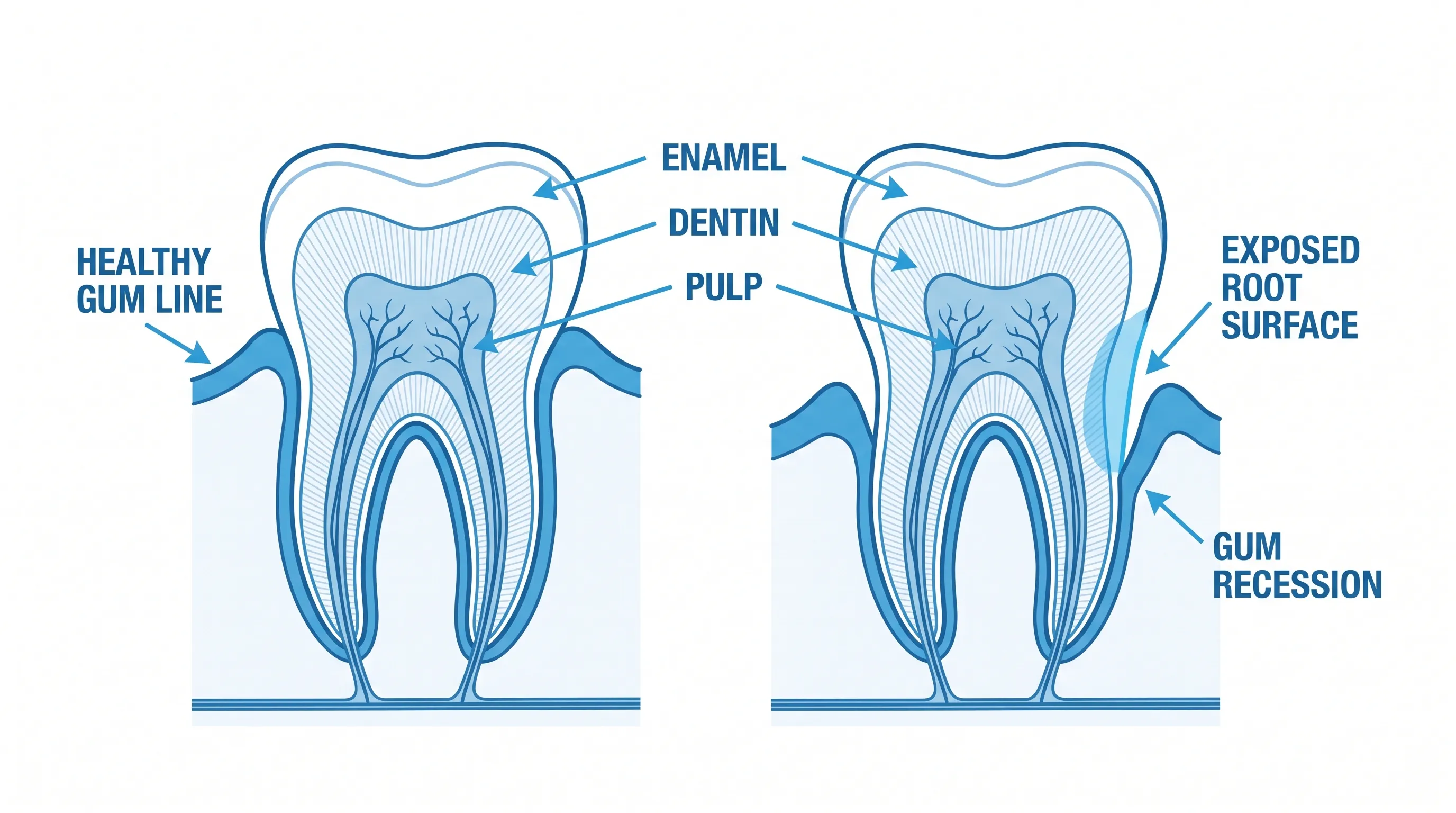
The sensation of pain at the gum line of a tooth is distinct because it often involves the convergence of two different types of tissue: the hard, non-living enamel and the living, vascular gum tissue. Inflammation in the gum tissue can press against the tooth, while decay in the tooth structure can irritate the gum from the inside out. This bidirectional relationship means that problems originating in the gum can affect the tooth, and vice versa. For instance, a cavity forming at the neck of the tooth (cervical caries) can mimic the symptoms of gum disease, while severe gum inflammation can make the tooth feel loose and painful.
Furthermore, the nerves in the dental pulp are highly sensitive to pressure and inflammation. When the protective layers are compromised, even minor irritants can cause significant discomfort. This is why patients often report that the pain is triggered by specific actions, such as brushing, flossing, or consuming cold beverages. Understanding this anatomical vulnerability is the first step in diagnosing the cause of your discomfort and seeking appropriate care.
Common Causes of Pain at the Gum Line
Identifying the specific cause of pain at the gum line of a tooth is crucial for determining the right treatment plan. While the symptom is consistent, the underlying etiologies can vary widely. Below are the most prevalent causes, ranging from hygiene-related issues to structural damage.
Gum Recession and Exposed Roots
Gum recession is one of the leading causes of sensitivity and pain at the gum line. This condition occurs when the margin of the gum tissue that surrounds the teeth wears away or pulls back, exposing more of the tooth or the tooth's root. As the gum recedes, the root surface becomes exposed. Unlike the crown, the root is not protected by enamel but by cementum, which is much thinner and less resistant to acid and abrasion.
When the root is exposed, the dentinal tubules are open to the oral environment. These tubules contain fluid that moves in response to thermal or tactile changes, stimulating the nerve endings inside the tooth. This results in the characteristic sharp zing associated with pain at the gum line of a tooth. Recession can be caused by aggressive brushing, genetic predisposition, hormonal changes, or tobacco use. It is a progressive condition, meaning that without intervention, the exposure and sensitivity will likely worsen over time. The American Academy of Periodontology notes that early detection is key to managing recession effectively.
Dental Cavities (Cervical Caries)
Cavities are not limited to the chewing surfaces of teeth; they frequently develop at the gum line. Known as cervical caries or root caries, these decay spots form where plaque accumulates near the gum margin. This area is particularly susceptible to decay because it is difficult to clean thoroughly, and the root surface is softer than enamel.
As the bacteria in plaque metabolize sugars, they produce acids that demineralize the tooth structure. Initially, this may present as a white spot or mild sensitivity. However, as the decay progresses deeper into the dentin and approaches the pulp, it causes persistent pain at the gum line of a tooth. This pain may be spontaneous or triggered by sweet and cold foods. If left untreated, the cavity can reach the nerve, leading to a severe infection and the need for a root canal. The Centers for Disease Control and Prevention (CDC) highlights that cavities are preventable with proper hygiene and fluoride use.
Gingivitis and Periodontal Disease
Gum disease begins with gingivitis, an inflammation of the gums caused by the buildup of plaque and tartar. Symptoms include redness, swelling, and bleeding during brushing or flossing. While gingivitis itself may not always cause sharp pain, the inflammation can make the gum tissue tender and sore to the touch, contributing to a general sense of discomfort at the gum line.
If gingivitis is not treated, it can advance to periodontitis. In this stage, the inner layer of the gum and bone pull away from the teeth, forming pockets. These pockets collect debris and become infected. The body’s immune response fights the bacteria, but the toxins produced by the bacteria and the enzymes released by the body start to break down the bone and connective tissue that hold teeth in place. This destruction can cause significant pain at the gum line of a tooth, along with bad breath, loose teeth, and changes in bite alignment. Periodontal disease is a chronic condition that requires professional management to halt its progression, as detailed by the Mayo Clinic.
Dental Abscess
A dental abscess is a pocket of pus caused by a bacterial infection. It can occur at the tip of the root (periapical abscess) or in the gums at the side of a tooth root (periodontal abscess). A periodontal abscess often presents as a swollen, painful bump on the gum line. The pain is typically throbbing and intense, often radiating to the jaw, neck, or ear.
An abscess is a dental emergency. The pressure from the accumulating pus causes severe pain at the gum line of a tooth and can lead to systemic infection if the bacteria enter the bloodstream. Other symptoms include fever, swollen lymph nodes, and a foul taste in the mouth. Immediate drainage and antibiotic therapy, followed by root canal treatment or extraction, are usually necessary to resolve the infection.
Tooth Grinding and Clenching (Bruxism)
Bruxism, the habit of grinding or clenching teeth, often occurs during sleep but can also happen during periods of stress while awake. This excessive force places immense pressure on the teeth and the supporting structures. Over time, bruxism can cause micro-fractures in the enamel and wear down the tooth structure, particularly at the neck of the tooth, a phenomenon known as abfraction.
Abfraction lesions are V-shaped notches at the gum line caused by biomechanical loading forces. These lesions expose the dentin, leading to sensitivity and pain at the gum line of a tooth. Additionally, the constant pressure can inflame the periodontal ligament, the tissue that connects the tooth to the bone, causing a dull, aching pain that feels like it is coming from the gum line. Managing bruxism often involves the use of a night guard and stress reduction techniques.
Diagnosing the Source of Your Discomfort
Accurate diagnosis is the cornerstone of effective treatment for pain at the gum line of a tooth. Because multiple conditions can present with similar symptoms, a thorough evaluation by a dental professional is essential. Self-diagnosis can lead to delayed treatment and worsening of the condition.
Professional Dental Examination
During a dental visit, your dentist will begin with a visual inspection of your teeth and gums. They will look for signs of recession, inflammation, cavities, and abscesses. Using a periodontal probe, a small ruler-like instrument, the dentist will measure the depth of the spaces between your teeth and gums. Healthy gums typically have pocket depths of 1 to 3 millimeters. Depths greater than 4 millimeters may indicate periodontal disease.
The dentist will also check for mobility in the teeth and examine the bite for signs of bruxism. They may ask you to bite down on a stick or use other diagnostic tools to isolate the source of pain. Visual cues such as discoloration at the gum line, swelling, or pus discharge are critical indicators of the underlying problem.
Diagnostic Imaging
X-rays are indispensable in diagnosing the cause of pain at the gum line of a tooth. Bitewing X-rays help detect cavities between teeth and at the gum line that are not visible to the naked eye. Periapical X-rays show the entire tooth, from the crown to the root tip, and the surrounding bone. These images can reveal bone loss associated with periodontal disease, infections at the root tip, or fractures.
In complex cases, a Cone Beam Computed Tomography (CBCT) scan may be used. This 3D imaging technique provides a detailed view of the bone structure and soft tissues, allowing for precise diagnosis of abscesses, cysts, or complex root anatomy. These diagnostic tools enable the dentist to create a targeted treatment plan that addresses the specific cause of your pain.
Sensitivity Tests
To determine if the pain is related to nerve involvement, the dentist may perform sensitivity tests. This can involve applying cold air, ice, or sweet substances to the tooth to see if it triggers pain. Electric pulp testing may also be used to assess the health of the nerve inside the tooth. If the tooth responds normally to cold but hurts when the stimulus is removed, it may indicate reversible pulpitis. If the pain lingers or is spontaneous, it may suggest irreversible damage requiring root canal therapy.
Effective Treatment Options
Treatment for pain at the gum line of a tooth depends entirely on the underlying cause. What works for gum recession will not help a cavity, and vice versa. Here are the most common evidence-based treatments.
Desensitizing Agents and Fluoride Treatments
For mild sensitivity caused by exposed roots or enamel erosion, desensitizing toothpaste is often the first line of defense. These toothpastes contain compounds like potassium nitrate or stannous fluoride that block the transmission of pain signals from the tooth surface to the nerve. Regular use can significantly reduce sensitivity over time. The Cleveland Clinic recommends consistent use of these products for best results.
Professional fluoride treatments, such as varnishes or gels, can also strengthen the enamel and cementum, making them more resistant to acid and sensitivity. Dentists may apply these high-concentration fluoride agents directly to the sensitive areas during routine cleanings. In some cases, dental bonding agents can be painted onto the exposed root surface to seal the dentinal tubules and provide immediate relief.
Restorative Procedures
If pain at the gum line of a tooth is caused by cavities or abfraction lesions, restorative procedures are necessary. Dental fillings, typically made of composite resin, are used to restore the lost tooth structure. The dentist removes the decayed or damaged portion of the tooth and fills the space with a material that matches the color of your natural teeth. This not only eliminates the pain but also prevents further decay.
For larger defects or severe erosion, dental crowns may be recommended. A crown covers the entire visible portion of the tooth, protecting it from further damage and restoring its function and appearance. In cases where the nerve is involved, root canal therapy may be required before placing a crown.
Periodontal Therapy
Treating gum disease involves removing the plaque and tartar that cause inflammation. Scaling and root planing is a deep cleaning procedure that removes bacteria and calculus from below the gum line. The root surfaces are smoothed to prevent future bacterial attachment. This procedure can reduce pocket depths and allow the gums to reattach to the teeth, alleviating pain at the gum line of a tooth associated with periodontitis.
In advanced cases, surgical interventions such as flap surgery or bone grafts may be necessary to regenerate lost bone and tissue. These procedures aim to restore the supporting structures of the teeth and halt the progression of the disease.
Gum Grafting
For severe gum recession that causes significant sensitivity and aesthetic concerns, gum grafting is a highly effective solution. During this procedure, a periodontist takes tissue from another part of the mouth, usually the palate, and attaches it to the receded area. This covers the exposed root, reduces sensitivity, and improves the appearance of the smile. Modern techniques, such as pinhole surgical technology, offer minimally invasive options with faster recovery times.
Prevention and Home Care Strategies
Preventing pain at the gum line of a tooth is far easier than treating it. Adopting a rigorous oral hygiene routine and making lifestyle changes can protect your gums and teeth from damage.
Proper Brushing Techniques
One of the most common causes of gum recession and enamel wear is aggressive brushing. Using a hard-bristled toothbrush or scrubbing horizontally can damage the delicate gum tissue and wear away the enamel at the neck of the tooth. Switch to a soft-bristled toothbrush and use gentle, circular motions. Angle the brush at 45 degrees to the gum line to clean effectively without causing trauma.

Electric toothbrushes with pressure sensors can be particularly helpful, as they alert you if you are brushing too hard. Consistency is key; brush twice a day for two minutes each time to remove plaque before it hardens into tartar.
Daily Flossing and Interdental Cleaning
Flossing is essential for removing plaque and food particles from between the teeth and under the gum line, areas that a toothbrush cannot reach. Failure to floss allows bacteria to accumulate, leading to gingivitis and periodontal disease. If traditional floss is difficult to use, consider water flossers or interdental brushes, which can be equally effective and easier to handle.
Make flossing a daily habit, preferably before bedtime. Be gentle when inserting the floss to avoid snapping it into the gums, which can cause injury and pain. Curve the floss around each tooth in a C-shape and slide it up and down against the tooth surface.
Dietary Adjustments
Your diet plays a significant role in oral health. Frequent consumption of sugary and acidic foods and beverages can erode enamel and promote cavity formation. Limit intake of soda, citrus fruits, and candy. If you do consume acidic drinks, use a straw to minimize contact with your teeth and rinse your mouth with water afterward.
Calcium and vitamin D are crucial for maintaining strong teeth and bones. Include dairy products, leafy greens, and fortified foods in your diet. Staying hydrated helps produce saliva, which neutralizes acids and washes away food particles. Chewing sugar-free gum can also stimulate saliva flow and provide additional protection against decay.
Regular Dental Check-ups
Regular visits to the dentist are vital for early detection and prevention of oral health issues. Professional cleanings remove tartar that cannot be removed by brushing and flossing alone. Your dentist can identify early signs of gum disease, cavities, and other problems before they cause pain at the gum line of a tooth or more serious complications.
Aim for dental check-ups every six months, or more frequently if you have a history of gum disease or other risk factors. During these visits, discuss any concerns or changes in your oral health with your dentist. They can provide personalized advice and preventive treatments tailored to your specific needs.
Comparison of Treatment Options
To help you understand the various interventions available, here is a comparison of common treatments for gum line pain.
| Treatment Option | Best For | Procedure Type | Recovery Time | Cost Estimate |
|---|---|---|---|---|
| Desensitizing Toothpaste | Mild sensitivity, early recession | At-home care | Immediate to 2 weeks | Low |
| Dental Filling | Cervical cavities, small erosions | Restorative | None to 1 day | Moderate |
| Scaling and Root Planing | Gingivitis, early periodontitis | Non-surgical | 1-3 days | Moderate |
| Gum Grafting | Severe recession, exposed roots | Surgical | 1-2 weeks | High |
| Root Canal Therapy | Infected pulp, abscess | Endodontic | 1-3 days | High |
This table illustrates that while some solutions are simple and low-cost, others require professional intervention and investment. Early intervention is almost always less invasive and less expensive than waiting for the condition to worsen.
Frequently Asked Questions
Why does my gum line hurt when I brush?
Pain at the gum line during brushing is often caused by gum recession exposing sensitive root surfaces, aggressive brushing techniques damaging the tissue, or early-stage gingivitis causing inflammation. Using a soft-bristled toothbrush and gentle circular motions can help alleviate this discomfort.
Can gum pain at the tooth line go away on its own?
Minor irritation from food debris or slight trauma may resolve within a few days with improved oral hygiene. However, pain caused by cavities, advanced gum disease, or abscesses will not heal without professional dental intervention and may worsen over time.
Is pain at the gum line a sign of an abscess?
Yes, a dental abscess can cause throbbing pain at the gum line, often accompanied by swelling, redness, and a bad taste in the mouth. This is a serious infection that requires immediate dental attention to prevent the spread of bacteria.
How do I treat sensitive teeth at the gum line?
Treatment includes using desensitizing toothpaste, applying fluoride varnishes professionally, avoiding acidic foods, and addressing underlying causes like gum recession or enamel erosion. In severe cases, a dentist may recommend bonding or a gum graft.
What is the difference between gingivitis and periodontitis?
Gingivitis is the early, reversible stage of gum disease characterized by inflammation and bleeding. Periodontitis is a more advanced stage where the infection damages the bone and connective tissue supporting the teeth, potentially leading to tooth loss if untreated.
Conclusion
Experiencing pain at the gum line of a tooth is a signal from your body that something is amiss in your oral health ecosystem. Whether it stems from simple sensitivity due to recession, the silent progression of gum disease, or the acute urgency of an abscess, ignoring the symptom rarely leads to a positive outcome. The intricate connection between your gums and teeth means that neglect in one area inevitably affects the other.
By understanding the potential causes—from bruxism to cervical caries—you are better equipped to have informed conversations with your dental provider. Early diagnosis is the key to minimizing invasive treatments and preserving your natural teeth. Implementing gentle oral hygiene practices, maintaining a balanced diet, and adhering to regular dental check-ups are powerful tools in your arsenal against gum line pain.
Remember, oral health is a window to your overall well-being. Addressing pain at the gum line of a tooth promptly not only restores comfort but also safeguards your long-term health. Do not hesitate to seek professional care if the pain persists, worsens, or is accompanied by other symptoms. Your smile deserves the best care possible, and taking action today ensures a healthier, pain-free tomorrow.
How we work
Researched and drafted with AI assistance, then reviewed by a human editor against the cited sources.
This article is general health information, not medical advice. Consult a qualified healthcare professional about your own situation.