Palate Expander for Adult: A Comprehensive Guide to Non-Surgical Widening

Key points
- Pressure: A feeling of tightness in the nose, cheeks, and teeth.
- Diastema: A gap may appear between your front teeth. This is a normal and positive sign that the suture is opening.
- Speech Changes: Temporary lisp or difficulty speaking clearly as the tongue adjusts to the new space.
- Nasal Congestion: Mild congestion or runny nose as the nasal floor expands.
For decades, orthodontists believed that significant skeletal changes to the upper jaw were impossible after puberty. The prevailing wisdom was that once the midpalatal suture fused, typically by late adolescence, the only way to widen a narrow palate in an adult was through invasive jaw surgery. However, advancements in orthodontic technology and a deeper understanding of craniofacial biology have shattered this myth. Today, a palate expander for adult patients is not only possible but is becoming a mainstream component of comprehensive airway and aesthetic orthodontic treatment.
A narrow palate is more than just a cosmetic concern involving crowded teeth or a narrow smile. It is often linked to functional issues such as mouth breathing, sleep-disordered breathing, chronic sinusitis, and even temporomandibular joint (TMJ) disorders. As adults increasingly seek holistic health solutions, the demand for non-surgical or minimally invasive methods to broaden the dental arches has surged. This guide explores the science, procedures, and realities of using a palate expander for adult individuals, providing you with the evidence-based information needed to make informed decisions about your oral and overall health.
Whether you are struggling with crowded teeth that relapsed after childhood braces, suffering from chronic congestion, or simply seeking a broader, more youthful smile, understanding the mechanics of adult expansion is crucial. We will delve into the different types of appliances available, the role of micro-implants, the expected timeline, and how this treatment integrates with other orthodontic therapies like Invisalign or traditional braces.
Understanding the Anatomy: Why Adult Expansion is Different
To understand why a palate expander for adult treatment requires a different approach than pediatric treatment, we must first look at the anatomy of the maxilla (upper jaw). The roof of your mouth is formed by two halves of the maxillary bone, joined in the middle by a fibrous joint called the midpalatal suture. In children and young adolescents, this suture is flexible and not fully ossified. When a traditional rapid palatal expander (RPE) is used in this age group, the force applied easily separates the two bones, creating new bone growth in the gap. This process is known as orthopedic expansion.
Free calculatorSleep CalculatorCalculate sleep cyclesOpen the calculatorHowever, as we age, this suture undergoes a process called interdigitation, where the bony edges lock together like the teeth of a zipper. By the time most individuals reach their late teens or early twenties, the suture becomes highly resistant to separation. Attempting to use a child-style expander on an adult often results in "orthodontic" expansion rather than "orthopedic" expansion. This means the teeth tip outward laterally, but the underlying bone structure remains narrow. This can lead to gum recession, bone loss, and instability, as the teeth are moved outside their bony housing.
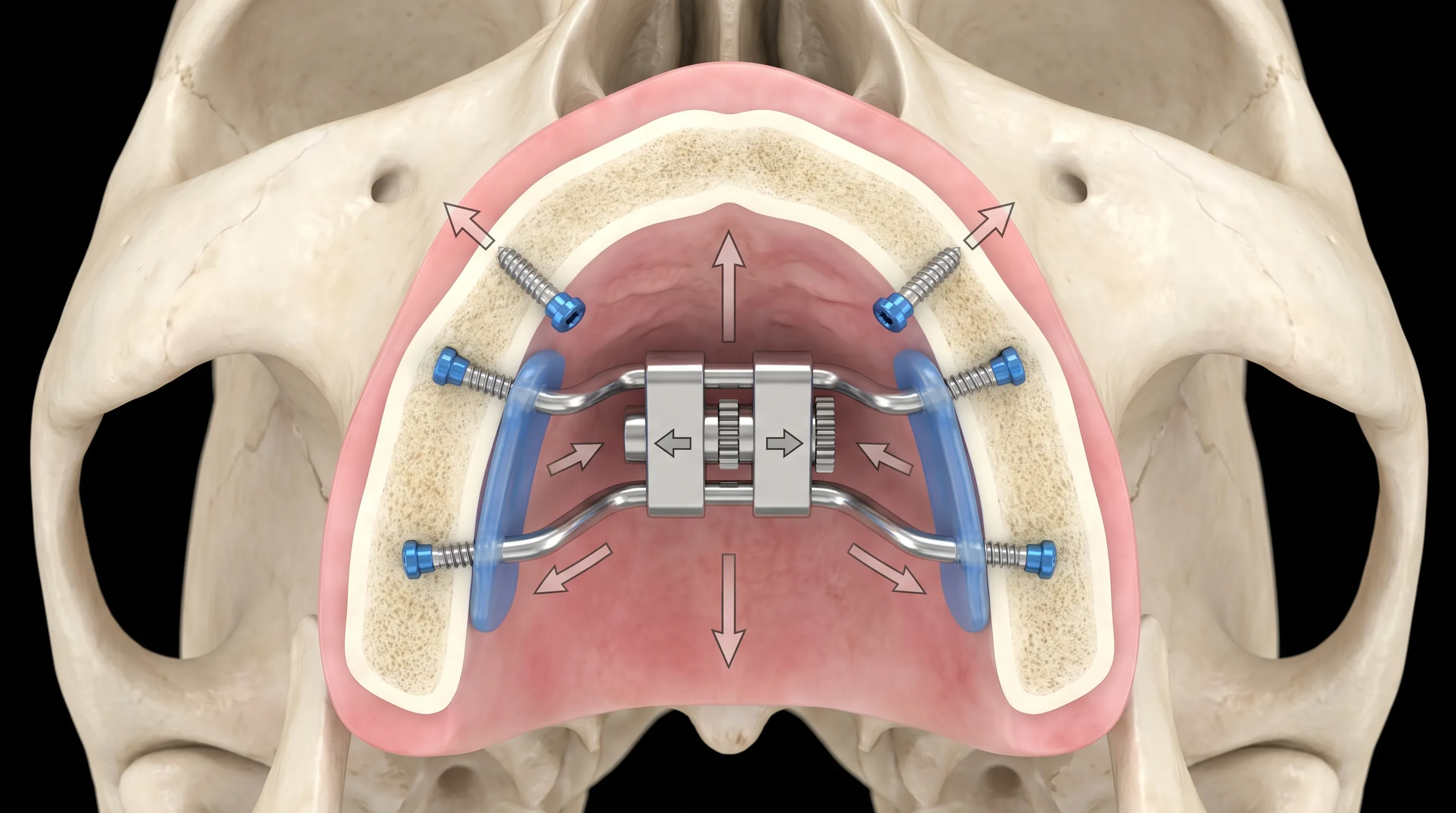
This anatomical reality is why older methods often failed or required surgical assistance. The breakthrough in recent years has been the development of appliances that can bypass the resistance of the fused suture without requiring full-scale jaw surgery. These devices apply force directly to the bone via temporary anchors, allowing for true skeletal expansion even in fully grown adults. This distinction is critical: when researching a palate expander for adult options, you must ensure your provider is using technology capable of skeletal change, not just tooth tipping.
Types of Palate Expanders for Adults
Not all expanders are created equal. The choice of appliance depends on the severity of the constriction, the patient's age, bone density, and specific clinical goals. Here are the primary types of expanders used in adult orthodontics today.
Traditional Rapid Palatal Expander (RPE)
While primarily designed for children, some modified RPEs are still used in young adults (late teens to early 20s) who may still have some sutural flexibility. These are fixed appliances cemented to the molars. However, in true adults, their efficacy is limited. They are rarely recommended as a standalone solution for significant skeletal narrowing in patients over 25 due to the high risk of dental side effects.
Surgically Assisted Rapid Palatal Expander (SARPE)
For many years, SARPE was the gold standard for adult expansion. This procedure involves an oral surgeon making small cuts in the palate (corticotomy) to weaken the bone and release the suture tension before the expander is activated. While highly effective, it is invasive, requires recovery time, and carries the risks associated with surgery, such as swelling, pain, and infection. Many patients seek alternatives to avoid this level of invasiveness.
Mini-Implant Assisted Rapid Palatal Expander (MARPE)
MARPE represents the modern revolution in adult expansion. Also known as Miniscrew-Assisted Rapid Palatal Expansion (MARPE), this device uses four or more tiny titanium mini-implants (micro-anchors) screwed directly into the palate bone. These implants anchor the expander to the skeleton rather than just the teeth. When the screw is turned, the force is transmitted directly to the midpalatal suture, forcing it to open even in fused adult skeletons.
Studies have shown that MARPE can achieve significant skeletal expansion in adults with success rates comparable to SARPE but without the need for surgical corticotomies. This makes it a preferred option for many patients seeking a palate expander for adult treatment that is less invasive yet highly effective. The mini-implants are removed after the expansion phase is complete, leaving no permanent hardware behind.
Clear Aligner-Compatible Expansion
Some newer protocols combine limited skeletal expansion with clear aligners like Invisalign. While clear aligners alone cannot achieve significant skeletal expansion in adults, they can be used in conjunction with a MARPE device. Once the palate is widened skeletally, aligners are used to straighten the teeth and refine the bite. This hybrid approach offers the aesthetic benefit of invisible braces during the long retention and alignment phase.
Benefits Beyond Straight Teeth
While a straighter smile is a compelling reason to pursue orthodontic treatment, the benefits of a palate expander for adult extend far beyond aesthetics. The maxilla forms the floor of the nasal cavity and the roof of the mouth. Therefore, its width directly impacts respiratory function and facial structure.
Improved Airway and Breathing
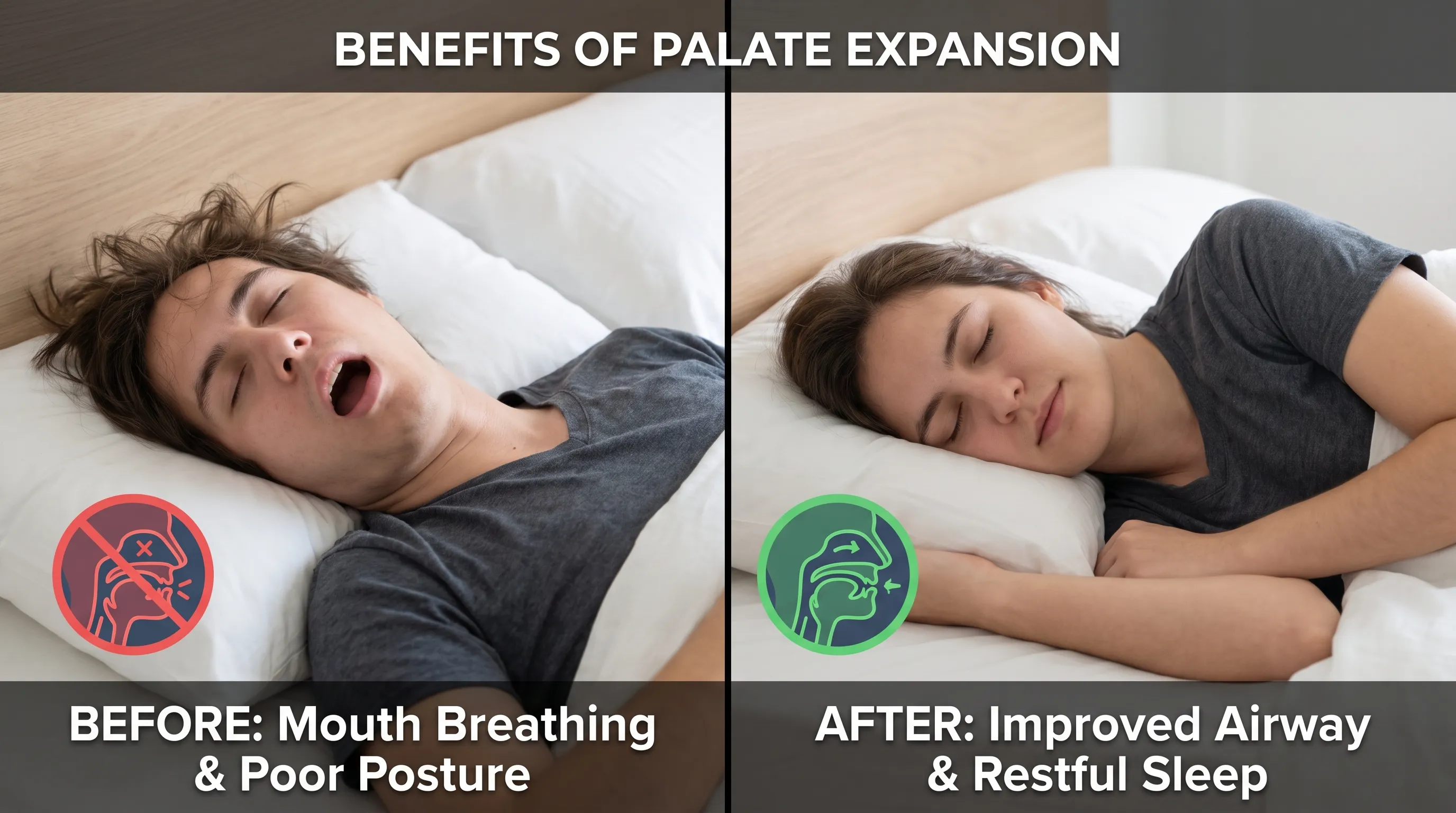
One of the most profound benefits of palate expansion is the improvement in nasal airflow. A narrow palate often correlates with a narrow nasal cavity. By widening the maxilla, the floor of the nose is lifted and widened, reducing nasal resistance. This can significantly alleviate chronic congestion, mouth breathing, and symptoms of allergic rhinitis. For many adults, this leads to easier breathing during the day and better oxygenation at night. According to the National Institutes of Health (NIH), maxillary expansion can lead to measurable increases in nasal cavity volume and improved nasal airflow resistance.
Sleep Apnea and Snoring Reduction
Obstructive Sleep Apnea (OSA) is a serious condition where the airway collapses during sleep. A narrow maxilla contributes to a crowded oral cavity, pushing the tongue back and narrowing the pharyngeal airway. Expanding the palate creates more room for the tongue to rest forward, keeping the airway open. While not a cure for severe OSA, expansion is a powerful adjunctive therapy that can reduce the severity of snoring and apnea events, sometimes allowing patients to lower their CPAP pressure settings or avoid surgery. The American Academy of Sleep Medicine recognizes oral appliances and structural corrections as viable treatments for sleep-disordered breathing.
Enhanced Facial Aesthetics
A narrow palate can contribute to a flattened midface appearance. Expansion can provide better support for the soft tissues of the face, particularly the cheeks and nose. Patients often report a fuller smile, reduced dark triangles between teeth, and a more balanced facial profile. Additionally, correcting a crossbite or narrow arch can improve lip competence, allowing the lips to close naturally without strain, which reduces the appearance of a gummy smile or excessive chin prominence.
TMJ and Postural Improvements
The relationship between the jaw, neck, and spine is intricate. A narrow upper jaw can force the lower jaw into an unnatural position to achieve a bite, straining the temporomandibular joints (TMJ). By widening the upper arch to match the lower arch properly, expansion can alleviate joint pain, clicking, and headaches. Some patients also report improvements in head and neck posture as the airway opens and the tongue rests in its proper position against the palate. The Cleveland Clinic notes that bite alignment plays a significant role in TMJ health.
The Treatment Process: What to Expect
Undergoing treatment with a palate expander for adult is a journey that requires commitment and patience. Understanding the phases of treatment helps manage expectations and ensures compliance.
Phase 1: Consultation and Planning
The process begins with a comprehensive evaluation by an orthodontist experienced in adult expansion. This includes digital scans, X-rays, and often a Cone Beam CT (CBCT) scan to assess bone density and suture fusion. Your provider will determine if you are a candidate for MARPE or if surgical assistance (SARPE) is necessary. A customized treatment plan is created, determining the target expansion width.
Phase 2: Appliance Placement
If undergoing MARPE, the placement of the mini-implants is a minor procedure performed under local anesthesia. It typically takes less than an hour. The expander is cemented or bonded to the teeth and secured to the implants. You may feel some pressure immediately after, but severe pain is uncommon. Most patients return to normal activities within 24 hours.
Phase 3: Active Expansion
This is the critical phase where the actual widening occurs. You will be instructed to turn the key of the expander a specific number of times per day (usually once or twice). Each turn advances the screw by a fraction of a millimeter.
During this period, which typically lasts 3 to 6 weeks, you may experience:
- Pressure: A feeling of tightness in the nose, cheeks, and teeth.
- Diastema: A gap may appear between your front teeth. This is a normal and positive sign that the suture is opening.
- Speech Changes: Temporary lisp or difficulty speaking clearly as the tongue adjusts to the new space.
- Nasal Congestion: Mild congestion or runny nose as the nasal floor expands.
It is vital to follow the activation schedule strictly. Missing turns can allow the bone to begin healing prematurely, making further expansion difficult.
Phase 4: Retention
Once the desired width is achieved, the active turning stops. However, the expander stays in place for 3 to 6 months. This retention phase is crucial because the new bone filling the gap (osteogenesis) is initially soft and immature. Keeping the appliance stable allows this new bone to mineralize and harden, ensuring the expansion is permanent. Removing the expander too early can lead to relapse.
Phase 5: Orthodontic Alignment
After the retention period, the expander is removed. If you had significant crowding or bite issues, you will likely need braces or clear aligners to straighten the teeth and finalize the bite. The expanded arch provides the necessary space to align teeth without extractions. This phase can last 12 to 18 months, depending on complexity.
Risks, Side Effects, and Considerations
While a palate expander for adult is generally safe, it is a medical procedure with potential risks. Being aware of these helps in making an informed decision.
Discomfort and Pain
Most patients describe the sensation as pressure rather than acute pain. However, sensitivity varies. Some individuals may experience headaches or tooth soreness during the active expansion phase. Over-the-counter anti-inflammatories are usually effective. If pain is severe, it should be reported to the orthodontist immediately.
Hygiene Challenges
The expander is a large appliance that can trap food particles. Maintaining rigorous oral hygiene is essential to prevent gum inflammation and cavities. Special brushes, water flossers, and antimicrobial rinses are often recommended. Neglecting hygiene can lead to bad breath and gingivitis. The Mayo Clinic emphasizes the importance of specialized cleaning tools for orthodontic appliances.
Speech and Eating Difficulties
Initially, the bulk of the appliance can interfere with tongue movement, affecting speech and chewing. Soft foods are recommended for the first few days. Speech therapy exercises or simply reading aloud can help the tongue adapt quickly. Most patients adjust within two weeks.
Potential for Failure
In rare cases, the suture may not open despite the force applied, or a mini-implant may become loose. If a MARPE fails, the provider may need to switch to a SARPE protocol or adjust the appliance. Choosing an experienced provider minimizes this risk.
Gum Recession
If the expansion is too rapid or if the patient has thin gum tissue, there is a risk of gum recession on the molars. Regular monitoring by the orthodontist ensures that the expansion rate is biological and safe for the periodontal tissues.
Comparing Treatment Options
To help you visualize where a palate expander for adult fits into the landscape of orthodontic care, consider the following comparison of common approaches for correcting narrow arches.
| Feature | MARPE (Non-Surgical) | SARPE (Surgical) | Traditional Braces Only | Extractive Orthodontics |
|---|---|---|---|---|
| Invasiveness | Low (Mini-implants) | High (Surgery required) | None | Moderate (Tooth removal) |
| Skeletal Change | Yes | Yes | No (Dental tipping only) | No |
| Airway Benefit | Significant | Significant | Minimal | Negative (reduces volume) |
| Recovery Time | 1-2 Days | 1-2 Weeks | None | 1 Week |
| Cost | Moderate-High | High | Moderate | Moderate |
| Best For | Most Adults | Severe Cases/Failed MARPE | Mild Crowding | Severe Crowding (Old School) |
As the table illustrates, MARPE offers a compelling balance of efficacy and comfort. Unlike extractive orthodontics, which removes teeth to create space (often shrinking the arch and airway), expansion adds space and improves function. Unlike traditional braces alone, it addresses the root skeletal cause of the narrowness.
Integrating Expansion with Overall Health
The trend toward "airway-centered orthodontics" recognizes that the mouth is the gateway to the body. A palate expander for adult is not just a dental device; it is a tool for systemic health improvement. By improving nasal breathing, you reduce the stress on the cardiovascular system associated with mouth breathing and sleep apnea. Better sleep quality leads to improved cognitive function, mood regulation, and energy levels. The Centers for Disease Control and Prevention (CDC) highlights the critical link between sleep duration/quality and overall health outcomes.
Furthermore, proper tongue posture is essential for maintaining the expansion. After the appliance is removed, myofunctional therapy may be recommended to retrain the tongue to rest on the roof of the mouth. This prevents the cheeks from pressing the teeth back inward and maintains the widened arch long-term. This holistic approach ensures that the investment in your oral health yields lifelong benefits.
Frequently Asked Questions
Can a palate expander work for adults?
Yes, a palate expander can work for adults, but traditional expanders are often less effective because the midpalatal suture has fused. Modern techniques like MARPE (Mini-Implant Assisted Rapid Palatal Expander) or SARPE (Surgically Assisted Rapid Palatal Expander) are specifically designed to overcome this fusion and successfully widen the adult palate.
How long does adult palate expansion take?
The active expansion phase typically lasts between 3 to 6 weeks, depending on the desired width and the specific appliance used. However, the retention phase, where the expander remains in place to allow new bone to form, usually lasts 3 to 6 months. Total treatment time including braces or aligners can range from 12 to 24 months.
Is palate expansion painful for adults?
Most patients report mild to moderate discomfort rather than sharp pain. You may feel pressure in the nose, cheeks, and teeth when the device is activated. Over-the-counter pain relievers are usually sufficient to manage any soreness during the first few days of activation.
Does palate expansion change your face shape?
Yes, it can lead to subtle but positive changes. By widening the maxilla, it can support the cheekbones better, reduce nasal flaring, and improve the smile arc. It may also help close lip incompetence, leading to a more balanced facial profile.
Can a palate expander help with sleep apnea?
Yes, expanding the palate can widen the nasal cavity and improve airflow, which may alleviate symptoms of mild to moderate obstructive sleep apnea or snoring. It is often used as part of a comprehensive approach to airway-centered orthodontics. Learn more about sleep apnea treatments from the National Heart, Lung, and Blood Institute.
Will I have a gap in my front teeth?
Yes, a gap (diastema) between the front teeth is a common and expected sign that the midpalatal suture is opening. This gap is temporary and will be closed during the subsequent orthodontic phase with braces or aligners.
How do I clean my palate expander?
Hygiene is critical. Use a soft toothbrush to clean around the appliance and implants. Water flossers are highly effective for removing food debris from under the device. Antimicrobial mouth rinses can help reduce bacteria buildup. Your orthodontist will provide specific cleaning instructions tailored to your appliance.
Conclusion
The notion that adults are stuck with the jaw structure they developed in childhood is outdated. With the advent of advanced technologies like MARPE, a palate expander for adult patients offers a viable, effective, and less invasive path to correcting narrow arches. The benefits extend far beyond a wider smile, encompassing improved breathing, better sleep, and enhanced facial harmony.
While the treatment requires dedication and a few months of adjustment, the long-term rewards for both oral and systemic health are substantial. If you suspect a narrow palate is affecting your breathing, sleep, or confidence, consult with an orthodontist who specializes in adult expansion and airway health. They can evaluate your specific anatomy and determine if a palate expander for adult therapy is the right key to unlocking your best health. Remember, investing in your airway is an investment in your overall quality of life.
How we work
Researched and drafted with AI assistance, then reviewed by a human editor against the cited sources.
This article is general health information, not medical advice. Consult a qualified healthcare professional about your own situation.