Children's Crooked Teeth: Causes, Treatments & Prevention
Parents often notice subtle shifts in their child’s smile long before formal dental visits become a routine. When primary molars begin to shed and permanent incisors emerge, many caregivers find themselves wondering why their child’s teeth are not aligning as expected. The prevalence of dental crowding and misalignment in pediatric populations has grown steadily over the past two decades, prompting orthodontic professionals to reevaluate early intervention strategies. Children’s crooked teeth are far more than a cosmetic concern; they represent a complex intersection of genetic predisposition, environmental influences, and developmental habits that can significantly impact long-term oral and systemic health. Understanding the underlying mechanisms behind malocclusion empowers parents to recognize early warning signs, seek timely professional guidance, and implement evidence-based preventive measures. This comprehensive guide explores the biological foundations of pediatric dental misalignment, outlines the clinical and functional consequences of untreated crowding, and provides actionable pathways for effective treatment and lifelong oral wellness.
Understanding the Biological Foundations of Pediatric Misalignment
Dental arches develop through a highly orchestrated interplay of genetic coding, epigenetic expression, and mechanical forces during childhood. The alignment of primary and permanent dentition relies on adequate alveolar bone growth, proportional tooth size, and proper neuromuscular coordination. When these developmental processes are disrupted, children’s crooked teeth frequently emerge as a clinical manifestation of underlying structural imbalances. Modern orthodontic research emphasizes that malocclusion rarely stems from a single causative factor. Instead, it typically results from a cumulative series of physiological and environmental influences that alter jaw maturation trajectories. Recognizing these foundational elements allows caregivers and clinicians to intervene before discrepancies become entrenched.
Free calculatorBMI CalculatorCalculate Body Mass IndexOpen the calculatorGenetic Predisposition and Hereditary Patterns
Inherited traits play a foundational role in determining dental arch dimensions, tooth morphology, and skeletal relationships. Families with a history of Class II or Class III malocclusions often observe similar occlusal patterns across multiple generations. Genetic studies have identified specific polymorphisms associated with reduced maxillary width, mandibular prognathism, and delayed eruption sequencing. However, heredity alone does not dictate orthodontic outcomes. Epigenetic research demonstrates that gene expression can be modified by environmental stimuli, nutritional intake, and early childhood habits. This means that while a child may inherit a genetic tendency for narrow arches, proactive interventions during the mixed dentition phase can frequently mitigate severe crowding. Orthodontic screening by age seven remains the clinical standard precisely because it aligns with the most responsive window of craniofacial growth.
The Impact of Prolonged Oral Habits
Pediatric behaviors such as thumb sucking, pacifier dependence, and tongue thrusting exert continuous pressure on developing dental structures. When these habits persist beyond the age of three, they alter the equilibrium of the perioral musculature and redirect alveolar bone deposition. Chronic thumb sucking creates anterior open bites and constricts the maxillary arch, frequently resulting in children’s crooked teeth that require interceptive orthodontic appliances. Similarly, prolonged pacifier use beyond age four can induce crossbites and disrupt normal palatal sutural development. Pediatric dentists recommend transitioning away from non-nutritive sucking habits by implementing positive reinforcement strategies, utilizing habit-breaking orthodontic appliances when necessary, and addressing underlying emotional triggers. Early behavioral intervention significantly reduces the likelihood of permanent skeletal discrepancies and simplifies comprehensive treatment planning later in adolescence.
Airway Health and Oral Posture Dynamics
Emerging research in pediatric airway medicine highlights a profound connection between respiratory function and dental alignment. Chronic nasal obstruction, whether secondary to allergic rhinitis, adenotonsillar hypertrophy, or deviated septum, frequently forces children into obligatory mouth breathing. This compensatory breathing pattern alters resting tongue posture, causing the tongue to drop away from the palate and eliminating the natural expansive force required for proper maxillary arch development. Over time, the absence of physiological palatal stimulation leads to vertical facial elongation, narrow arches, and dental crowding. Addressing underlying airway compromise through pediatric otolaryngology referrals, myofunctional therapy, and targeted breathing exercises can restore normal oral posture and support natural arch expansion. Recognizing the airway-malocclusion connection has transformed how orthodontists approach the treatment of children’s crooked teeth, shifting focus from purely mechanical alignment to holistic craniofacial wellness.
Recognizing Early Warning Signs Across Developmental Stages
Pediatric dental misalignment does not manifest uniformly. Clinical presentations vary significantly depending on the child’s age, eruption sequence, and skeletal maturity. Caregivers who understand the expected milestones of primary and mixed dentition are better equipped to identify deviations from normal development. Regular monitoring, combined with professional screening, ensures that orthodontic interventions can be timed to leverage natural growth spurts.
Primary Dentition Observations
During the preschool years, dental spacing is typically a favorable indicator of healthy jaw development. The presence of generalized spacing between primary teeth provides the necessary room for larger permanent successors. Conversely, primary teeth that contact tightly without any physiological spacing often signal underlying arch deficiency. Caregivers should watch for anterior crossbites, where upper front teeth bite behind lower teeth, as well as significant asymmetries in midline alignment. Persistent thumb sucking or pacifier use during this stage can exacerbate transverse discrepancies and establish maladaptive tongue resting positions. Early evaluation during the primary dentition phase allows pediatric dentists to implement space-maintaining strategies and monitor eruption trajectories before permanent teeth begin to emerge.
Mixed Dentition Indicators
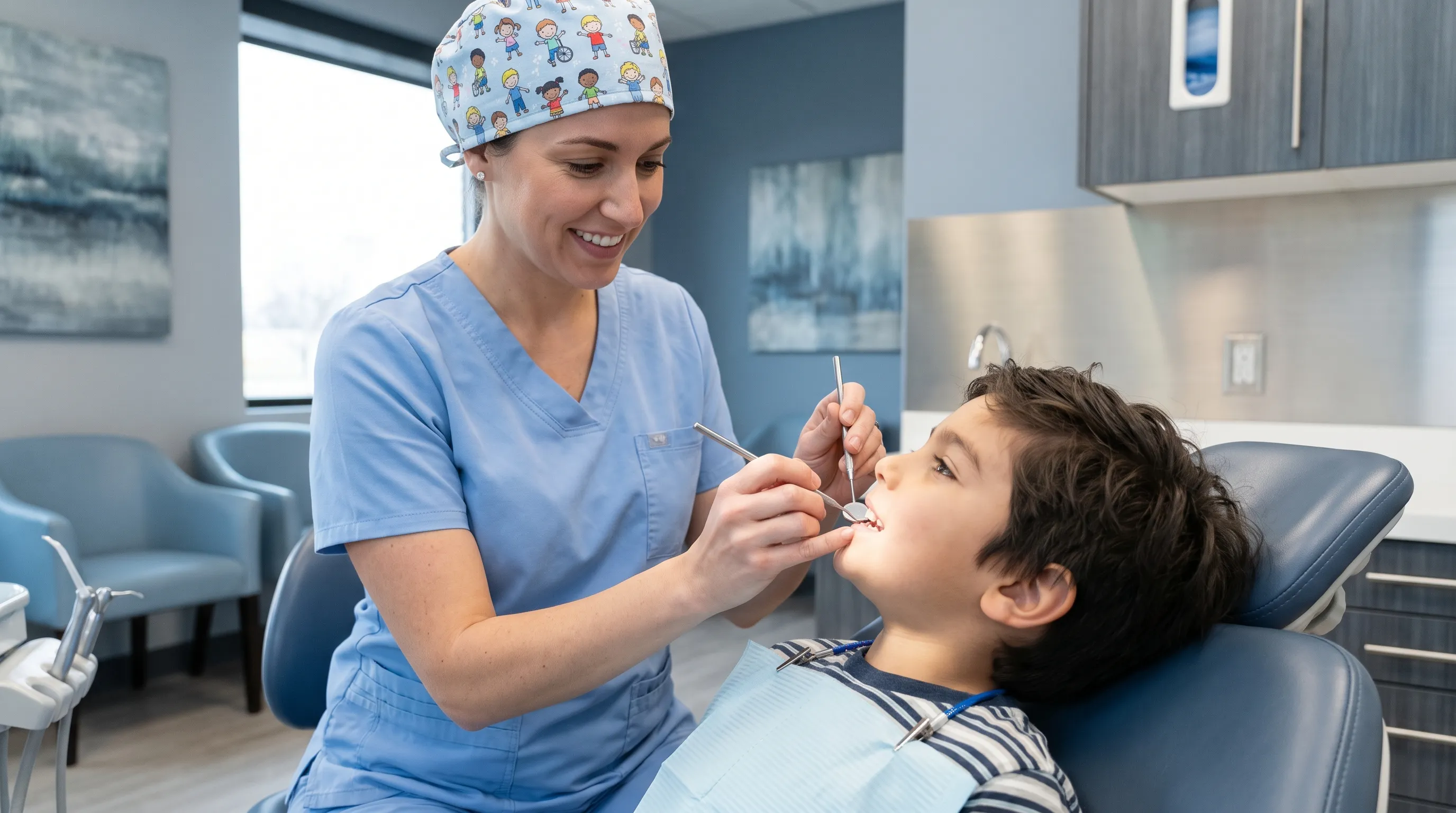
The mixed dentition phase, typically spanning ages six to twelve, represents the most critical window for detecting and addressing dental crowding. As permanent incisors and first molars erupt, caregivers may notice overlapping, rotation, or labial positioning of the central teeth. The “ugly duckling” stage of development, characterized by temporary spacing between erupting maxillary incisors, often resolves naturally as canines descend. However, true impaction, severe rotation, or crossbites require clinical assessment. Ectopic eruption, where permanent teeth erupt in incorrect positions, frequently indicates inadequate arch length or premature loss of primary teeth. Maintaining a consistent recall schedule during this transitional phase ensures timely identification of children’s crooked teeth and facilitates interceptive treatment before skeletal maturation limits orthopedic modification.
Adolescent Transition and Permanent Alignment
By early adolescence, the permanent dentition is largely established, and remaining orthodontic concerns typically focus on functional optimization and aesthetic refinement. Late-onset crowding, particularly in the mandibular arch, often results from continued alveolar bone remodeling and delayed jaw growth. Wisdom teeth emergence during the late teenage years can exacerbate existing crowding, though modern research suggests they are rarely the primary cause of anterior misalignment. Comprehensive orthodontic evaluation during this stage determines whether fixed appliances, removable aligners, or adjunctive therapies will achieve optimal occlusal harmony. Proactive management prevents progressive tooth wear, periodontal strain, and temporomandibular joint stress as patients transition into adulthood.
Health Consequences Beyond Aesthetic Considerations
While the visible misalignment of teeth often drives initial concern, the clinical implications of untreated malocclusion extend far beyond cosmetic appearance. Proper occlusion supports efficient mastication, clear speech production, and healthy periodontal maintenance. When dental arches are compromised, the resulting functional deficits can influence nutritional intake, respiratory efficiency, and long-term joint health.
Compromised Oral Hygiene and Periodontal Risk
Crowded and overlapping teeth create intricate anatomical niches that impede effective plaque removal. Standard toothbrush bristles struggle to access interproximal surfaces, while floss frequently shreds or fails to penetrate tight contacts. This mechanical barrier fosters localized bacterial colonization, accelerating enamel demineralization and gingival inflammation. Children with children’s crooked teeth experience significantly higher rates of white spot lesions, dental caries, and early-stage periodontal disease compared to peers with well-aligned dentition. Chronic gingival bleeding, halitosis, and localized recession often manifest during late childhood and progress into adolescence if hygiene remains inadequate. Implementing adjunctive cleaning tools such as water flossers, interdental brushes, and orthodontic floss threaders becomes essential when natural tooth alignment compromises routine plaque control.
Speech Articulation and Phonological Development
Dental arch configuration directly influences tongue placement and airstream modulation during speech production. Anterior open bites and severe crossbites disrupt the precise tongue-to-teeth contact required for alveolar and dental consonants, including /s/, /z/, /t/, and /d/. Children with pronounced dental crowding may develop compensatory articulation patterns, leading to lisping, distorted sibilants, or atypical vowel production. Speech-language pathologists frequently collaborate with orthodontists to differentiate structural impediments from neuromuscular learning patterns. Correcting underlying dental discrepancies often accelerates phonological improvement, though intensive speech therapy may be required for patients who have adapted to maladaptive articulatory habits over extended periods.
Masticatory Efficiency and Digestive Implications
Proper occlusal contact enables effective food breakdown during mastication. Misaligned teeth prevent uniform force distribution across the dental arch, resulting in premature enamel wear, fractured cusps, and compromised chewing efficiency. Inadequate mastication increases the bolus size before swallowing, placing additional strain on the gastrointestinal tract. Children with untreated malocclusion frequently exhibit selective eating patterns, favoring softer textures and avoiding fibrous vegetables or dense proteins due to masticatory discomfort. Over time, nutritional deficiencies and altered digestive function may emerge, compounding the systemic impact of untreated dental misalignment. Restoring functional occlusion supports optimal nutritional processing and reinforces healthy dietary behaviors throughout development.
Evidence-Based Treatment Pathways and Clinical Interventions
Modern pediatric orthodontics emphasizes individualized treatment planning that aligns with the patient’s developmental stage, skeletal classification, and specific occlusal anomalies. The American Association of Orthodontists recommends initial screening by age seven to evaluate growth potential, identify transverse discrepancies, and determine whether early intervention will optimize long-term outcomes. Treatment modalities range from removable appliances for mild guidance to comprehensive fixed systems for severe malocclusions. Understanding the clinical spectrum of interventions enables families to navigate care with confidence.
| Treatment Modality | Ideal Patient Profile | Primary Mechanism of Action | Typical Duration | Clinical Advantages |
|---|---|---|---|---|
| Rapid Maxillary Expansion | Ages 6-10, transverse deficiency | Midpalatal suture separation | 3-6 months | Resolves crossbites, improves nasal airflow |
| Phase One Interceptive Braces | Mixed dentition, ectopic eruption | Arch guidance, space creation | 9-15 months | Simplifies future treatment, prevents impaction |
| Clear Aligner Systems | Mild-moderate crowding, cooperative teens | Sequential force application via custom trays | 6-18 months | Aesthetic, removable, digitally predictable |
| Fixed Comprehensive Braces | Severe malocclusion, complex rotations | Continuous bracket-wire biomechanics | 18-30 months | Maximum control, predictable outcomes |
| Myofunctional Therapy | Habit-driven malocclusion, tongue thrust | Neuromuscular retraining exercises | 6-12 months | Addresses root causes, reduces relapse risk |
Interceptive Phase One Therapy
Phase one treatment typically targets growing children between ages seven and ten, focusing on skeletal modification and space management. Rapid maxillary expansion (RME) addresses transverse arch deficiency by applying controlled forces to the midpalatal suture, stimulating bone deposition and widening the maxillary arch. This orthopedic approach resolves posterior crossbites, creates space for erupting permanent teeth, and frequently alleviates nasal airway resistance by expanding the nasal floor. Additional Phase one appliances include lower lingual holding arches for space maintenance, functional appliances for Class II correction, and limited fixed braces to align severely rotated or ectopically erupted teeth. Early intervention reduces the complexity of future comprehensive treatment and minimizes the risk of extractions or surgical procedures during adolescence. For families navigating the initial stages of orthodontic planning, consulting resources from AAO Orthodontics provides evidence-based guidelines on pediatric interceptive care.
Comprehensive Phase Two Alignment
Once permanent dentition is established, Phase two treatment addresses fine occlusal detailing, final alignment, and functional optimization. Traditional metal brackets and archwires remain the gold standard for complex malocclusions due to their biomechanical precision and predictable tooth movement. Clear aligner systems have gained significant traction among pediatric populations, offering removable options for cooperative patients with mild to moderate crowding. Clinicians utilize digital treatment planning to map precise tooth movements, monitor compliance through embedded tracking sensors, and deliver customized aligners in sequential phases. Regardless of appliance selection, comprehensive treatment requires meticulous anchorage management, interproximal reduction when indicated, and careful torque control to achieve stable, biologically sound results.
Adjunctive and Surgical Modalities
Severe skeletal discrepancies, including profound Class III prognathism or extreme maxillary deficiency, may require surgical intervention once skeletal growth is complete. Orthognathic surgery, performed in conjunction with fixed orthodontics, repositions the maxilla, mandible, or both to establish functional occlusion and balanced facial aesthetics. For younger patients with severe dental crowding and impacted canines, surgical exposure and orthodontic traction can guide erupting teeth into proper alignment. Additionally, myofunctional therapy serves as a valuable adjunctive treatment by retraining orofacial musculature, correcting tongue posture, and eliminating harmful swallowing patterns that contribute to relapse. Integrating multidisciplinary care ensures that structural correction translates into sustainable functional and aesthetic outcomes. Patients and caregivers can explore detailed surgical protocols through the American Association of Oral and Maxillofacial Surgeons.
Practical Home Care Strategies and Preventive Protocols
Successful orthodontic outcomes depend heavily on caregiver engagement, patient compliance, and consistent home maintenance routines. While professional interventions address structural alignment, daily habits dictate the longevity of treatment results and the overall health of the dentition. Implementing evidence-based preventive strategies empowers families to support optimal oral development and minimize the risk of post-treatment relapse.
Optimizing Daily Oral Hygiene Protocols
Maintaining impeccable oral hygiene during orthodontic treatment requires specialized techniques and consistent execution. Patients with fixed appliances should brush after every meal using soft-bristled orthodontic toothbrushes, angling the brush at forty-five degrees to clean above and below the brackets. Flossing must be adapted using orthodontic floss threaders or water flossers to navigate around archwires and prevent interproximal plaque accumulation. Fluoride mouthrinses and prescription-strength toothpaste can enhance enamel remineralization, particularly during the active movement phase when gingival tissues experience increased tension. Caregivers should supervise brushing routines until fine motor skills are fully developed and establish a visual tracking system to reinforce daily compliance. Consistent hygiene practices prevent demineralization, gingival hyperplasia, and prolonged treatment delays caused by inflammatory tissue responses. Clinical guidance on pediatric hygiene optimization is available through the American Dental Association.
Nutritional Guidance for Healthy Jaw Development
Dietary composition significantly influences craniofacial growth patterns and dental arch formation. Diets rich in soft, highly processed foods require minimal masticatory effort, failing to stimulate the mechanical loading necessary for proper alveolar bone development. Introducing age-appropriate fibrous vegetables, lean proteins, and whole foods encourages robust chewing mechanics, promoting transverse arch expansion and physiological tooth eruption. Conversely, excessive consumption of fermentable carbohydrates and acidic beverages accelerates enamel demineralization, particularly around orthodontic brackets where plaque retention is highest. Caregivers should implement structured meal schedules, limit grazing behaviors, and rinse with water after consuming sugary or acidic items. Encouraging mindful chewing techniques and promoting water as the primary beverage supports both systemic health and optimal dental alignment.

Behavioral Modification and Habit Management
Persistent oral habits remain a leading cause of progressive dental misalignment in pediatric populations. Thumb sucking, nail biting, and tongue thrusting must be addressed through systematic behavioral interventions rather than punitive measures. Positive reinforcement charts, habit reversal training, and reward-based systems have demonstrated significant efficacy in reducing non-nutritive sucking behaviors. For children struggling with persistent habits, orthodontic habit-breaking appliances such as palatal cribs or bluegrass appliances create a physical barrier while preserving normal tongue function. Myofunctional exercises, including proper swallowing drills and targeted tongue elevation training, reinforce neuromuscular coordination and prevent relapse following orthodontic treatment. Early habit modification not only simplifies orthodontic mechanics but also establishes lifelong behavioral patterns that protect structural integrity. Parents seeking structured behavioral frameworks can reference the National Institutes of Health Pediatric Dental Guidelines.
Navigating Financial Planning and Insurance Coverage
Orthodontic treatment represents a significant financial investment for families, yet understanding coverage parameters and payment strategies can substantially reduce out-of-pocket expenses. Pediatric orthodontics is frequently classified as medically necessary rather than purely cosmetic, particularly when malocclusion impairs chewing function, speech articulation, or airway patency.
Insurance Verification and Benefit Optimization
Most dental insurance plans include orthodontic coverage for patients under eighteen, though benefit structures vary significantly between providers. Caregivers should verify coverage limits, waiting periods, and age restrictions prior to initiating treatment. Some plans utilize a lifetime maximum for orthodontic benefits, typically ranging from one thousand to three thousand dollars, while others cover a percentage of the total treatment fee. Utilizing flexible spending accounts (FSA) or health savings accounts (HSA) allows families to allocate pre-tax dollars toward orthodontic expenses, effectively reducing the overall financial burden. Additionally, Medicaid and Children’s Health Insurance Program (CHIP) beneficiaries may qualify for orthodontic services if malocclusion meets state-specific medical necessity criteria. Consulting with a certified orthodontic treatment coordinator ensures accurate benefit verification and prevents unexpected financial surprises during active treatment.
Payment Flexibility and Long-Term Value Assessment
Orthodontic practices frequently offer structured payment plans that align with treatment duration, eliminating the need for upfront lump-sum payments. Interest-free financing options, third-party healthcare credit programs, and in-house installment plans provide accessible pathways for families managing multiple household expenses. When evaluating treatment proposals, caregivers should consider the long-term clinical value rather than solely focusing on initial cost. Untreated malocclusion frequently leads to increased expenditures on restorative dentistry, periodontal therapy, and prosthodontic interventions later in adulthood. Proactive orthodontic investment typically yields superior functional outcomes, reduces the risk of dental trauma, and minimizes future healthcare costs. Transparent communication regarding fee schedules, retention protocols, and post-treatment monitoring ensures families make informed financial decisions that align with their child’s developmental needs.
Frequently Asked Questions
At what age should children be evaluated for potential orthodontic intervention?
The American Association of Orthodontists recommends that all children receive an initial orthodontic screening by age seven. This timing coincides with the eruption of the first permanent molars and incisors, allowing specialists to assess arch development, identify transverse discrepancies, and monitor eruption sequencing. Early evaluation does not always indicate immediate treatment but provides clinicians with baseline data to determine whether interceptive therapy will optimize long-term outcomes or if observation is appropriate.
Do pacifiers and thumb sucking permanently damage dental alignment?
Prolonged pacifier use and thumb sucking can significantly alter dental arch morphology when habits persist beyond age three or four. Chronic sucking forces create anterior open bites, constricted maxillary arches, and altered tongue resting postures that frequently lead to children’s crooked teeth. Discontinuing these habits before permanent teeth fully erupt often allows natural remodeling to correct minor discrepancies. For persistent habits, habit-breaking appliances and behavioral interventions are highly effective in preventing long-term skeletal and dental compromise.
Can mild crowding correct itself as the child grows older?
Spontaneous correction of true dental crowding is uncommon once permanent teeth begin to erupt. While some developmental spacing variations resolve naturally, such as the transient spacing seen during maxillary canine eruption, genuine arch length deficiency typically worsens without professional intervention. Early assessment determines whether the discrepancy stems from temporary eruption patterns or permanent structural limitations. Interceptive guidance can create adequate space and improve eruption trajectories, but established crowding generally requires active orthodontic treatment to achieve proper alignment.
Are clear aligners appropriate for children with severe dental crowding?
Clear aligner therapy is generally most effective for mild to moderate alignment concerns in cooperative pediatric patients. Severe crowding, significant rotation, impacted teeth, and complex skeletal discrepancies typically require fixed bracket systems that provide precise biomechanical control and continuous force application. Some practitioners utilize hybrid approaches, combining aligners for initial alignment with fixed appliances for detailed finishing. The appropriateness of aligner therapy depends on clinical severity, patient compliance, and the orthodontist’s treatment planning protocol.
How long do children need to wear retainers after braces are removed?
Retention protocols are critical for maintaining treatment results, as natural tooth movement and periodontal remodeling continue throughout life. Most orthodontists prescribe full-time retainer wear for the first three to six months post-treatment, transitioning to nighttime wear indefinitely. Fixed lingual retainers and removable Essix or Hawley appliances each offer distinct advantages regarding comfort, hygiene, and compliance. Lifelong retention ensures that the investment in properly aligned teeth is preserved and prevents gradual relapse of children’s crooked teeth into adulthood.
Conclusion
Navigating the developmental complexities of pediatric dental misalignment requires a blend of clinical expertise, proactive observation, and informed decision-making. Children’s crooked teeth rarely emerge in isolation; they represent a dynamic interplay of genetic predisposition, environmental influences, and functional habits that shape craniofacial growth trajectories. Early recognition of warning signs, timely orthodontic screening, and targeted interceptive strategies empower families to address structural discrepancies before they progress into complex malocclusions. Beyond aesthetic refinement, proper dental alignment supports optimal oral hygiene, efficient mastication, clear speech articulation, and long-term periodontal wellness. By implementing evidence-based preventive routines, managing harmful oral habits, and leveraging modern orthodontic technologies, caregivers can guide their children toward healthy, functional smiles that endure well into adulthood. Partnering with qualified orthodontic professionals, understanding financial planning options, and maintaining consistent home care protocols transforms pediatric malocclusion management from a reactive process into a proactive journey toward lifelong oral health and systemic vitality. Taking the first step toward professional evaluation remains the most impactful action caregivers can take, ensuring that every child receives the structural support necessary for confident smiling, healthy eating, and uninterrupted growth.
How we work
Researched and drafted with AI assistance, then reviewed by a human editor against the cited sources.
This article is general health information, not medical advice. Consult a qualified healthcare professional about your own situation.