Fosamax Teeth Side Effects: A Comprehensive Guide to Osteonecrosis of the Jaw and Dental Safety

Key points
- Persistent Jaw Pain: A dull, aching pain in the jaw that does not resolve with standard painkillers or dental treatments.
- Swelling and Inflammation: Unexplained swelling of the gums or jaw area.
- Loose Teeth: Teeth becoming loose without any obvious cause such as periodontal disease.
- Numbness or Heaviness: A sensation of numbness or "heaviness" in the jaw, which may indicate nerve involvement.
- Exposed Bone: The most definitive sign is the visibility of bare bone in the mouth, often through an ulcerated area of the gum that fails to heal.
- Poor Healing: Extraction sites or other surgical wounds in the mouth that fail to heal after several weeks.
Osteoporosis is a silent thief, gradually stealing bone density and leaving millions of individuals, particularly postmenopausal women, vulnerable to fractures. To combat this debilitating condition, physicians frequently prescribe bisphosphonates, with Fosamax (alendronate) being one of the most widely recognized and prescribed medications in this class. For decades, Fosamax has been hailed as a cornerstone in the prevention of hip and spinal fractures, offering stability and peace of mind to those at risk. However, as with any potent pharmaceutical intervention, the benefits come with a complex profile of potential adverse reactions. Among the most concerning and widely discussed complications are the fosamax teeth side effects, specifically a rare but severe condition known as osteonecrosis of the jaw (ONJ).
Understanding the relationship between Fosamax and oral health is not merely about acknowledging a risk; it is about empowering patients to make informed decisions regarding their treatment plans. The fear of dental complications should not necessarily deter individuals from treating their osteoporosis, but it does necessitate a heightened level of awareness and proactive dental care. This comprehensive guide delves deep into the mechanism of action of bisphosphonates, the specific nature of fosamax teeth side effects, the statistical realities of risk, and the practical steps patients can take to safeguard their oral health while protecting their skeletal integrity. By bridging the gap between rheumatology and dentistry, we aim to provide a holistic view that ensures both your bones and your smile remain healthy.
Understanding Fosamax and Its Mechanism of Action
To fully grasp why fosamax teeth side effects occur, one must first understand how the medication works within the body. Fosamax belongs to a class of drugs called bisphosphonates. These medications are designed to inhibit osteoclasts, the cells responsible for breaking down bone tissue. In a healthy skeleton, there is a continuous process of bone remodeling where old bone is removed by osteoclasts and new bone is formed by osteoblasts. In individuals with osteoporosis, this balance is disrupted; bone resorption outpaces bone formation, leading to porous, fragile bones.
Free calculatorHeadache Location ChartIdentify headache types by locationOpen the calculatorAlendronate, the active ingredient in Fosamax, binds to the hydroxyapatite crystals in the bone matrix. When osteoclasts attempt to resorb bone, they ingest the bisphosphonate, which disrupts their function and leads to their apoptosis (cell death). This effectively slows down bone loss, increases bone mineral density, and reduces the likelihood of fractures. However, this mechanism is not selective to the hip or spine; it affects all bone tissue in the body, including the maxilla and mandible (the upper and lower jawbones).
The jawbone is unique because it undergoes constant remodeling due to the mechanical stress of chewing and the high turnover rate associated with dental health. It also has a rich blood supply, which is crucial for healing after dental procedures. The accumulation of bisphosphonates in the jawbone, combined with their potent anti-resorptive effects, can theoretically impair the bone's ability to repair itself after micro-trauma or surgical intervention. This biological paradox—where the drug strengthens the bone structurally but may impair its physiological healing capacity—is the root cause of the fosamax teeth side effects that concern both patients and clinicians.
Osteonecrosis of the Jaw: The Primary Concern
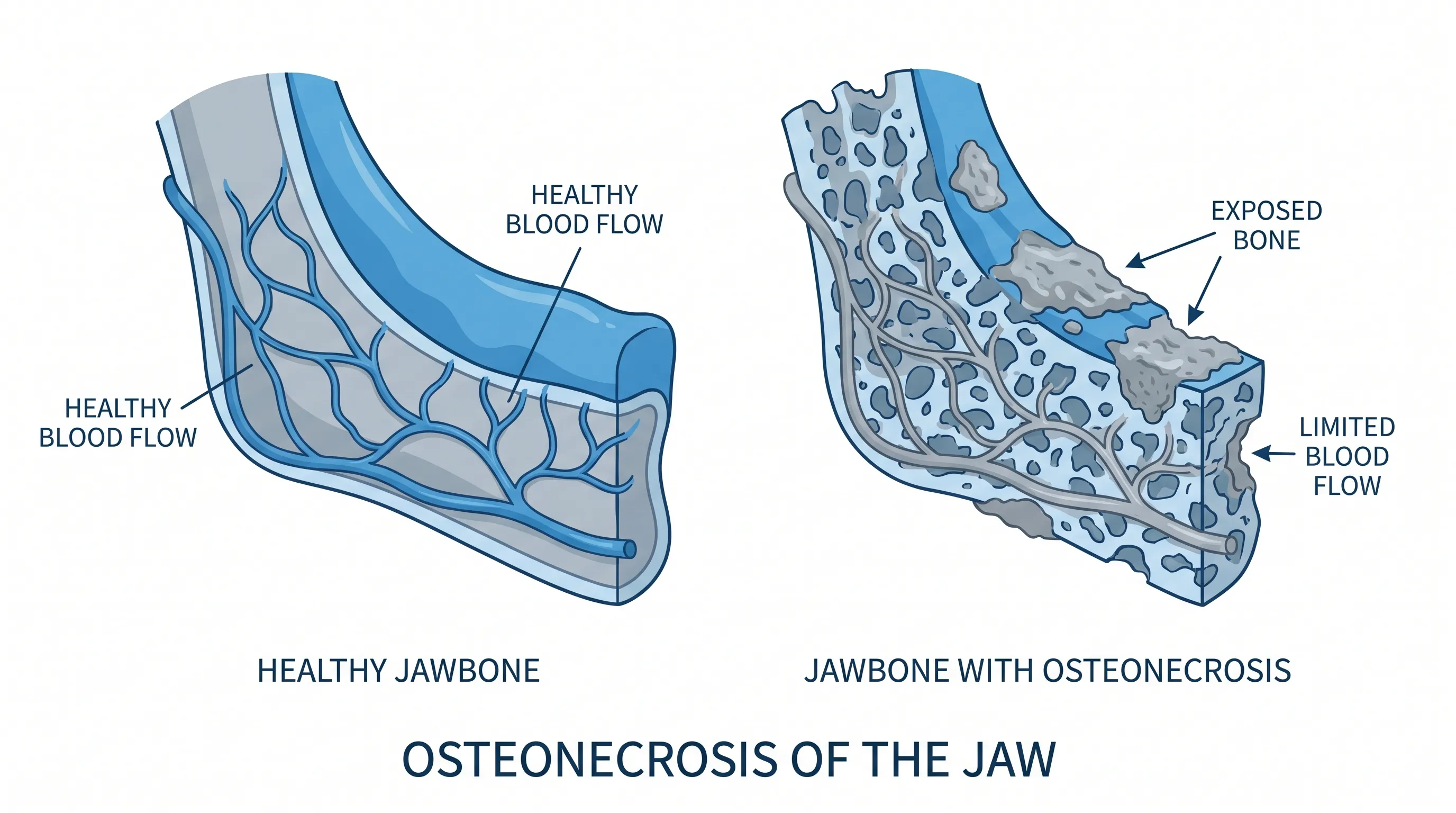
When discussing fosamax teeth side effects, the term that dominates medical literature and patient concerns is Osteonecrosis of the Jaw (ONJ), also referred to as Medication-Related Osteonecrosis of the Jaw (MRONJ). ONJ is a serious condition characterized by the exposure of dead bone in the maxillofacial region that does not heal within eight weeks. Unlike typical bone infections, ONJ involves the death of bone tissue due to a lack of blood supply, exacerbated by the presence of bisphosphonates. According to the National Institutes of Health (NIH), this condition requires careful monitoring and management.
Symptoms and Clinical Presentation
Identifying ONJ early is critical for managing the condition and preventing further complications. The symptoms can be subtle in the beginning, often mimicking common dental issues, which can lead to misdiagnosis. Patients experiencing fosamax teeth side effects related to ONJ may report:
- Persistent Jaw Pain: A dull, aching pain in the jaw that does not resolve with standard painkillers or dental treatments.
- Swelling and Inflammation: Unexplained swelling of the gums or jaw area.
- Loose Teeth: Teeth becoming loose without any obvious cause such as periodontal disease.
- Numbness or Heaviness: A sensation of numbness or "heaviness" in the jaw, which may indicate nerve involvement.
- Exposed Bone: The most definitive sign is the visibility of bare bone in the mouth, often through an ulcerated area of the gum that fails to heal.
- Poor Healing: Extraction sites or other surgical wounds in the mouth that fail to heal after several weeks.
It is important to note that not everyone who takes Fosamax will experience these symptoms. In fact, the majority of patients take the medication for years without any oral complications. However, the severity of ONJ when it does occur makes it a significant focal point in the discussion of fosamax teeth side effects.
Pathophysiology of ONJ
The exact pathophysiology of ONJ is multifactorial. While the suppression of bone turnover is the primary driver, other factors contribute to the development of necrosis. Bisphosphonates have anti-angiogenic properties, meaning they can reduce the formation of new blood vessels. Since the jawbone requires robust blood flow to heal from the daily micro-traumas of chewing and speaking, any reduction in vascularity can compromise its resilience. Additionally, bisphosphonates may have direct toxic effects on the soft tissues of the mouth, potentially leading to mucosal breakdown that exposes the underlying bone to bacterial invasion from the oral cavity.
Risk Factors and Statistical Reality
One of the most common misconceptions surrounding fosamax teeth side effects is the perceived frequency of occurrence. Media reports and anecdotal stories can sometimes exaggerate the prevalence of ONJ, causing unnecessary anxiety among osteoporosis patients. It is vital to look at the data from authoritative medical sources to understand the true risk profile. The Mayo Clinic provides detailed insights into the safety profiles of these medications.
Oral vs. Intravenous Bisphosphonates
The risk of developing ONJ varies dramatically depending on the route of administration and the indication for use. Intravenous (IV) bisphosphonates, such as zoledronic acid (Zometa) and pamidronate (Aredia), are typically used in higher doses for cancer patients to manage bone metastases or hypercalcemia of malignancy. In this population, the incidence of ONJ is significantly higher, estimated between 1% and 15%.
In contrast, oral bisphosphonates like Fosamax are used at much lower doses for osteoporosis. According to data from the American Association of Oral and Maxillofacial Surgeons (AAOMS) and various large-scale studies, the risk of ONJ in patients taking oral bisphosphonates for osteoporosis is extremely low, estimated to be between 0.01% and 0.1%. This translates to roughly 1 in 10,000 to 1 in 100,000 patients. While the absolute risk is low, the condition is serious enough that it warrants careful monitoring.
Duration of Therapy
The duration of Fosamax therapy is a critical risk factor. The likelihood of developing fosamax teeth side effects increases with the length of time the medication is taken. Most cases of ONJ in osteoporosis patients occur after three to five years of continuous use. This has led to the concept of a "drug holiday," where physicians may recommend temporarily discontinuing the medication after a certain period to allow bone turnover to resume, thereby reducing the risk of ONJ while maintaining fracture protection. However, the decision to take a drug holiday is highly individualized and must be made in consultation with a healthcare provider.
Comparative Risk Table
| Risk Factor | Low Risk Profile | High Risk Profile |
|---|---|---|
| Medication Type | Oral Bisphosphonates (Fosamax) | IV Bisphosphonates (Zometa) |
| Indication | Osteoporosis Prevention/Treatment | Cancer Bone Metastasis |
| Duration of Use | Less than 3 years | More than 5 years |
| Dental History | Good oral hygiene, no recent surgery | Recent extraction, periodontal disease |
| Comorbidities | None | Diabetes, Smoking, Corticosteroid use |
Other Dental and Oral Side Effects
While ONJ is the most severe manifestation of fosamax teeth side effects, it is not the only oral complication associated with alendronate. Patients may experience a range of less severe but still bothersome dental issues.
Esophageal and Mucosal Irritation
Fosamax is well-known for its potential to cause irritation to the esophagus and the lining of the mouth. If the pill is not taken correctly—specifically, if it is not swallowed with a full glass of water or if the patient lies down too soon after ingestion—it can cause esophagitis. This irritation can sometimes extend to the oral cavity, leading to:
- Mouth Ulcers: Painful sores on the gums, tongue, or inner cheeks.
- Gingivitis: Inflammation of the gums, which can mimic periodontal disease.
- Taste Disturbances: Some patients report a metallic or altered taste in the mouth.
These symptoms are usually reversible upon discontinuation of the drug or correction of administration techniques. However, they can impact quality of life and nutritional intake if severe. The Cleveland Clinic offers guidelines on proper administration to minimize these risks.
Atypical Femur Fractures and Jaw Connection
Interestingly, there is a link between another rare side effect of bisphosphonates—atypical femur fractures—and jaw issues. Both conditions are thought to stem from the same underlying mechanism: excessive suppression of bone turnover. While an atypical femur fracture occurs in the thigh bone, the biological principle is similar to ONJ in the jaw. The bone becomes so suppressed that it cannot repair micro-damage, leading to structural failure. This underscores the importance of monitoring overall skeletal health, not just bone density scores, when evaluating fosamax teeth side effects and systemic risks.
Preventive Strategies and Dental Care Guidelines
Given the potential for fosamax teeth side effects, proactive dental care is the most effective defense. The goal is to minimize the need for invasive dental procedures while on the medication. Here are actionable steps for patients:
1. Pre-Treatment Dental Examination
Before starting Fosamax, it is highly recommended to undergo a comprehensive dental examination. Any necessary invasive procedures, such as tooth extractions, root canals, or periodontal surgery, should be completed before initiating therapy. This allows the jawbone to heal fully in the absence of bisphosphonates, significantly reducing the risk of future ONJ. Ideally, this dental clearance should occur at least two to four weeks before starting the medication.
2. Maintain Rigorous Oral Hygiene
Preventing dental disease is paramount. Patients should:
- Brush twice daily with a soft-bristled toothbrush.
- Floss daily to remove plaque between teeth.
- Use an antimicrobial mouthwash if recommended by their dentist.
- Schedule regular dental cleanings every six months.
By preventing cavities and gum disease, you reduce the likelihood of needing extractions or other surgeries while on Fosamax.
3. Communicate with Your Healthcare Team
Transparency is key. Always inform your dentist that you are taking Fosamax or any other bisphosphonate. Similarly, inform your prescribing physician about any planned dental procedures. This collaboration ensures that both providers are aware of the risks and can coordinate care. For example, your doctor might suggest a temporary pause in medication (a drug holiday) before a major dental surgery, although this practice is still debated and depends on individual risk factors.

4. Recognize Early Warning Signs
Be vigilant about changes in your oral health. If you experience persistent pain, swelling, or loose teeth, do not ignore them. Early intervention can prevent the progression of ONJ. Avoid self-diagnosing or delaying treatment, as timely management is crucial for better outcomes.
Managing Dental Procedures While on Fosamax
Despite best efforts, dental issues may arise that require intervention. How should patients and dentists handle these situations? The approach depends on the invasiveness of the procedure.
Routine Dental Care
Routine procedures such as cleanings, fillings, and non-surgical periodontal therapy are generally considered safe for patients taking Fosamax. These procedures do not involve trauma to the bone and therefore do not carry a significant risk of triggering ONJ. Patients should continue to receive regular preventive care to maintain oral health.
Invasive Surgical Procedures
For invasive procedures like tooth extractions, dental implants, or bone biopsies, the risk assessment is more complex. The AAOMS provides guidelines for managing patients on oral bisphosphonates:
- Risk Stratification: Patients who have taken oral bisphosphonates for less than four years and have no other risk factors (like steroid use or diabetes) are at very low risk. In these cases, standard surgical protocols may be followed without discontinuing the medication.
- Drug Holidays: For patients who have taken oral bisphosphonates for more than four years, or who have additional risk factors, a drug holiday may be considered. This involves stopping the medication for a period (typically two to three months) before and after the surgery to allow some recovery of bone turnover. However, the efficacy of drug holidays in preventing ONJ is not definitively proven, and the decision must be weighed against the risk of fracture during the hiatus.
- Surgical Techniques: Dentists may employ atraumatic surgical techniques to minimize bone trauma. This includes preserving the socket walls, using primary closure of the wound, and avoiding extensive bone drilling. Antibiotic prophylaxis and antimicrobial rinses (such as chlorhexidine) are often prescribed to reduce the risk of infection.
Alternative Treatments and Considerations
For patients who are deeply concerned about fosamax teeth side effects or who have already experienced oral complications, alternative treatments for osteoporosis are available. It is essential to discuss these options with a healthcare provider to determine the best course of action based on individual health profiles.
Denosumab (Prolia)
Denosumab is a monoclonal antibody that inhibits bone resorption by targeting RANKL, a protein essential for the formation and function of osteoclasts. While it is effective in increasing bone density, it also carries a risk of ONJ, similar to bisphosphonates. Therefore, switching to Prolia does not eliminate the risk of fosamax teeth side effects-like complications, and similar dental precautions apply.
Teriparatide (Forteo) and Abaloparatide (Tymlos)
These are anabolic agents, meaning they stimulate new bone formation rather than just preventing bone loss. They are typically reserved for patients with severe osteoporosis or those who have failed other treatments. Interestingly, teriparatide has been studied for its potential to help heal ONJ lesions, suggesting it may have a different risk profile regarding jaw necrosis. However, it is administered via daily injection and is more expensive than oral bisphosphonates.
Raloxifene and Hormone Replacement Therapy (HRT)
For postmenopausal women, selective estrogen receptor modulators (SERMs) like raloxifene or HRT can help maintain bone density. These treatments do not carry the same risk of ONJ as bisphosphonates. However, they come with their own set of risks, such as blood clots or breast cancer, and may not be as effective in preventing fractures in high-risk patients.
Lifestyle Modifications
Regardless of medication, lifestyle factors play a crucial role in bone health. Adequate calcium and vitamin D intake, weight-bearing exercises, smoking cessation, and limiting alcohol consumption can all help improve bone density and reduce fracture risk. For some patients with mild osteopenia, lifestyle changes alone may be sufficient, eliminating the need for pharmacological intervention and thus avoiding fosamax teeth side effects entirely. The Centers for Disease Control and Prevention (CDC) emphasizes the importance of these lifestyle factors in maintaining skeletal health.
Frequently Asked Questions
What are the primary fosamax teeth side effects?
The most serious fosamax teeth side effect is osteonecrosis of the jaw (ONJ), a rare condition where the jawbone fails to heal after minor trauma, such as a tooth extraction. Other common oral side effects include mouth ulcers, gum inflammation, and persistent jaw pain.
How long does Fosamax stay in your system affecting teeth?
Fosamax (alendronate) binds strongly to bone tissue and can remain there for many years, even after discontinuation. This long half-life is why the risk of dental complications persists long after stopping the medication, necessitating long-term dental vigilance.
Can I have dental work done while taking Fosamax?
Yes, routine dental care like cleanings and fillings is generally safe. However, invasive procedures like extractions or implants carry a higher risk of ONJ. It is crucial to inform your dentist about your medication before any surgical procedure so they can take preventive measures.
What are the early warning signs of jaw problems from Fosamax?
Early warning signs include persistent jaw pain, numbness or heaviness in the jaw, loose teeth, swelling or infection of the gums, and exposed bone in the mouth. If you experience these symptoms, contact your healthcare provider immediately.
Is the risk of jaw necrosis higher with oral or IV bisphosphonates?
The risk is significantly higher with intravenous (IV) bisphosphonates used for cancer treatment compared to oral bisphosphonates like Fosamax used for osteoporosis. For oral users, the risk is estimated to be very low, ranging from 0.01% to 0.1%, but it remains a serious consideration.
Should I stop taking Fosamax before dental surgery?
Do not stop taking Fosamax without consulting your doctor. For minor procedures, stopping is usually not necessary. For major surgery, your doctor may recommend a "drug holiday" of a few months, but this decision depends on your fracture risk and duration of therapy.
Conclusion
The relationship between Fosamax and oral health is complex, but it should not be a source of undue fear. While fosamax teeth side effects, particularly osteonecrosis of the jaw, are serious, they are statistically rare in patients taking oral bisphosphonates for osteoporosis. The benefits of preventing debilitating hip and spinal fractures often outweigh the low risk of dental complications, provided that patients are proactive about their oral health.
Key to managing this risk is a collaborative approach between the patient, the prescribing physician, and the dentist. By undergoing a pre-treatment dental exam, maintaining rigorous oral hygiene, communicating openly about medication use, and recognizing early warning signs, patients can significantly mitigate the risks associated with bisphosphonate therapy. Furthermore, understanding that alternative treatments exist provides peace of mind and flexibility in managing bone health.
Ultimately, knowledge is power. By staying informed about fosamax teeth side effects and adhering to preventive guidelines, you can protect both your skeletal structure and your smile, ensuring a higher quality of life as you age. Always consult with your healthcare provider to tailor these general recommendations to your specific medical history and needs.
How we work
Researched and drafted with AI assistance, then reviewed by a human editor against the cited sources.
This article is general health information, not medical advice. Consult a qualified healthcare professional about your own situation.