Understanding and Treating Pain While Coughing Lower Abdomen

Experiencing discomfort during everyday activities can be both frustrating and concerning, especially when a simple physiological reflex triggers unexpected and sharp sensations. When you experience pain while coughing lower abdomen, it often signals that the intricate network of muscles, connective tissues, and internal organs in your lower midsection is under stress, compromised, or actively inflamed. Coughing is a powerful, high-pressure event that forces air through your respiratory tract at velocities exceeding 50 miles per hour. This explosive mechanism creates a sudden and dramatic spike in intra-abdominal pressure, which must be dynamically managed by your core musculature, pelvic floor, and supporting fascial layers. If any component of this anatomical system is weakened, injured, or structurally altered, that rapid surge in pressure translates directly into localized discomfort, aching, or sharp, radiating sensations. Understanding the precise physiological mechanisms behind this symptom, recognizing the underlying conditions that may be responsible, and implementing evidence-based relief strategies is crucial for restoring your daily comfort, preventing long-term tissue damage, and safeguarding your overall abdominal health. In this comprehensive guide, we will explore the anatomical pathways that trigger this response, examine the differential diagnoses supported by current medical literature, review clinical diagnostic pathways, evaluate both conservative and interventional treatment protocols, and provide highly actionable strategies for self-management and long-term prevention. Whether you are navigating a recent severe respiratory infection, recovering from physical overexertion, managing a chronic gastrointestinal condition, or simply seeking clarity on why this specific symptom occurs, you will find medically sound, thoroughly researched guidance tailored to your recovery journey.
Understanding the Anatomy: Why Coughing Triggers Lower Abdominal Pain
The human abdomen is not merely a passive container for organs; it is a highly dynamic, pressurized chamber designed to stabilize the spine, facilitate digestion, and protect vital structures during movement. The sensation of pain while coughing lower abdomen stems from a complex interplay between respiratory mechanics, muscular response, and structural integrity. When you inhale deeply in preparation for a cough, your diaphragm contracts downward while the accessory breathing muscles in your chest and neck engage. Upon exhalation, the glottis briefly closes, trapping air in the lungs, and then the expiratory muscles contract with tremendous force to open the airway rapidly. This coordinated action can raise intra-abdominal pressure to four times the resting baseline. Under healthy conditions, the abdominal wall muscles, particularly the transversus abdominis and obliques, contract isometrically to distribute this pressure evenly across the entire core. However, when localized tissue is compromised, the pressure becomes unevenly distributed, concentrating stress on vulnerable fascial lines, tendinous insertions, or nerve pathways. This biomechanical overload activates nociceptors, or pain-sensing nerve endings, which transmit signals to the central nervous system, resulting in the characteristic discomfort you feel precisely in the lower abdominal region.
Free calculatorWater Intake CalculatorCalculate daily water needsOpen the calculatorThe Role of Intra-Abdominal Pressure
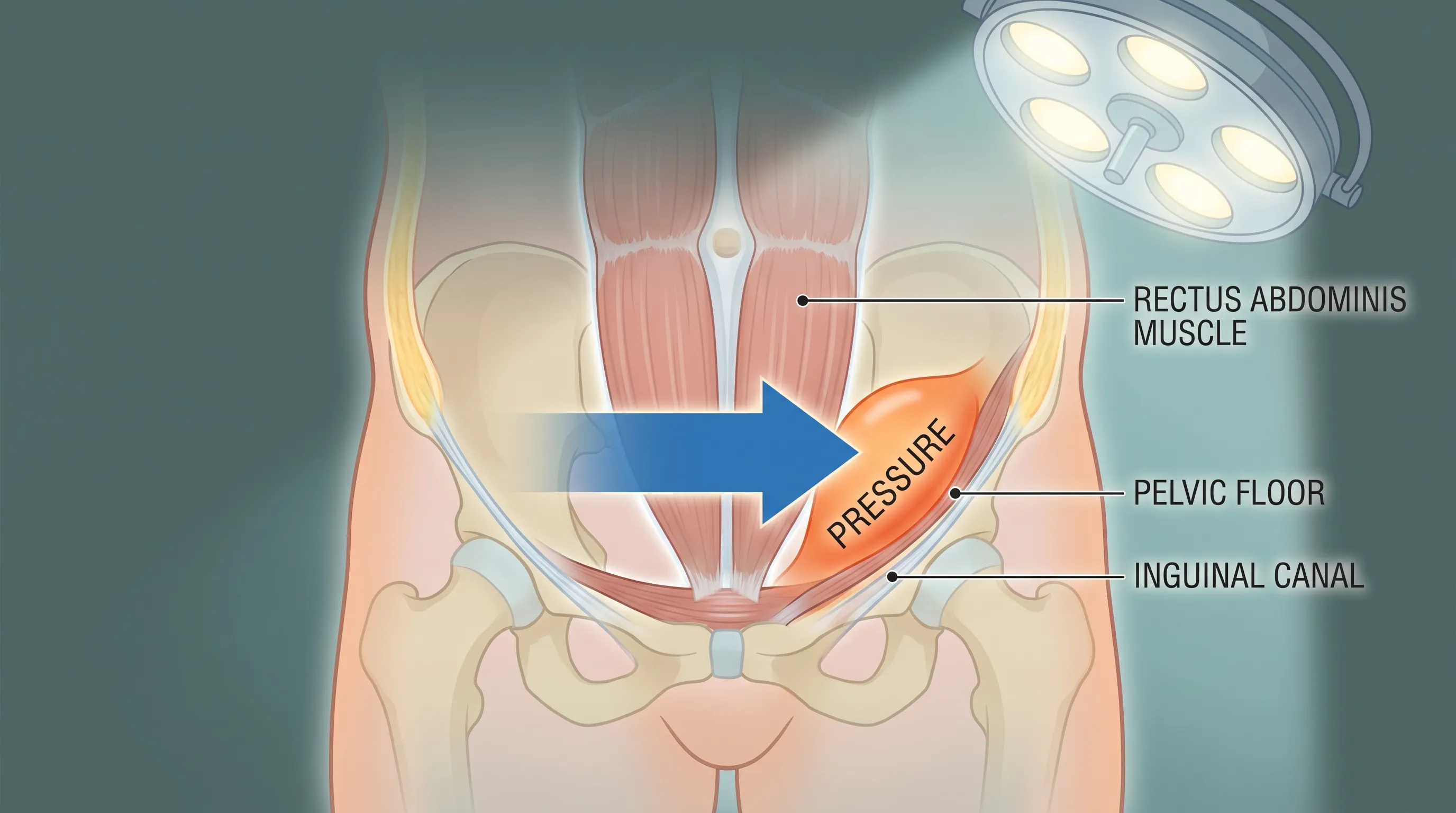
Intra-abdominal pressure (IAP) is a fundamental physiological parameter that maintains spinal stability and supports organ positioning. During a forceful cough, IAP spikes rapidly and transiently. Research published in clinical biomechanics journals demonstrates that healthy individuals naturally coordinate a pre-contraction of the deep core muscles milliseconds before the cough reflex is fully executed. This anticipatory bracing acts as a protective mechanism, stiffening the abdominal wall to resist deformation. When pain while coughing lower abdomen occurs, it often indicates a failure in this protective neuromuscular coordination. Conditions such as chronic bronchitis, uncontrolled allergies, or asthma can lead to frequent, uncontrolled coughing episodes that repeatedly overwhelm the core stabilizers. Over time, the repetitive high-pressure cycles can cause microscopic tearing in muscle fibers, inflammation of the inguinal ligaments, or progressive weakening of the pelvic diaphragm. The lower abdomen is particularly susceptible because it lacks the bony reinforcement found in the ribcage, relying entirely on soft tissue tension and fascial continuity to withstand pressure changes. When the fascial integrity is compromised, even a mild cough can generate disproportionate discomfort, highlighting the importance of addressing both the cough trigger and the structural response.
Muscle Mechanics and the Rectus Abdominis
The rectus abdominis, commonly known as the core muscle running vertically down the midline of the abdomen, plays a critical role in resisting anterior pressure during coughing. This muscle is divided by tendinous intersections and anchored at the pubic symphysis inferiorly. When experiencing pain while coughing lower abdomen, the rectus abdominis and its lower tendinous attachments are frequently involved. Muscle strain in this region typically occurs from sudden, forceful contraction against resistance, such as lifting a heavy object while clearing the throat or experiencing an unexpected coughing fit. The lower attachment points near the pubic bone are common sites for referred pain, as the nerve supply from the lower thoracic and upper lumbar regions converges here. Additionally, the linea alba, a fibrous midline structure where the left and right rectus muscles meet, can become overstretched if chronic pressure is applied repeatedly. This stretching alters the mechanical leverage of the muscle, causing it to work inefficiently and generating localized strain with every subsequent cough. Understanding these muscle mechanics helps clarify why targeted rehabilitation, rather than passive rest, is often necessary to restore normal function and eliminate discomfort during respiratory events.
Common Causes of Pain While Coughing Lower Abdomen
Identifying the precise etiology behind abdominal discomfort is essential for effective intervention. Medical literature consistently categorizes these symptoms into mechanical, visceral, inflammatory, and neurological origins. When evaluating pain while coughing lower abdomen, clinicians typically consider a structured differential diagnosis to rule out serious pathology and guide appropriate therapy. The following conditions represent the most frequently documented causes in primary care and gastroenterology settings.
Inguinal and Femoral Hernias
Hernias remain one of the leading structural causes of lower abdominal pain exacerbated by coughing. An inguinal hernia occurs when abdominal contents protrude through a weakened area in the groin region, while a femoral hernia develops lower, near the upper thigh. Both conditions are directly aggravated by increased intra-abdominal pressure. Coughing forces tissue through the weakened fascial plane, creating a pulling or tearing sensation that intensifies with each coughing episode. Patients often report a heaviness or dragging sensation that temporarily subsides when lying flat, as gravity reduces the protrusion. If the hernia becomes trapped (incarcerated), it can lead to compromised blood supply (strangulation), transforming mild discomfort into a surgical emergency. Early recognition of hernia-related pain while coughing lower abdomen can prevent complications and streamline referral for elective repair, which typically involves mesh reinforcement and modern minimally invasive techniques.
Abdominal Wall Muscle Strain
Muscle strain represents a direct overuse or acute injury to the abdominal musculature. This commonly occurs after severe respiratory infections, intense athletic training, or sudden awkward movements that force the core to brace unexpectedly. The tear can range from microscopic fiber disruption (Grade I) to partial or complete rupture (Grade III). When experiencing strain-related abdominal pain, the discomfort is usually sharp, localized, and worsens with twisting, bending, or forced exhalation. Palpation often reveals tenderness over the affected muscle segment, and mild swelling or muscle spasms may accompany the injury. Unlike visceral pain, muscular discomfort typically improves with targeted stretching, gradual reloading, and anti-inflammatory management. Recognizing the difference between a simple strain and deeper structural pathology requires careful clinical evaluation and often a trial of conservative management.
Pelvic Floor Dysfunction
The pelvic floor is a complex sling of muscles, ligaments, and fascia that supports the bladder, rectum, and reproductive organs. Chronic coughing places repetitive downward pressure on this structure, potentially leading to pelvic floor hypertonicity or weakness. When the pelvic muscles become overly tight or fatigued, they lose their ability to absorb pressure efficiently, resulting in referred discomfort in the lower abdomen, perineum, or suprapubic region. Patients with pelvic floor dysfunction often experience urinary urgency, bowel changes, or sexual discomfort alongside pain while coughing lower abdomen. Biofeedback therapy, targeted myofascial release, and specialized physical therapy programs have demonstrated high success rates in restoring normal pelvic muscle coordination and reducing cough-related strain.
Gastrointestinal and Urinary Factors
Visceral organs in the lower abdomen can become sensitized or inflamed, causing them to react abnormally to pressure changes. Conditions such as irritable bowel syndrome (IBS), inflammatory bowel disease, diverticulitis, chronic constipation, or urinary tract infections can heighten nerve sensitivity in the bowel and bladder walls. When intra-abdominal pressure rises during a cough, these inflamed organs are compressed, triggering sharp or cramping discomfort. In cases of severe constipation or fecal loading, the colon becomes distended and rigid, making it less compliant to pressure shifts. This mechanical stiffness translates directly into localized pain while coughing lower abdomen. Addressing the underlying gastrointestinal or urological condition through dietary modification, hydration, and appropriate medical therapy typically resolves the secondary cough-induced symptoms.
Reproductive System Conditions
Anatomical and hormonal factors unique to the reproductive system can significantly influence lower abdominal pain profiles. In individuals assigned female at birth, conditions such as ovarian cysts, endometriosis, pelvic inflammatory disease, or uterine fibroids can cause organ enlargement or adhesions. These structural changes reduce organ mobility and increase tissue sensitivity. Coughing creates sudden shear forces across these altered structures, leading to acute pain episodes. In individuals assigned male at birth, prostatitis or testicular inflammation can refer pain upward into the lower abdomen. Hormonal fluctuations, particularly during menstrual cycles, can temporarily increase fascial laxity and nerve sensitivity, making pain while coughing lower abdomen more pronounced during specific phases. Collaborative care involving gynecology, urology, or endocrinology is often necessary to manage these complex, system-driven presentations.
Diagnostic Evaluation: What to Expect at the Clinic
When you consult a healthcare provider for persistent discomfort, they will employ a systematic approach to pinpoint the underlying mechanism. Accurate diagnosis relies on correlating symptom patterns with physical findings and targeted imaging. The goal is to distinguish between benign, self-limiting conditions and those requiring prompt intervention.
Physical Examination and Clinical Maneuvers
A thorough physical exam begins with observation and palpation. Your clinician will ask you to identify the exact location, intensity, and radiation pattern of your discomfort. They will then perform standing and supine examinations, often asking you to cough while they place gentle pressure over the lower abdomen and groin areas. This cough-impulse test helps detect subtle bulges or fascial defects that indicate a hernia. The clinician will also assess for guarding, rigidity, or rebound tenderness, which signal deeper inflammation or peritoneal irritation. Additional maneuvers may include checking for costovertebral angle tenderness, evaluating hip and lumbar spine mobility, and performing a digital rectal or pelvic exam to assess organ positioning and muscle tone. These clinical tests provide immediate, actionable data that guide subsequent diagnostic steps.
Imaging Modalities and Laboratory Testing
If physical findings suggest structural compromise or if symptoms persist despite initial treatment, advanced imaging becomes necessary. Ultrasound is often the first-line imaging choice due to its accessibility, lack of radiation, and excellent visualization of soft tissue, muscle layers, and dynamic hernias. High-resolution dynamic ultrasound allows technicians to capture the abdominal wall in real-time as you cough, revealing fascial gaps or muscle tears. Computed tomography (CT) scans provide comprehensive cross-sectional views ideal for evaluating bowel pathology, abscesses, or complex hernias involving multiple fascial planes. Magnetic resonance imaging (MRI) excels at visualizing muscle strains, pelvic floor anatomy, and inflammatory conditions without ionizing radiation. Laboratory tests, including complete blood counts, inflammatory markers, and urinalysis, help rule out infection or systemic inflammation that could be contributing to pain while coughing lower abdomen.
Red Flags Requiring Immediate Medical Intervention
Certain symptoms indicate that your condition requires urgent evaluation. If you experience sudden, severe pain that does not improve with position changes or over-the-counter medications, it is crucial to seek emergency care. Additional warning signs include nausea, vomiting, inability to pass gas or bowel movements, fever, chills, or rapid swelling of the abdomen. A bulge that becomes firm, discolored, or non-reducible when lying down suggests hernia incarceration. Blood in the stool or urine, unexplained weight loss, or pain radiating to the back or chest should also prompt immediate medical attention. Recognizing these red flags ensures timely intervention and prevents life-threatening complications such as bowel obstruction, perforation, or sepsis.
Evidence-Based Treatment Pathways
Treatment strategies are carefully tailored to the underlying cause, severity, and functional impact of your symptoms. A stepped approach that prioritizes conservative management before considering interventional procedures aligns with current clinical guidelines and promotes optimal recovery.
Conservative Management and Targeted Rest
Initial management focuses on reducing tissue stress while maintaining gentle mobility. Acute rest does not mean complete bed rest, which can lead to muscle atrophy and stiffness. Instead, modified activity involves avoiding heavy lifting, high-impact exercise, and forceful straining. Applying heat therapy for 15 to 20 minutes several times daily increases blood flow, reduces muscle spasm, and promotes fascial relaxation. Compression garments or abdominal binders can provide external support, dampening the pressure spike during unavoidable coughing episodes. Clinicians often recommend a temporary modification of daily movements, such as bracing the core before coughing, using proper body mechanics when rising from a chair, and sleeping with slight torso elevation to reduce gravitational strain on the lower abdomen.
Pharmacological and Adjunctive Therapies
Medications play a vital role in breaking the pain-inflammation-coughing cycle. Nonsteroidal anti-inflammatory drugs (NSAIDs) reduce prostaglandin-mediated inflammation and provide analgesic relief, allowing patients to move more comfortably and participate in rehabilitation. Muscle relaxants may be prescribed for severe spasms that restrict mobility and exacerbate pain while coughing lower abdomen. If the primary trigger is respiratory, clinicians may recommend antitussive medications, inhaled corticosteroids, or bronchodilators to suppress or manage the cough reflex directly. Adjunctive therapies such as myofascial massage, dry needling, and therapeutic ultrasound can accelerate tissue healing, release chronic trigger points, and restore normal muscle length-tension relationships.
Surgical Interventions When Necessary
When structural defects, incarcerated hernias, or severe tissue degeneration fail to respond to conservative measures, surgical repair becomes the definitive solution. Modern hernia surgery frequently utilizes minimally invasive laparoscopic or robotic techniques, which reduce postoperative pain, shorten recovery times, and lower recurrence rates compared to traditional open approaches. For severe rectus abdominis tears or complex diastasis recti, specialized abdominal wall reconstruction may be performed to restore fascial continuity and biomechanical function. Surgery is always preceded by comprehensive optimization, including respiratory management, nutritional support, and smoking cessation, to ensure the highest success rates and minimize postoperative complications. Post-surgical rehabilitation emphasizes gradual load progression and breathing retraining to protect the repair while restoring functional core strength.
Practical Home Remedies and Self-Care Strategies
Empowering yourself with evidence-based self-care techniques can significantly accelerate recovery and prevent symptom recurrence. These strategies integrate seamlessly into daily routines and provide immediate relief while long-term healing progresses.
Supportive Techniques for Cough Management
Learning to modify how you cough dramatically reduces mechanical stress on vulnerable tissues. Instead of allowing a full, uncontrolled cough, practice the huff-cough technique: take a moderate breath in, hold it briefly, and exhale forcefully with your mouth open while saying "huff". This technique clears mucus with significantly lower intra-abdominal pressure. Splinting the abdomen with a firm pillow or folded towel directly over the painful area during unavoidable coughs provides immediate counter-pressure, stabilizing the tissue and minimizing strain. Maintaining optimal hydration keeps mucus thin and easier to expel, reducing the need for repeated, forceful coughing fits. Using a humidifier, taking warm steam showers, and consuming soothing teas with honey can naturally calm the respiratory tract and decrease cough frequency, directly addressing the trigger of pain while coughing lower abdomen.
Core Stabilization and Gentle Movement Protocols
As acute pain subsides, introducing gentle stabilization exercises restores neuromuscular control without overloading healing tissues. Diaphragmatic breathing is foundational: lie on your back with knees bent, place a hand on your lower abdomen, and breathe deeply so your hand rises gently with each inhale. This retrains the diaphragm to move efficiently without excessive downward pressure. Progress to transverse abdominis activation by gently drawing your lower belly inward toward your spine while breathing normally, holding for five seconds, and releasing. Gentle pelvic tilts, cat-cow stretches, and walking on level surfaces maintain circulation, prevent stiffness, and promote tissue alignment. Avoid traditional crunches, leg raises, or heavy resistance training until cleared by a healthcare provider, as these movements generate high pressure that can reopen micro-tears or aggravate fascial strain.
Nutritional and Hydration Guidelines for Tissue Repair
Optimal healing requires adequate building blocks and metabolic support. Protein intake should be maintained at approximately 1.2 to 1.6 grams per kilogram of body weight daily to facilitate muscle and fascial repair. Foods rich in vitamin C, zinc, and omega-3 fatty acids reduce inflammation and support collagen synthesis. Adequate hydration, targeting 2 to 3 liters of water daily depending on activity level and climate, maintains tissue elasticity and supports mucus clearance. Limiting alcohol, excessive caffeine, and highly processed foods reduces systemic inflammation and prevents dehydration that can worsen muscle cramping. Incorporating fiber-rich foods, probiotics, and fermented products supports gut motility, preventing constipation that increases baseline abdominal pressure and exacerbates discomfort during coughing.

Prevention and Long-Term Abdominal Health
Sustainable comfort relies on addressing modifiable risk factors and integrating protective habits into your lifestyle. Prevention is not merely about avoiding injury; it is about building resilient tissue capacity and optimizing systemic function.
Safe Progressive Strengthening Routines
Building long-term abdominal resilience requires a phased approach. Once cleared by a clinician, incorporate functional movements that mimic daily activities while challenging the core dynamically. Bird-dog exercises, dead bugs, and modified planks develop coordinated strength without excessive spinal loading. Focus on movement quality over volume, maintaining neutral spine alignment and controlled breathing throughout each repetition. Gradually introduce resistance bands or light weights to simulate real-world demands. Consistent, moderate training promotes fascial thickening, improves proprioception, and enhances the core's ability to absorb sudden pressure spikes, effectively eliminating the vulnerability that causes pain while coughing lower abdomen.
Proactive Chronic Cough Management
Chronic cough is a treatable medical condition, not an inevitable part of aging or stress. Work with your provider to identify and address underlying triggers such as postnasal drip, gastroesophageal reflux disease (GERD), asthma, or medication side effects (notably ACE inhibitors). Implementing allergen reduction strategies, optimizing sleep posture, and adhering to prescribed inhaler or acid-suppression regimens can suppress cough frequency by over 70%. Vocal cord exercises and respiratory physiotherapy teach airway control and reduce the violent expiratory force that damages abdominal tissues over time.
Ergonomic and Lifestyle Adjustments
Daily habits profoundly influence abdominal mechanics. Practice proper lifting techniques: hinge at the hips, engage the core before initiating the lift, keep objects close to your body, and exhale during exertion to prevent dangerous pressure spikes. Avoid prolonged sitting, which weakens core stabilizers and shortens hip flexors, altering pelvic alignment and abdominal tension. Maintain a healthy weight, as excess adipose tissue increases baseline intra-abdominal pressure and stresses the fascial system. Prioritize stress management through mindfulness, yoga, or meditation, as psychological tension directly manifests as physical muscle guarding and reduced tissue compliance. These holistic adjustments create a protective environment that minimizes strain and supports sustained abdominal health.
| Condition Category | Typical Presentation | Key Diagnostic Signs | Primary Management Approach |
|---|---|---|---|
| Inguinal/Femoral Hernia | Visible bulge, dragging sensation, worsens with standing/coughing | Positive cough-impulse test, reducible mass on palpation | Surgical repair with mesh, activity modification |
| Abdominal Muscle Strain | Sharp localized pain, tenderness, spasm, worsens with twisting/movement | Pain on resisted flexion, palpable muscle defect, negative hernia exam | Rest, NSAIDs, progressive loading, physical therapy |
| Pelvic Floor Dysfunction | Suprapubic aching, urinary urgency, heaviness, radiating discomfort | Hypertonic or weak pelvic muscles on exam, altered coordination | Biofeedback, targeted PT, pressure management strategies |
| Visceral Inflammation | Cramping, bloating, bowel/urinary changes, diffuse tenderness | Lab abnormalities, imaging showing organ inflammation, tenderness on palpation | Treat underlying condition, dietary modification, medical therapy |
| Reproductive Pathology | Cyclical pain, deep aching, organ enlargement, systemic symptoms | Imaging findings, hormonal correlation, specialized exam findings | Specialist referral, hormonal management, targeted interventions |
Frequently Asked Questions
Why does my lower abdomen hurt specifically when I cough?
Coughing generates a rapid and significant increase in intra-abdominal pressure. When your diaphragm contracts forcefully to expel air, this pressure pushes outward against the abdominal wall, pelvic floor, and surrounding connective tissues. If muscles, tendons, or fascial layers in the lower abdomen are strained, inflamed, or structurally compromised, the sudden pressure spike directly stimulates pain receptors, resulting in localized discomfort.
How can I tell if the pain while coughing lower abdomen is a hernia?
Hernia-related discomfort typically presents as a bulge that becomes more prominent when standing, coughing, or straining, and may disappear when lying down. It often feels like a sharp pulling or burning sensation near the groin or lower midline. If you notice a visible lump, experience heaviness, or have pain that radiates to the scrotum or labia, a hernia is a strong possibility and should be evaluated clinically.
Is rest the only treatment for lower abdominal coughing pain?
While rest is foundational during the acute inflammatory phase, effective management requires a multi-modal approach. This includes targeted breathing techniques to reduce pressure spikes, progressive core stabilization exercises, supportive taping or compression garments, anti-inflammatory protocols, and addressing the root cause of the cough itself. Complete inactivity can actually delay tissue remodeling and prolong recovery.
When should I seek emergency care for this symptom?
Seek immediate medical attention if the pain is sudden and severe, accompanied by nausea, vomiting, fever, or inability to pass gas or stool. These symptoms, especially if paired with a firm, discolored bulge, may indicate an incarcerated or strangulated hernia. Additionally, unexplained rectal bleeding, persistent urinary retention, or pain that radiates to the back or shoulder warrants urgent evaluation.
Can chronic coughing permanently weaken my lower abdominal muscles?
Chronic, untreated coughing places repetitive microtrauma on the abdominal wall and pelvic floor. Over months or years, this can lead to fascial laxity, muscle fatigue, or diastasis recti. However, the tissue is highly adaptable. With targeted rehabilitation, pressure management strategies, and resolution of the underlying respiratory or allergic condition, most patients regain functional strength and prevent long-term structural compromise.
Conclusion
Navigating the discomfort of pain while coughing lower abdomen requires a thoughtful blend of anatomical understanding, accurate diagnosis, and consistent self-management. By recognizing how intra-abdominal pressure interacts with your musculoskeletal and visceral systems, you can implement targeted strategies that not only alleviate immediate symptoms but also rebuild long-term tissue resilience. Whether your discomfort stems from a mild muscle strain, a developing hernia, pelvic floor imbalance, or an underlying medical condition, the treatment pathways outlined in this guide emphasize safe progression, professional evaluation, and holistic lifestyle integration. Prioritize proper cough mechanics, engage in guided core rehabilitation, address respiratory or digestive triggers proactively, and maintain open communication with your healthcare team. With patience, evidence-based care, and consistent preventive habits, you can restore comfortable, unrestricted movement and confidently manage your abdominal health for years to come. Always consult a licensed medical professional before beginning any new treatment or exercise regimen to ensure it aligns safely with your individual health profile.
How we work
Researched and drafted with AI assistance, then reviewed by a human editor against the cited sources.
This article is general health information, not medical advice. Consult a qualified healthcare professional about your own situation.