Bruising After Extraction: Causes, Timeline, and Effective Home Remedies for Faster Healing

Key points
- Start applying ice packs immediately after returning home from surgery.
- Use a cycle of 20 minutes on and 20 minutes off. Continuous application can damage the skin and nerves.
- Wrap the ice pack in a thin towel to prevent ice burns. Never apply ice directly to the skin.
- Continue this regimen for the first 24 to 48 hours. After 48 hours, ice is less effective for bruising and swelling.
Waking up after a dental procedure to find unexpected discoloration on your face can be a startling experience. You might look in the mirror and see shades of purple, blue, or even yellow spreading across your cheek or jawline. This phenomenon, known medically as ecchymosis, is a frequent concern for patients undergoing oral surgery. Understanding bruising after extraction is essential for managing expectations and ensuring a smooth recovery journey. While it may look dramatic, this discoloration is generally a sign that your body’s natural healing mechanisms are actively working to repair the tissues disturbed during the procedure.
The mouth is a highly vascular area, meaning it is rich in blood vessels. When a tooth is removed, especially complex cases like impacted wisdom teeth, the surrounding soft tissues and bone are manipulated. This manipulation can cause tiny capillaries beneath the skin to rupture, leaking small amounts of blood into the interstitial spaces. As this blood breaks down, it creates the visible spectrum of colors we recognize as a bruise. Although bruising after extraction is rarely a sign of a serious complication, knowing how to manage it can significantly improve your comfort levels and aesthetic appearance during the healing phase.
In this comprehensive guide, we will delve deep into the science behind why bruising occurs, the typical timeline for healing, and evidence-based strategies to minimize its severity. We will also explore when bruising might indicate a problem requiring professional attention. By arming yourself with knowledge and practical tools, you can navigate your post-operative period with confidence and ease.
The Science Behind Bruising After Tooth Extraction
To effectively manage bruising after extraction, it is helpful to understand the physiological processes at play. A bruise, or hematoma, forms when blood escapes from the circulatory system into the surrounding soft tissue. In the context of oral surgery, this is often an inevitable result of the mechanical forces applied during the removal of a tooth. According to the Mayo Clinic, bruises occur when small blood vessels (capillaries) near the skin's surface are broken by an impact or injury.
Free calculatorHeadache Location ChartIdentify headache types by locationOpen the calculatorVascular Trauma and Tissue Manipulation
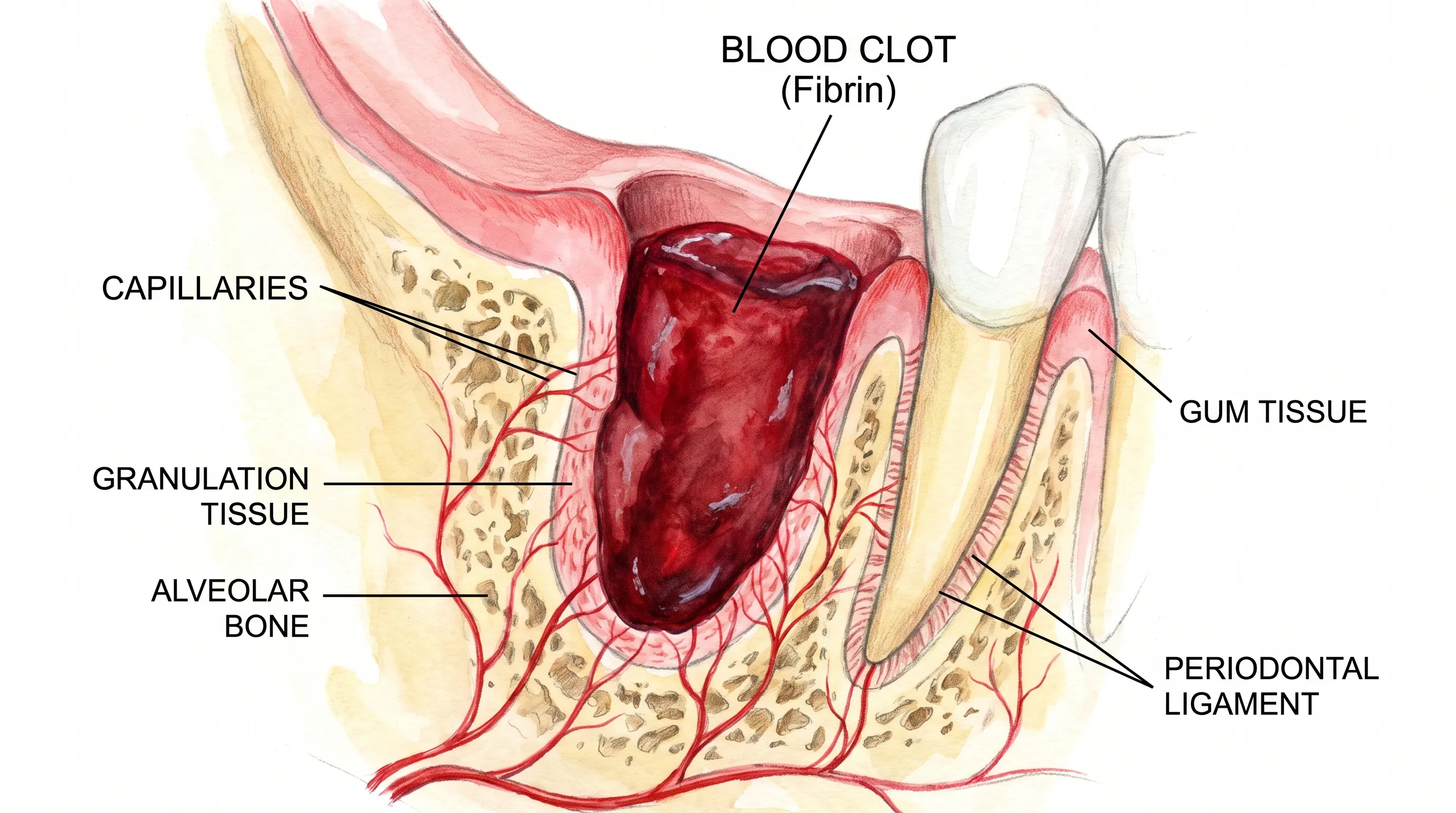
During a tooth extraction, the dentist or oral surgeon must loosen the tooth from its socket. This involves expanding the bony socket and cutting the periodontal ligaments that hold the tooth in place. For simple extractions, this process is relatively straightforward. However, for surgical extractions, such as those involving impacted wisdom teeth, the surgeon may need to make an incision in the gum, remove some bone, and possibly section the tooth into smaller pieces for removal.
These actions, while performed with precision and care, inevitably cause trauma to the surrounding soft tissues. The gingiva (gums), mucosa, and even the facial muscles can be stretched or compressed. This physical stress can damage the delicate network of capillaries and small veins located just beneath the skin and mucous membranes. When these vessels break, blood leaks out. Because the skin on the face is thin and translucent, this pooled blood becomes visible as discoloration.
The Role of Gravity in Facial Bruising
One unique aspect of bruising after extraction is how gravity influences its appearance. Unlike a bruise on your arm, which stays relatively localized, facial bruising can migrate. If you have had lower wisdom teeth removed, you might notice bruising appearing on your neck or upper chest a few days later. This happens because the blood that leaks into the tissue spaces follows the path of least resistance, pulled downward by gravity.
This migration can sometimes alarm patients who think the bleeding is starting again or spreading uncontrollably. However, this is simply the body’s way of clearing out the extravasated blood. The discoloration moves away from the source of the trauma as it is broken down and reabsorbed by the lymphatic system. Understanding this gravitational effect helps patients realize that new bruising appearing in lower areas of the face or neck days after surgery is part of the normal healing trajectory.
Individual Susceptibility Factors
Not everyone bruises to the same degree. Several factors influence the severity of bruising after extraction:
- Age: Older adults tend to bruise more easily because their skin becomes thinner and loses some of the protective fatty layer that cushions blood vessels. Additionally, blood vessels become more fragile with age.
- Skin Tone: Individuals with fairer skin tones may show bruising more prominently than those with darker skin tones, although the underlying physiological process is the same.
- Medications: Patients taking anticoagulants (blood thinners) such as warfarin, aspirin, or clopidogrel are at a higher risk of extensive bruising because their blood does not clot as quickly. Even over-the-counter supplements like fish oil, vitamin E, and ginkgo biloba can have mild blood-thinning effects. The National Institutes of Health (NIH) provides extensive resources on how medications and supplements interact with surgical outcomes.
- Genetic Predisposition: Some people naturally have more fragile capillaries or slower clotting factors, making them prone to bruising even from minor trauma.
Typical Timeline: What to Expect During Recovery
Knowing what to expect day-by-day can alleviate anxiety associated with bruising after extraction. The healing process follows a predictable pattern, although individual variations exist. Here is a general timeline of how bruising evolves post-surgery.
Days 1-2: The Onset
Immediately after the procedure, you may not see much bruising. The area might appear slightly red or swollen due to acute inflammation. Within the first 24 to 48 hours, the bruise begins to form. It typically starts as a reddish or pinkish hue, which quickly transitions to a deep purple or blue color. This is the stage where hemoglobin, the oxygen-carrying protein in red blood cells, is still intact but trapped outside the blood vessels. Swelling is also usually at its peak during this time, which can mask the full extent of the discoloration.
Days 3-4: Peak Discoloration
By the third or fourth day, bruising after extraction often reaches its most intense visual stage. The color may deepen to a dark purple or blackish-blue. This is completely normal and indicates that the body is beginning the process of breaking down the trapped blood cells. Swelling may start to subside slightly, making the bruise appear more defined. It is crucial during this phase to continue following post-operative care instructions to prevent further trauma to the area.
Days 5-7: The Color Shift
As the body’s macrophages (immune cells) begin to clean up the debris, the chemical composition of the bruise changes. Hemoglobin breaks down into biliverdin and then bilirubin. Consequently, the bruise will change color from purple/blue to green, and then to yellow or brown. This color shift is a positive sign of healing. The bruise may also spread slightly outward as the fluids disperse, but the intensity of the color should begin to fade.
Days 8-14: Resolution
In the second week, the yellowish or brownish discoloration gradually fades. For most patients, the visible signs of bruising after extraction are minimal or gone entirely by day 14. However, in cases of complex surgery or for individuals who bruise easily, faint discoloration may persist for up to three weeks. If the bruising has not improved at all after two weeks, or if it is accompanied by other symptoms, it is advisable to consult your oral surgeon.
Proven Strategies to Minimize Bruising
While you cannot completely prevent bruising after extraction, there are several evidence-based strategies you can employ before and after surgery to minimize its severity and duration. These methods focus on reducing blood flow to the area initially and then promoting circulation to clear the bruise later.
Pre-Operative Preparation
Preparation begins before you even sit in the dental chair. If you are taking any blood-thinning medications or supplements, discuss them with your surgeon well in advance. They may advise you to pause certain supplements like vitamin E, garlic, or ginseng for a week prior to surgery. However, never stop prescribed anticoagulants without explicit instruction from both your prescribing physician and your oral surgeon, as this could pose serious health risks.
Maintaining good overall health also plays a role. Ensuring adequate levels of Vitamin C and K can support blood vessel integrity and clotting function. A balanced diet rich in fruits and vegetables in the weeks leading up to surgery can provide these essential nutrients.
The Power of Cold Therapy
The most effective immediate intervention for minimizing bruising after extraction is the application of cold. Ice packs cause vasoconstriction, which narrows the blood vessels and reduces blood flow to the injured area. This limits the amount of blood that can leak into the tissues.
How to Apply Ice Correctly:
- Start applying ice packs immediately after returning home from surgery.
- Use a cycle of 20 minutes on and 20 minutes off. Continuous application can damage the skin and nerves.
- Wrap the ice pack in a thin towel to prevent ice burns. Never apply ice directly to the skin.
- Continue this regimen for the first 24 to 48 hours. After 48 hours, ice is less effective for bruising and swelling.
Head Elevation
Keeping your head elevated above your heart level helps reduce blood pressure in the head and neck region. This gravitational assistance minimizes the pooling of blood in the surgical site. For the first few nights after surgery, sleep with extra pillows proppping up your head. Avoid lying flat, as this can increase throbbing and potentially worsen bruising and swelling.
Avoiding Strain and Heat
In the first 48 hours, avoid activities that increase blood pressure or heart rate significantly. Strenuous exercise, heavy lifting, and bending over can force more blood into the head, exacerbating bruising after extraction. Similarly, avoid hot showers, saunas, or hot tubs, as heat causes vasodilation (widening of blood vessels), which can increase bleeding and bruising. Stick to lukewarm water for hygiene during the initial recovery phase.
Accelerating Healing: Remedies and Nutrition
Once the initial 48-hour window has passed, the goal shifts from preventing blood leakage to promoting the clearance of the existing bruise. Several remedies and nutritional adjustments can support this phase of healing.
Transitioning to Warm Compresses
After two days, switch from ice to moist heat. Warm compresses promote vasodilation, which increases blood circulation to the area. Improved circulation brings fresh oxygen and nutrients to the tissues and helps carry away the broken-down blood cells responsible for the discoloration. Apply a warm, damp washcloth to the bruised area for 15-20 minutes several times a day. Ensure the temperature is comfortable and not scalding to avoid burning sensitive skin.
Topical Remedies: Arnica and Bromelain
Natural remedies have gained popularity for their potential to reduce bruising. Arnica montana, a plant-based homeopathic remedy, is widely used in Europe and North America for trauma and bruising. Studies suggest that topical arnica gel may reduce the severity and duration of bruising after surgery. Apply it gently to the skin around the bruise, avoiding the open wound or incision site inside the mouth.
Bromelain, an enzyme found in pineapple stems, has anti-inflammatory properties. Some research indicates that oral bromelain supplements can reduce swelling and bruising after surgical procedures. You can also consume fresh pineapple, although the concentration of bromelain is lower in the fruit flesh compared to the stem extract.

Nutritional Support for Tissue Repair
Your diet plays a critical role in how quickly your body heals from bruising after extraction. Focus on foods that support collagen production and blood vessel health.
- Vitamin C: Essential for collagen synthesis, which strengthens blood vessels and skin. Include citrus fruits, strawberries, bell peppers, and broccoli in your diet. Since chewing might be difficult, smoothies are an excellent option.
- Vitamin K: Plays a key role in blood clotting. Leafy greens like spinach, kale, and Swiss chard are rich in Vitamin K. Again, blending these into a smoothie ensures you get the nutrients without the need for vigorous chewing.
- Protein: Adequate protein intake is necessary for tissue repair. Incorporate soft proteins like Greek yogurt, eggs, tofu, and blended soups into your meals.
- Hydration: Staying well-hydrated helps maintain blood volume and supports the lymphatic system in flushing out waste products from the bruised tissue.
Comparison of Treatment Methods
To help you decide which approach is best for your situation, here is a comparison of common methods used to manage bruising after extraction.
| Method | Timing | Mechanism of Action | Effectiveness | Precautions |
|---|---|---|---|---|
| Ice Packs | First 24-48 hours | Vasoconstriction reduces blood flow | High for prevention | Do not apply directly to skin; limit to 20 min intervals |
| Warm Compresses | After 48 hours | Vasodilation increases circulation | High for resolution | Ensure temperature is safe; do not use if swelling persists |
| Arnica Gel | After 24 hours | Anti-inflammatory, improves microcirculation | Moderate/Variable | For external use only; avoid open wounds |
| Bromelain | Pre-op and Post-op | Enzymatic breakdown of inflammatory proteins | Moderate | Consult doctor if on blood thinners; may cause GI upset |
| Head Elevation | First 3-5 days | Gravity reduces hydrostatic pressure | High for prevention | Maintain even during sleep |
When to Seek Professional Help
While bruising after extraction is typically benign, there are scenarios where it may signal a complication. It is vital to distinguish between normal healing and signs of infection or other issues.
Signs of Infection
If the bruised area becomes increasingly red, hot to the touch, or painful after the first few days, it could indicate an infection. Other signs include:
- Fever over 101°F (38.3°C)
- Pus or discharge from the extraction site
- Foul taste or odor in the mouth that does not resolve with rinsing
- Swelling that worsens after day 3 instead of improving
Excessive or Expanding Bruising
If the bruise continues to grow significantly after the third day, or if you notice new, large areas of bruising appearing far from the surgical site, contact your oral surgeon. This could indicate a bleeding disorder or a hematoma that requires drainage. Additionally, if you experience difficulty breathing, swallowing, or opening your mouth, seek immediate medical attention, as this could suggest a deep space infection or airway compromise.
Persistent Pain
Normal post-operative pain should be manageable with prescribed or over-the-counter pain medication and should gradually decrease. If pain intensifies after day 3, it might be a sign of dry socket (alveolar osteitis) or infection, rather than just bruising. Dry socket occurs when the blood clot dislodges, exposing the bone and nerves. While dry socket itself does not cause external bruising, the associated inflammation can complicate the healing picture. The Cleveland Clinic offers detailed guidance on recognizing dry socket versus normal healing.
Frequently Asked Questions
Is bruising after extraction normal?
Yes, bruising after extraction is a common and normal physiological response to the trauma of surgery. It occurs when small blood vessels under the skin are damaged during the procedure, allowing blood to leak into the surrounding tissues. While it can look alarming, it typically resolves on its own within one to two weeks. The extent of bruising depends on the complexity of the extraction and individual patient factors.
How long does bruising last after a tooth extraction?
Bruising after extraction usually peaks between days 2 and 4 post-surgery. The discoloration may change colors from purple or blue to green and yellow as the body reabsorbs the blood. Most visible bruising fades significantly within 7 to 10 days, though complete resolution can take up to two weeks depending on individual healing rates and the severity of the initial trauma.
Can I apply heat to reduce bruising after extraction?
You should not apply heat during the first 48 hours after extraction, as this can increase blood flow and worsen swelling and bruising. After 48 hours, applying warm compresses can help improve circulation and speed up the reabsorption of the bruised blood, aiding in faster healing. Always ensure the compress is warm, not hot, to avoid burning the skin.
What causes excessive bruising after wisdom teeth removal?
Excessive bruising after extraction, particularly with wisdom teeth, can be caused by the complexity of the surgery, such as bone removal or sectioning of the tooth. Other factors include individual susceptibility, use of blood-thinning medications, high blood pressure during the procedure, or vigorous physical activity too soon after surgery. Impacted teeth require more tissue manipulation, which increases the likelihood of capillary damage.
When should I call my dentist about bruising?
Contact your dentist if the bruising continues to expand after the third day, is accompanied by severe pain that medication does not relieve, involves difficulty breathing or swallowing, or if you notice signs of infection such as fever, pus, or increasing redness and warmth around the site. Prompt communication with your healthcare provider ensures any complications are addressed early.
Does age affect bruising after extraction?
Yes, age can significantly affect bruising after extraction. Older adults often have thinner skin and more fragile blood vessels, making them more prone to bruising. Additionally, the healing process may be slower in older individuals. Conversely, younger patients with elastic skin and robust circulation may experience less visible bruising and faster resolution, although complex surgeries can still result in significant discoloration regardless of age.
Conclusion
Navigating the recovery period following oral surgery requires patience and informed self-care. Bruising after extraction is a standard part of the healing process, reflecting the body's intricate response to tissue trauma. While the visual impact of a bruise can be concerning, understanding the timeline—from the initial purple hue to the final yellow fading—can provide reassurance. By implementing proactive measures such as cold therapy in the first 48 hours, keeping the head elevated, and transitioning to warm compresses later, you can significantly mitigate the severity and duration of discoloration.
Nutrition also plays a pivotal role. Supporting your body with Vitamin C, Vitamin K, and adequate hydration accelerates tissue repair and blood reabsorption. Natural remedies like arnica and bromelain offer additional support for those seeking holistic adjuncts to conventional care. However, vigilance is key. Recognizing the difference between normal healing and signs of infection or complications ensures that you seek professional help when necessary.
Ultimately, bruising after extraction is temporary. With proper care and attention to your body’s signals, you can enjoy a smoother, more comfortable recovery. Always follow the specific instructions provided by your oral surgeon, as they tailor their advice to your unique medical history and surgical details. If you have concerns at any point during your recovery, do not hesitate to reach out to your dental care team. Your health and comfort are their top priorities, and open communication is the best tool for a successful outcome.
How we work
Researched and drafted with AI assistance, then reviewed by a human editor against the cited sources.
This article is general health information, not medical advice. Consult a qualified healthcare professional about your own situation.