What Is a Dental Pulp Cap? A Complete Guide to Saving Your Tooth

Key points
- Spontaneous, throbbing pain that wakes you up at night.
- Swelling in the gums or face.
- Pain that lingers for more than 30 seconds after removing a hot or cold stimulus.
- A bad taste or smell coming from the tooth.
Imagine sitting in the dental chair, heart pounding, as the dentist drills away decay from a sensitive tooth. Suddenly, they pause. There is a tiny pinprick of red—a direct exposure of the nerve. In the past, this might have been an automatic ticket for a root canal. But today, there is a less invasive, tooth-saving alternative. Understanding what is a dental pulp cap can be the difference between keeping your natural tooth vital and undergoing extensive endodontic therapy. This procedure represents a significant advancement in conservative dentistry, focusing on healing rather than removal.
For many patients, the term "pulp cap" sounds mysterious, perhaps even intimidating. However, it is essentially a protective barrier placed over the dental pulp—the living tissue inside your tooth containing nerves and blood vessels—to promote healing and prevent infection. By sealing the pulp from bacterial invasion, dentists can often save teeth that would otherwise require more aggressive treatment. This comprehensive guide will explore the intricacies of pulp capping, from the biological mechanisms that make it work to the practical steps you can take to ensure its success. Whether you are facing this procedure soon or are simply curious about modern dental preservation techniques, understanding what is a dental pulp cap empowers you to make informed decisions about your oral health.
Understanding the Anatomy: Why the Pulp Matters
To fully grasp what is a dental pulp cap, one must first understand the structure it protects. The tooth is not a solid, inert block of calcium; it is a dynamic, living organ. At the center of every tooth lies the pulp chamber, a soft tissue structure housing blood vessels, lymphatics, and nerves. This pulp extends down through the root canals to the tip of the root, where it connects with the body’s circulatory and nervous systems.
Free calculatorHigh Calcium Foods ChartChart of calcium-rich foods for bone healthOpen the calculatorSurrounding the pulp is dentin, a hard, bone-like tissue that makes up the bulk of the tooth. Dentin is porous, containing microscopic tubules that connect directly to the pulp. When decay (caries) penetrates the outer enamel and reaches the dentin, bacteria and their byproducts can travel through these tubules, irritating the pulp. This irritation causes inflammation, known as pulpitis. If caught early, this inflammation is reversible. If left unchecked, it becomes irreversible, leading to pulp death (necrosis) and infection. For more detailed information on tooth anatomy and pulp health, refer to resources from the National Institute of Dental and Craniofacial Research.
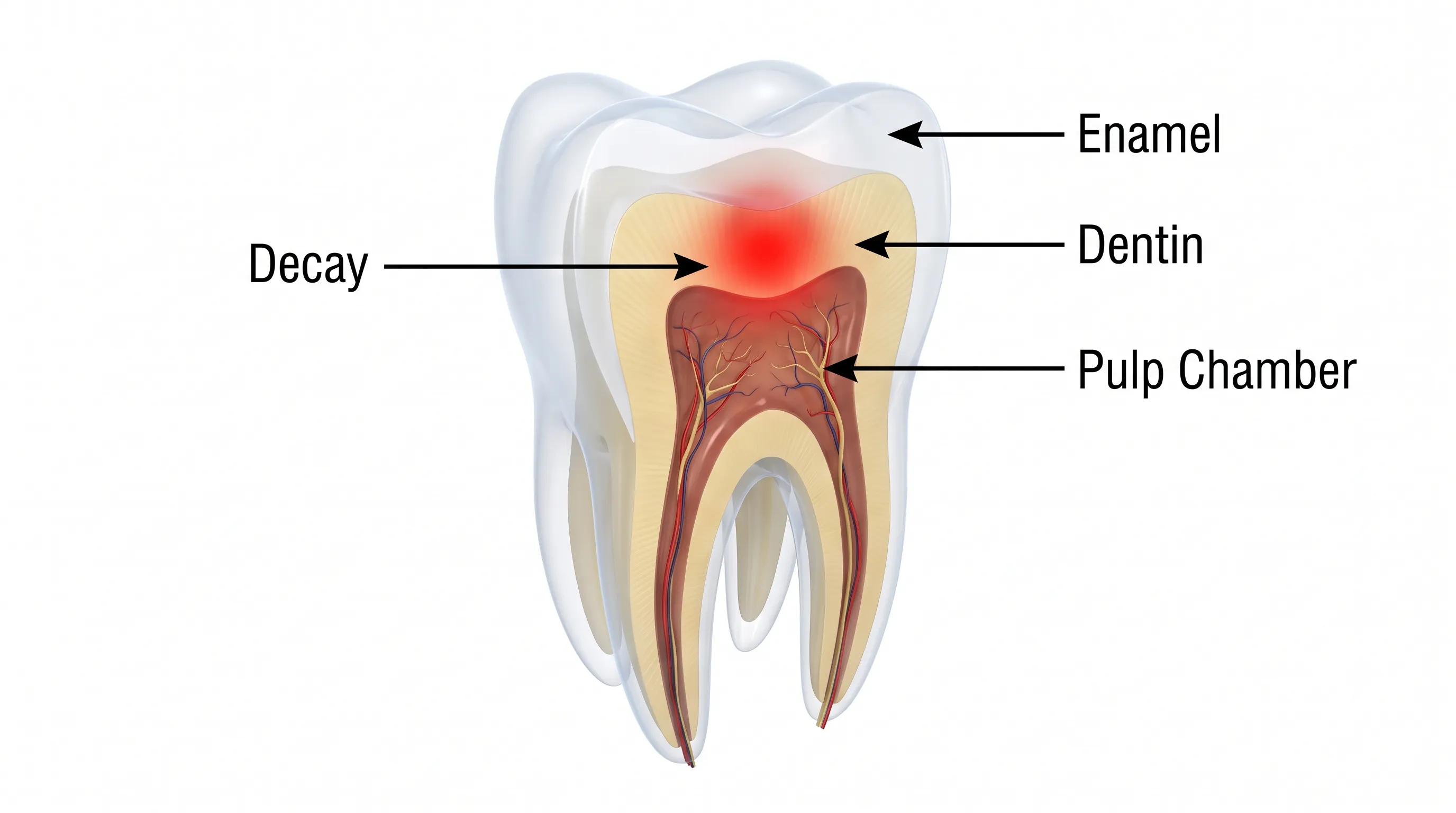
The goal of pulp capping is to interrupt this destructive process. By placing a biocompatible material over the threatened or exposed pulp, the dentist creates a seal that blocks bacterial entry and provides a scaffold for the tooth to repair itself. The pulp responds by forming "reparative dentin," a new layer of hard tissue that thickens the barrier between the outside world and the sensitive nerve. This biological response is the cornerstone of why what is a dental pulp cap is such a critical concept in modern restorative dentistry. It leverages the body’s natural healing capabilities, supported by advanced biomaterials, to preserve tooth vitality.
Direct vs. Indirect Pulp Capping: Key Differences
When dentists evaluate a deep cavity, they must decide between two primary approaches: direct pulp capping and indirect pulp capping. While both aim to save the pulp, the clinical scenarios and techniques differ significantly. Understanding these differences is crucial when asking what is a dental pulp cap in the context of your specific diagnosis.
Indirect Pulp Capping (IPC)
Indirect pulp capping is the more conservative of the two procedures. It is indicated when a cavity is very deep, approaching the pulp, but has not yet exposed it. During the removal of decay, the dentist intentionally leaves a thin layer of affected dentin over the pulp chamber to avoid mechanical exposure. This remaining dentin may be softened or discolored but is not necessarily infected if the outer layers of decay are thoroughly removed.
Once the bulk of the decay is cleared, a biocompatible material—such as calcium hydroxide, MTA, or a glass ionomer liner—is placed over the remaining dentin. This material serves two purposes: it seals the tubules to prevent bacterial leakage and stimulates the underlying pulp to produce reparative dentin. Over time, this new dentin thickens, moving the pulp further away from the threat of exposure. The tooth is then restored with a permanent filling or crown. IPC has a high success rate, often exceeding 90%, because the pulp is not directly traumatized by the drilling instrument or exposed to the oral environment.
Direct Pulp Capping (DPC)
Direct pulp capping is a more delicate procedure reserved for cases where the pulp has been accidentally exposed. This can happen during the removal of deep decay or due to trauma. In DPC, the dentist places the protective material directly onto the exposed pulp tissue. Because the pulp is open to the oral cavity, there is a higher risk of bacterial contamination and inflammation. Therefore, strict criteria must be met for DPC to be successful:
- The exposure must be small (typically less than 1 mm).
- The bleeding from the pulp must be controlled quickly (within a few minutes), indicating healthy, non-inflamed tissue.
- The tooth must have no history of spontaneous pain or signs of irreversible pulpitis.
- The exposure must be free of contamination.
If these conditions are met, the capping material is placed directly on the exposure site, followed by a tight seal with a restorative material. The success of DPC is slightly lower than IPC, ranging from 70% to 85% depending on the material used and the skill of the clinician. However, it remains a valuable alternative to root canal therapy for vital teeth. Knowing what is a dental pulp cap helps patients understand why their dentist might choose one method over the other based on the specific condition of their tooth. Learn more about endodontic treatments from the American Association of Endodontists.
Materials Used in Pulp Capping Procedures
The success of a pulp cap relies heavily on the material used. The ideal material should be biocompatible, antibacterial, capable of sealing the dentin tubules, and able to stimulate dentin formation. Over the decades, the materials used have evolved significantly, reflecting advances in biomaterials science.
Calcium Hydroxide
For many years, calcium hydroxide was the gold standard for pulp capping. It works by creating a high pH environment that is antibacterial and stimulates the differentiation of pulp cells into odontoblasts (cells that form dentin). However, calcium hydroxide has limitations. It dissolves over time, which can compromise the seal, and it may cause tunnel defects in the newly formed dentin, potentially allowing bacterial leakage. Despite these drawbacks, it remains a widely used and effective option, particularly in indirect capping.
Mineral Trioxide Aggregate (MTA)
MTA has revolutionized endodontics and pulp capping. Composed of tricalcium silicate, dicalcium silicate, tricalcium aluminate, and bismuth oxide, MTA offers superior biocompatibility and sealing ability. Unlike calcium hydroxide, MTA does not dissolve and provides a hermetic seal that prevents bacterial leakage. Studies have shown that MTA promotes faster and more consistent formation of high-quality reparative dentin. Its main disadvantages are its gray color (which can stain tooth structure) and higher cost, though white MTA variants have mitigated the staining issue.
Bioceramics and Biodentine
Newer bioceramic materials, such as Biodentine, are gaining popularity. These materials are similar to MTA but offer easier handling, faster setting times, and no staining. They are highly biocompatible and release calcium ions, which are essential for dentin mineralization. Many experts now consider bioceramics the material of choice for what is a dental pulp cap procedures, especially in direct capping scenarios, due to their predictable outcomes and ease of use.
| Feature | Calcium Hydroxide | MTA (Mineral Trioxide Aggregate) | Bioceramics (e.g., Biodentine) |
|---|---|---|---|
| Biocompatibility | High | Very High | Very High |
| Sealing Ability | Moderate (dissolves over time) | Excellent (hermetic seal) | Excellent |
| Dentin Formation | Stimulates, but may have tunnels | Stimulates high-quality dentin | Stimulates high-quality dentin |
| Handling | Easy | Difficult (gritty, long set time) | Easy (smooth, faster set) |
| Cost | Low | High | Moderate to High |
| Staining Risk | None | Possible (with gray MTA) | None |
The Procedure: Step-by-Step Breakdown
Understanding the step-by-step process can alleviate anxiety for patients wondering what is a dental pulp cap entails. While every case is unique, the general workflow follows a structured protocol to maximize success.
1. Diagnosis and Anesthesia
The procedure begins with a thorough examination, including X-rays and clinical tests to assess the health of the pulp. The dentist checks for signs of irreversible pulpitis, such as lingering pain to cold or spontaneous throbbing. If the tooth is deemed suitable for capping, local anesthesia is administered to ensure the patient is comfortable.
2. Caries Removal
Using a high-speed drill and hand instruments, the dentist removes the decayed tooth structure. In indirect capping, the dentist stops before exposing the pulp, leaving a thin layer of affected dentin. In direct capping, if an exposure occurs, the dentist carefully cleans the area. Hemostasis (stopping the bleeding) is critical. Sterile saline or sodium hypochlorite is often used to clean the exposure site and control bleeding. If bleeding cannot be stopped within a few minutes, it suggests irreversible inflammation, and the dentist may opt for a root canal instead.
3. Application of Capping Material
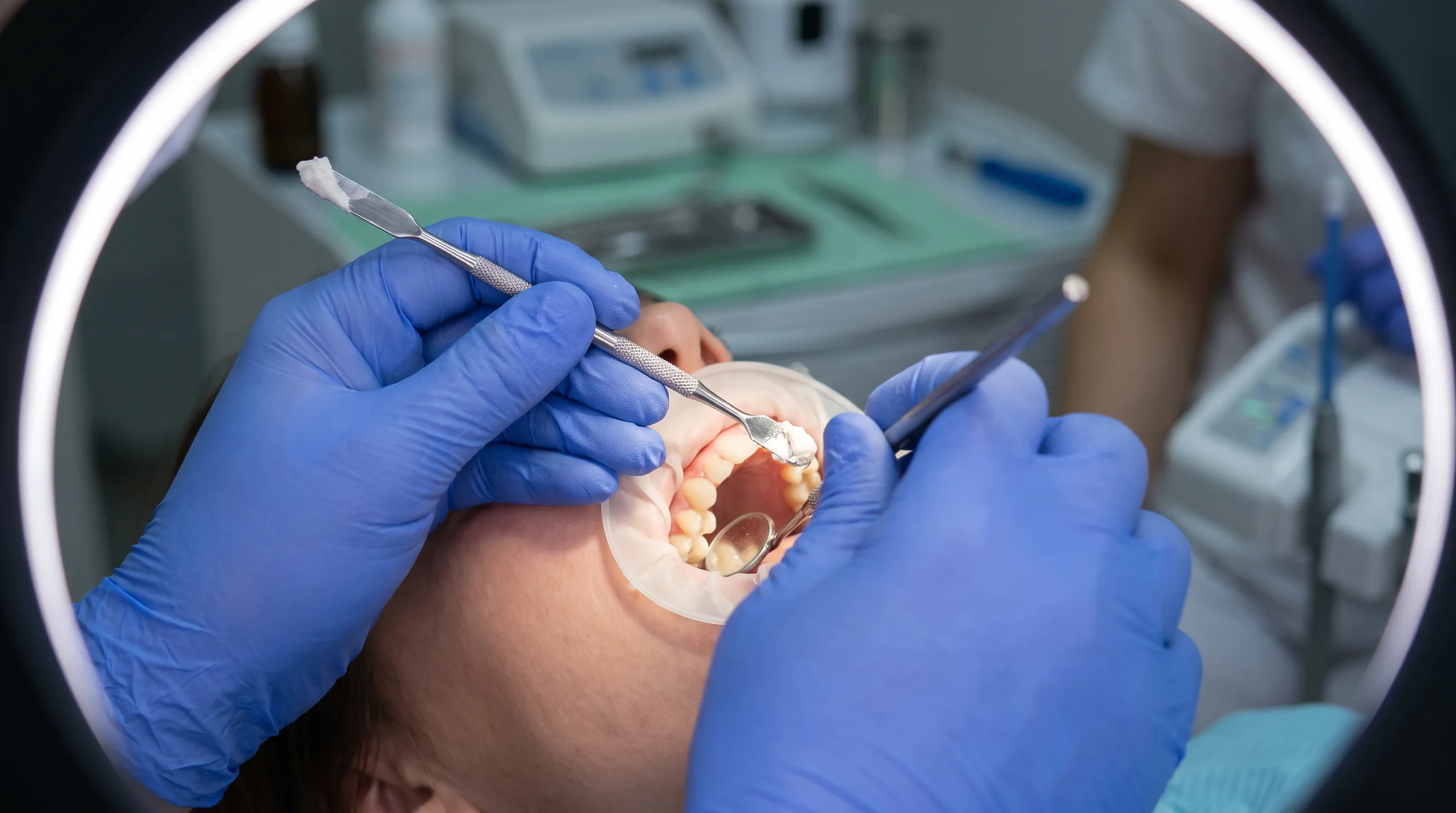
Once the site is clean and dry (but not desiccated), the capping material is applied. For direct capping, a small pellet of MTA or bioceramic is placed directly over the exposure. For indirect capping, the material is spread over the remaining dentin. The material is gently condensed to ensure good contact with the tooth structure.
4. Restorative Seal
This is perhaps the most critical step. A pulp cap will fail if bacteria leak around the edges of the filling. Therefore, a strong, durable restoration is placed immediately. This is often a glass ionomer base followed by a composite resin filling, or a full coverage crown if the tooth is structurally compromised. The goal is to create a bacteria-tight seal that protects the pulp cap from the oral environment.
5. Follow-Up
Patients are scheduled for follow-up appointments, typically at 6 weeks, 6 months, and 1 year. At these visits, the dentist checks for symptoms, tests the pulp’s vitality, and takes X-rays to look for signs of healing, such as the formation of a dentin bridge, or signs of failure, such as periapical radiolucency (dark spots at the root tip indicating infection).
Success Rates and Long-Term Outcomes
One of the most common questions patients ask is, "Will it work?" The answer depends on several factors, including the type of capping, the material used, and the initial health of the pulp. Research indicates that when proper protocols are followed, pulp capping is a highly successful procedure.
Studies comparing direct pulp capping with MTA versus calcium hydroxide show that MTA has significantly higher success rates, often exceeding 80-90% over 2-5 years. Indirect pulp capping generally has even higher success rates, often above 90%, because the pulp is not directly exposed. However, long-term success requires a perfect seal. If the final restoration leaks, bacteria will eventually reach the pulp, leading to failure.
It is important to note that pulp capping is not a permanent guarantee. The tooth remains vital, which means it can still feel temperature changes and pressure. Over time, the pulp may calcify, narrowing the root canal space, which is a normal aging process but can complicate future root canal therapy if needed. Nevertheless, preserving the natural pulp maintains the tooth’s proprioception (sense of position) and structural integrity, making it a superior option to root canal therapy when feasible. Understanding what is a dental pulp cap includes recognizing that it is a biological treatment with variable outcomes, dependent on both the dentist’s skill and the patient’s biological response. You can find more information on dental procedure outcomes at the Mayo Clinic.
Recovery and Aftercare Tips
After undergoing a pulp cap, proper aftercare is essential to support healing and prevent complications. While the procedure is minimally invasive, the pulp has undergone trauma, and it needs time to recover. Here are actionable tips to ensure the best outcome:
Manage Sensitivity
It is normal to experience some sensitivity to hot, cold, or biting pressure for a few days to a week after the procedure. This is due to the inflammation caused by the drilling and the placement of materials. Over-the-counter anti-inflammatory medications like ibuprofen can help manage this discomfort. Avoid chewing on the treated side for the first 24 hours if possible.
Maintain Oral Hygiene
Keeping the mouth clean is crucial to prevent bacterial accumulation around the restoration. Brush gently twice a day with a soft-bristled toothbrush and floss daily. However, be careful around the new filling for the first few days to avoid dislodging it if the bond is still setting (though most modern composites set immediately).
Monitor for Warning Signs
While mild sensitivity is normal, severe or worsening pain is not. Contact your dentist immediately if you experience:
- Spontaneous, throbbing pain that wakes you up at night.
- Swelling in the gums or face.
- Pain that lingers for more than 30 seconds after removing a hot or cold stimulus.
- A bad taste or smell coming from the tooth.
These symptoms may indicate that the pulp has not healed and that irreversible pulpitis or necrosis has developed. Early intervention can prevent the spread of infection.
Attend Follow-Up Appointments
Do not skip your scheduled check-ups. Even if the tooth feels fine, X-rays are necessary to confirm that the pulp is healthy and that reparative dentin is forming. Silent failures can occur, where the pulp dies without significant pain, leading to an abscess. Regular monitoring ensures that any issues are caught early.
When Is a Root Canal Necessary Instead?
Despite the benefits of pulp capping, it is not always the right choice. Knowing when to opt for root canal therapy is part of understanding what is a dental pulp cap and its limitations. Root canal therapy (endodontic treatment) involves removing the entire pulp, cleaning the root canals, and sealing them. It is necessary when:
- Irreversible Pulpitis is Present: If the patient has a history of spontaneous pain, night pain, or lingering pain to thermal stimuli, the pulp is likely irreversibly damaged. Capping will not heal this tissue.
- Large Exposures: If the pulp exposure is large (>1 mm) or contaminated with saliva for an extended period, the risk of failure is too high.
- Uncontrolled Bleeding: If bleeding from the pulp cannot be stopped within a few minutes, it indicates severe inflammation.
- Periapical Pathology: If X-rays show a dark spot at the root tip (abscess or granuloma), the pulp is already necrotic or infected, and capping is contraindicated.
- Restorative Compromise: If the tooth is so broken down that a tight seal cannot be achieved, a root canal followed by a crown may be the only viable option to save the tooth structure.
In these cases, attempting a pulp cap would likely lead to failure, prolonged pain, and the eventual need for a root canal anyway, doubling the cost and discomfort. A skilled dentist will evaluate these factors carefully before recommending a pulp cap. For more details on when root canals are necessary, visit the Cleveland Clinic.
Frequently Asked Questions
What is the difference between direct and indirect pulp capping?
Direct pulp capping involves placing a protective material directly over an exposed dental pulp, usually after accidental exposure during cavity removal. Indirect pulp capping involves leaving a thin layer of affected dentin over the pulp to avoid exposure, covering it with a protective material to encourage healing and remineralization. Indirect capping is generally less risky and has a higher success rate.
Is a dental pulp cap painful?
The procedure itself is typically painless because local anesthesia is used. After the procedure, some patients may experience mild sensitivity or discomfort for a few days, which can be managed with over-the-counter pain relievers. Severe or lingering pain may indicate that the pulp did not heal properly and requires further evaluation.
How successful is a dental pulp cap compared to a root canal?
When performed correctly on teeth with reversible pulpitis, direct pulp capping has a success rate ranging from 70% to 90% over several years. While root canals have a higher overall success rate for infected teeth, pulp capping is preferred when possible because it preserves the natural vitality and structural integrity of the tooth, avoiding the brittleness associated with non-vital teeth.
What materials are used for pulp capping?
Historically, calcium hydroxide was the gold standard. Today, Mineral Trioxide Aggregate (MTA) and other bioceramic materials are increasingly preferred due to their superior sealing ability, biocompatibility, and ability to stimulate the formation of high-quality reparative dentin. Bioceramics offer easier handling and no staining compared to traditional MTA.
Can a pulp cap fail, and what happens if it does?
Yes, pulp caps can fail if bacteria remain in the tooth, if the seal is compromised, or if the pulp was already irreversibly inflamed. If a pulp cap fails, symptoms such as persistent pain, swelling, or abscess may develop. In such cases, root canal therapy or extraction becomes necessary to resolve the infection and save the tooth structure.
How much does a dental pulp cap cost?
The cost of a dental pulp cap varies by location and provider but is generally significantly less than a root canal. It is often billed as part of the deep filling procedure. Insurance coverage varies, so it is best to check with your provider. While cheaper upfront, if it fails, the subsequent root canal will add to the total cost, so proper case selection is key.
Conclusion
Understanding what is a dental pulp cap reveals a sophisticated, biology-driven approach to saving teeth. It is not merely a filling; it is a therapeutic intervention that harnesses the tooth’s natural healing potential. By distinguishing between direct and indirect methods, utilizing advanced biomaterials like MTA and bioceramics, and adhering to strict clinical protocols, dentists can successfully preserve the vitality of teeth that were once destined for extraction or root canal therapy.
For patients, this means less invasive treatment, lower costs, and the preservation of natural tooth structure. However, success is not guaranteed. It requires a healthy pulp, a skilled clinician, and a patient committed to follow-up care. If you are diagnosed with a deep cavity, ask your dentist if pulp capping is an option for you. By staying informed and proactive, you can make the best decision for your long-term oral health. Remember, the goal of modern dentistry is not just to fix problems, but to preserve nature whenever possible. A dental pulp cap is a testament to that philosophy, offering a second chance for your tooth to thrive.
How we work
Researched and drafted with AI assistance, then reviewed by a human editor against the cited sources.
This article is general health information, not medical advice. Consult a qualified healthcare professional about your own situation.