Blood Clot vs. Bruise: How to Tell the Difference

Key points
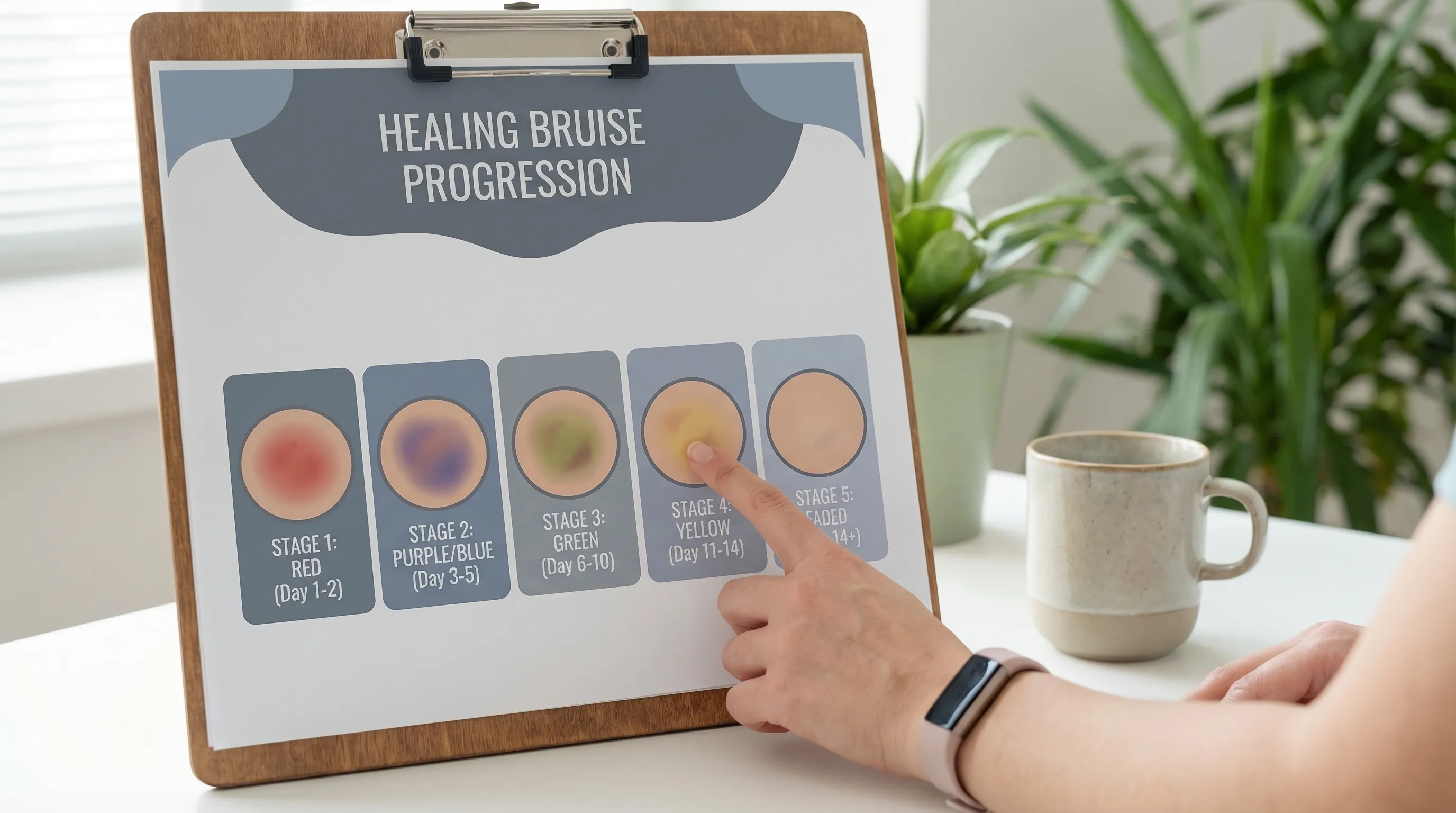
- Appearance: A fresh bruise often starts red, then turns blue or purple within a day. As your body breaks down the trapped blood, the bruise will change color to green, then yellow, before fading away completely. This chromatic evolution is a direct result of hemoglobin degradation into biliverdin (green pigment) and subsequently bilirubin (yellow pigment), which are then gradually reabsorbed by the lymphatic and circulatory systems.
- Cause: Most bruises result from bumping into things, falls, or sports injuries. Some people may bruise more easily due to age, certain medications (like blood thinners), or underlying medical conditions. Thinning skin associated with aging, reduced subcutaneous fat, and decreased collagen production make capillaries more vulnerable to rupture even with minimal force.
- Pain: Bruises are typically tender to the touch. The pain is localized to the site of the injury and usually subsides as the bruise heals over one to two weeks. The discomfort is primarily caused by tissue swelling pressing against nerve endings and the local inflammatory response, which releases prostaglandins and other mediators that sensitize pain receptors.
- Healing: Your body naturally heals a bruise by reabsorbing the blood. You can aid this process with the R.I.C.E. method: Rest, Ice (for the first 24-48 hours), Compression, and Elevation. After the initial 48-hour inflammatory phase, applying gentle warmth can help increase local blood flow, promoting faster clearance of cellular debris and accelerating the remodeling of damaged tissue.
Have you ever noticed a discolored, painful spot on your skin and wondered if it's just a bruise or something more serious, like a blood clot? While a common bruise (contusion) and a deep vein blood clot can share symptoms like pain and discoloration, they are fundamentally different conditions with very different implications for your health. Understanding these differences is crucial and can be life-saving.
This guide will explain what bruises and blood clots are, how to tell them apart, their symptoms, risk factors, and when you should seek medical help.
What Is a Bruise (Contusion)?
A bruise, or contusion, occurs when a direct impact or trauma breaks tiny blood vessels (capillaries) just under the skin. Blood leaks from these vessels and becomes trapped in the surrounding tissue, creating a visible mark. The body's natural hemostatic response immediately activates to stop the bleeding. Platelets rush to the site and aggregate to form a temporary plug, while the coagulation cascade releases fibrin threads to stabilize the clot within the soft tissue. This localized clotting process is a protective mechanism designed to prevent excessive blood loss and initiate tissue repair.
Free calculatorSun Protection GuideSPF guide and sun protection recommendationsOpen the calculator- Appearance: A fresh bruise often starts red, then turns blue or purple within a day. As your body breaks down the trapped blood, the bruise will change color to green, then yellow, before fading away completely. This chromatic evolution is a direct result of hemoglobin degradation into biliverdin (green pigment) and subsequently bilirubin (yellow pigment), which are then gradually reabsorbed by the lymphatic and circulatory systems.
- Cause: Most bruises result from bumping into things, falls, or sports injuries. Some people may bruise more easily due to age, certain medications (like blood thinners), or underlying medical conditions. Thinning skin associated with aging, reduced subcutaneous fat, and decreased collagen production make capillaries more vulnerable to rupture even with minimal force.
- Pain: Bruises are typically tender to the touch. The pain is localized to the site of the injury and usually subsides as the bruise heals over one to two weeks. The discomfort is primarily caused by tissue swelling pressing against nerve endings and the local inflammatory response, which releases prostaglandins and other mediators that sensitize pain receptors.
- Healing: Your body naturally heals a bruise by reabsorbing the blood. You can aid this process with the R.I.C.E. method: Rest, Ice (for the first 24-48 hours), Compression, and Elevation. After the initial 48-hour inflammatory phase, applying gentle warmth can help increase local blood flow, promoting faster clearance of cellular debris and accelerating the remodeling of damaged tissue.
 :max_bytes(150000):strip_icc()/stages-of-a-bruise-4172551_final-5b7ed27d46e0fb0025f549c4.png)
Technically, the blood in a bruise does clot under the skin as part of the healing process. However, this is not the same as the dangerous type of blood clot that forms inside a vein. A bruise involves clotted blood in the soft tissues, which is a normal response to injury. When the volume of trapped blood is significant, it may form a hematoma—a localized collection of clotted blood that can feel like a firm lump under the skin. While hematomas often resolve spontaneously, larger ones may require medical drainage to prevent tissue damage or infection.
When to Be Concerned About a Bruise
Most bruises are harmless. However, you should see a doctor if:
- You have a very large, swollen, and extremely painful bruise, which could indicate a more severe injury like a fracture or significant soft tissue trauma.
- Bruises appear frequently for no apparent reason, potentially signaling an underlying hematologic disorder, liver disease, or nutritional deficiency (such as Vitamin C, K, or B12).
- A bruise does not show signs of healing after two weeks, which may suggest impaired circulation, chronic inflammation, or a coagulation defect.
- You notice signs of infection, such as spreading redness, warmth, or fever.
- Bruises are located on the head, neck, or abdomen, or are accompanied by dizziness, confusion, or severe swelling, as these could indicate internal bleeding or traumatic brain injury.
- You experience bruising while taking new medications, particularly anticoagulants, antiplatelet drugs, corticosteroids, or selective serotonin reuptake inhibitors (SSRIs), which can alter clotting dynamics.
What Is a Blood Clot (Thrombosis)?
When doctors refer to a dangerous "blood clot," they usually mean a clot that has formed inside a blood vessel, known as thrombosis. This is different from the clotting that occurs under the skin to form a bruise. The most common type of concern is a deep vein thrombosis (DVT).
A DVT is a blood clot that forms in a deep vein, most often in the leg, but it can also occur in the arm. A DVT is dangerous because it can block blood flow. The greatest risk is that a piece of the clot may break off, travel through the bloodstream to the lungs, and cause a life-threatening blockage called a pulmonary embolism (PE).
To understand why clots form abnormally in deep veins, clinicians often reference Virchow's Triad, a foundational medical concept that identifies three primary factors contributing to thrombosis:
- Venous Stasis: Sluggish or impaired blood flow, often caused by prolonged immobility, heart failure, or paralysis.
- Endothelial Injury: Damage to the inner lining of the blood vessel, which can result from trauma, surgery, inflammation, or invasive medical devices like central venous catheters.
- Hypercoagulability: An increased tendency of the blood to clot, which can be genetic (e.g., Factor V Leiden mutation, prothrombin gene mutation) or acquired (e.g., cancer, pregnancy, oral contraceptive use, smoking, or autoimmune conditions like antiphospholipid syndrome).
When these factors intersect, the delicate balance between coagulation and fibrinolysis tips in favor of clot formation, leading to potentially dangerous intravascular thrombi.
Symptoms of a Deep Vein Thrombosis (DVT)
A DVT often does not cause a visible bruise. Instead, symptoms are usually confined to one limb and may include:
- Swelling: One leg or arm becomes noticeably larger than the other. This unilateral edema is often the most prominent clinical sign and results from obstructed venous return causing fluid to leak into surrounding tissues.
- Pain or Tenderness: Often described as a deep ache or cramp that doesn't go away. The pain may worsen when walking or standing due to increased venous pressure against the obstruction. It typically localizes to the calf or posterior thigh.
- Warmth and Redness: The skin on the affected limb may feel warm to the touch and appear reddish or discolored. This inflammatory response is triggered by the clot irritating the venous wall and surrounding tissues, sometimes mimicking cellulitis.
- Visible Surface Veins: Veins near the skin's surface may become more prominent as blood is rerouted around the clot through collateral venous pathways to bypass the obstruction.
It's important to know that about half of people with DVT have no symptoms at all. You can learn more about these risks on the CDC's official blood clot information page. Asymptomatic DVTs are particularly dangerous because they may go undetected until a complication like PE occurs. Routine screening is generally reserved for high-risk postoperative patients rather than the general public.
Symptoms of a Pulmonary Embolism (PE)
A pulmonary embolism is a medical emergency. If you experience any of the following symptoms, especially if you also have signs of a DVT, call 911 or seek immediate emergency medical care:
- Sudden shortness of breath that occurs at rest or with minimal exertion, often accompanied by rapid, shallow breathing as the body attempts to compensate for impaired oxygen exchange.
- Sharp chest pain, especially when taking a deep breath (pleuritic chest pain). This occurs when the embolus irritates the pleural lining of the lung.
- Rapid heart rate (tachycardia) as the cardiovascular system struggles to maintain adequate cardiac output despite compromised pulmonary circulation.
- Coughing, which may include coughing up blood (hemoptysis). This indicates lung tissue damage or infarction secondary to blocked blood supply.
- Lightheadedness or fainting, which can signal a sudden drop in blood pressure and severe hemodynamic instability requiring immediate life support.
Bruise vs. Blood Clot: Key Differences
Here is a side-by-side comparison to help you distinguish between a bruise and a DVT.
| Feature | Bruise (Contusion) | Blood Clot (DVT) |
|---|---|---|
| Cause | External impact breaking capillaries | Internal clotting inside a deep vein |
| Location | In the tissues under the skin (superficial) | Inside a deep vein, well below the skin's surface |
| Appearance | Visible, colorful patch that changes over time | Often no visible mark; limb may be red and swollen |
| Pain | Tender to the touch at the site of injury | Deep, aching, or cramping pain within the limb |
| Swelling | Mild and localized to the bruised area | Often significant swelling of the entire limb |
| Temperature | Skin temperature is usually normal | Affected limb often feels warm to the touch |
| Healing | Heals on its own in 1-2 weeks | Requires medical treatment to prevent complications |
While this comparison provides a useful framework, clinical differentiation isn't always straightforward. Some conditions, like superficial thrombophlebitis (inflammation and clotting in veins near the skin's surface), can mimic bruising with visible redness and tenderness but actually involve intravascular clotting. Conversely, severe bruises with large hematomas can cause significant swelling and localized warmth that may initially raise concerns for DVT. This overlap underscores why diagnostic imaging is the gold standard for ruling out deep vein pathology. Physicians rarely rely on physical examination alone when DVT is a serious consideration.
When to See a Doctor
It's crucial to know when to seek medical advice. Contact a doctor or go to an urgent care facility if:
- You suspect a DVT: You have swelling, deep pain, warmth, and redness in one leg or arm, especially if you have risk factors like recent surgery, prolonged inactivity (like a long flight), or a personal or family history of clots.
- A bruise is severe: An unusually large or painful bruise may need evaluation to rule out a more serious underlying injury, such as a fracture, tendon rupture, or compartment syndrome.
- You have unexplained bruising: Frequent, large bruises without a known cause should be discussed with a doctor to screen for platelet disorders, coagulation factor deficiencies, or systemic illnesses.
- Symptoms worsen or fail to improve: If a suspected bruise becomes increasingly painful, expands rapidly, or is accompanied by numbness or tingling, it warrants prompt evaluation to assess nerve compression or vascular compromise.
A doctor can diagnose a DVT using a painless ultrasound that visualizes blood flow in your veins. This imaging modality, known as a compression duplex ultrasound, is highly sensitive and specific for detecting intraluminal clots. In ambiguous cases, clinicians may also order a D-dimer blood test, which measures fibrin degradation products. Elevated D-dimer levels indicate active clot breakdown but are non-specific, meaning they can also be elevated due to recent surgery, infection, or pregnancy. When combined with validated clinical decision tools like the Wells Score for DVT, these diagnostic steps help clinicians accurately triage patients and avoid unnecessary treatments or missed diagnoses.
How Blood Clots and Bruises Are Treated
The treatments for these two conditions are vastly different, highlighting their distinct nature. Proper management depends on accurate diagnosis, appropriate risk stratification, and careful monitoring of therapeutic interventions.
Treating a Blood Clot
A DVT requires immediate medical treatment to prevent a pulmonary embolism. Treatment typically involves:
- Anticoagulants (Blood Thinners): These medications, such as heparin, warfarin, or newer direct oral anticoagulants (DOACs) like apixaban, rivaroxaban, and dabigatran, prevent the clot from growing and new clots from forming. They do not dissolve existing clots; rather, they stabilize the thrombus while the body's endogenous fibrinolytic system gradually breaks it down. Warfarin requires regular INR monitoring and dietary vitamin K consistency, while DOACs offer more predictable pharmacokinetics with fewer drug-food interactions.
- Compression Stockings: Graduated compression garments help reduce venous stasis, mitigate post-thrombotic syndrome (chronic swelling, pain, and skin changes), and improve overall circulation in the affected limb. Patients are typically advised to wear them during waking hours for several months following diagnosis.
- Thrombolytics: In severe cases involving massive DVT with impending limb ischemia or life-threatening PE, "clot-busting" drugs like alteplase may be administered intravenously or directly into the clot via catheter-directed therapy. Due to significant bleeding risks, thrombolytics are reserved for critical situations.
- Inferior Vena Cava (IVC) Filters: For patients who cannot tolerate anticoagulation, a small metal device may be surgically placed in the inferior vena cava to catch emboli before they reach the lungs. These are typically temporary and removed once anticoagulation can be safely initiated.
Long-term management involves regular follow-up, adherence to prescribed therapy, and lifestyle modifications to prevent recurrence. The duration of anticoagulation depends on whether the DVT was provoked (e.g., surgery, trauma) or unprovoked, with guidelines typically recommending 3 to 6 months for provoked cases and potentially indefinite therapy for unprovoked or recurrent events.
Treating a Bruise
A simple bruise requires only basic home care. The R.I.C.E. method—Rest, Ice, Compression, and Elevation—can help reduce pain and swelling. Over-the-counter pain relievers like acetaminophen are generally preferred, as NSAIDs (ibuprofen, naproxen) can interfere with platelet aggregation and potentially prolong bleeding time. After 48 hours, switching to gentle heat application can enhance vasodilation, promoting macrophage activity and accelerating the clearance of hemosiderin and cellular debris. Avoid massaging the area in the acute phase, as this may disrupt fragile healing tissue or dislodge forming clots, potentially worsening the hematoma. Most superficial bruises resolve completely within 10 to 14 days without scarring.
Can a Bruise Turn Into a Dangerous Blood Clot?
For a healthy individual, a simple, superficial bruise will not turn into a DVT. The processes are different. However, a severe trauma that causes extensive bruising could also damage a deep vein or lead to immobility, which are both risk factors for developing a DVT. But the bruise itself is not the cause.
The coagulation pathways involved in superficial tissue injury are localized and tightly regulated by natural anticoagulants like protein C, protein S, and antithrombin III. These mechanisms ensure that clot formation is restricted to the injury site and does not propagate into the deeper venous system. In cases of massive trauma or crush injuries, systemic inflammatory responses and endothelial damage can create a pro-thrombotic state, increasing overall DVT risk. Additionally, large intramuscular hematomas can occasionally cause external compression on adjacent veins, contributing to venous stasis. While this theoretical overlap exists, clinical evidence consistently shows that routine minor contusions do not initiate intravascular thrombogenesis. If you sustain significant trauma and are subsequently immobilized, prophylactic measures such as early mobilization or mechanical compression devices may be recommended to mitigate DVT risk.
Preventing Blood Clots
While you can't always prevent bruises, you can take steps to reduce your risk of developing a dangerous blood clot:
- Stay Active: Move around frequently, especially during long periods of sitting, such as on flights or long car rides. Stand up, walk, and stretch every 1 to 2 hours to promote calf muscle pump function, which naturally drives venous return to the heart.
- Perform Seated Exercises: When standing isn't feasible, practice ankle circles, heel-toe raises, and leg extensions while seated. These movements mimic the physiological mechanisms that prevent venous pooling.
- Stay Hydrated: Drinking plenty of water helps keep your blood from thickening. Dehydration increases hematocrit and blood viscosity, which can exacerbate stasis. Limit alcohol and excessive caffeine during travel, as both contribute to fluid loss.
- Maintain a Healthy Lifestyle: Manage your weight, exercise regularly, and avoid smoking. Obesity increases abdominal pressure on pelvic veins and promotes a chronic inflammatory state that elevates coagulation factors. Smoking damages the endothelial lining, making vessels more prone to thrombus formation.
- Know Your Risk: If you have a family history of clots or other risk factors, talk to your doctor about preventive measures. Genetic counseling and thrombophilia screening may be appropriate for individuals with recurrent unprovoked DVTs or strong familial clustering.
- Use Compression Socks: These can be beneficial during long travel or if you are at higher risk. Properly fitted, graduated compression stockings exert the highest pressure at the ankle and gradually decrease up the calf, effectively counteracting gravitational pooling.
- Medication Adherence & Review: If you're prescribed anticoagulants post-surgery or during hospitalization, take them exactly as directed. Discuss all over-the-counter supplements, including herbal products like ginkgo biloba or fish oil, with your physician, as some can interact with clotting mechanisms. Women considering estrogen-based birth control should discuss their individual thrombosis risk profile with a healthcare provider.
- Post-Hospital Care: After surgery or prolonged bed rest, early ambulation is critical. Follow physical therapy recommendations closely, use sequential compression devices if provided, and never ignore new or worsening limb symptoms during recovery.
Frequently Asked Questions
Q: Can a bruise cause a dangerous blood clot like a DVT? A: A simple bruise from a minor bump is very unlikely to cause a deep vein thrombosis (DVT). A bruise is blood that has leaked and clotted in the tissues outside of the blood vessels. A DVT is a clot that forms inside a deep vein. While a major trauma can cause both extensive bruising and a DVT, a common bruise will not transform into a dangerous internal clot. The anatomical boundaries and physiological regulatory mechanisms keep superficial hematoma formation separate from intravascular coagulation.
Q: How can I tell if my leg pain is a blood clot or just a bruise or muscle pull? A: If you remember a specific injury and have a visible, tender bruise at that site, it's likely a bruise. A muscle pull often hurts more with specific movements. Pain from a blood clot (DVT) is often a deep, persistent cramp or ache that may not be linked to an injury. Key signs of a DVT include swelling of the limb (one leg larger than the other), warmth, and redness, which are not typical for a simple bruise or muscle pull. Additionally, DVT pain rarely improves with rest or positional changes and may feel like a heavy, dragging sensation that progressively worsens over hours or days rather than stabilizing like a typical strain.
Q: Does a blood clot in the leg cause a visible bruise? A: Usually, no. A deep vein thrombosis (DVT) forms deep within the muscle and does not typically cause a classic black-and-blue bruise on the skin's surface. The skin over a DVT may appear reddish or discolored, but it won't have the distinct color changes of a healing bruise. In rare cases where superficial veins are involved or collateral circulation becomes highly prominent, you might notice visible venous engorgement or mild ecchymosis, but this differs fundamentally from traumatic contusions.
Q: I bruise easily. Does that mean I'm at higher risk for blood clots? A: Easy bruising is typically related to fragile capillaries or blood that is slower to clot in tissues, which is the opposite of the internal clotting that causes a DVT. Conditions and medications (like aspirin or anticoagulants) that cause easy bruising actually work to prevent dangerous clots. Therefore, easy bruising does not mean you are more prone to developing a DVT. In fact, individuals on prescribed anticoagulants for prior clots often report increased superficial bruising as an expected, benign side effect of therapeutic blood thinning.
Q: What should I do if I think I have a blood clot in my leg? A: If you suspect you have a DVT (e.g., you have unexplained swelling, pain, warmth, and redness in one leg), you should seek medical attention promptly. Contact your doctor or go to an urgent care center. If you also experience symptoms like sudden shortness of breath, chest pain, or coughing up blood, go to the emergency room immediately, as these could be signs of a life-threatening pulmonary embolism. While waiting for medical care, keep the affected limb elevated and avoid massaging or vigorously rubbing the area, as mechanical manipulation could theoretically dislodge a partially formed thrombus. Do not start or stop any medications without direct physician guidance.
Q: Are there specific populations more vulnerable to DVT? A: Yes. While DVT can affect anyone, risk is significantly higher among older adults (age 60+), individuals with active cancer or undergoing chemotherapy, pregnant and postpartum women, people with chronic inflammatory or autoimmune conditions, and those with prolonged immobility from neurological conditions or major orthopedic surgery. Recognizing these demographic and clinical vulnerabilities helps guide preventive strategies and timely screening protocols.
Disclaimer: This article is for informational purposes only and does not constitute medical advice. Always consult a qualified healthcare provider for any health concerns or before making any decisions related to your health or treatment.
Additional Resources:
- Centers for Disease Control and Prevention (CDC) - Blood Clot Facts and Resources
- Mayo Clinic - Deep Vein Thrombosis (DVT)
- MedlinePlus - Bruises
- National Blood Clot Alliance - Signs and Symptoms
Conclusion
Distinguishing between a common bruise and a potentially life-threatening blood clot requires understanding their distinct origins, symptoms, and clinical trajectories. A bruise is a superficial, self-limiting response to localized tissue trauma, characterized by visible color changes and gradual healing within one to two weeks. In contrast, a deep vein thrombosis is an intravascular event driven by venous stasis, endothelial injury, or hypercoagulability, often presenting with unilateral swelling, deep aching pain, and localized warmth. Recognizing these differences empowers you to take appropriate action: applying basic first aid for minor contusions while promptly seeking medical evaluation for signs of DVT or pulmonary embolism.
Proactive health management remains the cornerstone of prevention. Staying physically active, maintaining proper hydration, understanding your personal and familial risk factors, and adhering to medical guidance during periods of immobility or recovery can dramatically reduce thrombosis risk. When in doubt, always err on the side of caution. Early diagnosis and timely anticoagulant therapy can prevent catastrophic complications and save lives. By staying informed and attentive to your body's signals, you can navigate skin changes and limb discomfort with confidence and clarity.
How we work
Researched and drafted with AI assistance, then reviewed by a human editor against the cited sources.
This article is general health information, not medical advice. Consult a qualified healthcare professional about your own situation.