When Do Your Boobs Stop Growing? A Complete Guide to Breast Development

Navigating the physical transformations of adolescence can be both exciting and confusing, especially when it comes to understanding your body's natural developmental timeline. Many young women, parents, and caregivers frequently search for answers to a single pressing question: when do your boobs stop growing? The truth is that breast development is not a uniform process with a fixed expiration date. It is a highly individualized biological journey influenced by genetics, hormonal fluctuations, nutritional status, and overall health. Understanding this timeline can alleviate unnecessary anxiety, promote healthy body image, and help you distinguish normal developmental milestones from signs that may warrant professional medical evaluation. In this comprehensive guide, we will explore the exact phases of breast maturation, the hormonal mechanisms driving growth, the factors that can accelerate or delay development, and evidence-based strategies for supporting healthy tissue changes. Whether you are tracking your own progress, supporting a daughter through puberty, or simply curious about human anatomy, this article provides medically accurate, thoroughly researched insights to help you navigate every stage with confidence and clarity.
The Biological Timeline of Breast Development
Breast development is one of the most recognizable markers of female puberty, but the process is far more complex than simple size increase. It begins long before visible changes appear, triggered by intricate signaling pathways within the brain and endocrine system. The hypothalamus releases gonadotropin-releasing hormone, which stimulates the pituitary gland to secrete luteinizing hormone and follicle-stimulating hormone. These hormones travel through the bloodstream to the ovaries, prompting the production of estrogen and progesterone, the primary drivers of mammary gland formation. Understanding when do your boobs stop growing requires examining the structured progression of tissue differentiation, ductal branching, and fat deposition that occurs over several years, as detailed by the National Institutes of Health (NIH).
Free calculatorOvulation CalculatorCalculate ovulation periodOpen the calculator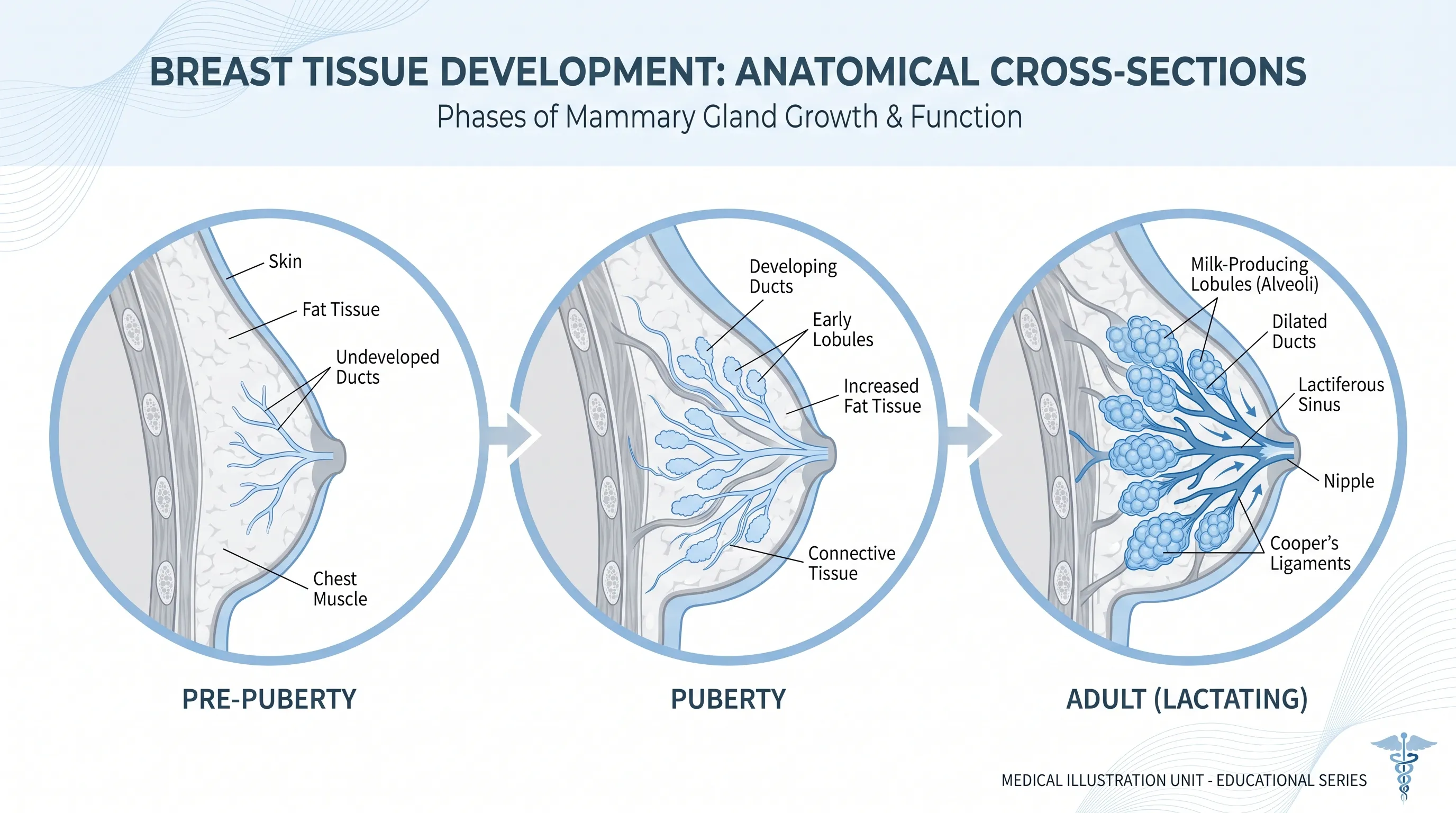
Understanding Tanner Stages
Medical professionals use the Tanner staging system to classify the physical development of children, adolescents, and adults. This framework divides puberty into five distinct phases, providing a standardized method for tracking when do your boobs stop growing across diverse populations. Stage one represents prepubertal development, characterized by a flat chest with only a slightly raised nipple. During stage two, typically occurring between ages eight and thirteen, small firm breast buds emerge beneath the areola. The areola often widens slightly, and mild tenderness or itching is common due to rapid cellular proliferation. Stage three marks the continued elevation and enlargement of the breast and areola without distinct separation of contours. At this point, glandular tissue expands, and the breast begins taking on a conical shape. Stage four features further enlargement, with the areola and nipple forming a secondary mound above the breast tissue. Finally, stage five represents full maturity, characterized by a smooth contour where the areola recedes into the overall breast mound, leaving only the nipple projecting. This final stage typically aligns with the completion of linear growth and the establishment of regular menstrual cycles.
The Hormonal Orchestra
The transformation from undeveloped tissue to mature mammary structures relies on a precise hormonal balance. Estrogen primarily stimulates the proliferation of ductal epithelial cells and encourages fat accumulation in the stromal tissue, which determines overall volume and shape. Progesterone works synergistically to promote lobuloalveolar maturation, preparing the tissue for potential future lactation. Growth hormone and insulin-like growth factor one amplify estrogen signaling and support cellular differentiation. When these hormones fluctuate during early adolescence, breast tissue responds dynamically. This is why many individuals experience cyclical swelling, tenderness, or size variations aligned with their menstrual cycles. Recognizing that hormonal rhythms dictate growth patterns helps clarify when do your boobs stop growing: development concludes once the endocrine system reaches homeostatic balance and growth plates fuse, usually by late adolescence.
When Do Your Boobs Stop Growing? The Science Behind the Timeline
Addressing the core question directly requires examining population studies, clinical guidelines, and longitudinal research on female development. Most authoritative medical sources indicate that significant breast growth typically concludes between ages seventeen and nineteen, aligning with the CDC's guidelines on adolescent growth and puberty. However, the exact timeline varies substantially based on ethnic background, genetic predisposition, and environmental factors. Some individuals may experience minor tissue remodeling until their early twenties, particularly if weight fluctuations, pregnancy, or hormonal contraceptive use introduces new physiological variables. The completion of breast maturation often coincides with skeletal maturity, which is medically confirmed when epiphyseal growth plates in the long bones close. Once these plates fuse, usually monitored via left-hand radiographs, systemic growth signals diminish, and secondary sexual characteristics stabilize.
| Tanner Stage | Typical Age Range | Physical Characteristics | Hormonal Drivers |
|---|---|---|---|
| Stage 1 | Pre-puberty | Flat chest, elevated papilla only | Baseline adrenal and ovarian hormones |
| Stage 2 | 8-13 years | Breast buds, areolar widening, tenderness | Rising estrogen, initial progesterone exposure |
| Stage 3 | 12-15 years | Enlargement, conical shape, continued ductal branching | Peak estrogen, increased growth hormone |
| Stage 4 | 14-17 years | Secondary mound of areola and nipple, further volume increase | Estrogen-progesterone synergy, stabilized LH/FSH |
| Stage 5 | 17-21+ years | Mature contour, areola recesses, established size | Homeostatic balance, cyclical fluctuations |
Average Age of Completion
Clinical data consistently demonstrates that approximately ninety percent of females complete primary breast development by age eighteen. Growth velocity slows dramatically after menarche, which typically occurs two to two and a half years after initial budding. Following menarche, breast tissue continues maturing for an additional two to four years, with gradual volume redistribution rather than rapid expansion. This explains why many teenagers notice subtle changes in contour, firmness, or proportion even after their height stabilizes. Understanding this timeline directly addresses when do your boobs stop growing: while the foundational architecture forms during mid-adolescence, minor refinements may continue until full reproductive maturity, as supported by Mayo Clinic's research on puberty and development.
Individual Variations in Development
Human biology does not operate on a rigid schedule. Factors such as nutritional status during childhood, chronic illness exposure, stress levels, and physical activity patterns can shift the developmental window by up to three years. Athletes with high caloric expenditure or those following restrictive diets may experience delayed onset due to suppressed gonadotropin secretion. Conversely, higher childhood body mass index can accelerate estrogen conversion from adipose tissue, leading to earlier budding. Genetic polymorphisms in estrogen receptor genes also influence tissue responsiveness, meaning two individuals with similar hormonal profiles may display markedly different growth trajectories. When do your boobs stop growing ultimately depends on this unique interplay of internal biology and external environment.
Factors That Shape Your Unique Developmental Journey
Breast development does not occur in isolation. It is deeply intertwined with overall physiological health, lifestyle choices, and hereditary factors. Recognizing how these variables interact empowers you to support healthy tissue formation and avoid unnecessary worry about normal variations.
Genetics and Hereditary Patterns
Family history remains the strongest predictor of breast size and developmental timing. Studies examining identical and fraternal twins demonstrate that heritability accounts for approximately seventy to eighty percent of breast volume variation. If your mother or sisters experienced early puberty and larger breast development, you are statistically more likely to follow a similar trajectory. Conversely, delayed maturation in close relatives often correlates with later completion. Genetic markers also influence tissue density, skin elasticity, and the distribution of subcutaneous fat, all of which contribute to the final appearance. When considering when do your boobs stop growing, reviewing generational patterns can provide realistic expectations and reduce comparison-based anxiety.
Nutrition, Weight, and Body Fat
Adequate caloric intake and balanced micronutrient consumption are essential for proper endocrine function. Breast tissue comprises glandular structures, connective tissue, and significant adipose deposits. Fluctuations in body fat directly impact volume because leptin, a hormone secreted by fat cells, signals the hypothalamus to maintain or suppress reproductive development. Severe undernutrition or eating disorders disrupt this signaling, potentially halting or delaying maturation. On the other hand, rapid weight gain can accelerate perceived growth due to increased fat deposition, though this does not necessarily reflect glandular development. Maintaining a balanced diet rich in healthy fats, lean proteins, zinc, magnesium, and vitamins supports optimal hormonal synthesis and tissue health, consistent with global WHO adolescent nutrition guidelines.
Exercise and Physical Activity
Regular physical activity promotes cardiovascular health, circulation, and musculoskeletal strength, but intense training regimens require careful nutritional monitoring. While exercise does not directly stimulate breast growth, developing pectoral muscles can enhance chest posture and provide a supportive foundation for mature tissue. Activities such as strength training, swimming, and yoga improve lymphatic drainage and reduce fluid retention, which may alleviate cyclical swelling and discomfort. However, excessive endurance training without adequate fuel can elevate cortisol levels, temporarily suppressing estrogen production and delaying developmental milestones. Moderation and proper recovery remain essential.

Myths, Misconceptions, and Evidence-Based Facts
The internet is saturated with unverified claims regarding breast enhancement, growth acceleration, and size modification. Separating scientific reality from marketing fiction is crucial for making informed decisions about your body.
Do Certain Foods Increase Breast Size?
Phytoestrogens found in soy, flaxseeds, and legumes are often marketed as natural breast enhancers. While these plant-based compounds weakly bind to estrogen receptors, clinical trials demonstrate that dietary phytoestrogens do not stimulate significant breast tissue proliferation. Their effect is too minimal to alter structural development or reverse genetic predispositions. A balanced diet supports overall health, but no specific food will permanently increase breast volume. When wondering when do your boobs stop growing, it is important to recognize that nutrition influences timing and health, not final size.
The Truth About Supplements and Creams
Over-the-counter breast enhancement products frequently contain proprietary blends of herbs, hormones, or collagen promoters. Regulatory agencies consistently warn that these products lack rigorous clinical validation and may interfere with natural endocrine balance. Some creams induce temporary skin plumping through hydration or mild inflammation, creating a fleeting illusion of growth. Others contain unregulated hormone precursors that could disrupt menstrual cycles or increase the risk of tissue abnormalities. Always consult a healthcare provider before using topical or oral supplements claiming to alter breast anatomy.
The Reality Behind Massage and Exercises
Breast massage improves circulation and may reduce muscular tension, but it cannot stimulate cellular proliferation or alter genetic programming. Similarly, targeted exercises strengthen the chest wall but do not expand glandular or fatty tissue. Postural correction and core strengthening, however, significantly improve breast projection and reduce the appearance of sagging. Focusing on functional strength rather than size manipulation yields sustainable, health-positive outcomes.
Navigating Changes: Practical Advice and Self-Care
Managing physical changes during adolescence requires practical strategies that prioritize comfort, health, and psychological well-being. Implementing routine self-care habits can make the developmental transition smoother and more empowering.
Proper Bra Selection and Fit
As breast tissue matures, support structures must adapt to prevent discomfort, skin irritation, and potential posture issues. Measure yourself every three to six months during active growth phases, focusing on band circumference and cup volume. Underwire, seamless, or sports bras should align with your daily activities and provide even weight distribution without restricting lymphatic flow. Professional fittings ensure optimal support and reduce strain on the Cooper ligaments, which maintain structural integrity over time.
Skin Care and Hygiene
Rapid tissue expansion can stretch the epidermis, leading to temporary dryness, itching, or mild striae. Daily moisturizing with fragrance-free emollients maintains skin elasticity and reduces irritation. Wearing breathable, moisture-wicking fabrics prevents friction-related rashes, particularly during physical activity or warm weather. Gentle cleansing without harsh exfoliants protects delicate tissue while maintaining natural oil balance.
Tracking Changes Responsibly
Keeping a simple log of developmental milestones, menstrual cycles, and any unusual symptoms helps you recognize normal patterns and identify deviations. Noting fluctuations in tenderness, size changes aligned with hormonal cycles, or the appearance of new lumps provides valuable context for healthcare visits. Self-awareness, paired with routine clinical check-ups, ensures early detection of potential concerns while reinforcing confidence in your natural progression.
When to Consult a Healthcare Provider
While most developmental variations fall within normal ranges, certain indicators warrant professional evaluation to rule out underlying endocrine or anatomical conditions.
Signs of Delayed or Precocious Puberty
Precocious puberty involves breast budding before age eight or menarche before age nine, often requiring endocrinological assessment to rule out central nervous system abnormalities, ovarian cysts, or exogenous hormone exposure. Delayed puberty, defined by absent breast development by age thirteen or no menstruation by fifteen, may indicate hormonal deficiencies, genetic conditions, or chronic systemic illness. Early intervention with targeted hormone therapy or nutritional counseling can restore healthy developmental trajectories.
Understanding Breast Asymmetry
Nearly all females experience some degree of asymmetry during development, with one breast typically growing faster than the other. This imbalance often resolves partially as tissue matures, but minor differences frequently persist permanently. Severe breast asymmetry exceeding two cup sizes, sudden onset after maturity, or accompanying pain, redness, or nipple discharge should be evaluated to exclude cysts, fibroadenomas, or rare congenital anomalies.
Pain, Discharge, and Unusual Symptoms
Cyclical tenderness aligns with normal progesterone fluctuations and usually resolves post-menstruation. Persistent, localized pain unrelated to cycles, spontaneous unilateral discharge, or palpable hard masses require prompt clinical examination. Ultrasound imaging or hormonal panels may be recommended to assess tissue composition and endocrine function. Routine self-exams and annual pediatric or gynecological visits establish baseline health and provide timely guidance.
Frequently Asked Questions
When do your boobs stop growing on average?
Breast development typically begins between ages eight and thirteen and reaches structural maturity by ages seventeen to nineteen. Minor volume fluctuations may continue into the early twenties due to hormonal cycles, weight changes, or contraceptive use, but primary tissue formation usually concludes during late adolescence.
Can breast size continue to change after puberty?
Yes, breast tissue remains hormonally responsive throughout adulthood. Menstrual cycles, pregnancy, breastfeeding, weight fluctuations, and certain medications can cause noticeable temporary or permanent changes. Aging and gravity also affect tissue density and skin elasticity, gradually altering shape and firmness over time.
Do genetics determine when breast development ends?
Genetics are the primary determinant of both breast size and developmental timeline. Family history heavily influences the onset of budding, growth velocity, and the age at which maturation stabilizes. Hereditary patterns in hormone receptor sensitivity and metabolic rates further shape individual trajectories.
Why are my breasts asymmetrical during development?
Asymmetry is a normal physiological occurrence. One breast often receives slightly more localized blood flow or hormonal receptor activation, causing faster expansion. In most cases, the discrepancy minimizes but rarely disappears completely, which is medically harmless and extremely common.
When should I consult a doctor about delayed breast growth?
Medical evaluation is recommended if there is no visible breast budding by age thirteen, if menstruation has not occurred by fifteen, or if development abruptly halts after initial progress. Additionally, severe pain, sudden size loss, or abnormal discharge warrants immediate clinical assessment.
Can exercise specifically increase breast size?
Exercise cannot increase glandular breast tissue, as breast size is determined by genetics, hormones, and fat composition. However, strengthening the underlying pectoral muscles improves chest posture, enhances support, and creates a firmer, slightly more lifted appearance.
Conclusion
Understanding when do your boobs stop growing involves recognizing the intricate interplay between genetics, hormones, nutrition, and individual physiology. While most breast development concludes between ages seventeen and nineteen, subtle changes can occur well into early adulthood due to natural life transitions. Embracing this variability as a normal aspect of human biology reduces unnecessary stress and promotes healthier body perception. By focusing on evidence-based self-care, proper support, and regular medical check-ins, you can navigate developmental milestones with confidence and informed awareness. Remember that every body follows its own unique timeline, and seeking professional guidance when needed ensures optimal long-term reproductive and overall health.
How we work
Researched and drafted with AI assistance, then reviewed by a human editor against the cited sources.
This article is general health information, not medical advice. Consult a qualified healthcare professional about your own situation.