Understanding Swollen Gums and Sinuses: Causes, Symptoms & Relief
Experiencing simultaneous discomfort in your teeth, gums, and facial sinuses can be both confusing and deeply uncomfortable. Many patients visit dental clinics or primary care offices believing they have developed sudden periodontal disease or severe tooth decay, only to discover that their oral symptoms originate from an entirely different anatomical source. The phenomenon of swollen gums and sinuses occurring together is surprisingly common, yet frequently misunderstood by those experiencing it for the first time. Because the upper respiratory tract and the oral cavity share intricate anatomical boundaries and complex neurological pathways, inflammation in one area easily manifests as symptoms in the other. Understanding this bidirectional relationship is essential for accurate self-assessment, effective symptom management, and timely medical intervention. When you experience swollen gums and sinuses simultaneously, your body is signaling a interconnected inflammatory process that requires targeted, evidence-based care. This comprehensive guide explores the anatomical mechanisms, clinical presentations, practical home management strategies, and professional treatment pathways to help you navigate this condition safely and effectively.
The Hidden Anatomical Link Between Your Sinuses and Gums
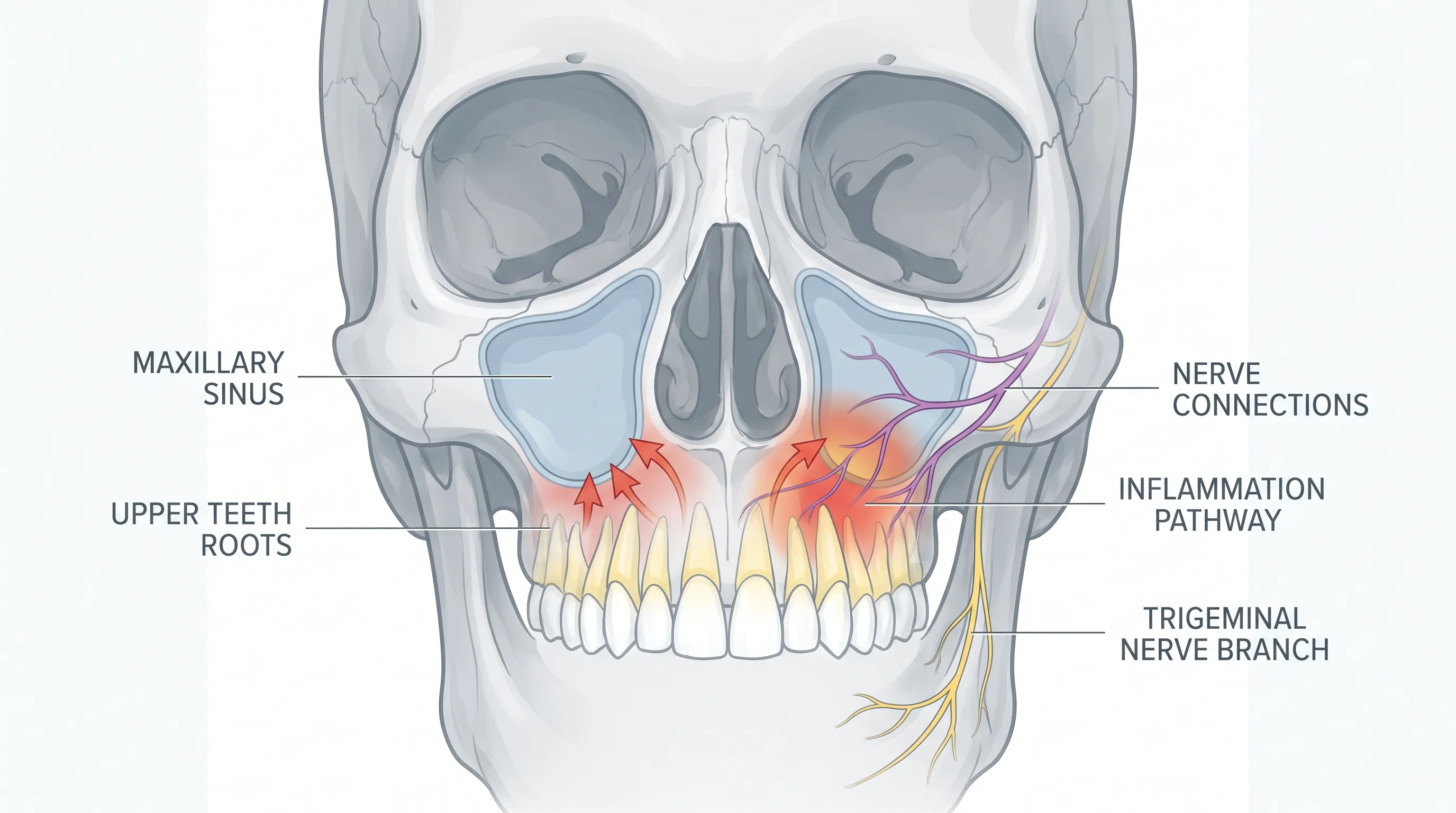
The human skull contains a complex network of paranasal sinuses, but the maxillary sinuses hold particular significance when discussing oral-facial discomfort. Located within the maxilla bone directly above the upper jaw, the maxillary sinuses are the largest of the paranasal sinus cavities. Their anatomical positioning creates a direct structural relationship with the roots of the upper premolars and molars. Understanding this proximity is the foundational step in comprehending why swollen gums and sinuses frequently overlap during inflammatory episodes.
Free calculatorHeadache Location ChartIdentify headache types by locationOpen the calculatorThe Maxillary Sinus Floor and Alveolar Process
According to established anatomical references, the floor of each maxillary sinus is formed by the alveolar process of the maxilla bone. Within this floor, several conical bony processes project upward, directly corresponding to the roots of the first and second maxillary molar teeth. In a significant portion of the population, the apices of these tooth roots lie just millimeters beneath the sinus floor, and in some anatomical variations, they may even project slightly into the sinus cavity itself. When this occurs, the roots are separated from the sinus mucosa by only a paper-thin layer of cortical bone, and occasionally, only by the sinus membrane. This minimal barrier means that any inflammatory process, fluid accumulation, or pressure fluctuation within the sinus can readily transmit mechanical stress and chemical mediators to the surrounding periodontal ligaments and alveolar bone. Consequently, patients experiencing maxillary sinus congestion often report localized gum swelling, heightened tooth sensitivity, and aching discomfort that mimics periodontal pathology. For a detailed visualization of this anatomical arrangement, you can review the structural documentation provided by Wikipedia.
The Neurological Bridge: Trigeminal and Superior Alveolar Nerves
Beyond physical proximity, the shared nervous system architecture explains much of the symptom overlap between these two regions. Sensory innervation to the upper teeth, gums, and maxillary sinus mucosa is provided by the superior alveolar nerves, which branch directly from the maxillary division of the trigeminal nerve (cranial nerve V2). These nerve branches travel through interconnected pathways within the maxilla, creating a neurological network where inflammatory signals from one structure can easily trigger referred sensations in another. When sinus tissues swell, the released prostaglandins and cytokines stimulate nociceptive fibers that the brain interprets as originating from the dental arches. This neurological cross-talk is the primary reason patients experiencing swollen gums and sinuses often struggle to pinpoint whether their discomfort is dental or sinus-related. The shared nerve supply transforms localized sinus inflammation into perceived dental tenderness, gum puffiness, and even phantom toothaches, particularly when pressure changes occur during swallowing, chewing, or changing posture.
How Sinus Infections Trigger Dental Discomfort
Acute sinusitis, whether viral, bacterial, or allergic in origin, initiates a cascade of physiological responses that directly impact the maxillofacial region. When the sinus mucosa becomes inflamed, the epithelial lining thickens, mucus production increases, and natural drainage pathways narrow or become completely obstructed. This pathological sequence creates a perfect storm for secondary dental and periodontal symptoms. Leading medical authorities consistently recognize dental manifestations as core components of sinus infection symptomatology.
Pressure Dynamics and Fluid Buildup
As mucus accumulates within the confined space of the maxillary sinus, intracavitary pressure rises substantially. This elevated pressure pushes downward against the alveolar ridge and compresses the periodontal ligaments surrounding the upper molars. The mechanical stress alone is sufficient to cause gingival inflammation, localized gum swelling, and a persistent dull ache across the upper dental arch. Bending forward, lying flat, or experiencing sudden barometric changes further exacerbates this pressure, intensifying the perceived oral discomfort. The fluid itself contains inflammatory mediators that can diffuse through the thin bony partitions, directly irritating the nerve endings embedded in the gums and tooth roots. This pressure-driven mechanism is why patients report that their symptoms fluctuate throughout the day and often worsen during periods of rest or when experiencing weather changes.
Clinical Symptom Recognition
Both the Mayo Clinic and the UK's National Health Service explicitly document dental and gum symptoms as recognized indicators of sinusitis. The Mayo Clinic staff notes that acute sinusitis causes the spaces inside the nose to become inflamed and swollen, making drainage difficult and leading to mucus buildup that exerts pressure on nearby structures. They explicitly list aching in the teeth among the primary symptoms. Similarly, NHS guidelines categorize toothache, facial tenderness, and pressure-related discomfort as standard manifestations. Patients dealing with swollen gums and sinuses should also monitor for systemic and upper respiratory indicators, including thick yellow or green nasal discharge, persistent cough, postnasal drip, diminished olfactory function, ear fullness, and generalized fatigue. When these respiratory signs accompany upper dental discomfort, the etiology strongly points toward sinus pathology rather than primary dental disease.
Sinusitis Versus Dental Pathology: A Comparison
Distinguishing between sinus-induced discomfort and true dental infection is crucial for preventing unnecessary treatments and ensuring appropriate care. The following table outlines the key differentiating factors that clinicians use during initial assessment.
| Feature | Sinus-Related Discomfort | Primary Dental Infection |
|---|---|---|
| Location of Pain | Diffuse, affects multiple upper teeth simultaneously | Localized, typically targets one specific tooth |
| Pain Quality | Dull, aching, pressure-like, throbbing with movement | Sharp, persistent, intense, often spontaneous |
| Triggers | Bending forward, nasal congestion, weather changes | Hot or cold foods, biting pressure, sweet stimuli |
| Gum Appearance | Generalized puffiness, mild redness, tender to touch | Localized swelling, pus formation, visible abscess, severe redness |
| Associated Symptoms | Nasal blockage, facial pressure, headache, postnasal drip | Tooth mobility, visible decay, bad taste, swollen lymph nodes |
| Response to Position | Worsens significantly when leaning forward or lying down | Remains constant regardless of body position |
Odontogenic Sinusitis: When Dental Issues Spread Upward
While sinus infections frequently cause secondary dental symptoms, the reverse relationship is equally clinically significant. The phenomenon where dental infections migrate upward into the sinus cavity is known as odontogenic sinusitis. Current clinical literature estimates that approximately ten to twelve percent of all chronic maxillary sinusitis cases originate from dental sources rather than upper respiratory pathogens. Recognizing this upward pathway is vital for breaking the cycle of swollen gums and sinuses and preventing chronic complications.
Pathophysiology of Upward Infection Spread
The thin bony floor separating the maxillary sinus from the oral cavity can become compromised by various dental conditions. Chronic periodontal disease creates pockets of bacterial colonization that slowly degrade alveolar bone. As the bone thins, pathogenic microorganisms, their metabolic byproducts, and inflammatory enzymes breach the barrier and colonize the sinus mucosa. Dental abscesses at the roots of upper molars can directly perforate into the sinus floor, introducing high concentrations of anaerobic bacteria that thrive in the oxygen-poor sinus environment. Once established, these organisms trigger persistent sinus inflammation, mucosal thickening, and impaired ciliary clearance, perpetuating a cycle where sinus swelling further irritates the gums, and gum infection continuously feeds the sinus.
Common Dental Triggers
Several dental interventions and pathologies serve as primary catalysts for this condition. Impacted wisdom teeth, failed root canal therapies, untreated caries, and periodontal abscesses are frequent contributors. Additionally, iatrogenic factors such as tooth extraction socket healing complications, dental implant placement near the sinus floor, or oroantral communications can introduce pathogens directly into the sinus cavity. Patients experiencing unilateral swollen gums and sinuses that persist despite standard sinus treatments should undergo comprehensive dental evaluation, including panoramic radiographs and cone-beam computed tomography, to identify occult odontogenic sources. Addressing the primary dental infection through endodontic therapy, periodontal debridement, or surgical closure is often the only way to achieve lasting resolution of the associated sinus inflammation.
Comprehensive Management of Swollen Gums and Sinuses
Effective management of these interconnected symptoms requires a multifaceted approach that addresses both the inflammatory source and the symptomatic discomfort. Conservative home care remains the cornerstone of initial treatment for most viral and allergy-driven cases, focusing on reducing mucosal swelling, promoting drainage, and alleviating pain without unnecessary pharmacological intervention.
Step-by-Step Saline Irrigation Protocols
Nasal saline irrigation is widely recommended by both the NHS and otolaryngology specialists as a first-line therapy. The procedure mechanically flushes out thick mucus, allergens, and inflammatory mediators while restoring natural mucociliary function. To prepare a safe and effective solution, boil fresh water, allow it to cool to lukewarm temperature, and dissolve one teaspoon of non-iodized salt with half a teaspoon of bicarbonate of soda. Using a sterile nasal irrigation bottle or bulb syringe, gently introduce the solution into one nostril while leaning forward over a sink, allowing it to drain through the opposite nostril or mouth. Repeat on the other side, performing this routine three times daily during acute flare-ups. Always use distilled, boiled, or previously filtered water to prevent rare but serious infections. This simple practice significantly reduces intrasinus pressure, indirectly relieving the mechanical stress on the upper gums and teeth.
Targeted Pain Relief and Anti-Inflammatory Care
Over-the-counter analgesics play a critical role in breaking the pain-inflammation cycle. Ibuprofen and acetaminophen are effective at reducing both sinus mucosal swelling and periodontal tenderness. Ibuprofen additionally inhibits cyclooxygenase enzymes, lowering prostaglandin production and directly addressing the inflammatory mediators responsible for swollen gums and sinuses. Apply these medications according to package directions, taking them with food to minimize gastrointestinal irritation. Complementary approaches include applying warm compresses to the cheekbones to encourage sinus drainage, rinsing the mouth with warm salt water to soothe irritated gingival tissues, and elevating the head during sleep to prevent nocturnal mucus pooling and pressure buildup.
Environmental and Lifestyle Modifications
Lifestyle factors profoundly influence both sinus health and periodontal inflammation. Smoking and exposure to secondhand tobacco smoke paralyze ciliary function, thicken mucus, and impair immune response in the respiratory tract, while simultaneously reducing gingival blood flow and accelerating periodontal tissue destruction. Cessation or avoidance is non-negotiable for optimal recovery. Maintain consistent hydration by drinking eight to ten glasses of water daily, which keeps mucus thin and easier to clear. Incorporate anti-inflammatory foods rich in omega-3 fatty acids, turmeric, ginger, and vitamin C, which modulate systemic inflammatory pathways. Use a humidifier in dry environments to prevent mucosal desiccation, and identify potential environmental allergens that may be triggering both rhinitis and secondary gum sensitivity. Consistent oral hygiene practices, including gentle brushing with a soft-bristled toothbrush, daily flossing, and antimicrobial mouthwash, prevent secondary bacterial overgrowth that could complicate an already inflamed environment.
Navigating Professional Care and Diagnostics
While conservative measures effectively manage acute episodes, certain clinical scenarios require professional evaluation to prevent complications and rule out serious underlying conditions. Understanding the appropriate thresholds for seeking care ensures timely intervention and prevents unnecessary suffering.
Recognizing Red Flags and When to Seek Help
The NHS and Mayo Clinic provide clear timelines for when self-care is no longer sufficient. Symptoms persisting beyond seven to ten days without meaningful improvement warrant clinical assessment. Additionally, seek immediate medical attention if you develop high fever exceeding one hundred one degrees Fahrenheit, severe unilateral facial swelling, periorbital edema, visual disturbances, double vision, or intense headaches that resist standard analgesics. These symptoms may indicate orbital complications, intracranial spread, or aggressive bacterial sinusitis requiring urgent antibiotic therapy. Patients experiencing symptoms that initially improve with home care but then suddenly worsen may be developing secondary bacterial infection or dental abscess complications. Recurrent episodes lasting beyond twelve weeks transition into chronic territory, demanding specialized diagnostic imaging and targeted therapeutic planning.
Clinical Evaluation Pathways
Initial evaluation typically involves a thorough history and physical examination focusing on facial palpation, intraoral inspection, nasal endoscopy, and dental vitality testing. Primary care physicians or otolaryngologists may order sinus radiographs or CT scans to visualize fluid levels, mucosal thickening, and structural obstructions. Dentists will perform periapical radiographs, percussion testing, and periodontal probing to assess alveolar bone integrity and pulp vitality. In complex cases where swollen gums and sinuses present simultaneously without obvious etiology, collaborative referral between dental and ENT specialists is standard practice. This multidisciplinary approach ensures that both anatomical systems are thoroughly evaluated, preventing missed diagnoses and ensuring coordinated treatment protocols.
Advanced Medical Interventions and Long-Term Prevention
When conservative management fails or when anatomical or infectious complications are identified, targeted medical interventions become necessary. Modern clinical guidelines emphasize stepped care, progressing from targeted pharmacotherapy to surgical correction only when medically indicated.
Pharmacological and Targeted Therapies
Topical corticosteroid nasal sprays and drops are first-line medical treatments for reducing sinus mucosal inflammation and restoring normal drainage pathways. They work by suppressing local immune responses, shrinking swollen tissues, and decreasing mucus hypersecretion. When allergic rhinitis contributes to the inflammatory cascade, oral or intranasal antihistamines help block histamine-mediated swelling and postnasal drip, indirectly relieving gum tenderness. Antibiotics are prescribed only when clinical criteria confirm bacterial etiology, such as prolonged symptom duration, purulent discharge, or systemic fever. Empirical therapy typically targets common respiratory and oral pathogens, with duration and selection guided by local resistance patterns and allergy history. It is crucial to understand that most acute sinus inflammation is viral in origin, rendering antibiotics ineffective and potentially harmful when misused.
Surgical Options and Specialist Referrals
For refractory chronic sinusitis or confirmed anatomical obstruction, Functional Endoscopic Sinus Surgery (FESS) offers a minimally invasive solution. This procedure widens natural sinus ostia, removes polypoid tissue, and restores physiological ventilation and drainage. When odontogenic sinusitis is confirmed, treatment requires addressing the dental source through apicoectomy, root canal retreatment, or surgical extraction, often combined with simultaneous or staged sinus debridement. Patients with recurrent swollen gums and sinuses benefit greatly from establishing long-term relationships with both an otolaryngologist and a periodontist. Regular sinus maintenance therapy and periodontal maintenance cleanings every three to four months prevent the microbial shifts and inflammatory cascades that trigger symptom recurrence.
Proactive Prevention Strategies
Long-term management focuses on breaking the anatomical-inflammatory cycle before it begins. Maintain meticulous oral hygiene to prevent periodontal pockets and apical infections. Manage seasonal allergies proactively with prescribed antihistamines and nasal steroids rather than waiting for full symptom onset. Stay current with dental check-ups to identify and treat caries or gum disease before they compromise the maxillary bone barrier. Practice stress management and ensure adequate sleep, as cortisol dysregulation impairs mucosal immunity and accelerates periodontal breakdown. When you experience early signs of nasal congestion, initiate saline irrigation and anti-inflammatory measures immediately rather than waiting for secondary oral symptoms to develop. Consistency in these preventative habits dramatically reduces the frequency and severity of future episodes.
Frequently Asked Questions
Can a sinus infection really cause swollen gums and tooth pain?
Yes, absolutely. The anatomical proximity between the maxillary sinus floor and upper molar roots means that sinus inflammation directly compresses shared nerve pathways and periodontal tissues. This pressure and neurological cross-talk frequently manifest as gum swelling, tenderness, and aching teeth, a phenomenon extensively documented by the Mayo Clinic and NHS guidelines.
How can I differentiate between sinus pressure and actual gum disease?
Sinus-related discomfort typically affects multiple upper teeth simultaneously, worsens when bending forward, and coincides with nasal congestion or facial pressure. True gum disease presents with localized swelling, bleeding during brushing, visible pocket formation, and often affects the lower arch or posterior teeth without respiratory symptoms. A dental examination with vitality testing and radiographs provides definitive differentiation.
What is the most effective home remedy for swollen gums and sinuses?
Consistent nasal saline irrigation three times daily, combined with OTC anti-inflammatory medication like ibuprofen, provides the most reliable symptom relief. This approach physically clears mucus, reduces sinus pressure, and lowers systemic inflammation affecting both the respiratory and periodontal tissues. Hydration, head elevation during sleep, and avoiding smoke exposure further accelerate recovery.
When should I seek professional medical or dental care?
Consult a healthcare provider if symptoms persist beyond seven to ten days, if you develop high fever, severe facial swelling, vision changes, or if symptoms initially improve but rapidly worsen. Chronic episodes lasting over twelve weeks require specialist evaluation to rule out structural abnormalities, bacterial infection, or odontogenic sinusitis that demand targeted intervention.
Can untreated dental infections spread to the sinuses?
Yes, this condition is clinically recognized as odontogenic sinusitis. Dental abscesses, severe periodontal disease, or root infections can breach the thin maxillary bone floor and colonize the sinus cavity. This accounts for approximately ten to twelve percent of chronic maxillary sinusitis cases and requires coordinated treatment addressing both the dental source and sinus clearance.
Conclusion
The relationship between the maxillary sinuses and the upper dental arch is one of the most clinically significant anatomical connections in the head and neck region. When you experience swollen gums and sinuses simultaneously, your body is communicating a unified inflammatory response driven by shared structural boundaries and interconnected neurological pathways. While the discomfort can be alarming, understanding the underlying mechanisms empowers patients to implement effective, evidence-based management strategies and recognize when professional intervention is necessary. Most cases resolve successfully with conservative home care, targeted anti-inflammatory measures, and vigilant monitoring. However, chronic or unexplained symptoms warrant comprehensive evaluation to exclude odontogenic sources or structural complications that require specialized treatment. By maintaining rigorous oral hygiene, proactively managing respiratory allergies, and adhering to safe self-care protocols, individuals can effectively prevent recurrent episodes and preserve both sinus and periodontal health. Always consult qualified healthcare or dental professionals for persistent, severe, or atypical presentations to ensure accurate diagnosis and optimal therapeutic outcomes.

How we work
Researched and drafted with AI assistance, then reviewed by a human editor against the cited sources.
This article is general health information, not medical advice. Consult a qualified healthcare professional about your own situation.