Early Signs of Aging Botox: A Comprehensive Guide to Preventative Care

The mirror has always been an honest confidant, reflecting not just our appearance but the passage of time. For many, the first glimpse of a fine line etching across the forehead or a subtle crease forming between the eyebrows triggers a moment of pause. It is a universal experience, yet one that is deeply personal. In the realm of aesthetic medicine, this moment often marks the transition from reactive care to proactive preservation. Enter the concept of "early signs of aging botox," a preventative approach that has gained significant traction among dermatologists and patients alike. Rather than waiting for deep-set wrinkles to establish themselves, individuals are increasingly turning to botulinum toxin treatments in their late twenties and early thirties to halt the aging process in its tracks.
This shift represents a fundamental change in how we view facial aging. It is no longer solely about correction; it is about preservation. Understanding the nuances of early intervention requires a deep dive into the biology of skin aging, the mechanics of muscle movement, and the strategic application of neurotoxins. This comprehensive guide explores everything you need to know about using Botox as a preventative measure. We will examine the scientific basis for early treatment, identify the specific signs that indicate it might be time to consult a professional, and provide actionable advice on integrating these treatments into a holistic skincare regimen. Whether you are noticing the faintest shadow of a line or simply wish to maintain your current complexion, understanding the role of early signs of aging botox is crucial for making informed decisions about your long-term skin health.
Understanding the Biology of Facial Aging
To appreciate the value of preventative Botox, one must first understand the biological mechanisms that lead to the formation of wrinkles. Skin aging is a complex, multifactorial process influenced by intrinsic factors, such as genetics and hormonal changes, and extrinsic factors, including sun exposure, pollution, and lifestyle choices. At the cellular level, the skin’s structural integrity relies heavily on two key proteins: collagen and elastin. Collagen provides strength and structure, while elastin allows the skin to snap back after being stretched or folded.
Free calculatorDosage CalculatorCalculate medication dosageOpen the calculatorAs we age, the production of collagen and elastin naturally declines. Research indicates that collagen production decreases by approximately 1% per year after the age of 20. This gradual loss results in thinner, less resilient skin that is more prone to damage. However, the formation of visible wrinkles is not solely due to this loss of structural support. A significant contributor is the repetitive contraction of facial muscles. Every time we smile, frown, squint, or raise our eyebrows, the underlying muscles contract, causing the overlying skin to fold. In youth, the skin’s elasticity allows it to return smoothly to its original position. Over time, however, these repeated folds create a "memory" in the skin. Eventually, these dynamic lines—those visible only during movement—become static lines, etched into the skin even when the face is at rest.
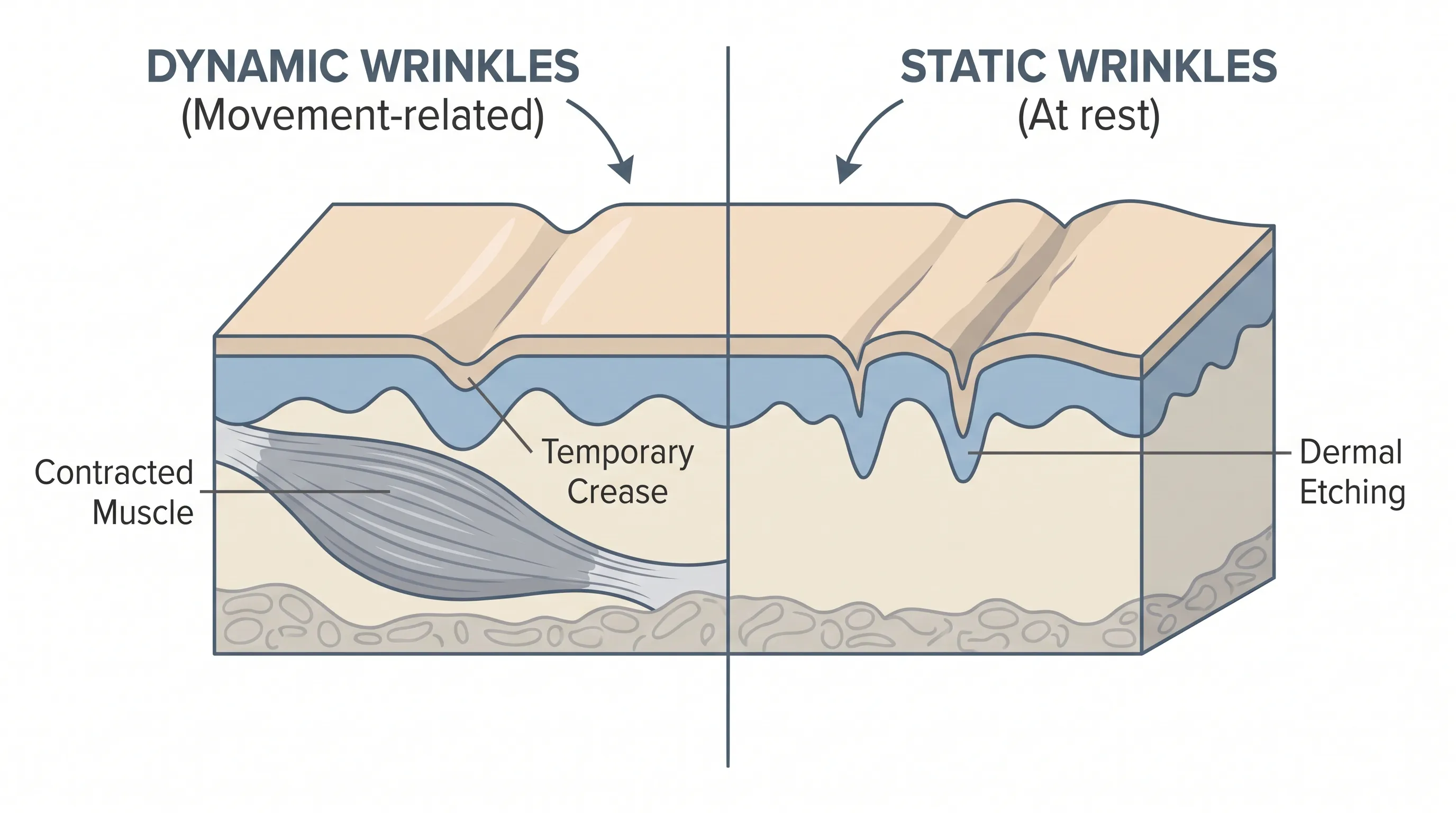
This transition from dynamic to static wrinkles is the critical window where preventative Botox becomes effective. By intervening before the lines become permanent, individuals can preserve the smoothness of their skin. The concept of early signs of aging botox is rooted in this biological reality. It is not about freezing the face or altering one’s appearance drastically; it is about reducing the mechanical stress on the skin to allow it to heal and maintain its integrity. Understanding this distinction is vital for anyone considering cosmetic interventions. It shifts the narrative from vanity to health maintenance, aligning aesthetic treatments with broader wellness goals.
Furthermore, external factors accelerate this process. Ultraviolet (UV) radiation from the sun is the primary cause of premature skin aging, known as photoaging. According to the National Institute on Aging, UV rays break down collagen and elastin fibers, weakening the skin’s support structure. When combined with repetitive muscle movements, the result is deeper, more pronounced wrinkles. Therefore, a comprehensive approach to preventing early signs of aging must include both muscle relaxation through Botox and protection against environmental damage through sun care and antioxidants.
Identifying the Early Signs That Indicate It’s Time for Botox
Recognizing the right time to start preventative Botox is subjective and varies from person to person. There is no universal age threshold, as genetics, skin type, and lifestyle play significant roles. However, there are specific visual and tactile cues that suggest the onset of dynamic wrinkles. Being attuned to these early signs of aging botox candidates can help you make timely decisions.
One of the most common indicators is the appearance of fine lines on the forehead. These horizontal lines often emerge when raising the eyebrows. Initially, they may only be visible when you are actively expressing surprise or curiosity. If you notice these lines lingering for a few seconds after your expression relaxes, it is a sign that the skin is beginning to lose its ability to snap back completely. Similarly, the glabellar lines, often referred to as "11s," form between the eyebrows. These are caused by frowning or concentrating. Early detection involves checking for faint vertical lines in this area when you are focused on a task or looking at a screen.
Crow’s feet, the fine lines radiating from the outer corners of the eyes, are another early indicator. These are caused by smiling and squinting. Because the skin around the eyes is thinner and more delicate, it is often the first area to show signs of aging. If you notice subtle creases appearing when you smile broadly, it may be time to consider consultation. Additionally, bunny lines on the sides of the nose, which appear when scrunching the nose, can also be an early sign. While less common, they can be addressed with targeted Botox injections.
It is important to distinguish between dehydration lines and true dynamic wrinkles. Dehydration lines are temporary and result from a lack of moisture in the skin. They often appear as fine, crisscrossing patterns and can be resolved with proper hydration and moisturization. True dynamic wrinkles, however, follow the pattern of muscle movement and persist despite hydration. A simple test is to observe your face in a well-lit mirror while making various expressions. If the lines disappear completely when your face is neutral, they are still dynamic. If faint traces remain, they are beginning to become static. This is the ideal stage for early signs of aging botox intervention.
Genetics also play a crucial role. If your parents developed deep wrinkles at a young age, you may be predisposed to earlier wrinkling. In such cases, starting preventative treatments earlier may be beneficial. Conversely, individuals with thicker skin or higher collagen density may not need intervention until later in life. Consulting with a board-certified dermatologist or plastic surgeon is the best way to assess your individual risk factors and determine the appropriate timing for treatment, as recommended by the American Academy of Dermatology.
How Preventative Botox Works: Mechanism and Benefits
Botox, the brand name for botulinum toxin type A, is a neurotoxic protein that temporarily blocks nerve signals in the muscles where it is injected. When used for cosmetic purposes, it works by inhibiting the release of acetylcholine, a neurotransmitter responsible for triggering muscle contractions. By blocking this signal, the targeted muscles are unable to contract forcefully, resulting in a relaxation of the area. This relaxation smooths out the overlying skin, preventing the formation of wrinkles. More information on how botulinum toxins work can be found via the U.S. Food and Drug Administration.
In the context of preventative care, the goal is not to eliminate all movement but to reduce the intensity and frequency of muscle contractions. This subtle reduction is enough to prevent the skin from folding deeply and repeatedly. Over time, this can train the muscles to move less aggressively, further reducing the risk of wrinkle formation. The benefits of early signs of aging botox extend beyond mere aesthetics. By preserving the skin’s structural integrity, preventative Botox can delay the need for more invasive procedures later in life, such as surgical facelifts or deep filler injections.
One of the key advantages of starting early is the lower dosage required. Preventative treatments typically involve smaller amounts of Botox compared to corrective treatments for deep, static wrinkles. This not only reduces the cost but also minimizes the risk of side effects. Additionally, because the muscles have not yet developed strong memory patterns, the results can appear more natural. The face retains its expressiveness while avoiding the etching of lines.
Another benefit is the psychological impact. Many individuals report feeling more confident and proactive about their appearance when they take steps to preserve their youthfulness. This sense of control can contribute to overall well-being. Furthermore, the regular visits required for Botox maintenance provide opportunities for ongoing skin assessments. Dermatologists can monitor skin health, detect early signs of other conditions, and adjust skincare recommendations as needed.
It is also worth noting that Botox has therapeutic uses beyond cosmetics. It is FDA-approved for treating conditions such as chronic migraines, excessive sweating, and muscle spasms. This broad medical acceptance underscores its safety profile when administered correctly. For those concerned about the safety of early signs of aging botox, knowing its extensive medical history can provide reassurance. However, it is crucial to emphasize that Botox should only be administered by licensed and experienced professionals to ensure safety and efficacy.
Comparing Preventative vs. Corrective Botox Treatments
Understanding the difference between preventative and corrective Botox is essential for setting realistic expectations. While the substance used is the same, the goals, techniques, and outcomes differ significantly. Preventative Botox is administered to individuals who have minimal to no visible wrinkles at rest. The primary objective is to stop dynamic lines from becoming static. In contrast, corrective Botox is used to treat existing static wrinkles that are visible even when the face is relaxed.
| Feature | Preventative Botox | Corrective Botox |
|---|---|---|
| Target Audience | Individuals in their 20s-30s with dynamic lines | Individuals with established static wrinkles |
| Goal | Prevent formation of permanent wrinkles | Soften or eliminate existing wrinkles |
| Dosage | Lower units required | Higher units often needed |
| Frequency | May require less frequent touch-ups over time | Regular maintenance every 3-4 months |
| Results | Subtle, natural preservation | Visible improvement in skin smoothness |
| Muscle Memory | Weakens muscle habit before it sets | Retrains already established muscle patterns |
As illustrated in the table, preventative Botox is a lighter, more subtle intervention. It focuses on maintaining the status quo rather than reversing damage. This makes it an attractive option for younger patients who want to avoid the "frozen" look sometimes associated with heavy corrective treatments. The lower dosage also means a reduced risk of complications such as ptosis (drooping eyelids) or asymmetry.
Corrective Botox, on the other hand, requires a more aggressive approach to overcome the entrenched muscle habits and deep tissue changes. Patients seeking corrective treatment may need higher doses and more frequent sessions to achieve desired results. In some cases, Botox alone may not be sufficient for deep static wrinkles, necessitating combination therapies with dermal fillers or laser resurfacing.
For those considering early signs of aging botox, the preventative route offers a strategic advantage. It allows for a gradual, controlled approach to aging. By starting early, patients can maintain a consistent appearance over decades, avoiding the dramatic changes that can occur when waiting until wrinkles are deep. This long-term perspective is key to successful aesthetic management. It transforms Botox from a quick fix into a component of lifelong skin health.
Integrating Botox into a Holistic Skincare Routine
While Botox is a powerful tool for preventing wrinkles, it is not a standalone solution. Optimal results are achieved when it is integrated into a comprehensive skincare routine. Sun protection is arguably the most critical component. Daily use of broad-spectrum sunscreen with an SPF of 30 or higher protects the skin from UV-induced collagen breakdown. Without sun protection, the benefits of Botox can be undermined by ongoing photoaging. The Centers for Disease Control and Prevention (CDC) emphasizes the importance of sun protection in preventing skin damage and aging.
Topical retinoids are another cornerstone of anti-aging skincare. Retinoids, derivatives of vitamin A, promote cell turnover and stimulate collagen production. They work synergistically with Botox by improving skin texture and thickness. Using a prescription-strength retinoid or an over-the-counter retinol product can enhance the smoothness of the skin and complement the muscle-relaxing effects of Botox. However, it is important to introduce retinoids gradually to avoid irritation.
Antioxidants, such as vitamin C and E, help neutralize free radicals generated by environmental stressors. Applying a vitamin C serum in the morning can protect the skin from pollution and UV damage. Hydration is also vital. A well-hydrated skin barrier functions better and appears plumper, which can minimize the appearance of fine lines. Look for moisturizers containing hyaluronic acid, ceramides, and glycerin to lock in moisture.
Lifestyle factors also play a significant role. Smoking accelerates skin aging by reducing blood flow and depleting vitamin C. A balanced diet rich in fruits, vegetables, and healthy fats provides the nutrients necessary for skin health. Adequate sleep allows the body to repair and regenerate cells. Stress management techniques, such as meditation or yoga, can reduce the tendency to frown or tense facial muscles, further supporting the effects of Botox.
Regular consultations with a dermatologist are essential for tailoring this routine to your specific needs. They can recommend professional-grade products and procedures that complement your Botox treatments. Chemical peels, microdermabrasion, and laser therapies can address surface irregularities and pigmentation issues that Botox does not target. By combining these modalities, you create a multi-layered defense against aging.
Potential Risks and Considerations for Early Treatment
While Botox is generally safe, it is a medical procedure and carries potential risks. Understanding these risks is crucial for making an informed decision. The most common side effects are mild and temporary, including bruising, swelling, redness, and pain at the injection site. These usually resolve within a few days. Headaches can also occur shortly after treatment but are typically short-lived.
More serious side effects are rare but can occur if the toxin spreads beyond the injection site. This can lead to muscle weakness in adjacent areas, causing issues such as drooping eyelids (ptosis) or an uneven smile. These effects are usually temporary and resolve as the Botox wears off. To minimize these risks, it is imperative to choose a qualified and experienced injector. Board-certified dermatologists and plastic surgeons have the anatomical knowledge and technical skill to administer Botox safely and effectively. The Mayo Clinic provides detailed information on the risks and side effects associated with botulinum toxin injections.
Another consideration is the development of resistance. In rare cases, the body may develop antibodies to botulinum toxin, rendering future treatments less effective. This is more likely to occur with high doses and frequent treatments. Using the lowest effective dose for preventative purposes can help mitigate this risk. Additionally, taking breaks between treatments can allow the immune system to reset.
Cost is also a factor. Preventative Botox is an ongoing expense, as treatments need to be repeated every three to four months to maintain results. While the initial cost may be lower due to smaller doses, the cumulative cost over time can be significant. Patients should budget accordingly and view it as a long-term investment in their skin health.
Psychological readiness is another important aspect. Some individuals may feel pressure to start treatments due to social media influences or peer pressure. It is important to ensure that the decision to undergo Botox is driven by personal desire rather than external expectations. Realistic expectations are key. Botox can soften lines and prevent new ones, but it cannot stop the aging process entirely. It is one tool in a broader toolkit for maintaining youthful skin.
Frequently Asked Questions
What is the best age to start getting Botox for prevention?
There is no single "best" age for everyone, as it depends on individual genetics and skin type. However, many dermatologists suggest considering preventative Botox in the mid-to-late 20s or early 30s, once dynamic lines begin to appear but before they become permanent static wrinkles. The key is to monitor your skin for early signs of movement-related lines and consult a professional when you notice them lingering after your expression relaxes.
Does Botox prevent new wrinkles from forming?
Yes, preventative Botox works by temporarily relaxing the facial muscles responsible for creating expression lines. By limiting these repetitive movements, it prevents the skin from folding repeatedly, which helps stop dynamic lines from etching into the skin as permanent static wrinkles. It essentially hits the "pause" button on the formation of new wrinkles in treated areas.
How long does preventative Botox last compared to corrective Botox?
The duration is generally similar, typically lasting between 3 to 4 months. However, some patients who use Botox consistently for prevention may find that their muscles weaken over time, potentially allowing for longer intervals between treatments as the habit of frowning or squinting diminishes. Consistency is key to maintaining the preventative benefits.
Are there any side effects to starting Botox early?
When administered by a qualified professional, Botox is considered safe. Common mild side effects include temporary bruising, swelling, or redness at the injection site. Serious side effects are rare. Starting early does not inherently increase risks, but over-treatment can lead to a frozen appearance if not managed correctly. Choosing an experienced injector is crucial to minimizing risks.
Can I combine Botox with other skincare treatments for better results?
Absolutely. Combining Botox with a robust skincare routine including sunscreen, retinoids, and antioxidants enhances results. Additionally, procedures like chemical peels, laser resurfacing, or hyaluronic acid fillers can be used in conjunction with Botox to address both muscle movement and skin texture or volume loss. A holistic approach yields the best long-term outcomes.
Conclusion
Navigating the landscape of aesthetic medicine can be daunting, but understanding the role of early signs of aging botox empowers individuals to take charge of their skin health. Preventative Botox is not about resisting age but about managing the visible effects of time with science and strategy. By intervening at the stage of dynamic wrinkles, we can preserve the skin’s integrity and delay the onset of deeper, static lines. This proactive approach aligns with modern wellness principles, emphasizing prevention over correction.
However, Botox is just one piece of the puzzle. Its effectiveness is maximized when combined with diligent sun protection, a nutrient-rich skincare routine, and healthy lifestyle choices. The journey to maintaining youthful skin is a marathon, not a sprint. It requires consistency, patience, and informed decision-making. Consulting with qualified professionals ensures that treatments are tailored to individual needs and administered safely.
As we continue to demystify cosmetic procedures, the stigma surrounding early intervention is fading. More people are recognizing that taking care of their skin is an act of self-care and confidence. Whether you are in your twenties noticing the first faint lines or in your thirties looking to maintain your glow, understanding the science behind early signs of aging botox provides the knowledge needed to make choices that align with your personal goals. Embrace the power of prevention, and let your skin reflect the vitality and care you invest in it.
How we work
Researched and drafted with AI assistance, then reviewed by a human editor against the cited sources.
This article is general health information, not medical advice. Consult a qualified healthcare professional about your own situation.