Can Braces Fix Buck Teeth? A Comprehensive Guide to Treatment Options

Buck teeth, medically known as an overbite or Class II malocclusion, are a common dental concern that affects millions of people worldwide. Characterized by the upper front teeth protruding significantly over the lower teeth, this condition can impact not only the aesthetics of a smile but also oral health, speech, and self-confidence. For many individuals seeking a solution, the primary question is often: can braces fix buck teeth effectively and permanently? The short answer is yes, but the journey to a corrected bite involves understanding the underlying causes, exploring various treatment modalities, and committing to a comprehensive care plan.
The desire to correct protruding teeth is driven by both functional and cosmetic motivations. Functionally, severe overbites can lead to difficulties in chewing, increased risk of trauma to the front teeth, speech impediments, and even jaw pain or temporomandibular joint (TMJ) disorders. Cosmetically, many individuals feel self-conscious about their profile or smile, which can affect social interactions and professional confidence. Fortunately, advancements in orthodontic technology have made it easier than ever to address these issues. Whether you are considering treatment for yourself or your child, understanding the mechanics of how braces work to retract protruding teeth is the first step toward achieving a healthier, more balanced smile. This article delves deep into the science, options, and realities of treating buck teeth, providing you with the knowledge needed to make an informed decision about your oral health journey.
Understanding Buck Teeth and Overbites
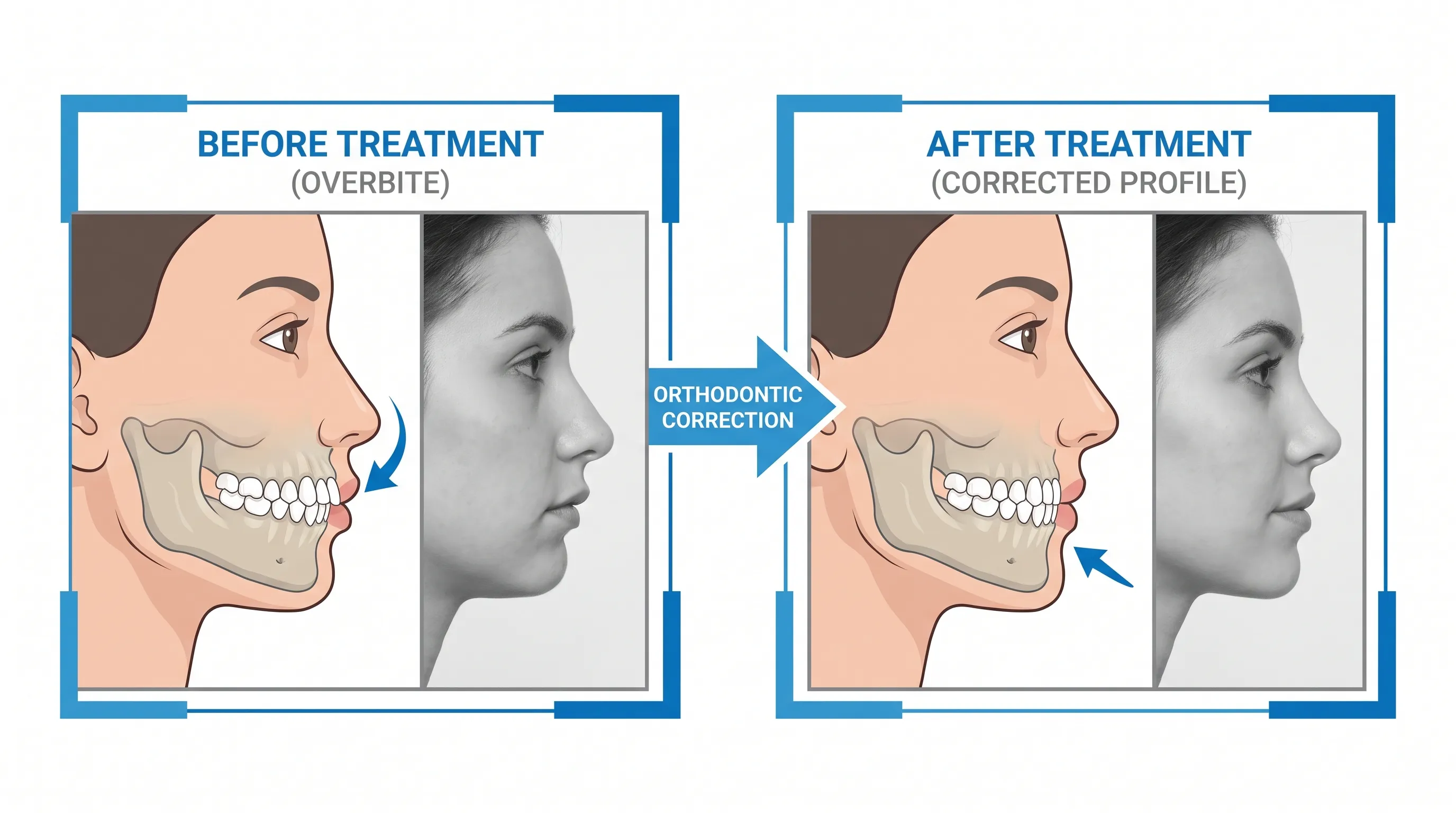
To fully grasp how orthodontic treatment works, it is essential to understand what buck teeth actually are. The term "buck teeth" is a colloquial expression for a specific type of malocclusion, or bad bite, where the upper incisors extend horizontally beyond the lower incisors. In clinical terms, this is often referred to as an excessive overjet or an overbite, although there is a technical distinction between the two. An overbite refers to the vertical overlap of the upper teeth over the lower teeth, while overjet refers to the horizontal projection. When people ask if can braces fix buck teeth, they are usually referring to reducing this horizontal projection. According to the American Association of Orthodontists, malocclusions are classified based on the relationship of the teeth and jaws.
Free calculatorBMI CalculatorCalculate Body Mass IndexOpen the calculator
The Difference Between Dental and Skeletal Overbites
Not all buck teeth are created equal. Orthodontists classify overbites into two main categories: dental and skeletal. A dental overbite occurs when the teeth themselves are angled incorrectly, even if the jawbones are in a relatively normal position. This is often the result of habits such as thumb sucking, prolonged pacifier use, or tongue thrusting during childhood. In these cases, the teeth have shifted forward, creating the appearance of buck teeth. Dental overbites are generally easier to treat and respond very well to traditional braces or clear aligners.
On the other hand, a skeletal overbite is caused by a discrepancy in the size or position of the jawbones. Typically, this involves a smaller or recessed lower jaw (mandible) or an overly prominent upper jaw (maxilla). Because the issue is structural rather than just positional, treating a skeletal overbite is more complex. While braces can camouflage the issue by moving the teeth into a better position, severe skeletal cases may require orthognathic surgery to reposition the jaws for a complete correction. Determining whether your overbite is dental or skeletal is a critical step in the diagnostic process, as it dictates the treatment plan. The National Institute of Dental and Craniofacial Research (NIDCR) provides detailed information on how jaw development impacts occlusion.
Causes of Protruding Front Teeth
Several factors contribute to the development of buck teeth. Genetics play a significant role; if your parents had an overbite, you are more likely to have one as well. However, environmental factors and childhood habits are equally influential. Prolonged thumb sucking or finger sucking beyond the age of four or five can exert pressure on the upper front teeth, pushing them forward and preventing the proper development of the upper arch. Similarly, extended use of bottles or pacifiers can alter the shape of the palate and the position of the teeth.
Other contributing factors include tongue thrusting, where the tongue pushes against the front teeth during swallowing instead of resting against the roof of the mouth. This constant pressure can gradually move the teeth outward. Additionally, missing lower teeth can cause the upper teeth to drift forward due to the lack of opposing contact. Understanding the root cause of your specific condition helps in predicting the stability of the treatment outcome and determining if behavioral modifications are needed alongside physical correction.
How Braces Work to Correct Overbites
When patients ask, can braces fix buck teeth, they are often curious about the mechanical process involved. Braces do not simply push teeth into place; they utilize controlled biological processes to remodel the bone surrounding the teeth. The fundamental principle behind orthodontic movement is bone remodeling. When force is applied to a tooth via braces, it creates pressure on one side of the tooth root and tension on the other.
The Biology of Tooth Movement
On the side where pressure is applied, specialized cells called osteoclasts break down the bone tissue, creating space for the tooth to move. On the opposite side, where tension is created, cells called osteoblasts build new bone to fill in the gap left by the moving tooth. This process is gradual and requires consistent, gentle force. If the force is too strong, it can damage the tooth root or kill the nerve; if it is too weak, no movement occurs. This is why regular adjustments are necessary—to maintain the optimal level of force as the teeth shift.
For buck teeth specifically, the goal is to retract the upper front teeth backward and/or advance the lower teeth forward. This is achieved through a combination of archwires, brackets, and elastic bands. The archwire acts as a track, guiding the teeth into their desired positions. Brackets are bonded to the teeth and hold the wire in place. Elastic bands, or rubber bands, are often used to connect the upper and lower braces, applying additional force to correct the bite relationship between the jaws.
Components Used in Overbite Correction
Several specific components are frequently employed in the treatment of buck teeth. One common tool is the power chain, a connected series of elastic o-rings that apply continuous force to close gaps or rotate teeth. Another critical component is the coil spring, which can be used to create space or push teeth apart. For more significant retraction, orthodontists may use headgear, although this is less common today due to the availability of internal appliances. Headgear attaches to the braces and applies force from outside the mouth to slow the growth of the upper jaw or move the upper teeth back.
In modern practice, Temporary Anchorage Devices (TADs) are increasingly used. These are small titanium screws inserted into the jawbone to provide a fixed anchor point. TADs allow orthodontists to apply precise forces to move teeth without relying on other teeth for support, which is particularly useful in extracting maximum retraction for severe overbites. Understanding these tools helps demystify the treatment process and highlights the sophistication of modern orthodontics in answering the question: can braces fix buck teeth with precision?
Types of Orthodontic Treatments for Buck Teeth
While traditional metal braces are the most well-known solution, they are not the only option available today. The field of orthodontics has expanded to include various appliances and technologies, each with its own advantages and limitations. Choosing the right treatment depends on the severity of the overbite, aesthetic preferences, lifestyle considerations, and budget.
Traditional Metal Braces
Traditional metal braces remain the gold standard for complex orthodontic cases. They consist of stainless steel brackets bonded to the front of the teeth and connected by a metal wire. Their primary advantage is durability and control. Orthodontists can make precise adjustments to the wire and brackets to manage difficult movements, such as rotating teeth or closing large gaps. For severe buck teeth, metal braces are often the most efficient and predictable option. They are also generally the most cost-effective treatment.
Ceramic Braces
For patients concerned about the appearance of metal braces, ceramic braces offer a discreet alternative. These braces function identically to metal braces but use clear or tooth-colored brackets and wires. They are less visible and blend in with the natural color of the teeth. However, ceramic brackets are more brittle than metal and can break if subjected to hard foods. They also tend to be more expensive and may stain if not cared for properly. Despite these drawbacks, they are an excellent choice for adults and teenagers who want the effectiveness of traditional braces with a lower visual profile.
Clear Aligners (Invisalign)
Clear aligners, such as Invisalign, have revolutionized orthodontic treatment. These are removable, transparent plastic trays that fit snugly over the teeth. They are virtually invisible and can be removed for eating and cleaning, offering greater convenience and hygiene. For mild to moderate buck teeth, clear aligners are highly effective. They use a series of custom-made trays to gradually shift teeth into place. However, for severe skeletal overbites or cases requiring significant tooth rotation, aligners may have limitations. Success with aligners depends heavily on patient compliance; they must be worn for 20-22 hours a day to be effective. The Mayo Clinic notes that while aligners are effective for many, they require strict adherence to wear schedules.
Functional Appliances
In growing children and adolescents, functional appliances can be used to modify jaw growth. Devices like the Herbst appliance or Twin Block appliance help to advance the lower jaw forward, correcting the skeletal component of the overbite. These appliances are typically used in conjunction with braces. By guiding jaw growth during puberty, orthodontists can reduce the severity of the overbite and potentially avoid the need for surgery later in life. This proactive approach is crucial for younger patients and highlights that early intervention can change the trajectory of dental development.
Treatment Timeline and What to Expect
One of the most common questions patients have is regarding the duration of treatment. How long does it take to fix buck teeth? The answer varies widely based on individual factors, but understanding the general timeline helps set realistic expectations. On average, orthodontic treatment for overbites lasts between 18 and 24 months. However, mild cases may be resolved in as little as 12 months, while complex cases involving surgery or severe crowding can take up to 3 years.
Factors Influencing Treatment Duration
Several factors influence how quickly teeth can be moved. Age is a significant factor; children and teenagers typically experience faster results because their bones are still growing and more malleable. Adults have denser bone structure, which can slow down tooth movement. The severity of the overbite is another critical determinant. A slight overjet requires less movement than a severe protrusion. Patient compliance is also vital; missing appointments, breaking brackets, or failing to wear elastics or aligners as directed can significantly prolong treatment time.
The Stages of Orthodontic Treatment
Treatment generally follows three main stages. The first stage is alignment and leveling, where the braces or aligners work to straighten the teeth and correct rotations. This phase usually takes the first 6-8 months. The second stage is bite correction, where the focus shifts to correcting the overbite and ensuring the upper and lower teeth fit together properly. This involves the use of elastics and specific wire bends. The final stage is detailing and finishing, where minor adjustments are made to ensure optimal aesthetics and function. Once the active treatment is complete, the retention phase begins, which is crucial for maintaining the results.
Alternatives to Braces for Mild Cases
While braces are the most comprehensive solution, some patients may seek alternatives, especially for mild cases. It is important to note that these alternatives may not correct the underlying bite issue but can improve the appearance of the teeth. When considering if can braces fix buck teeth, it is worth knowing what other options exist for those who may not be candidates for full orthodontic treatment.
Dental Veneers and Bonding
Dental veneers are thin shells of porcelain or composite resin that are bonded to the front surface of the teeth. They can change the shape, size, and color of the teeth, making protruding teeth appear less prominent. Dental bonding involves applying a tooth-colored resin to the teeth to reshape them. These cosmetic procedures are much faster than braces, often completed in just one or two visits. However, they do not move the teeth or correct the bite. They are best suited for adults with minor aesthetic concerns and healthy underlying bone structure. Additionally, veneers require the removal of a small amount of enamel, which is irreversible.
Tooth Extraction
In some cases, particularly where there is severe crowding along with the overbite, extraction of premolars may be recommended. Removing teeth creates space that allows the remaining front teeth to be pulled back, reducing the protrusion. This is often done in conjunction with braces. While extraction sounds drastic, it is a common and safe procedure that can dramatically improve the profile and bite alignment. The decision to extract teeth is made carefully after thorough analysis of the patient's facial structure and dental arches.
| Treatment Option | Best For | Pros | Cons | Estimated Cost | Timeframe |
|---|---|---|---|---|---|
| Metal Braces | Severe overbites, complex cases | Highly effective, durable, cost-effective | Visible, dietary restrictions | $3,000 - $7,000 | 18-24 months |
| Clear Aligners | Mild to moderate overbites | Invisible, removable, comfortable | Requires high compliance, limited for severe cases | $4,000 - $8,000 | 12-18 months |
| Ceramic Braces | Aesthetic-conscious patients | Less visible than metal, effective | More fragile, can stain, higher cost | $4,000 - $8,000 | 18-24 months |
| Veneers | Mild aesthetic issues, adults | Fast results, improves smile aesthetics | Does not correct bite, irreversible, expensive | $1,000 - $2,500 per tooth | 2-3 weeks |
| Surgery | Severe skeletal overbites | Corrects jaw structure, permanent functional fix | Invasive, long recovery, high cost | $20,000 - $40,000 | Variable |
Costs and Insurance Coverage
Financial considerations are a major part of the decision-making process. The cost of fixing buck teeth varies significantly depending on the treatment method, geographic location, and the complexity of the case. Traditional metal braces are generally the most affordable option, ranging from $3,000 to $7,000. Clear aligners and ceramic braces tend to be more expensive, often costing between $4,000 and $8,000. Surgical interventions are the most costly, potentially exceeding $20,000 when combined with orthodontics.
Insurance and Payment Plans
Many dental insurance plans offer coverage for orthodontic treatment, particularly for children under the age of 18. Coverage for adults is less common but becoming more available. It is essential to check with your insurance provider to understand your specific benefits, including lifetime maximums and waiting periods. Most orthodontic offices also offer flexible payment plans, allowing patients to spread the cost over the duration of treatment. Some providers accept Health Savings Accounts (HSA) or Flexible Spending Accounts (FSA), which can provide tax advantages.
Maintaining Results: The Importance of Retainers
Once the braces are removed, the treatment is not entirely over. Teeth have a memory and a natural tendency to shift back to their original positions, a phenomenon known as relapse. To prevent buck teeth from returning, wearing a retainer is non-negotiable. Retainers hold the teeth in their new positions while the surrounding bone and gums stabilize. There are two main types of retainers: removable and fixed.
Removable retainers, such as Hawley retainers or clear plastic retainers, can be taken out for cleaning and eating. Fixed retainers, also known as permanent retainers, consist of a wire bonded to the back of the front teeth. They are always in place and require no patient compliance, but they can be harder to clean around. Most orthodontists recommend wearing retainers full-time for the first few months after treatment, followed by nightly wear indefinitely. Neglecting retainer use is the most common reason for treatment failure, so commitment to this final phase is crucial for long-term success.
Frequently Asked Questions
Can braces fix buck teeth in adults?
Yes, braces can effectively fix buck teeth in adults. While treatment may take slightly longer than in children due to denser bone structure, modern orthodontic techniques such as ceramic braces, clear aligners, and temporary anchorage devices (TADs) allow for successful correction of overbites and protruding teeth in patients of all ages. Adult orthodontics is a rapidly growing field, and many adults achieve excellent results.
How long does it take for braces to fix buck teeth?
The duration varies depending on the severity of the misalignment. Mild cases may take 12 to 18 months, while moderate to severe overbites typically require 18 to 24 months or longer. Consistent wear of appliances and regular orthodontic adjustments are crucial for staying on track. Factors such as age, bone density, and patient compliance also influence the timeline.
Is surgery necessary to fix buck teeth?
Surgery is not always necessary. Most cases of buck teeth can be corrected with braces or aligners alone. However, if the overbite is skeletal—meaning it is caused by the position of the jawbones rather than just the teeth—orthognathic surgery combined with orthodontics may be recommended for optimal functional and aesthetic results. Your orthodontist will determine this through X-rays and clinical examination.
Do buck teeth come back after braces?
Teeth have a natural tendency to shift back to their original positions, a phenomenon known as relapse. To prevent buck teeth from returning, it is essential to wear retainers as prescribed by your orthodontist. Long-term or lifelong retainer use is often recommended to maintain the new alignment. Failure to wear retainers is the primary cause of post-treatment shifting.
Can I fix buck teeth without braces?
For mild cases, clear aligners like Invisalign can be an effective alternative to traditional braces. Dental veneers or bonding may mask the appearance of slightly protruding teeth but do not correct the underlying bite issue. Severe cases generally require orthodontic intervention, either with braces or surgery. Consulting with an orthodontist is the best way to determine if non-brace options are viable for your specific situation.
Conclusion
The question "can braces fix buck teeth" has a resounding yes for the vast majority of patients. Orthodontic treatment offers a proven, effective solution for correcting overbites, improving both the function and aesthetics of the smile. Whether through traditional metal braces, discreet ceramic options, or innovative clear aligners, modern dentistry provides tailored approaches to suit individual needs and lifestyles. While the journey requires time, financial investment, and commitment, the benefits extend far beyond a straighter smile. Correcting buck teeth can enhance oral health, prevent future dental complications, and boost self-confidence.
It is crucial to consult with a qualified orthodontist to determine the specific nature of your overbite and the most appropriate treatment plan. Early intervention in children can simplify treatment, while adults can still achieve remarkable results with today's advanced technologies. Remember that the end of active treatment is just the beginning of maintenance; diligent retainer use is key to preserving your new smile for a lifetime. By taking the first step towards consultation, you are investing in your long-term health and well-being. For more information on oral health conditions, visit the Centers for Disease Control and Prevention (CDC).
How we work
Researched and drafted with AI assistance, then reviewed by a human editor against the cited sources.
This article is general health information, not medical advice. Consult a qualified healthcare professional about your own situation.