Bunion Surgery Cost: Complete Price Guide, Insurance & Financing

Dealing with a persistent foot deformity can significantly impact your daily mobility, exercise routines, and overall quality of life. When conservative measures like orthotic inserts, wider footwear, and anti-inflammatory medications no longer provide adequate relief, surgical intervention often emerges as the most effective solution. However, navigating the financial aspects of this procedure can be overwhelming. The bunion surgery cost varies widely based on numerous clinical, geographic, and administrative factors, making transparent financial planning essential before scheduling a consultation. Understanding the complete breakdown of surgical expenses, insurance coverage parameters, and long-term financial implications empowers patients to make confident, well-informed healthcare decisions without unexpected fiscal burdens. This comprehensive guide examines every financial component of hallux valgus correction, from preoperative diagnostics to extended rehabilitation, ensuring you have the clinical and economic knowledge needed to proceed safely and affordably.
Understanding Bunion Surgery: What to Expect
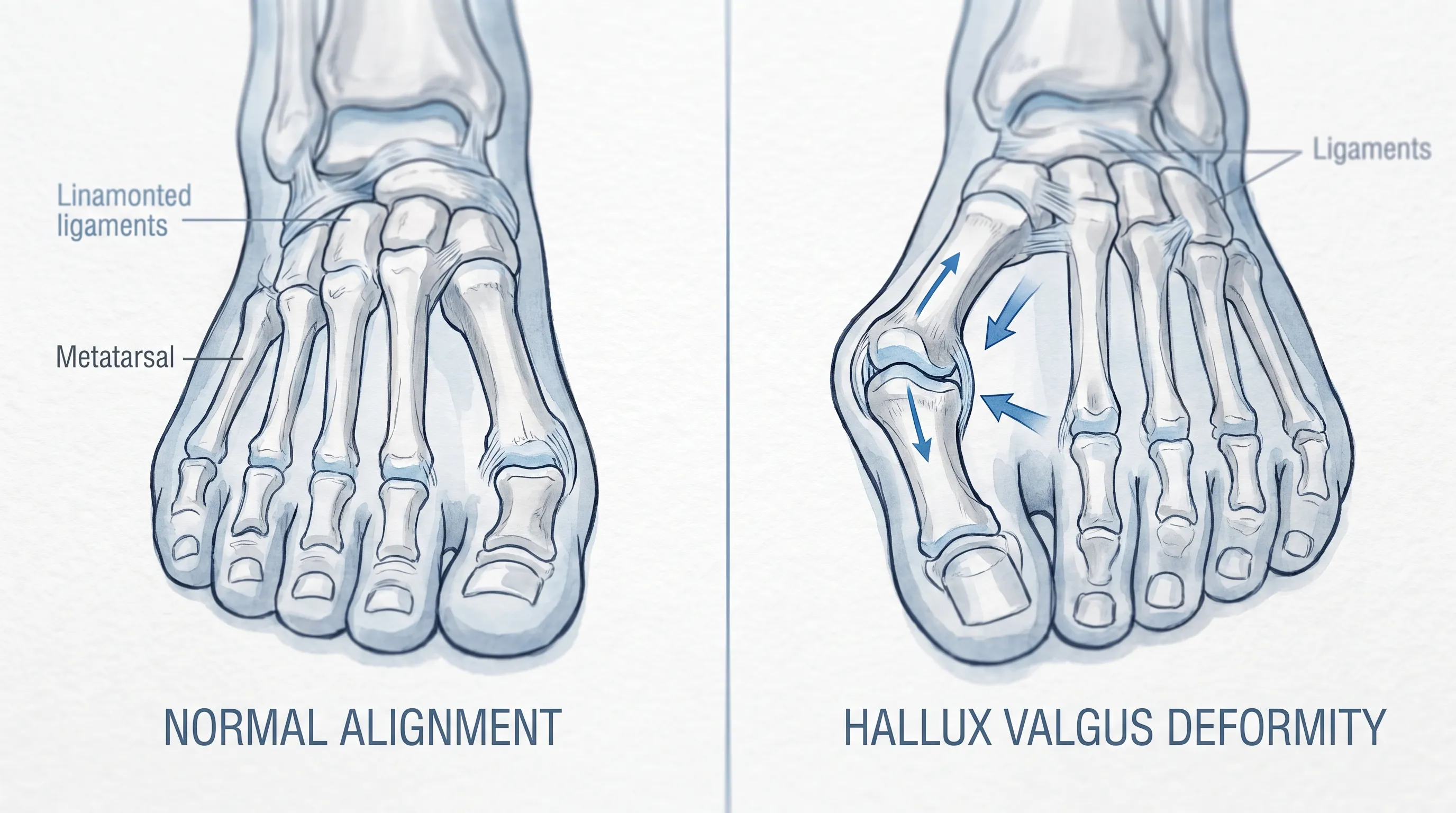
Bunions, medically classified as hallux valgus, represent a progressive structural deformity where the metatarsophalangeal joint at the base of the big toe shifts outward while the toe itself angles inward toward adjacent digits. This misalignment creates a prominent bony protrusion along the medial aspect of the foot, frequently accompanied by soft tissue inflammation, joint stiffness, and chronic discomfort. Over time, repetitive biomechanical stress, genetic predisposition, ill-fitting footwear, and neuromuscular imbalances exacerbate the condition, potentially leading to secondary complications such as metatarsalgia, hammertoe formation, and altered gait mechanics. When nonoperative interventions fail to halt progression, surgical realignment becomes the definitive treatment pathway. The procedural approach focuses on correcting angular deviation, removing osteophytic formations, rebalancing surrounding ligaments, and restoring normal joint kinematics. Patients considering intervention should expect a comprehensive clinical evaluation, advanced imaging studies, and individualized surgical planning tailored to their specific anatomical presentation.
Free calculatorFoot Reflexology ChartFoot reflexology points and corresponding organsOpen the calculatorThe Anatomy of a Bunion and Why Surgery is Performed
The first metatarsophalangeal joint functions as a critical weight-bearing structure during the toe-off phase of walking. In hallux valgus, abnormal lateral forces gradually displace the metatarsal head medially while the proximal phalanx deviates laterally. This mechanical shift stretches the medial joint capsule, tightens lateral soft tissues, and compresses articular cartilage. Persistent malalignment increases joint reaction forces, accelerating degenerative arthritis and compromising overall foot stability. Surgical correction addresses these biomechanical abnormalities through precise osteotomies, soft tissue releases, and internal fixation techniques. By restoring proper joint congruency, patients experience significant pain reduction, improved footwear compatibility, and enhanced functional mobility. Orthopedic specialists and podiatric surgeons carefully evaluate radiographic angular measurements, joint flexibility, and arthritic changes to determine the optimal operative strategy. Understanding the structural rationale behind surgical intervention clarifies why the procedure delivers lasting therapeutic benefits when appropriately indicated.
Types of Surgical Procedures
Multiple surgical techniques exist for hallux valgus correction, each selected based on deformity severity, joint integrity, and patient activity levels. Distal soft tissue procedures, such as the McBride operation, address mild angular deviations by releasing contracted lateral structures and repairing medial capsular laxity. Osteotomies, including the Austin/Chevron and Scarf techniques, involve controlled bone cuts that allow precise realignment of the metatarsal head while maintaining structural stability through screw or plate fixation. For severe deformities or advanced osteoarthritis, arthrodesis permanently fuses the joint, eliminating painful motion while correcting alignment. Proximal metatarsal osteotomies and Lapidus procedures correct hypermobility by stabilizing the tarsometatarsal joint. Minimally invasive bunion surgery utilizes small portal incisions, specialized burrs, and fluoroscopic guidance to perform controlled bone modifications with reduced soft tissue trauma. Each technique carries distinct clinical advantages, operative timelines, and financial considerations that directly influence the overall bunion surgery cost, as outlined in comprehensive surgical treatment guidelines.
Candidacy for Surgery vs. Conservative Management
Not every patient with hallux valgus requires operative intervention. Clinical guidelines recommend exhausting conservative therapies before considering surgical correction, including custom orthotic fabrication, targeted stretching protocols, anti-inflammatory medications, activity modification, and properly fitted footwear with wide toe boxes, per established conservative management standards. Surgery becomes indicated when conservative measures fail to alleviate persistent pain, progressive deformity interferes with daily ambulation, secondary pathologies develop, or significant functional limitations emerge. Patients must maintain realistic expectations regarding postoperative recovery timelines, weight-bearing restrictions, and potential complications. Thorough medical history review, vascular assessment, and glycemic control evaluation ensure surgical safety, particularly for individuals with diabetes, peripheral vascular disease, or autoimmune conditions. Shared decision-making between patient and surgeon guarantees that clinical indications align with personal lifestyle requirements and financial capacity.
Breaking Down the Bunion Surgery Cost
The financial landscape of foot reconstructive surgery encompasses multiple discrete billing components that collectively determine the final financial responsibility. The bunion surgery cost is never a single flat rate but rather an aggregated total of professional services, facility utilization, diagnostic requirements, and postoperative necessities. Transparency in surgical pricing requires understanding how healthcare systems itemize these expenses and why variations occur across different practice environments. Patients should anticipate charges spanning preoperative consultations, intraoperative resources, and extended recovery support. Medical billing utilizes standardized Current Procedural Terminology codes to categorize each service, enabling insurers to adjudicate claims according to contractual fee schedules. Recognizing how these billing mechanisms operate demystifies financial statements and empowers patients to audit charges, verify coverage applicability, and identify potential discrepancies before final payment.
Surgeon and Facility Fees
Professional surgeon fees represent compensation for operative expertise, preoperative planning, intraoperative execution, and postoperative management. These charges correlate with surgical complexity, operative duration, specialized training credentials, and regional market standards. Facility fees cover operating room utilization, sterile instrumentation, surgical nursing staff, recovery area monitoring, and administrative overhead. Hospital-based procedures typically incur higher facility charges due to elevated operational costs, staffing ratios, and regulatory compliance requirements. Conversely, freestanding ambulatory surgery centers often provide streamlined scheduling, specialized orthopedic teams, and optimized workflow efficiency, resulting in lower overhead expenses that translate into reduced financial burden for patients. Understanding the distinction between professional and technical components of surgical billing clarifies why quotes may vary and enables more accurate financial forecasting.
Anesthesia and Preoperative Testing
Safe operative care requires comprehensive anesthetic management and thorough preoperative medical evaluation. Anesthesia fees depend on administration methodology, monitoring complexity, provider credentials, and procedure duration. Local anesthesia with monitored sedation typically generates lower costs compared to general anesthesia or regional nerve blockade techniques performed by board-certified anesthesiologists. Preoperative testing ensures physiological readiness for surgical stress and identifies contraindications requiring medical optimization, aligning with national surgical safety recommendations. Standard diagnostic requirements include complete blood counts, comprehensive metabolic panels, coagulation studies, electrocardiograms for patients over fifty or with cardiovascular histories, and updated weight-bearing radiographs. Advanced imaging such as computed tomography or magnetic resonance may be indicated for complex revisions or severe arthritic degeneration. Each diagnostic component carries separate laboratory or radiology charges that accumulate before the operative date. Coordinating these requirements through a single integrated health network often reduces redundant testing and minimizes financial duplication.
Postoperative Care and Rehabilitation Expenses
Surgical success relies heavily on structured postoperative management, which generates additional costs beyond the initial procedure. Immediate expenses include prescription analgesics, anti-inflammatory medications, prophylactic antibiotics, and specialized postoperative footwear designed to immobilize the forefoot while protecting osteotomy sites. Durable medical equipment such as surgical boots, elastic compression wraps, and cryotherapy devices support early healing phases. Physical therapy initiation typically occurs once soft tissues stabilize, focusing on progressive range-of-motion exercises, edema reduction, gait retraining, and intrinsic foot muscle strengthening. Therapy frequency extends over several weeks, with costs varying by provider rates, session duration, and insurance authorization limits. Follow-up office visits for wound assessment, suture removal, radiographic verification, and progressive weight-bearing clearance generate standard evaluation charges. Patients should budget comprehensively for these extended recovery requirements rather than focusing exclusively on the operative event itself.
Insurance Coverage and Out-of-Pocket Expenses
Navigating health insurance reimbursement for orthopedic procedures requires understanding policy terminology, medical necessity criteria, and contractual reimbursement methodologies. Most commercial health plans, Medicare Advantage networks, and traditional Medicare programs recognize bunion surgery as a covered benefit when specific clinical thresholds are met. However, coverage does not equate to full financial responsibility elimination. Patients remain accountable for annual deductibles, copayment structures, coinsurance percentages, and any services exceeding authorized limitations. Prior authorization requirements mandate that surgeons submit comprehensive clinical documentation demonstrating failed conservative therapy, documented pain levels, functional impairment assessments, and radiographic evidence of deformity progression. Understanding how these administrative processes function prevents claim denials, reduces financial surprises, and ensures seamless care coordination.
Does Health Insurance Cover Bunion Procedures?
Health insurance carriers universally cover bunion surgery when medical necessity documentation satisfies policy requirements. Elective corrections for cosmetic purposes typically face automatic exclusion clauses, while functionally indicated procedures receive standard adjudication according to contracted fee schedules. Physicians must provide detailed progress notes illustrating at least three to six months of conservative treatment failure, including documented use of orthotics, activity modification, and pharmacologic interventions. Radiographic measurements demonstrating intermetatarsal and hallux valgus angles exceeding established clinical thresholds further substantiate surgical indication. Patients should verify network participation status, confirm authorization approval timelines, and review specific policy exclusions before scheduling operative dates. Proactive communication with insurance representatives and surgical coordinators ensures accurate financial responsibility estimation and prevents unexpected out-of-network charges.
Navigating Deductibles, Copays, and Coinsurance
Out-of-pocket financial responsibility depends entirely on individual policy design, enrollment tier, and accumulated healthcare utilization throughout the benefit year. High-deductible health plans require patients to satisfy substantial annual thresholds before coinsurance or copayment structures activate, potentially concentrating financial burden within a single benefit period. Traditional plans with lower deductibles often distribute costs across predictable copayment amounts for specialist visits, facility utilization, and prescription medications. Coinsurance percentages typically range from ten to twenty percent of allowed charges after deductible satisfaction, meaning higher procedure costs directly scale patient responsibility. Maximizing out-of-network benefits rarely applies to elective orthopedic surgery, as most insurers restrict coverage to contracted provider networks with negotiated reimbursement rates. Patients should request detailed benefit summaries, verify accumulated deductible balances, and calculate projected coinsurance liabilities using the insurer's allowed amount rather than billed charges.
Strategies for Maximizing Coverage
Optimizing insurance reimbursement requires strategic documentation, timely authorization submission, and accurate coding practices. Surgeons utilize specific CPT codes reflecting the exact procedure performed, anatomical approach, and complexity level. Proper coding prevents downgrading of claims, ensures appropriate reimbursement tier classification, and eliminates audit vulnerabilities. Patients should request itemized explanations of benefits before treatment, verify all submitted codes align with operative reports, and appeal unjust denials through formal review processes. Maintaining organized medical records, conservator notes, and physical therapy documentation strengthens appeal submissions. Additionally, leveraging employer-sponsored wellness incentives, flexible spending account rollovers, and supplemental hospital indemnity policies can offset remaining financial gaps. Proactive insurance navigation transforms unpredictable healthcare expenses into manageable financial planning opportunities.
Geographic and Facility Variations in Pricing
Healthcare economics operate within localized market conditions, meaning identical surgical procedures generate substantially different financial requirements across distinct metropolitan regions, state jurisdictions, and care delivery models. Facility overhead, regional labor costs, malinsurance premiums, and regulatory compliance requirements directly influence pricing structures. Understanding these geographic and administrative variables enables patients to identify cost-effective care settings without compromising clinical quality or surgical outcomes.
Regional Cost Differences Across the United States
Urban coastal metropolitan areas typically exhibit elevated procedural costs due to higher real estate expenses, specialized provider concentration, and increased operational overhead. Conversely, midwestern and southern regions often maintain lower fee schedules reflecting reduced facility costs, favorable malpractice insurance environments, and competitive market dynamics. State Medicaid reimbursement policies also indirectly influence commercial pricing structures, as facilities adjust fee schedules to maintain operational viability when government programs underfund certain services. Patients residing in high-cost regions may explore intra-state travel to accredited facilities in neighboring jurisdictions with more favorable pricing, provided travel logistics, follow-up care coordination, and insurance network boundaries permit such arrangements. Transparent price transparency tools, hospital chargemaster databases, and independent healthcare cost aggregators facilitate geographic financial comparisons.
Hospital vs. Ambulatory Surgery Center Pricing
Facility selection significantly impacts the overall bunion surgery cost due to fundamental differences in operational structure and reimbursement methodologies. Hospital outpatient departments charge premium rates reflecting twenty-four-hour staffing capabilities, intensive care backup availability, and comprehensive diagnostic integration. Ambulatory surgery centers specialize in scheduled, low-to-moderate complexity procedures, optimizing workflow efficiency, standardizing clinical protocols, and reducing administrative overhead. Studies consistently demonstrate that ASC-based orthopedic procedures generate thirty to forty percent lower facility charges while maintaining equivalent clinical outcomes and patient satisfaction metrics. Medicare and commercial insurers increasingly reimburse ASC procedures at standardized rates that favor outpatient migration, provided patient comorbidities remain stable and postoperative support systems are adequate. Selecting an accredited ambulatory surgical center for appropriate candidates represents a proven cost-containment strategy without compromising surgical safety.
Financing Options and Cost-Saving Strategies
Healthcare financial planning extends beyond insurance navigation into structured payment methodologies, tax-advantaged accounts, and strategic cost-reduction techniques. Patients facing substantial out-of-pocket responsibility should explore legitimate financing pathways that preserve cash flow, minimize interest accumulation, and align with personal budgeting frameworks.
Payment Plans and Medical Credit Cards
Many surgical practices offer in-house installment arrangements that distribute total financial responsibility across twelve to twenty-four months, typically without interest or credit check requirements when payments remain current. Medical credit cards provide extended promotional periods with zero interest, though deferred interest structures activate retroactive charges if balances remain unpaid after expiration. Patients should carefully review promotional terms, calculate monthly affordability thresholds, and establish automatic payment mechanisms to avoid penalty interest accumulation. Third-party healthcare lending platforms facilitate rapid approval, fixed monthly installments, and transparent amortization schedules. Comparing effective annual percentage rates, origination fees, and prepayment penalties ensures optimal financing selection aligned with personal financial capacity.
Health Savings Accounts and Tax Deductions
Pre-tax healthcare savings accounts provide significant financial advantages by reducing taxable income while accumulating funds exclusively for qualified medical expenses. Health Savings Accounts and Flexible Spending Accounts cover bunion surgery, anesthesia, physical therapy, prescription medications, and durable medical equipment. Contributions reduce current-year tax liability, grow tax-free, and withdraw tax-free when utilized for eligible expenses. Additionally, patients exceeding ten percent of adjusted gross income in unreimbursed medical expenses may deduct qualified costs during annual tax filing, providing secondary financial relief for substantial procedural outlays. Coordinating account contributions, timing elective procedures near fiscal year transitions, and maximizing employer matching programs optimize long-term healthcare savings strategies.
Negotiating with Providers and Cash Pay Discounts
Uninsured patients or individuals with high-deductible plans frequently qualify for cash pay discounts ranging from twenty to forty percent below standard billed charges. Healthcare facilities recognize that direct payment eliminates insurance administrative costs, claim denial risks, and extended accounts receivable cycles. Patients should request written cash pay price quotes, compare facility rates, and negotiate payment timing in exchange for reduced totals. Many practices offer bundled pricing packages encompassing surgical, facility, anesthesia, and initial postoperative visit fees, eliminating surprise billing and simplifying financial administration. Transparent pricing initiatives, mandated by federal regulations, require facilities to publish standard charges, enabling informed financial decision-making before scheduling operative dates.
| Cost Component | Hospital-Based Range | ASC-Based Range | Cash Pay Discount Average |
|---|---|---|---|
| Surgeon Fee | $1,800 - $4,500 | $1,500 - $3,800 | 15-25% reduction |
| Facility Charge | $3,000 - $7,000 | $1,800 - $4,000 | 30-40% reduction |
| Anesthesia | $600 - $1,500 | $500 - $1,200 | 10-20% reduction |
| Preop Diagnostics | $200 - $800 | $150 - $600 | N/A |
| Postoperative Care | $400 - $1,200 | $300 - $900 | 15-25% reduction |
| Total Estimated Range | $6,000 - $15,000 | $4,250 - $10,500 | 20-35% overall savings |

Recovery Timeline and Long-Term Value
Postoperative rehabilitation demands patience, compliance, and structured physical progression. Initial weeks focus on wound healing, edema control, and protected weight-bearing within surgical footwear. Progressive mobilization initiates radiographic confirmation of bone healing, typically occurring between four and eight weeks postoperatively. Physical therapy reintroduces functional strengthening, gait normalization, and proprioceptive training to restore optimal biomechanical efficiency. Full recovery extends three to six months for uncomplicated cases, with complex revisions or arthrodesis procedures requiring extended consolidation periods, as detailed in postoperative recovery guidelines. The long-term value justifies financial investment through permanent pain elimination, restored ambulation capacity, prevention of secondary foot pathologies, and elimination of expensive conservative care maintenance. Patients report dramatically improved quality of life metrics, enhanced exercise tolerance, and expanded footwear options following successful realignment.
Frequently Asked Questions
How much does bunion surgery typically cost without insurance?
The out-of-pocket cost for bunion surgery without insurance generally ranges from $3,000 to $10,000, depending on geographic location, surgical complexity, facility type, and anesthesia requirements. Ambulatory surgery centers frequently offer competitive pricing compared to hospital outpatient departments. Cash pay discounts, bundled pricing structures, and financing programs can further reduce upfront financial obligations. Requesting detailed cost breakdowns before scheduling ensures transparent financial planning.
Does Medicare cover bunion correction procedures?
Medicare typically covers bunion surgery when it is deemed medically necessary, such as when conservative treatments fail and the deformity causes severe pain or mobility impairment. Standard Part B deductibles and twenty percent coinsurance apply unless supplemental Medigap policies cover remaining balances. Prior authorization and comprehensive documentation demonstrating failed conservative therapy remain mandatory for reimbursement approval.
Are minimally invasive bunion procedures more expensive?
Minimally invasive bunion surgery often has comparable or slightly lower facility and recovery costs due to shorter operative times and reduced need for inpatient stays, though surgeon fees may vary based on specialized training. Smaller incisions decrease soft tissue trauma, accelerate healing timelines, and minimize postoperative rehabilitation expenses. Insurance coverage typically mirrors traditional open techniques when clinical indications align.
What factors cause bunion surgery cost variations across regions?
Regional cost differences stem from local market rates, facility overhead, anesthesia provider fees, state Medicaid reimbursement rates, and the concentration of specialized orthopedic or podiatric surgeons. Metropolitan areas with elevated cost-of-living indices generally reflect higher procedural pricing. Patients should consult regional healthcare cost transparency databases to identify competitive pricing within acceptable travel distances.
Can I use a Health Savings Account for bunion surgery?
Yes, bunion surgery is a qualified medical expense under IRS guidelines. You can use pre-tax funds from an HSA or FSA to cover surgical fees, anesthesia, physical therapy, and prescribed postoperative medical equipment. Coordination with your employer benefits administrator ensures timely fund distribution and maximizes tax-advantaged savings potential.
Conclusion
Understanding the bunion surgery cost requires comprehensive evaluation of clinical, administrative, and financial variables that collectively determine your ultimate investment in long-term foot health. Transparent pricing structures, strategic insurance navigation, facility selection optimization, and structured financing pathways transform potentially overwhelming expenses into manageable healthcare investments. Patients who proactively engage with surgical coordinators, verify coverage parameters, negotiate cash pricing, and utilize tax-advantaged accounts consistently achieve superior financial outcomes without compromising clinical quality. The permanent elimination of chronic pain, restoration of functional mobility, and prevention of progressive joint degeneration justify careful financial planning and informed decision-making. By implementing the strategies outlined in this guide, patients confidently navigate the healthcare financial landscape, secure appropriate coverage, and prioritize sustainable recovery. Consult a board-certified orthopedic specialist or podiatric surgeon to evaluate your specific anatomical presentation, explore personalized surgical options, and receive customized financial counseling tailored to your unique clinical and economic circumstances.
How we work
Researched and drafted with AI assistance, then reviewed by a human editor against the cited sources.
This article is general health information, not medical advice. Consult a qualified healthcare professional about your own situation.