How Long Does Local Anesthesia Last: Complete Medical Guide & Recovery Timeline

Undergoing a minor surgical procedure, dental extraction, or dermatological treatment often requires temporary pain control, making the question of how long does local anesthesia last one of the most frequently asked concerns among patients. The uncertainty surrounding numbness duration can create anxiety, disrupt daily routines, and sometimes lead to unintended tissue injuries when sensation has not yet fully returned. Understanding the pharmacological timeline of local anesthetics is essential for proper post-procedure planning, safe self-care, and realistic expectation management. Medical professionals carefully select anesthetic agents based on procedure complexity, anticipated recovery windows, and individual patient physiology. While many assume that all numbing medications behave identically, clinical reality reveals a highly nuanced spectrum of onset times, peak efficacy periods, and gradual clearance phases. Evidence-based guidelines emphasize that duration is never a single fixed value but rather a dynamic range influenced by drug chemistry, administration technique, and biological metabolism (Mayo Clinic). Patients who understand these variables are better equipped to protect themselves during the vulnerable window of reduced sensation, adhere to appropriate dietary restrictions, and recognize when prolonged numbness transitions from normal physiological clearance to a potential clinical concern. This comprehensive guide breaks down the science behind local anesthesia, provides procedure-specific timelines, explores metabolic influences, and delivers actionable recovery strategies backed by peer-reviewed research and clinical best practices.
Understanding the Science Behind Local Anesthesia and Its Mechanism
How Nerve Signal Blockade Works
Local anesthetics function by temporarily interrupting the transmission of pain signals along peripheral nerve fibers. At the cellular level, these medications bind to voltage-gated sodium channels located within neuronal membranes. Under normal conditions, these channels open in response to electrical depolarization, allowing sodium ions to rush into the nerve cell and propagate an action potential toward the central nervous system. When a local anesthetic molecule occupies these channels, it physically prevents sodium influx, effectively halting the cascade required for pain signal conduction. Importantly, this blockade does not affect all nerve fibers uniformly. Larger, myelinated motor neurons and proprioceptive fibers often remain partially functional, which explains why patients may still experience pressure, vibration, or limited movement while sharp pain perception is completely eliminated. The reversible nature of this interaction ensures that once the anesthetic molecules diffuse away from the nerve tissue or are metabolized, sodium channels resume normal function and sensation gradually returns to baseline. Clinical studies consistently demonstrate that the depth and duration of blockade correlate directly with drug concentration, lipid solubility, and protein binding capacity (NIH). Highly lipid-soluble compounds penetrate nerve membranes more rapidly and achieve deeper penetration into the intracellular binding site, resulting in both faster onset and extended duration. Understanding this neuropharmacological foundation provides critical context for answering how long does local anesthesia last under varying clinical circumstances.
Free calculatorTDEE CalculatorCalculate Total Daily Energy ExpenditureOpen the calculator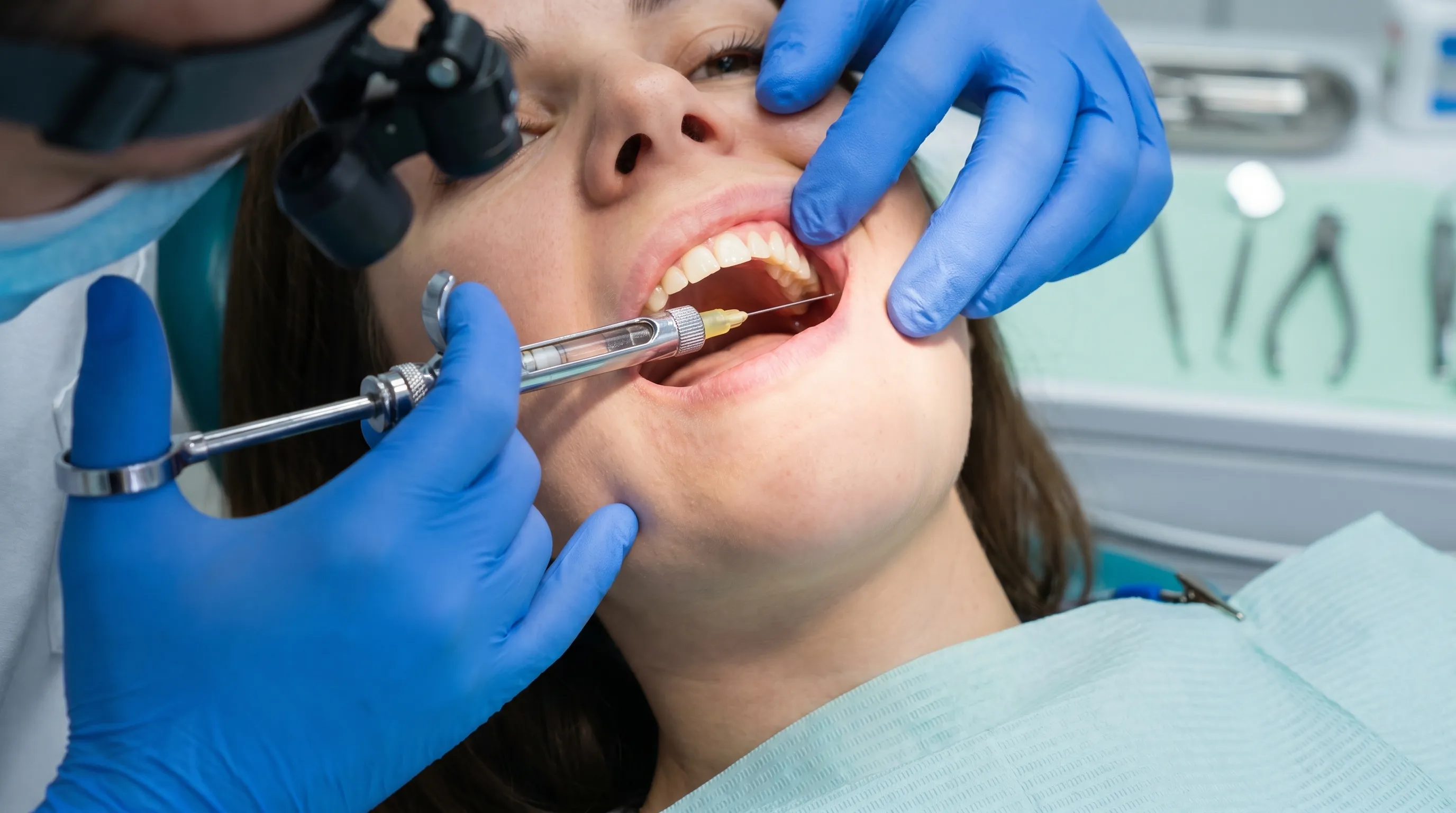
Common Agents and Their Chemical Profiles
Modern clinical practice relies on several well-characterized local anesthetic compounds, each engineered for specific performance characteristics (Cleveland Clinic). Lidocaine remains the most widely utilized agent due to its rapid onset, reliable efficacy, and favorable safety profile. Structurally classified as an amide-type anesthetic, lidocaine typically initiates blockade within two to five minutes and maintains therapeutic numbness for approximately sixty to ninety minutes when administered without vasoconstrictors. When combined with epinephrine, this duration frequently extends to two to four hours, making it highly suitable for dental restorations, minor laceration repairs, and dermatological biopsies. Articaine, another amide compound, features a thiophene ring that enhances tissue diffusion and bone penetration, which explains its popularity in dental practice. Clinical data indicates articaine provides slightly faster onset and marginally prolonged duration compared to traditional lidocaine formulations, particularly in areas requiring dense mandibular anesthesia. Bupivacaine occupies a different pharmacological niche entirely. Engineered for extended procedures and postoperative pain management, bupivacaine exhibits high lipid solubility and strong protein binding, resulting in an onset time of five to fifteen minutes but a remarkably prolonged duration ranging from four to twelve hours. This makes it ideal for longer surgical interventions, joint injections, and peripheral nerve blocks where sustained analgesia reduces postoperative opioid requirements. Mepivacaine and prilocaine serve as alternatives for patients with contraindications to vasoconstrictors or those requiring shorter-acting formulations. Each compound undergoes hepatic metabolism via cytochrome P450 enzymes, primarily CYP1A2 and CYP3A4, with ester-type anesthetics following entirely different hydrolysis pathways in the bloodstream. The distinct pharmacokinetic profiles directly dictate clinical applications and recovery expectations.
How Long Does Local Anesthesia Last by Procedure Type
Dental Work and Oral Surgery
Oral procedures represent the most common clinical scenario where patients experience localized numbness, prompting frequent inquiries about how long does local anesthesia last in the dental context (Mayo Clinic). Routine dental fillings, crown preparations, and periodontal treatments typically utilize lidocaine or articaine formulations with 1:100,000 epinephrine concentrations. Soft tissue anesthesia generally persists for two to four hours, while deeper pulpal anesthesia may resolve slightly faster as the anesthetic gradually diffuses away from the dental pulp chamber. Patients undergoing tooth extractions, implant placements, or root canal therapy often receive slightly higher volumes or alternative agents to ensure comprehensive comfort throughout multi-stage procedures. In these cases, lip, cheek, and tongue numbness can extend beyond the typical window, occasionally reaching five to six hours before complete sensory restoration. The inferior alveolar nerve block, which targets the mandibular division of the trigeminal nerve, produces the most profound and extended effects due to the depth of injection and reduced local vascularity that slows systemic clearance. Mandibular anesthesia consistently outlasts maxillary infiltration techniques by approximately thirty to sixty minutes. Pediatric dental patients may experience marginally shorter duration due to faster metabolic rates and higher tissue perfusion, while older adults often report extended numbness periods resulting from age-related hepatic changes. Understanding these procedure-specific timelines helps patients coordinate meals, avoid accidental cheek biting, and plan transportation accordingly.
Dermatological and Minor Surgical Procedures
Cutaneous interventions ranging from mole removals, cyst excisions, and suturing of lacerations to laser treatments and biopsy procedures rely heavily on precise local anesthetic administration. Dermatologists frequently employ lidocaine with epinephrine to achieve both immediate numbness and hemostasis through localized vasoconstriction. In superficial dermal applications, anesthesia typically lasts one to three hours, which aligns perfectly with the procedural timeline and initial wound closure phase. However, when treating highly vascularized areas such as the scalp, face, or mucosal regions, clinicians often adjust dosages or select longer-acting alternatives to account for accelerated systemic absorption. Surgical sites on the extremities generally retain anesthesia longer due to reduced blood flow and slower clearance rates. Patients undergoing digital nerve blocks for finger or toe procedures frequently experience numbness lasting four to eight hours, which provides extended postoperative comfort during the critical initial healing phase. The strategic use of bupivacaine in plastic surgery, Mohs micrographic reconstruction, and minor orthopedic interventions demonstrates how extended duration directly correlates with reduced analgesic medication requirements during the first twenty-four postoperative hours. Clinicians carefully calculate maximum safe dosages based on patient weight, injection site volume limits, and cumulative exposure across multiple anatomical regions.
Pain Management and Nerve Blocks
Interventional pain specialists utilize targeted nerve blockade techniques that fundamentally alter the question of how long does local anesthesia lasts in chronic pain management scenarios. Peripheral nerve blocks, sympathetic blocks, and epidural analgesia techniques employ significantly higher volumes and often combine short-acting and long-acting agents to achieve multiphase pain control. A single peripheral nerve injection for joint replacement surgery or trauma management may provide twelve to thirty-six hours of continuous anesthesia when bupivacaine or ropivacaine formulations are utilized. Catheter-based continuous infusion systems extend this timeframe indefinitely while the medication delivery persists. Epidural anesthesia, particularly in labor and delivery or postoperative thoracic pain management, demonstrates variable duration depending on epidural fat distribution, cerebrospinal fluid dynamics, and systemic clearance patterns. Patients receiving diagnostic or therapeutic nerve blocks for chronic neuropathic conditions often experience prolonged relief that extends well beyond the pharmacological half-life of the anesthetic itself. This extended therapeutic window results from nerve membrane stabilization, reduction of central sensitization, and interruption of pain cycle perpetuation. Clinical guidelines emphasize that while the primary anesthetic effect typically diminishes within twenty-four hours, the analgesic benefits of nerve modulation may persist for days or weeks, fundamentally distinguishing procedural anesthesia from therapeutic nerve modulation.
Key Factors That Determine Duration
The Role of Vasoconstrictors Like Epinephrine
Vasoconstrictors represent the most significant clinical tool for extending anesthetic duration and reducing systemic toxicity risk. Epinephrine, when combined with amide local anesthetics in ratios of 1:100,000 or 1:200,000, induces profound localized vasoconstriction that dramatically slows absorption into the capillary network. By restricting blood flow at the injection site, vasoconstrictors maintain higher drug concentrations within the target tissue, prolonging sodium channel blockade while simultaneously minimizing peak plasma levels that could trigger cardiovascular or neurological side effects. Research published in anesthesiology journals consistently demonstrates that adding epinephrine extends lidocaine duration by approximately fifty to one hundred percent compared to plain formulations (NIH). This mechanism explains why dental practitioners and surgeons routinely utilize vasoconstricted solutions for procedures requiring extended working time or postoperative comfort. However, clinical contraindications strictly limit epinephrine use in anatomical regions with end-arterial circulation, such as the digits, nose, ears, and penis, where excessive vasoconstriction could compromise tissue perfusion and precipitate ischemic injury. Alternative vasoconstrictors like felypressin exist for specific patient populations with cardiovascular comorbidities, though they demonstrate reduced efficacy in prolonging anesthesia duration. Understanding the vasoconstrictor interaction is essential for accurately predicting how long does local anesthesia last in different clinical contexts.
Individual Metabolic and Physiological Variables
Human physiology introduces substantial inter-individual variability that fundamentally shapes anesthetic clearance timelines. Hepatic function represents the primary determinant for amide-type anesthetic metabolism, as cytochrome P450 enzymes break down these compounds into inactive metabolites that undergo renal excretion (NIH). Patients with chronic liver disease, cirrhosis, or hepatic enzyme induction from chronic medication use experience significantly altered clearance rates. Conversely, genetic polymorphisms in CYP1A2 and CYP3A4 pathways can cause certain individuals to metabolize local anesthetics either rapidly or slowly compared to population averages. Renal impairment primarily affects metabolite elimination rather than active drug clearance, though severe kidney dysfunction may contribute to prolonged systemic exposure in rare circumstances. Age exerts profound influence across the lifespan. Pediatric patients demonstrate accelerated hepatic blood flow and higher enzymatic activity, resulting in faster onset and shorter duration. Elderly patients experience age-related declines in hepatic perfusion, reduced plasma protein binding capacity, and altered volume of distribution, frequently leading to prolonged effects and increased sensitivity to standard dosages. Cardiac output and tissue perfusion directly impact distribution kinetics. Patients with hypertension, peripheral vascular disease, or heart failure exhibit modified blood flow patterns that alter both delivery and clearance rates. Pregnancy introduces unique physiological changes, including increased cardiac output, elevated plasma volume, and enhanced enzymatic activity that collectively accelerate anesthetic metabolism while simultaneously requiring adjusted dosing strategies due to altered protein binding. Body mass index and adipose tissue distribution influence lipophilic drug sequestration, potentially creating secondary release phases that subtly prolong low-level sensory alteration.
Dosage, Injection Technique, and Anatomical Site
Clinical administration variables play equally critical roles in determining anesthetic longevity. Total administered volume and concentration directly correlate with receptor occupancy and blockade depth. Higher doses within maximum safe limits extend duration by maintaining therapeutic concentrations above the minimum effective threshold for longer periods. However, clinicians must balance extended duration against toxicity risk, particularly in highly vascular injection sites where rapid absorption occurs. Injection technique profoundly influences clinical outcomes. Aspirating before deposition prevents intravascular administration while slow, controlled deposition reduces tissue pressure and optimizes perineural distribution. Ultrasound-guided nerve blocks demonstrate superior precision compared to landmark-based techniques, resulting in more consistent duration and reduced total volume requirements. Anatomical site selection remains a fundamental determinant. Highly vascularized facial tissues and scalp regions exhibit rapid clearance due to rich capillary networks, while distal extremities and areas with thicker subcutaneous layers retain anesthesia significantly longer. The specific anatomical plane of injection matters considerably. Superficial subcutaneous infiltrations wear off faster than deep fascial plane blocks or targeted perineural applications. Clinicians carefully consider tissue density, vascular architecture, and diffusion pathways when planning injection strategies. Understanding these technical variables provides patients with realistic expectations regarding how long does local anesthesia last and helps practitioners optimize procedural comfort while maintaining stringent safety standards.
The Typical Timeline of Numbness and Recovery
Onset, Peak Effect, and Gradual Wear-Off
The pharmacokinetic timeline of local anesthesia follows a predictable yet variable curve that begins within minutes and extends across several hours. Initial onset typically manifests within two to ten minutes, depending on tissue acidity, drug formulation, and injection site. As the medication diffuses through extracellular fluid and penetrates perineural tissues, sodium channel occupancy increases until maximum blockade occurs at approximately fifteen to thirty minutes post-injection. During this peak phase, patients experience complete absence of sharp pain while often retaining proprioception and pressure sensitivity. The wear-off process initiates gradually as systemic circulation absorbs residual drug molecules from the injection site and hepatic enzymes begin metabolic breakdown. Patients frequently notice a transitional period lasting sixty to one hundred twenty minutes where sensation returns in a patchy, non-uniform pattern. Fingertip numbness typically resolves last due to dense nerve fiber distribution and distal location, while larger cutaneous areas regain sensation more rapidly. Complete pharmacological clearance generally occurs within four to eight hours for standard dental and dermatological applications, though bupivacaine-based interventions may extend this window to twelve hours or more. The final phase involves full restoration of pain perception, tactile discrimination, temperature sensation, and motor coordination as sodium channel function completely normalizes.
Recognizing Normal Sensations During Recovery
The restoration phase produces distinctive sensory experiences that often concern patients unfamiliar with neurological recovery patterns. Tingling, prickling, warmth, and mild electric shock sensations represent completely normal paresthesia associated with sodium channel reactivation. These transient symptoms indicate healthy neural regeneration rather than nerve damage. Patients may experience mild swelling at the injection site for twenty-four to forty-eight hours due to localized tissue trauma and vasoconstrictor effects. Slight bruising occurs frequently as needle tracks disrupt small capillary vessels. Muscle fatigue or mild jaw stiffness following mandibular blocks reflects temporary altered muscle activation patterns rather than permanent dysfunction. Clinicians consistently report that normal recovery sensations gradually diminish in intensity and frequency as circulation fully restores and inflammatory mediators clear from injection sites. Patients who understand these expected recovery patterns report significantly lower anxiety levels and demonstrate improved compliance with post-procedure instructions. Monitoring the progression from complete numbness to tingling, then to mild tactile hypersensitivity, and finally to normal sensation provides reliable indicators of healthy neurological recovery.
Evidence-Based Recovery Guidelines
Clinical guidelines emphasize protective measures during the anesthesia window to prevent inadvertent injury (Cleveland Clinic). Patients must avoid chewing, biting, or testing numbness with hot objects until full sensation returns, as thermal and mechanical damage frequently occurs when pain feedback mechanisms remain suppressed. Applying cold compresses to injection sites during the first twenty-four hours reduces inflammation and swelling. Over-the-counter analgesics may be introduced proactively before anesthesia completely dissipates, ensuring continuous pain control during the transition period. Hydration supports optimal renal clearance of drug metabolites while rest facilitates tissue healing. Avoiding alcohol consumption for at least twenty-four hours prevents additive central nervous system depression and reduces hepatic metabolic competition. Patients should maintain upright positioning following facial or oral injections to minimize gravitational fluid accumulation and prolonged swelling. Following these evidence-based recommendations minimizes complications and optimizes recovery trajectories.

Practical Tips for Managing Post-Anesthesia Discomfort
Dietary Precautions While Numb
Nutrition during the recovery window requires careful modification to prevent accidental injury. Patients should consume only soft, lukewarm or cool foods until tactile sensitivity fully restores. Avoiding crunchy, sharp-edged, or extremely hot items prevents lacerations, burns, and tissue trauma to insensate mucosal surfaces. Drinking through straws creates negative pressure that may dislodge blood clots or irritate healing sites, so direct cup consumption remains safer. Chewing should occur exclusively on the unaffected side of the mouth to prevent accidental biting of lips, cheeks, or tongue. Patients frequently underestimate bite force during anesthesia, making mindful eating essential. Maintaining adequate caloric intake through smoothies, yogurt, soups, and mashed foods supports immune function and tissue repair during the initial healing phase.
Protecting Soft Tissues from Accidental Injury
The absence of pain feedback removes the body's primary protective mechanism, necessitating conscious behavioral modifications. Patients must resist the urge to repeatedly check or manipulate numb areas, as repetitive trauma can cause significant tissue damage before sensation returns. Using lip balm prevents cracking while numbness reduces natural licking and moisture regulation. Applying gentle pressure rather than rubbing reduces mechanical stress on anesthetized skin. Wearing protective eyewear prevents accidental scratching during sleep when motor control remains partially impaired. Keeping hands occupied with light activities prevents unconscious fidgeting that often results in tissue injury. Implementing these protective strategies dramatically reduces complication rates and accelerates comfortable recovery.
When to Seek Professional Medical Attention
While prolonged numbness frequently reflects normal metabolic variation, certain clinical presentations require immediate evaluation. Sensory disturbances persisting beyond forty-eight hours, complete motor paralysis, severe swelling extending to adjacent structures, or signs of infection including purulent discharge, fever, and escalating pain warrant prompt medical assessment. Development of hives, respiratory distress, or cardiovascular symptoms indicates potential allergic reaction or systemic toxicity requiring emergency intervention. Persistent burning pain, shooting electrical sensations, or complete sensory loss extending beyond the anticipated anatomical distribution suggests possible nerve injury or neuropraxia requiring neurological consultation. Healthcare providers utilize sensory mapping, imaging studies, and nerve conduction testing to differentiate normal prolonged clearance from pathological complications. Early intervention significantly improves outcomes and prevents permanent neurological deficits.
Common Myths Versus Clinical Reality
Myth: Anesthesia Lasts Longer in Certain People
Many patients believe that anxiety, fear, or "strong nerves" fundamentally alter pharmacological duration. Clinical evidence consistently demonstrates that psychological states do not affect hepatic metabolism, tissue diffusion, or sodium channel binding kinetics. While stress may heighten pain perception during onset or increase subjective discomfort during recovery, it does not modify actual anesthetic clearance rates. Variability stems exclusively from physiological, pharmacological, and anatomical factors.
Myth: Drinking Water Flushes It Out Faster
Hydration remains essential for overall health, but excessive fluid intake does not accelerate local anesthetic metabolism. These medications undergo enzymatic transformation rather than renal filtration of intact compounds. Increasing water consumption beyond normal recommendations provides no pharmacokinetic advantage and may create unnecessary discomfort during recovery.
Fact: Metabolism Is the True Driver
Liver enzyme activity, blood flow dynamics, and molecular binding characteristics represent the sole determinants of anesthetic duration. Understanding this pharmacological reality empowers patients to set accurate expectations, follow evidence-based recovery protocols, and avoid unverified interventions that claim to artificially shorten or extend numbness periods.
| Anesthetic Agent | Typical Onset Time | Duration (Plain) | Duration (with Epinephrine) | Primary Clinical Applications |
|---|---|---|---|---|
| Lidocaine | 2-5 minutes | 30-60 minutes | 120-240 minutes | Dental restorations, laceration repair, dermatological procedures |
| Articaine | 2-4 minutes | 60-75 minutes | 180-300 minutes | Mandibular blocks, periodontal surgery, implant placement |
| Bupivacaine | 5-15 minutes | 180-360 minutes | 240-720 minutes | Long-duration surgery, joint injections, peripheral nerve blocks |
| Mepivacaine | 2-4 minutes | 45-90 minutes | 90-150 minutes | Patients with cardiovascular contraindications to vasoconstrictors |
| Prilocaine | 2-5 minutes | 30-90 minutes | 60-180 minutes | Obstetric anesthesia, dermatological treatments, IV regional blocks |
Frequently Asked Questions
How long does local anesthesia last after dental work?
After dental procedures, local anesthesia typically lasts between 2 to 5 hours for soft tissue numbness, while deeper lip and tongue numbness may persist for up to 6 hours depending on the agent used and whether a vasoconstrictor like epinephrine was added.
Can local anesthesia last longer than 24 hours?
Yes, in rare cases involving nerve blocks, high-dose formulations, or individual metabolic variations, numbness can extend beyond 24 hours. Prolonged effects beyond 48 hours warrant immediate medical evaluation to rule out nerve injury or systemic complications.
Does drinking water help wash out local anesthesia faster?
No, hydration does not accelerate the metabolism or elimination of local anesthetics. These medications are primarily processed by the liver and kidneys at a fixed pharmacokinetic rate. Staying hydrated supports overall recovery but will not shorten numbness duration.
Why does local anesthesia wear off at different rates?
The rate of wear-off depends on multiple variables including the specific drug formulation, dosage, presence of vasoconstrictors, injection site vascularity, liver enzyme activity, age, and genetic factors that influence cytochrome P450 metabolism pathways.
Is it normal to feel tingling when local anesthesia wears off?
Yes, mild tingling, warmth, or pins-and-needles sensations are completely normal as nerve conduction gradually restores. These paresthesia symptoms indicate healthy neural regeneration and typically resolve completely within 30 to 90 minutes after initial sensation returns.
Conclusion
Understanding how long does local anesthesia last requires integrating pharmacological science, clinical application variables, and individual physiological characteristics. The duration spectrum spans from brief, localized numbness lasting sixty minutes to extended nerve blockade persisting beyond twelve hours, all dictated by carefully balanced medical factors. Patients benefit significantly from recognizing that anesthetic longevity follows predictable metabolic patterns rather than random or anxiety-driven mechanisms. By adhering to evidence-based recovery protocols, protecting insensate tissues during the vulnerable clearance window, and monitoring for abnormal neurological presentations, individuals ensure safe, comfortable post-procedure experiences. Medical professionals continue refining delivery techniques, optimizing drug formulations, and personalizing dosing strategies to maximize therapeutic benefits while minimizing complications. As anesthesiology and procedural dentistry advance, the focus remains on delivering precise, predictable, and safe sensory control tailored to each patient's unique physiological profile. Armed with accurate information and practical recovery strategies, patients can confidently navigate the anesthesia window, maintain appropriate dietary and behavioral modifications, and return to normal activities with minimal disruption. The transparent integration of clinical knowledge, metabolic understanding, and proactive self-care transforms temporary numbness from an uncertain inconvenience into a managed, predictable component of modern procedural medicine.
For additional clinical guidance on local anesthesia safety and recovery protocols, consult authoritative medical resources including the National Institutes of Health (NIH), Mayo Clinic, Cleveland Clinic, and World Health Organization (WHO) guidelines available through professional healthcare channels.
How we work
Researched and drafted with AI assistance, then reviewed by a human editor against the cited sources.
This article is general health information, not medical advice. Consult a qualified healthcare professional about your own situation.