Best Time to Pump at Night: A Complete Guide for Maximizing Milk Supply and Sleep

Key points
- 0-3 Months: During the newborn phase, milk supply is being established. Frequent removal of milk is critical. Most experts recommend pumping every 2-3 hours, which often includes 1-2 nighttime sessions. The best time to pump at night during this stage is likely multiple times, aligned with your baby’s feeding cues or a strict schedule if exclusive pumping.
- 3-6 Months: As supply stabilizes, you may be able to stretch the interval between pumps to 3-4 hours. You might drop one nighttime session, aiming for one strategic pump during the prolactin peak. This is often where mothers find the best time to pump at night is a single session around 3:00 or 4:00 AM.
- 6+ Months: If your baby is sleeping longer stretches and eating solids, you may be able to drop nighttime pumping entirely, provided your daytime supply is sufficient. However, if you notice a dip in supply, reintroducing an early morning pump can help.
Navigating the delicate balance between maintaining a robust milk supply and getting enough rest is one of the most challenging aspects of early parenthood. For mothers who exclusively pump or combine breastfeeding with pumping, the question of when to express milk during the night is not just about convenience—it is a physiological imperative tied to hormonal rhythms and infant nutritional needs. The best time to pump at night is a topic that generates significant debate among lactation consultants, pediatricians, and experienced mothers, primarily because it involves balancing two competing biological drives: the need for sleep and the need for milk production.
Understanding the nuances of nighttime pumping can transform an exhausting routine into a manageable, even strategic, part of your daily life. Many new mothers believe that sleeping through the night is the ultimate goal, but for those focused on building or maintaining a high volume of breast milk, the middle-of-the-night hours are actually the most productive. This article delves deep into the science of lactation, the role of prolactin, and practical strategies to optimize your pumping schedule. By identifying the best time to pump at night, you can align your efforts with your body’s natural circadian rhythms, ensuring that every drop of milk is produced efficiently while protecting your mental and physical well-being.
Whether you are returning to work, dealing with low supply issues, or simply prefer the control that pumping offers, knowing how to structure your nighttime routine is essential. We will explore specific time windows, the impact of spacing out sessions, and how to adjust your schedule as your baby grows. This comprehensive guide aims to empower you with evidence-based advice, helping you make informed decisions that support both your lactation goals and your need for restorative sleep.
The Science of Lactation: Why Nighttime Matters
To understand the best time to pump at night, we must first look at the hormonal machinery driving milk production. Breast milk synthesis is not a constant, linear process; it is highly dynamic and influenced by a complex interplay of hormones, primarily prolactin and oxytocin. Prolactin is the primary hormone responsible for the production of milk, while oxytocin triggers the let-down reflex, allowing the milk to flow from the alveoli into the ducts. According to the National Institutes of Health (NIH), these hormones play a critical role in the initiation and maintenance of lactation.
Free calculatorSleep CalculatorCalculate sleep cyclesOpen the calculatorThe Role of Prolactin and Circadian Rhythms
Research has consistently shown that prolactin levels follow a circadian rhythm, meaning they fluctuate throughout the 24-hour day. Studies indicate that prolactin levels are significantly higher during the night and early morning hours compared to the daytime. Specifically, serum prolactin concentrations tend to peak between 1:00 AM and 5:00 AM. This natural surge is an evolutionary mechanism designed to ensure that infants, who historically nursed frequently throughout the night, received adequate nutrition.
When you pump during this window of high prolactin sensitivity, your body responds more robustly to the stimulation. The breast tissue is more receptive to the signals sent by the pump, potentially resulting in a higher volume of milk expressed compared to similar sessions during the day. Ignoring this window by sleeping through the night without expression can send a signal to your body that less milk is needed, potentially leading to a gradual decrease in overall supply. Therefore, many lactation experts argue that the best time to pump at night is precisely during this hormonal peak to capitalize on your body’s natural biology.
Feedback Inhibitor of Lactation (FIL)
Another critical factor is the Feedback Inhibitor of Lactation (FIL). FIL is a whey protein found in breast milk that acts as a local regulator of milk production. When the breast is full, FIL accumulates and sends a signal to the milk-producing cells to slow down or stop production. Conversely, when the breast is emptied, FIL levels drop, signaling the body to produce more milk.
If you go too long without pumping or nursing, FIL builds up, and your supply may begin to taper off. Nighttime stretches that are too long can allow FIL to reach inhibitory levels. By pumping at strategic intervals during the night, you remove the milk and the associated FIL, keeping the "faucet" open for continued production. This biochemical reality underscores why spacing out nighttime sessions appropriately is crucial for maintaining supply, especially in the first few months postpartum. The American Academy of Pediatrics emphasizes that frequent milk removal is key to establishing and maintaining milk supply.
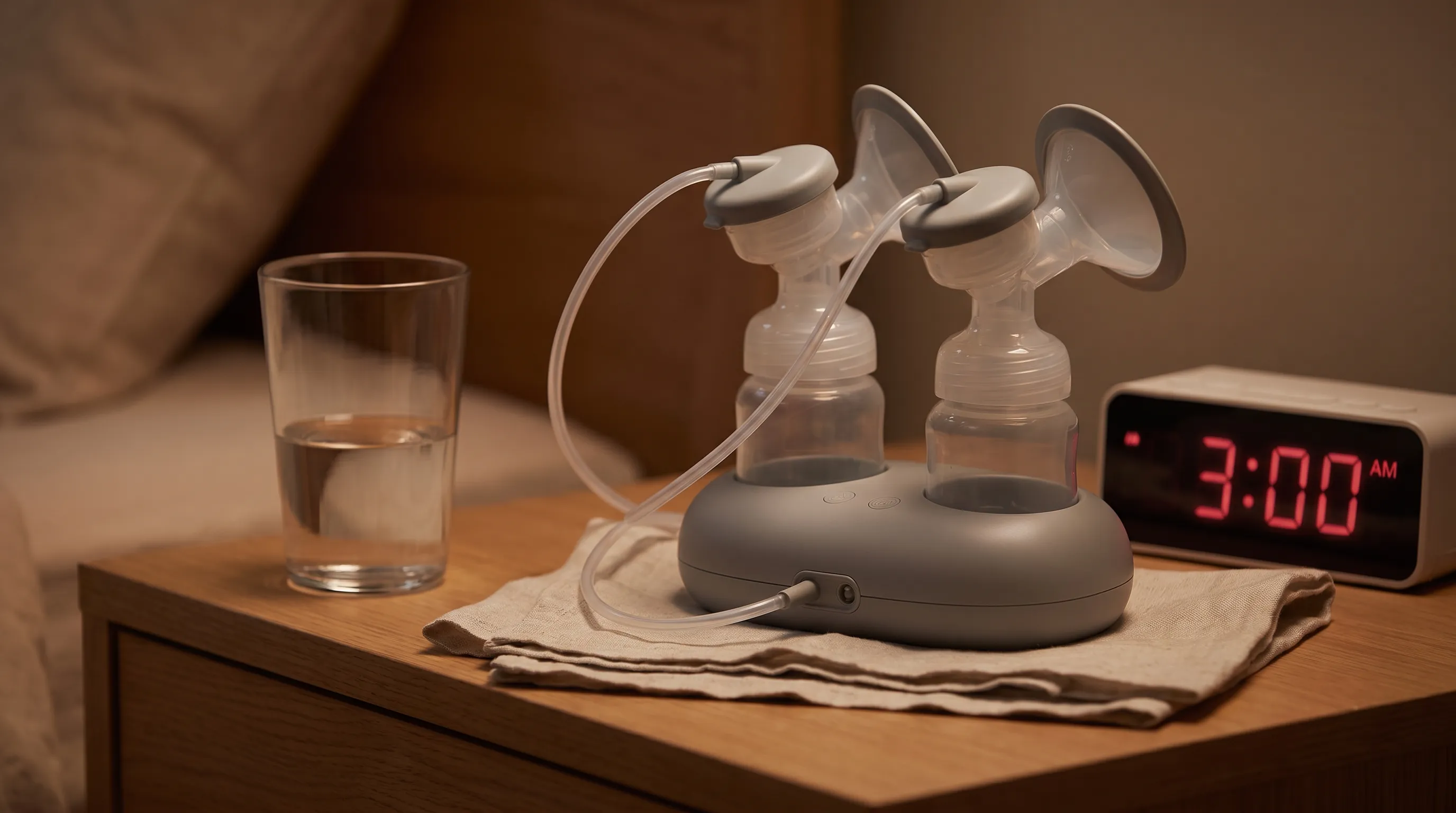
Determining the Best Time to Pump at Night
While individual needs vary, there are general guidelines that can help you identify the best time to pump at night for your specific situation. These recommendations depend on factors such as the age of your baby, your current milk supply, and whether you are exclusively pumping or combining with breastfeeding.
The Golden Window: 1:00 AM to 5:00 AM
As mentioned earlier, the period between 1:00 AM and 5:00 AM is widely considered the golden window for nighttime expression due to peak prolactin levels. For mothers struggling with low supply, adding a pump session during this timeframe can be a game-changer. Even if you are not fully awake, the hormonal environment is primed for production.
However, the exact minute within this window is less important than consistency. Your body thrives on routine. If you choose to pump at 3:00 AM every night, your body will eventually anticipate this stimulation and may begin to prepare milk in advance. Consistency helps regulate your supply and makes the process more predictable. Therefore, when determining the best time to pump at night, pick a time within this window that allows you to get the maximum amount of uninterrupted sleep before and after the session.
Adjusting for Baby’s Age
The frequency and timing of nighttime pumps should evolve as your baby grows. The CDC provides guidelines on storage and handling which often correlate with feeding frequency recommendations.
- 0-3 Months: During the newborn phase, milk supply is being established. Frequent removal of milk is critical. Most experts recommend pumping every 2-3 hours, which often includes 1-2 nighttime sessions. The best time to pump at night during this stage is likely multiple times, aligned with your baby’s feeding cues or a strict schedule if exclusive pumping.
- 3-6 Months: As supply stabilizes, you may be able to stretch the interval between pumps to 3-4 hours. You might drop one nighttime session, aiming for one strategic pump during the prolactin peak. This is often where mothers find the best time to pump at night is a single session around 3:00 or 4:00 AM.
- 6+ Months: If your baby is sleeping longer stretches and eating solids, you may be able to drop nighttime pumping entirely, provided your daytime supply is sufficient. However, if you notice a dip in supply, reintroducing an early morning pump can help.
Exclusive Pumping vs. Combination Feeding
For exclusive pumpers, the pressure to maintain supply is higher because there is no direct nursing stimulation. These mothers often need to adhere more strictly to nighttime pumping schedules to mimic the frequency of a nursing infant. For combination feeders, the best time to pump at night might be determined by when the baby takes their longest bottle or sleeps their longest stretch. If the baby sleeps from 10 PM to 6 AM, a mother might choose to pump once at 2 AM to relieve pressure and maintain supply, or she might pump right before bed and right upon waking, relying on the baby’s daytime nursing to maintain the rest.
Strategies for Efficient Nighttime Pumping
Pumping at night doesn't have to be a miserable experience. With the right strategies, you can minimize disruption to your sleep and make the process as efficient as possible. Finding the best time to pump at night is only half the battle; executing the session effectively is the other.
Create a Sleep-Friendly Environment
Light exposure suppresses melatonin, the hormone that promotes sleep. To protect your sleep quality, keep your pumping environment as dark as possible. Use blackout curtains, eye masks, or dim red-light nightlights, which are less disruptive to circadian rhythms than blue or white light. Avoid checking your phone or turning on bright overhead lights. Prepare your pumping station before you go to bed so you can fumble in the dark if necessary.
Use Hands-Free Equipment
Investing in a hands-free pumping bra or a wearable pump can revolutionize your nighttime routine. Hands-free bras allow you to lie down or sit comfortably without holding flanges in place. Wearable pumps, which fit inside your bra, offer even more freedom, allowing you to remain in bed under the covers. This comfort can help you fall back asleep faster after the session is complete. When you are comfortable, you are more likely to relax, which aids the let-down reflex.
The Power of Relaxation
Stress and anxiety can inhibit oxytocin, making it harder for milk to flow. Nighttime pumping can sometimes feel stressful, especially if you are worried about waking the baby or losing sleep. Practice deep breathing exercises or listen to calming music or white noise while you pump. Visualization techniques, such as imagining milk flowing freely, can also help trigger the let-down reflex. Remember, relaxation is key to efficiency.
Keep Supplies Nearby
Have everything you need within arm’s reach: clean bottles, lids, nipple cream, a glass of water, and snacks if you’re hungry. Waking up fully to search for items breaks your sleep inertia and makes it harder to return to sleep. Hydration is particularly important, as dehydration can negatively impact milk volume. Keep a large water bottle on your nightstand and take sips throughout the session.
Common Challenges and Solutions
Even with the best intentions, nighttime pumping comes with challenges. Addressing these proactively can help you stick to your schedule and maintain your sanity.
Engorgement and Mastitis Risk
Going too long without pumping can lead to engorgement, which is painful and increases the risk of mastitis, a bacterial infection of the breast tissue. The Mayo Clinic notes that mastitis can cause breast pain, swelling, warmth, and redness, along with fever and chills. If you are trying to stretch your nighttime intervals, do so gradually. Increase the time between pumps by 15-30 minutes every few days rather than jumping from 3 hours to 6 hours overnight. If you wake up with hard, painful lumps, hand express or pump just enough to relieve the pressure, but avoid emptying completely if you are trying to reduce supply. Always monitor for signs of mastitis, such as fever, redness, and flu-like symptoms.
Sleep Deprivation
Chronic sleep deprivation is a serious health concern for new parents. If nighttime pumping is leaving you exhausted, reassess your schedule. Are you pumping too frequently? Can you combine sessions? Talk to your partner about sharing nighttime duties, such as diaper changes or burping, so you can focus solely on pumping and then return to sleep immediately. Prioritizing sleep is not selfish; it is necessary for your health and your ability to care for your baby.
Decreasing Supply
If you notice your supply dropping despite consistent pumping, evaluate your nighttime routine. Are you pumping during the prolactin peak? Are your pump parts worn out? Flange size incorrect? Sometimes, adding a "power pumping" session during the night can help boost supply. Power pumping mimics cluster feeding by pumping for short bursts with breaks in between. For example, pump for 20 minutes, rest for 10, pump for 10, rest for 10, pump for 10. This intense stimulation can signal your body to increase production.

Comparing Nighttime Pumping Schedules
Choosing a schedule depends on your lifestyle and goals. Below is a comparison of common nighttime pumping strategies to help you decide which might offer the best time to pump at night for your situation.
| Schedule Type | Description | Pros | Cons | Best For |
|---|---|---|---|---|
| The Strict Interval | Pumping every 3 hours around the clock (e.g., 12 AM, 3 AM, 6 AM) | Maintains high supply; mimics newborn feeding patterns | Highly disruptive to sleep; difficult to sustain long-term | Newborns; mothers with low supply; exclusive pumpers |
| The Prolactin Peak | One session between 1 AM and 5 AM | Capitalizes on hormonal surge; allows longer sleep blocks | May not be enough for very young infants; requires discipline | Mothers with established supply; babies 3+ months |
| The Bookend Method | Pump right before bed (e.g., 10 PM) and right upon waking (e.g., 6 AM) | Maximizes continuous sleep; simple routine | Long gap may cause engorgement; may lower supply if gap is too long | Mothers with oversupply; older babies; combination feeders |
| The Dream Pump | Pumping while drowsy or half-asleep | Minimizes full awakening; preserves sleep inertia | Requires practice; risk of improper flange placement; messy | Experienced pumpers; those desperate for sleep |
Each of these schedules has its merits. The best time to pump at night is ultimately the time that fits seamlessly into your life while meeting your milk production goals. It is not a one-size-fits-all solution. You may need to experiment with different approaches to find what works best for you and your baby.
Integrating Pumping with Baby’s Sleep Training
As your baby grows, you may consider sleep training, which often involves consolidating nighttime feedings. This transition requires careful coordination with your pumping schedule. If your baby stops waking up to eat at night, you must continue to pump to maintain your supply and prevent discomfort.
Gradual Transition
Do not stop nighttime pumping abruptly when your baby starts sleeping through the night. Instead, gradually reduce the duration or frequency of your night pumps. For example, if you usually pump for 20 minutes at 3 AM, reduce it to 15 minutes for a few days, then 10 minutes, and so on. This gradual reduction signals your body to produce less milk at that time without causing engorgement or mastitis.
Monitoring Supply
During this transition, closely monitor your diaper output and your baby’s weight gain. If you notice a significant drop in your daytime supply, you may need to add a quick morning pump or adjust your daytime frequency. Remember, the goal is to shift milk production to the daytime hours when you are awake and active.
Partner Support
Sleep training is a team effort. If your partner is handling nighttime soothing or bottle-feeding expressed milk, communicate your pumping needs clearly. Let them know when you plan to pump so they can manage the baby’s needs accordingly. This collaboration ensures that both parents get some rest and that the baby’s nutritional needs are met.
Frequently Asked Questions
What is the best time to pump at night to maximize milk supply?
The best time to pump at night to maximize milk supply is generally between 1:00 AM and 5:00 AM. This timeframe aligns with the body’s natural circadian rhythm, where prolactin levels—the hormone responsible for milk production—are at their highest. Pumping during this window capitalizes on your body’s hormonal peak, potentially yielding more milk and signaling your body to maintain a robust supply. Consistency is key, so try to pump at the same time each night within this window.
Can I skip nighttime pumping if my baby sleeps through the night?
If your baby is older than 6 months, gaining weight appropriately, and you have a well-established milk supply, you may be able to gradually drop nighttime pumping sessions. However, for younger infants or mothers who are still building their supply, skipping night pumps can lead to engorgement, plugged ducts, and a decrease in overall milk production. It is crucial to transition slowly and consult with a lactation consultant to ensure your supply remains stable. The Cleveland Clinic offers additional resources on managing pumping schedules.
How long should I pump at night?
Nighttime pumping sessions typically last between 15 to 20 minutes per side, or until the milk flow slows to a trickle. If you are using a double pump, 15-20 minutes total is usually sufficient. If you are trying to increase supply, you might extend the session slightly or incorporate power pumping techniques. However, prioritize efficiency to preserve your sleep. Listen to your body; once your breasts feel soft and drained, you can stop.
Does pumping at night affect sleep quality?
Yes, waking up to pump can disrupt sleep cycles, leading to fragmented sleep and potential fatigue. To mitigate this, create a dark, quiet environment and use hands-free pumping equipment to maximize comfort. Try to keep the interaction minimal—avoid checking phones or turning on bright lights. Some mothers find that "dream pumping" or pumping immediately upon waking helps minimize the impact on sleep quality. Prioritizing sleep hygiene during the day can also help compensate for nighttime interruptions.
What is 'dream pumping' and does it work?
Dream pumping refers to the practice of pumping while in a drowsy, semi-asleep state. Some mothers find this allows them to get the stimulation needed for milk production without fully waking up, thus preserving sleep inertia. While it can be effective for some, it requires practice and caution to ensure the pump flanges are positioned correctly to avoid injury or ineffective pumping. It may not be suitable for everyone, but it is a strategy worth exploring if you are struggling with sleep deprivation.
Conclusion
Finding the best time to pump at night is a personal journey that balances biological science with individual lifestyle needs. While the window between 1:00 AM and 5:00 AM offers hormonal advantages due to peak prolactin levels, the ultimate schedule must be sustainable for you. Whether you choose a strict interval, a single peak-time session, or a bookend approach, consistency and responsiveness to your body’s signals are paramount.
Remember that lactation is a demand-and-supply system. By understanding the role of prolactin and FIL, you can make informed decisions that support your milk production goals. Do not hesitate to adjust your strategy as your baby grows and your circumstances change. Prioritize your sleep and mental health, utilizing tools like hands-free pumps and partner support to ease the burden. With the right knowledge and flexibility, nighttime pumping can become a manageable part of your parenting routine, ensuring your baby receives the nourishment they need while you preserve your well-being.
By implementing the strategies outlined in this guide, you can navigate the complexities of nighttime expression with confidence. Stay attuned to your body, seek professional guidance when needed, and remember that every drop of milk is a testament to your dedication and love.
How we work
Researched and drafted with AI assistance, then reviewed by a human editor against the cited sources.
This article is general health information, not medical advice. Consult a qualified healthcare professional about your own situation.