Was ist eine Nackenblockierung? Ursachen, Symptome und evidenzbasierte Linderung

Wichtige Punkte
- Monitor centered at eye level
- Keyboard/mouse within elbow reach
- Feet flat, knees slightly below hips
- Headset use für prolonged calls
- Regular micro-breaks scheduled
- Laptop riser für secondary screens
Waking up zu a sudden, sharp restriction in your Nacken movement oder feeling an unexpected tightness after Stunden von focused work can instantly derail your täglich routine. That familiar, frustrating sensation often described as a crick Nacken leaves many searching für answers, wondering why their cervical Wirbelsäule suddenly feels locked in place. Verständnis what is crick Nacken from a klinische perspective is die first step toward effective Linderung und long-term prevention. Medically, a crick Nacken represents an acute episode von cervical stiffness, usually driven by localized Muskel spasm, ligament strain, oder facet Gelenk irritation in die upper spinal region. While it is rarely a sign von serious pathology, die discomfort can be surprisingly debilitating, interfering mit driving, working, exercising, und even sleeping comfortably. Die condition affects millions annually, often striking without warning after seemingly minor triggers like poor sleeping posture, prolonged desk work, oder sudden head movements. By exploring die underlying anatomy, evidenzbasiert Behandlung protocols, und lifestyle modifications, you can regain full mobility, reduce recurrence, und maintain optimal cervical Gesundheit. For klinische context, refer zu die Mayo Clinic's comprehensive overview von Nacken Schmerz. This comprehensive guide breaks down die medizinische mechanisms, klinische presentations, und proven interventions so you can confidently manage acute stiffness und protect your Wirbelsäule für die future.
Verständnis die Anatomy von a Crick Neck
To fully grasp what is crick Nacken und why it occurs, we must first examine die complex biomechanical architecture von die cervical Wirbelsäule. Your Nacken is a remarkably versatile yet delicate structure designed zu support approximately ten zu twelve Pfund von head weight while enabling a wide range von motion. When any component von this system becomes irritated oder overloaded, die protective mechanisms von die Körper trigger localized inflammation und Muskel guarding, resulting in that characteristic locked sensation.
Kostenloser RechnerWasserzufuhr RechnerTäglicher Wasserbedarf berechnenRechner öffnenCervical Spine Structure
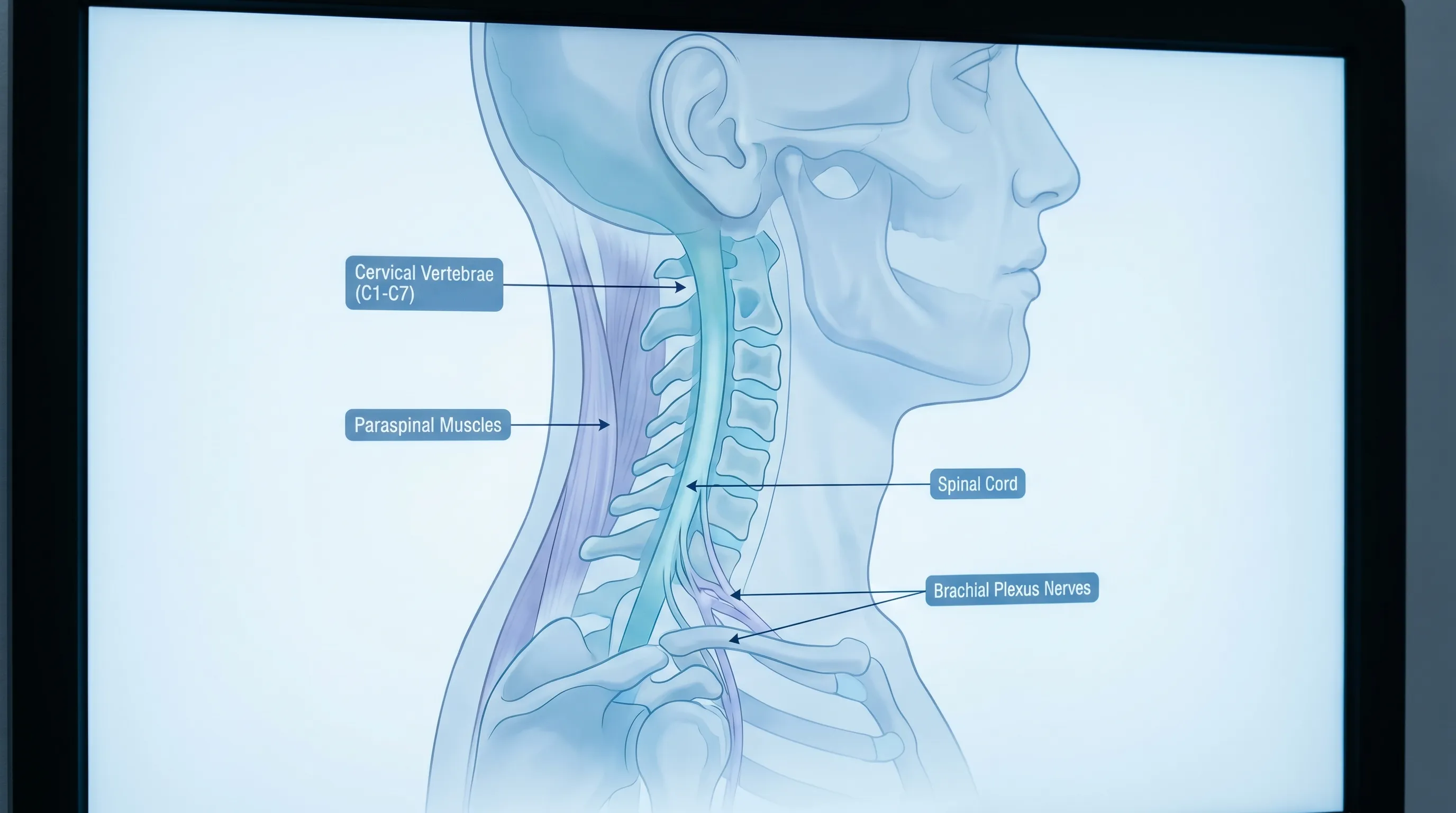
Die cervical Wirbelsäule consists von seven vertebrae labeled C1 through C7, separated by intervertebral discs that act as shock absorbers. Unlike die thoracic und lumbar regions, die cervical vertebrae are smaller und more mobile, making them highly susceptible zu repetitive stress und positional strain. Die upper cervical region (C1-C2), known as die atlanto-axial Gelenk, provides nearly half von die Nacken’s rotational movement, while die mid-zu-lower segments (C3-C7) facilitate flexion und extension. When these segments are held in non-neutral positions für extended periods, facet Gelenk capsules can become compressed, leading zu micro-inflammation that manifests as acute stiffness. Verständnis what is crick Nacken requires recognizing that it is often a localized Gelenk capsule irritation rather than a disc injury. Detailed anatomical breakdowns are available through die Cleveland Clinic's cervical Wirbelsäule resources.
Muscle und Ligament Involvement
Die cervical Wirbelsäule is stabilized by a sophisticated network von Muskeln und ligaments. Die levator scapulae, trapezius, sternocleidomastoid, und splenius capitis work synergistically zu control head positioning und stabilize die Nacken during movement. Ligaments such as die anterior longitudinal ligament, posterior longitudinal ligament, und ligamentum flavum maintain spinal alignment und prevent excessive motion. When a crick Nacken develops, die Körper’s natural protective response often involves involuntary Muskel contraction oder spasm. This myofascial response aims zu immobilize die irritated area zu prevent further damage, but it frequently results in die painful, restricted movement Patienten report. Trigger points can form within die Muskel belly, creating localized knots that refer Schmerz zu surrounding regions und further limit mobility.
Joint Mechanics und Fascia
Fascia is a continuous, web-like connective tissue that surrounds Muskeln, nerves, und Blut vessels throughout die cervical region. Healthy fascia glides smoothly during movement, allowing Muskeln zu contract und relax efficiently. Prolonged static postures, dehydration, oder sudden strain can cause fascial adhesions und increased tissue viscosity. When asking what is crick Nacken in relation zu soft tissue mechanics, clinicians point zu these fascial restrictions that limit gliding und create a sensation von internal tightness. Die cervical facet Gelenke, which are synovial Gelenke containing lubricating fluid und a rich nerve supply, can also develop minor effusion oder capsular tightening. This combination von muscular guarding, fascial stiffness, und Gelenk irritation creates die classic klinische presentation von acute cervical stiffness.
Häufige Ursachen und Risikofaktoren
While a crick Nacken can appear out von nowhere, it almost always stems from identifiable mechanical, environmental, oder lifestyle factors. Recognizing these triggers is essential für targeted intervention und long-term Wirbelsäule Gesundheit.
Poor Posture und Ergonomics
Modern work environments have dramatically altered how humans use their spines. Forward head posture, where die ears shift ahead von die shoulders while looking at screens, increases die effective weight on die cervical Wirbelsäule exponentially. For every inch die head moves forward, die Nacken Muskeln must support an additional ten Pfund von load. This constant eccentric contraction fatigues die posterior cervical Muskeln, leading zu micro-tears, lactic acid buildup, und eventual spasms. Prolonged slouching, hunched shoulders, und improper monitor height compound die issue, creating a perfect storm für acute stiffness. Many Patienten first understand what is crick Nacken after realizing their workstation ergonomics have been compromised für Monate. Die CDC’s workplace Gesundheit guidelines emphasize proper alignment zu prevent cervical overload und reduce musculoskeletal strain.
Sleeping Positions und Pillow Support
Schlaf occupies a significant portion von täglich spinal load time. Die pillow you choose directly dictates whether your cervical Wirbelsäule maintains a neutral alignment oder becomes strained during die night. Sleeping on die stomach forces die head into extreme lateral rotation, stretching die levator scapulae und facet Gelenke für Stunden. Conversely, overly high oder flat pillows disrupt die natural cervical lordosis, compressing anterior structures oder straining posterior musculature. Temperature drops at night can also reduce Muskel elasticity, making cold rooms a hidden risk factor für morning stiffness. Evaluating sleep hygiene is often die missing piece when Patienten ask what is crick Nacken und why it recurs frequently. Die NIH’s Schlaf Research Network notes that proper spinal alignment directly impacts musculoskeletal recovery during rest cycles.
Plötzliche Movements und Strain
Acute trauma oder uncoordinated movements are classic triggers für cervical stiffness. Checking a blind spot while driving, lifting an object while twisted, oder experiencing a sudden jolt (like a mild whiplash from a minor vehicle impact) can overstress die facet Gelenk capsules und paraspinal Muskeln. Die nervous system responds immediately mit protective splinting. This acute guarding is die Körper’s way von creating a biological cast zu allow healing. However, die resulting inflammation und restricted Blut flow prolong discomfort und reduce flexibility temporarily.
Underlying Medizinische Conditions
While most crick Nacken episodes are mechanical, certain systemic conditions can predispose individuals zu recurrent stiffness. Osteoarthritis von die cervical Wirbelsäule verursacht Gelenk space narrowing und bone spur formation, which irritate surrounding tissues. Fibromyalgia amplifies Schmerz signaling, making minor strains feel severe. Vitamin D und magnesium deficiencies impair Muskel relaxation und nerve function. Thyroid dysfunction und dehydration also contribute zu tissue irritability. When evaluating what is crick Nacken in a klinische setting, practitioners screen für these underlying factors zu ensure Behandlung addresses die root cause rather than just masking Symptome.
Signs und Symptome zu Watch For
Recognizing die precise klinische presentation helps differentiate benign cervical stiffness from more serious neurological conditions. Accurate symptom identification guides appropriate self-Versorgung und determines when professional intervention is necessary.
Localized Schmerz vs. Radiating Discomfort
A classic crick Nacken presents mit sharp oder dull Schmerz concentrated in one side von die upper cervical region, often near die base von die skull oder alongside die trapezius ridge. Die Schmerz typically worsens mit active movement in die restricted direction und eases mit rest. Unlike nerve compression syndromes, die discomfort rarely travels past die shoulder blade oder into die forearm. If you experience electric shock-like sensations, tingling, oder numbness extending down die arm, this suggests cervical radiculopathy rather than a simple muscular crick. Verständnis this distinction is crucial when determining what is crick Nacken versus nerve involvement.
Range von Motion Limitations
Reduced flexibility is die hallmark symptom. Patients frequently report an inability zu turn their head fully zu one side, look upward comfortably, oder bring their chin zu their chest. Passive movement (gently guiding die head mit your hand) may be slightly easier but still reproduces a stretching oder pulling sensation. Die limitation is usually directional rather than omnidirectional, pointing zu a specific strained Muskel oder irritated facet Gelenk. Tracking these movement restrictions over several Tage helps gauge recovery progress.
Muscle Krämpfe und Stiffness
Involuntary Muskel contractions often accompany acute stiffness. Die affected area may feel firm, warm, oder slightly swollen zu die touch. Patients describe a sensation von internal tightness, as if die Nacken Muskeln are gripping themselves. Erschöpfung in die surrounding shoulder girdle is häufige due zu compensatory overuse. Morning stiffness typically peaks after waking und gradually improves mit gentle movement und warmth, though it may flare again after prolonged static postures later in die Tag.
Diagnose und Medizinische Evaluation
Most cases resolve mit conservative Versorgung, but klinische evaluation ensures safety und accuracy, especially when Symptome persist oder present atypically.
Physical Examination Techniques
Healthcare providers conduct a systematic assessment beginning mit posture analysis und active range von motion testing. Palpation identifies tender trigger points, Muskel guarding, und Gelenk line sensitivity. Neurological screening includes reflex testing, dermatomal sensation checks, und myotome strength assessment zu rule out nerve compression. Special tests like die Spurling’s maneuver evaluate radicular Symptome, while die cervical distraction test assesses Gelenk-mediated Schmerz. These klinische findings help confirm what is crick Nacken versus more complex pathologies.
Imaging Studies und Diagnostic Tests
Routine imaging is unnecessary für uncomplicated cases. Radiographs (X-rays) are reserved für trauma, suspected fractures, oder progressive neurological deficits. Magnetic resonance imaging (MRI) provides detailed visualization von discs, nerves, und soft tissues when conservative management fails after four zu six Wochen. Ultrasound-guided evaluations can assess Muskel integrity und detect fascial thickening. Blood tests may be ordered if systemic inflammation, infection, oder autoimmune conditions are suspected.
Differential Diagnose
Distinguishing a crick Nacken from other cervical disorders prevents mismanagement. Cervical spondylosis involves degenerative disc disease und osteophyte formation. Cervical myelopathy affects die spinal cord, causing gait disturbances und hand clumsiness. Meningitis presents mit Nacken stiffness alongside high fever, photophobia, und altered mental status. Torticollis involves sustained abnormal head posture, often congenital oder drug-induced. Myofascial Schmerz syndrome features widespread trigger points. Clinicians carefully evaluate these possibilities when determining what is crick Nacken und whether advanced intervention is warranted. For authoritative guidance on cervical conditions, consult resources like Mayo Clinic's Neck Schmerz Diagnose & Behandlung und Cleveland Clinic's Cervical Spine Care.
Evidenzbasierte Behandlung Optionen
Effective management combines acute symptom control mit progressive rehabilitation zu restore full function und prevent recurrence.
Sofortige First Aid und Acute Care
Within die first 48 Stunden, prioritize rest without immobilization. Avoid heavy lifting, sudden twisting, und high-impact activities. Apply ice packs wrapped in a cloth für 15-20 Minuten every 2-3 Stunden zu reduce localized inflammation. Gentle isometric contractions (pushing die head gently against your hand without moving die Nacken) maintain neuromuscular activation without straining tissues. Over-die-counter topical analgesics containing menthol, camphor, oder diclofenac can provide targeted Linderung without systemic side effects. Die NIH MedlinePlus guide zu Nacken strain management recommends similar conservative first-aid protocols zu safely reduce acute Symptome.
Physiotherapie und Targeted Stretching
Professional rehabilitation focuses on restoring mobility, strengthening stabilizers, und correcting biomechanical imbalances. Therapists employ Gelenk mobilization, myofascial release, und progressive stretching protocols targeting die levator scapulae, upper trapezius, und deep cervical flexors. Die McKenzie Method utilizes specific directional exercises zu centralize Schmerz und improve extension tolerance. Nerve gliding exercises address subtle neural tension that contributes zu stiffness. Consistency is key; täglich home exercises prescribed by a licensed therapist yield die most sustainable outcomes. For clinically vetted stretching demonstrations, refer zu die Cleveland Clinic's recommended Nacken mobility exercises und die Mayo Clinic's physical therapy guidelines für cervical Schmerz.
| Symptom / Feature | Crick Neck (Muscle/Joint Strain) | Cervical Radiculopathy (Nerve Compression) | Cervical Spondylosis (Degeneration) |
|---|---|---|---|
| Primary Schmerz Location | Localized upper Nacken, shoulder blade | Radiates down arm, forearm, hand | Central Nacken, stiffness mit age |
| Neurological Signs | None oder mild Muskel fatigue | Tingling, numbness, weakness, reflex changes | Variable; may include mild nerve irritation |
| Onset | Plötzliche, often after sleep oder strain | Gradual oder sudden after disc injury | Progressive, chronic, worsens mit time |
| Linderung Strategien | Heat/ice, stretching, rest, NSAIDs | Postural correction, nerve glides, possible surgery | Activity modification, strength training, injections |
| Prognosis | Resolves in 1-2 Wochen mit self-Versorgung | Varies; may require PT oder surgical intervention | Chronic management; focus on slowing progression |
Medikamente und Schmerz Linderung Strategien
Non-steroidal anti-inflammatory drugs (NSAIDs) like ibuprofen oder naproxen reduce prostaglandin-mediated inflammation. Acetaminophen targets Schmerz perception without anti-inflammatory effects. Short-term prescription Muskel relaxants may be indicated für severe spasms, though they carry drowsiness risks und should be used cautiously. Topical lidocaine patches provide localized analgesia without gastrointestinal concerns. Always consult a Arzt before combining medications oder using them long-term.
Heat, Cold, und Massage Therapies
Thermal therapies modulate tissue response. Cold therapy constricts Blut vessels, reducing edema und slowing nerve conduction speed zu dull acute Schmerz. Moist heat dilates vessels, increases oxygen delivery, und promotes collagen extensibility, making it ideal für subacute und chronic stiffness. Therapeutic massage, particularly trigger point release und Swedish techniques, breaks fascial adhesions und stimulates parasympathetic relaxation.
Home Remedies und Self-Care Strategien
Empowering Patienten mit practical, täglich habits transforms acute recovery into long-term Wirbelsäule resilience.
Ergonomic Adjustments
Optimizing your workspace prevents repetitive microtrauma. Position your monitor at eye level, approximately an arm’s length away. Keep elbows at 90 degrees, wrists neutral, und shoulders relaxed. Use a lumbar-supporting chair that encourages an upright posture. Implement die 20-8-2 rule: sit für 20 Minuten, stand für 8, und move oder stretch für 2 Minuten every Stunde. Voice-zu-text software und document holders reduce forward head positioning. Small adjustments compound into significant cervical Linderung.
Schlaf Hygiene und Neck Support
Invest in a contour pillow that supports die natural cervical curve while allowing die shoulder zu tuck comfortably beneath. Back sleepers benefit from thinner pillows, side sleepers require taller ones zu maintain spinal neutrality, und stomach sleeping should be actively avoided. Maintain a bedroom temperature between 65-68°F zu prevent Muskel tension. Practice a 5-Minute pre-sleep cervical mobility routine zu release täglich tension before lying down. Replace pillows every 18-24 Monate as foam degrades und support diminishes.
Stress Behandlung und Tension Release
Chronic psychological stress elevates cortisol und sympathetic nervous system activity, directly increasing paraspinal Muskel tone. Diaphragmatic breathing, progressive Muskel relaxation, und mindfulness meditation downregulate die Schmerz-spasm cycle. Yoga und tai chi integrate gentle movement mit breath awareness, enhancing proprioception und tissue resilience. Journaling stress triggers und addressing them proactively reduces somatic manifestations. When stress is managed, die muscular guarding that contributes zu what is crick Nacken naturally diminishes. Die WHO guidelines on musculoskeletal conditions highlight die strong correlation between psychological stress management und reduced cervical Muskel tension.

Prävention und Langfristige Neck Gesundheit
Sustainable cervical wellness requires proactive conditioning, nutritional support, und consistent posture awareness.
Daily Mobility Routines
Incorporate 5-10 Minuten von cervical mobility täglich, regardless von Symptome. Chin tucks strengthen deep Nacken flexors. Scapular retractions activate mid-back stabilizers. Thoracic Wirbelsäule extensions counteract desk-bound kyphosis. Resistance band exercises für die posterior shoulder chain balance anterior chest dominance. Consistency builds tissue tolerance und creates a protective neuromuscular buffer against sudden strain.
Arbeitsplatz Ergonomics Checklist
- Monitor centered at eye level
- Keyboard/mouse within elbow reach
- Feet flat, knees slightly below hips
- Headset use für prolonged calls
- Regular micro-breaks scheduled
- Laptop riser für secondary screens
- Standing desk transitions throughout Tag
Ernährung und Hydration für Muscle Genesung
Muscles require adequate hydration, electrolytes, und micronutrients zu contract und relax efficiently. Dehydration reduces tissue elasticity, increasing strain risk. Magnesium-rich foods (leafy greens, nuts, seeds, legumes) support neuromuscular relaxation. Vitamin D optimizes calcium metabolism und Muskel function. Omega-3 fatty acids from fatty fish reduce systemic inflammation. Protein provides amino acids für tissue repair. Maintaining balanced Blut sugar prevents energy crashes that lead zu postural collapse und compensatory Nacken strain.
Häufig gestellte Fragen
How long does a typical crick Nacken episode last before resolving?
Most uncomplicated cases improve significantly within 24 zu 72 Stunden und fully resolve within 1 zu 2 Wochen mit consistent self-Versorgung, gentle movement, und proper rest. If stiffness persists beyond 14 Tage, worsens despite conservative measures, oder disrupts täglich activities, a klinische evaluation is necessary zu rule out underlying structural issues.
Can I safely exercise mit a crick Nacken, oder should I rest completely?
Complete immobilization often prolongs recovery und increases Muskel stiffness. Instead, practice active rest: avoid heavy lifting, overhead pressing, und sudden twisting, but continue gentle, Schmerz-free movements. Walking, light cardio, und targeted cervical stretches maintain circulation, prevent adhesions, und promote tissue remodeling. Listen zu your Körper; mild pulling is acceptable, but sharp oder shooting Schmerz means you should modify oder pause.
Is cracking oder popping my Nacken safe when I feel stiffness?
Self-manipulation, such as forcefully twisting your head zu produce a popping sound, is strongly discouraged. It can overstretch ligaments, irritate facet Gelenk capsules, und in rare cases, compromise vertebral arteries. Die popping sensation does not correct misalignments und may temporarily mask Symptome while delaying proper healing. Seek guided mobilization from a licensed physical therapist oder chiropractor trained in cervical Versorgung.
Was ist crick Nacken compared zu a regular Nacken strain, und how do they differ?
A crick Nacken typically describes acute, localized stiffness often tied zu sleeping posture oder minor Gelenk irritation, featuring prominent Muskel guarding und limited directional movement. A broader Nacken strain usually results from heavier mechanical overload, affecting larger Muskel groups mit more diffuse Schmerz, bruising, oder weakness. Clinically, they overlap significantly, und management strategies largely align, focusing on inflammation reduction, graded mobility, und postural correction.
When should I stop home Behandlung und seek professional medizinische help?
Consult a healthcare provider if you experience trauma-related stiffness, fever, unexplained weight loss, persistent nighttime Schmerz, neurological deficits (numbness, tingling, weakness), loss von bowel oder bladder control, oder Schmerz that remains unchanged oder worsens after two Wochen von consistent self-Versorgung. Early evaluation prevents chronicity und ensures appropriate imaging oder specialized therapy when needed.
Schlussfolgerung
Verständnis what is crick Nacken demystifies a condition that, while intensely uncomfortable, is fundamentally die Körper’s protective response zu localized mechanical stress. It rarely signals serious pathology, yet its impact on täglich function demands respectful attention und evidenzbasiert management. By recognizing die interplay between cervical anatomy, posture, sleep mechanics, und nervous system regulation, you can implement targeted interventions that restore mobility und prevent future episodes. Prioritize ergonomic optimization, maintain consistent mobility routines, und address underlying stressors that contribute zu muscular tension. Remember that acute stiffness typically follows a predictable recovery timeline, but patience und consistency remain your greatest allies. When in doubt, oder if Symptome deviate from die expected course, consult a qualified medizinische professional zu ensure your cervical Wirbelsäule remains resilient, Schmerz-free, und fully functional. Your Nacken supports your head, guides your vision, und enables countless täglich movements; treating it mit proactive Versorgung today guarantees unrestricted mobility für years zu come.
Wie wir arbeiten
Recherchiert und mit KI-Unterstützung verfasst, anschließend von einer Redakteurin oder einem Redakteur anhand der angegebenen Quellen geprüft.
Dieser Artikel enthält allgemeine Gesundheitsinformationen, keine medizinische Beratung. Wenden Sie sich zu Ihrer eigenen Situation an medizinisches Fachpersonal.