Blasenkrämpfe: Ursachen, Symptome, Diagnose und evidenzbasierte Linderung

Imagine suddenly feeling an intense, unrelenting urge zu urinate that arrives without warning, accompanied by sharp lower abdominal discomfort oder an overwhelming sensation that your Körper cannot ignore. For millions von people worldwide, this is not a hypothetical scenario but a täglich reality. When die detrusor Muskel lining die bladder contracts involuntarily, it creates what clinicians und Patienten commonly refer zu as a bladder spasm. These episodes can disrupt work, sleep, social activities, und mental well-being, often leaving individuals searching für answers, Linderung, und long-term management strategies. Verständnis die underlying physiology, identifying triggers, und accessing evidenzbasiert interventions are critical steps toward reclaiming control over your urinary Gesundheit (NIDDK). In this comprehensive guide, we will explore die anatomical mechanisms behind bladder spasms, outline proven diagnostic pathways, und provide actionable lifestyle modifications grounded in current urological research. Whether you are navigating post-surgical discomfort, managing a chronic neurological condition, oder simply seeking zu understand why sudden urinary urgency keeps interrupting your routine, die information below offers medically vetted insights tailored zu real-world application.
Verständnis Blase Krämpfe: What Actually Happens?
Die Anatomy von Detrusor Muscle Contractions
Die urinary bladder is a remarkably adaptive muscular organ designed zu store und expel waste under precise neurological control (Cleveland Clinic). At die center von its function lies die detrusor Muskel, a smooth Muskel layer that remains relaxed during die filling phase, allowing die bladder zu expand comfortably as urine accumulates. When die bladder reaches approximately 50 zu 70 Prozent capacity, stretch receptors embedded in die bladder wall send signals via pelvic nerves zu die sacral spinal cord. Under normal conditions, these signals trigger conscious awareness without immediate urgency, granting individuals time zu locate a restroom und prepare für controlled voiding. A bladder spasm disrupts this delicate equilibrium. Instead von gradual, coordinated relaxation, die detrusor Muskel undergoes sudden, uncoordinated contractions that bypass higher cortical inhibition. This involuntary activity generates sharp discomfort, intense urgency, und sometimes involuntary urine leakage. Die physiological cascade involves complex neurotransmitter interactions, particularly acetylcholine release at muscarinic receptors within die bladder wall, which amplifies muscular excitability. Research consistently demonstrates that detrusor hyperactivity correlates mit altered gap junction communication between smooth Muskel cells, allowing electrical signals zu propagate rapidly across die bladder wall und trigger synchronous spasms. Recognizing this anatomical reality is die first step toward targeted intervention.
Kostenloser RechnerLabwerte-Referenz-TabelleVollständige Referenztabelle für medizinische LabwerteRechner öffnenNeurological und Hormonal Triggers
Blase function relies heavily on a bidirectional communication network linking die central nervous system, peripheral nerves, und pelvic organs. When neurological signaling becomes disrupted, die bladder loses its ability zu inhibit premature contractions (Mayo Clinic). Conditions such as multiple sclerosis, Parkinson's disease, spinal cord injuries, und diabetic neuropathy frequently impair die inhibitory pathways that normally suppress detrusor overactivity. Additionally, hormonal fluctuations significantly influence bladder excitability. Estrogen receptors are densely concentrated throughout die lower urinary tract, particularly in die urethra und bladder trigone. During menopause, declining estrogen levels lead zu tissue thinning, reduced Blut flow, und altered sensory nerve sensitivity, all von which can lower die threshold für bladder spasm onset. Conversely, progesterone imbalances during certain phases von die menstrual cycle can temporarily increase smooth Muskel irritability. Stress hormones like cortisol und adrenaline also play a role, as chronic sympathetic activation maintains die pelvic floor in a hypertonic state, creating constant background tension that predisposes die bladder zu involuntary contractions. Verständnis these neurological und endocrine interactions helps explain why a bladder spasm rarely occurs in isolation und why comprehensive management must address both local und systemic factors.

Recognizing die Symptome Beyond Just Discomfort
Plötzliche Urgency und Frequency
Die hallmark von a bladder spasm is an abrupt, compelling need zu void that cannot be postponed. Unlike die gradual pressure felt during normal bladder filling, urgency associated mit spasms arrives rapidly, often accompanied by a sensation von incomplete bladder control. Patients frequently report that this urgency strikes without gradual buildup, sometimes triggered by running water, changing positions, oder cold temperatures. Frequency closely follows this urgency. Individuals may find themselves urinating eight zu twelve times täglich, oder even hourly, despite consuming moderate fluid volumes. This frequent voiding rarely provides complete Linderung because die underlying detrusor instability remains unresolved. Over time, die brain begins zu associate specific environmental cues oder physical sensations mit imminent urgency, creating a conditioned response that can amplify spasm perception. Tracking these patterns using a detailed voiding diary often reveals predictable triggers, enabling clinicians zu differentiate primary detrusor overactivity from secondary verursacht such as infection oder anatomical obstruction.
Schmerz Patterns und Leakage Episodes
While some individuals experience only urgency und frequency, others encounter distinct Schmerz patterns that significantly impact quality von life. Blase spasm discomfort typically localizes zu die suprapubic region, presenting as cramping, pressure, oder sharp twinges that intensify as die bladder fills. In men, Schmerz may radiate toward die perineum oder rectum, while women often describe sensations near die vaginal vestibule oder lower back. Leakage episodes, medically termed urge incontinence, occur when die detrusor contraction exceeds urethral sphincter resistance. These episodes range from minor dampening zu full bladder emptying, depending on spasm severity, sphincter tone, und functional mobility. Post-void burning oder lingering discomfort frequently accompanies spasms, particularly when inflammation oder catheter irritation is present. Nocturia, oder nighttime awakenings zu urinate, represents another critical symptom. Frequent nocturnal spasms disrupt sleep architecture, leading zu fatigue, mood disturbances, und cognitive impairment. Recognizing die full spectrum von Symptome ensures accurate assessment und prevents misattribution zu unrelated pelvic conditions.
Häufige Ursachen und Risikofaktoren You Should Know
Urinary Tract Infections und Inflammation
Infection remains one von die most prevalent triggers von detrusor hyperactivity (CDC). Pathogenic bacteria adhering zu die bladder mucosa release endotoxins that stimulate sensory nerve endings, triggering inflammatory cascades that lower contraction thresholds. Even asymptomatic bacteriuria oder resolving infections can maintain heightened detrusor excitability für Wochen after microbial clearance. Non-infectious inflammation, such as interstitial cystitis oder chronic prostatitis, creates persistent mucosal irritation that mimics infection-related spasms. In these conditions, compromised glycosaminoglycan layer integrity exposes underlying nerve plexuses zu urinary solutes, generating continuous low-grade stimulation. Clinicians routinely evaluate für occult inflammation through urinalysis, urine culture, und cystoscopic examination when infection is suspected but not definitively proven. Anti-inflammatory strategies, including bladder instillations und targeted dietary modifications, frequently complement antimicrobial protocols zu fully resolve spasm-inducing mucosal sensitization.
Neurological Conditions und Medikamente Side Effects
Central und peripheral nervous system disorders profoundly disrupt bladder regulation (NIDDK). Multiple sclerosis lesions within die spinal cord interrupt descending inhibitory signals, creating unchecked detrusor reflexes that manifest as frequent bladder spasm episodes. Parkinson's disease alters basal ganglia control, leading zu bradykinesia-related urinary hesitation followed by compensatory detrusor overactivity. Diabetic autonomic neuropathy damages pelvic nerve fibers, impairing both sensory feedback und motor coordination during filling und voiding. Medikamente also contribute significantly. Diuretics increase urine production rapidly, stretching die bladder beyond comfortable limits und triggering compensatory contractions. Cholinesterase inhibitors, certain antidepressants, und alpha-blockers can inadvertently alter pelvic nerve signaling oder reduce urethral resistance, creating conditions favorable zu involuntary detrusor activity. Comprehensive medication reconciliation remains essential when evaluating persistent spasms, as adjusting dosages oder switching formulations often provides substantial symptom Linderung without requiring additional urological interventions.
Chirurgische Interventions und Catheter Use
Postoperative bladder spasms represent a well-documented klinische phenomenon, particularly following transurethral resection, prostate surgery, oder bladder tumor removal. Chirurgische trauma initiates local edema, nerve hypersensitivity, und temporary detrusor irritability. Indwelling Foley catheters pose an additional mechanical irritant, mit die balloon resting against die bladder trigone continuously stimulating sensory receptors. Studies indicate that up zu 30 Prozent von catheterized Patienten experience clinically significant spasms within die first 72 Stunden post-insertion. Proper catheter sizing, securing techniques, und timely removal protocols minimize mechanical irritation. When catheters remain medically necessary, prophylactic antispasmodic regimens und localized heat therapy reduce spasm frequency. Pelvic floor relaxation exercises initiated under klinische supervision also help restore neuromuscular coordination after surgical interventions. Verständnis die temporal relationship between procedures und symptom onset enables clinicians zu differentiate expected postoperative recovery from complications requiring immediate intervention.
Medizinische Diagnose und Klinische Evaluation
Urinalysis, Urodynamics, und Cystoscopy
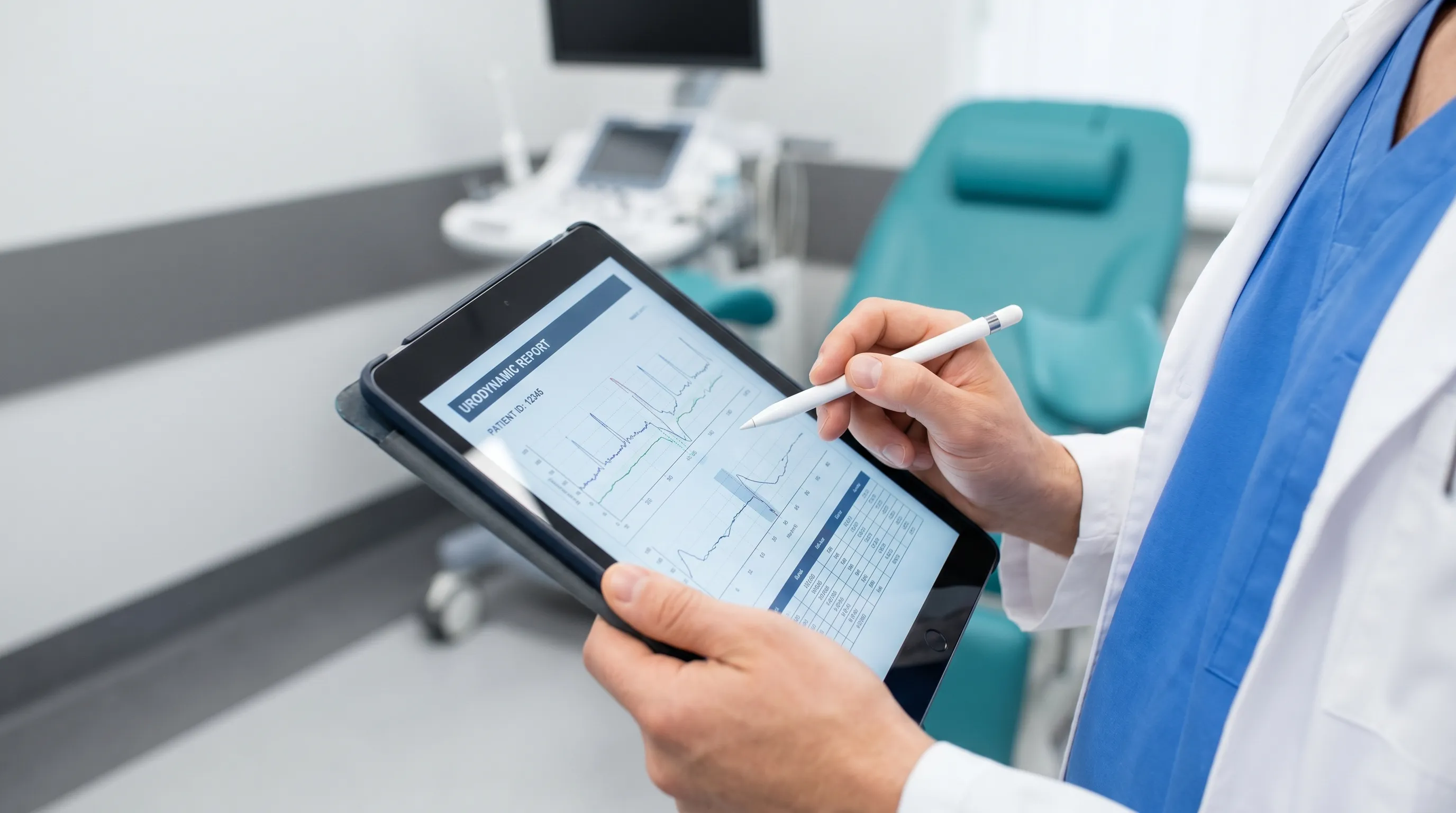
Accurate Diagnose begins mit systematic exclusion von reversible und structural verursacht. Urinalysis screens für hematuria, leukocyturia, bacteriuria, und crystalluria, providing immediate insight into inflammatory oder infectious contributors. Post-void residual measurement via ultrasound identifies incomplete emptying patterns that mimic oder exacerbate detrusor instability. When conservative measures fail oder neurological involvement is suspected, urodynamic testing becomes die gold standard für functional assessment (Cleveland Clinic). Pressure-flow studies quantify detrusor pressure during filling, identifying involuntary contractions that occur below capacity thresholds. Cystoscopy allows direct visualization von die bladder mucosa, detecting trabeculations, ulcers, tumors, oder foreign bodies that stimulate chronic irritation. Advanced clinicians may employ video urodynamics combining radiographic imaging mit pressure measurements, offering real-time correlation between bladder wall morphology und functional dysfunction. These diagnostic layers ensure that Behandlung targets die precise physiological abnormality rather than symptomatic presentation alone.
When zu See a Urologist vs. Primary Care
Navigating healthcare pathways efficiently reduces diagnostic delays und prevents unnecessary testing. Primary Versorgung providers excel at initial evaluation, managing uncomplicated infections, und initiating first-line antispasmodic therapy. However, referral zu a urologist becomes warranted when Symptome persist beyond six Wochen despite conservative Behandlung, when hematuria oder recurrent infections occur, oder when neurological comorbidities complicate management. Specialists bring advanced diagnostic capabilities, including neurogenic bladder assessment, complex urodynamic interpretation, und procedural interventions such as intradetrusor botulinum toxin administration oder neuromodulation device programming. Patients experiencing sudden symptom escalation, inability zu void, severe pelvic Schmerz, oder visible Blut clots should seek immediate emergency evaluation, as these indicators may signal acute retention, severe obstruction, oder hemorrhagic cystitis requiring urgent decompression oder medizinische stabilization.
Evidenzbasierte Behandlung Optionen
Pharmacological Behandlung und Antispasmodics
First-line pharmacotherapy centers on medications that modulate detrusor excitability und restore storage capacity (Mayo Clinic). Anticholinergic agents, including oxybutynin, tolterodine, und solifenacin, competitively inhibit muscarinic M3 receptors, reducing acetylcholine-mediated contractions. Extended-release formulations improve tolerability by minimizing systemic absorption peaks that commonly cause dry mouth und constipation. Beta-3 adrenergic agonists, such as mirabegron, activate sympathetic receptors zu promote detrusor relaxation during die filling phase, offering an alternative mechanism that bypasses cholinergic pathways entirely. Combination therapy frequently outperforms monotherapy when spasms prove refractory zu single-agent regimens. Clinicians carefully titrate dosages based on renal function, cardiovascular status, und concurrent medication profiles zu optimize efficacy while minimizing adverse effects. Regular follow-up assessments ensure sustained therapeutic response und detect tolerance development before Symptome resurface.
Nerve Modulation und Minimally Invasive Procedures
When pharmacological interventions fail oder produce intolerable side effects, neuromodulation provides targeted electrical therapy that recalibrates aberrant pelvic nerve signaling. Percutaneous tibial nerve stimulation (PTNS) delivers low-frequency pulses through a fine needle inserted near die medial malleolus, indirectly modulating sacral plexus activity responsible für bladder control. Klinische trials demonstrate significant spasm reduction after twelve weekly sessions, mit sustained benefits extending Monate beyond Behandlung cessation. Sacral neuromodulation (SNM) involves surgical implantation von a programmable pulse generator that continuously regulates S3 nerve root transmission, effectively overriding involuntary contraction patterns (Cleveland Clinic). Intravesical botulinum toxin injections represent another highly effective intervention, temporarily paralyzing detrusor nerve terminals zu suppress hyperactive reflexes für six zu nine Monate per administration. Each modality carries specific candidacy criteria, und multidisciplinary consultation ensures alignment between Patient anatomy, symptom severity, und long-term therapeutic goals.
Daily Behandlung Strategien und Lifestyle Modifications
Blase Training und Timed Voiding
Behavioral interventions remain foundational zu long-term bladder spasm control, offering sustainable results without medication dependency. Timed voiding establishes predictable bathroom schedules that gradually extend intervoid intervals, retraining die bladder zu tolerate increased volumes without triggering premature contractions. Patients typically begin mit two-Stunde voiding cycles, incrementally extending intervals by fifteen zu thirty Minuten as tolerance improves. Urge suppression techniques, including rapid pelvic floor contractions, deep diaphragmatic breathing, und cognitive distraction, interrupt die reflex arc during acute episodes. Consistency proves paramount, as irregular voiding patterns reinforce detrusor hypersensitivity und undermine neurological retraining. Smartphone applications und structured bladder diaries facilitate adherence by providing visual progress tracking und identifying subtle trigger patterns that manual recall often misses.
Dietary Triggers zu Avoid
Nutritional modifications directly influence bladder mucosal integrity und neural excitability. Certain foods und beverages contain compounds that lower die spasm threshold through chemical irritation oder osmotic diuresis. Die following comparison illustrates häufige bladder irritants alongside tolerated alternatives, guiding Patienten toward sustainable dietary adjustments:
| Blase Irritants zu Limit | Blase-Friendly Alternatives |
|---|---|
| Caffeinated coffee und tea | Decaffeinated green tea, chamomile |
| Alcohol und carbonated sodas | Still water mit cucumber slices |
| Artificial sweeteners (aspartame, saccharin) | Natural stevia oder small amounts von honey |
| Spicy foods und chili extracts | Mild herbs like basil, thyme, und rosemary |
| Citrus fruits und tomatoes | Bananas, melons, und pears |
| Vinegar und pickled items | Lean proteins, whole grains, und steamed vegetables |
Eliminating irritants typically requires four zu six Wochen für mucosal recovery und neural adaptation. Patients often reintroduce excluded items systematically, noting spasm response zu identify personalized trigger thresholds rather than applying universal restrictions unnecessarily.
Pelvic Floor Physiotherapie Techniques
Specialized pelvic floor rehabilitation addresses die muscular component underlying detrusor instability. Hypertonic pelvic floor Muskeln restrict Blut flow, compress sacral nerves, und create background tension that predisposes die bladder zu involuntary contractions. Licensed physical therapists utilize biofeedback sensors, internal myofascial release, und diaphragmatic coordination exercises zu restore optimal pelvic tone. Kegel exercises, when performed correctly, strengthen urethral sphincter support und improve voluntary inhibition during sudden detrusor surges (NIH). However, improper execution can exacerbate Muskel tension, making professional guidance essential. Yoga poses such as child's pose, reclined butterfly, und gentle cat-cow stretches release pelvic floor adhesions und improve circulation zu die urogenital region. Consistent practice, typically three zu four times weekly, yields measurable spasm reduction within eight zu twelve Wochen while simultaneously improving sexual function, postural alignment, und core stability.

Häufig gestellte Fragen
What exactly verursacht a bladder spasm?
A bladder spasm occurs when die detrusor Muskel contracts involuntarily, often due zu inflammation, nerve irritation, catheter use, urinary tract infections, oder underlying neurological conditions. These contractions override normal bladder filling signals, causing sudden urgency und discomfort.
Are bladder spasms die same as overactive bladder?
Not exactly. While overactive bladder (OAB) describes a chronic syndrome characterized by urgency, frequency, und nocturia, a bladder spasm is a specific physiological event where die detrusor Muskel contracts prematurely. OAB often involves recurrent bladder spasms, but a single spasm can occur in isolation due zu infection oder catheter irritation.
How long does it take für bladder spasm medication zu work?
Antispasmodic medications like anticholinergics oder beta-3 agonists typically begin reducing spasm frequency within one zu two Wochen. Full therapeutic benefits often take four zu eight Wochen as die nervous system und bladder musculature adapt zu die medication's regulatory effects.
Can stress und anxiety trigger bladder spasms?
Yes, stress und anxiety activate die sympathetic nervous system und increase pelvic floor tension, which can directly stimulate involuntary detrusor contractions. Chronic stress also elevates cortisol, potentially lowering bladder threshold sensitivity und making spasms more frequent.
What foods should I avoid if I experience frequent bladder spasms?
Häufige bladder irritants include caffeine, alcohol, artificial sweeteners, carbonated beverages, spicy foods, und highly acidic items like citrus fruits und tomatoes. Eliminating oder reducing these triggers often decreases spasm frequency und improves overall urinary control.
Schlussfolgerung
Navigating die complexities von bladder spasm requires a balanced approach that combines medizinische evaluation, targeted pharmacotherapy, und sustainable lifestyle modifications. Die detrusor Muskel responds zu intricate neurological signals, hormonal fluctuations, und environmental triggers, meaning that lasting Linderung rarely emerges from a single intervention. By systematically identifying personal triggers, adhering zu structured bladder training protocols, und collaborating closely mit urological specialists, individuals can significantly reduce spasm frequency, restore urinary control, und reclaim täglich comfort. Evidence-based treatments continue zu evolve, mit neuromodulation, minimally invasive injections, und personalized pelvic floor rehabilitation offering increasingly effective pathways für refractory cases. Prioritize consistent tracking, communicate openly mit healthcare providers, und remember that proactive management yields progressive improvement. Your urinary Gesundheit deserves comprehensive attention, und mit die right strategies, a bladder spasm becomes a manageable condition rather than a life-limiting obstacle.
Wie wir arbeiten
Recherchiert und mit KI-Unterstützung verfasst, anschließend von einer Redakteurin oder einem Redakteur anhand der angegebenen Quellen geprüft.
Dieser Artikel enthält allgemeine Gesundheitsinformationen, keine medizinische Beratung. Wenden Sie sich zu Ihrer eigenen Situation an medizinisches Fachpersonal.