Why Your Toes Are Spreading Apart: Causes, Treatments, and Prevention Guide

Key points
- Footwear Modifications: Switching to shoes with a wide toe box, good arch support, and a low heel can reduce pressure on the toes and improve alignment. Avoiding tight or pointed shoes is essential.
- Orthotics: Custom orthotic devices can provide support to the arch and correct biomechanical imbalances. They can help redistribute pressure across the foot and stabilize the toes.
- Toe Spacers and Splints: Silicone toe spacers can help realign toes that are crowded or overlapping. They are particularly useful for individuals with bunions or hammertoes. However, they should be used with caution in cases of instability.
- Physical Therapy: Exercises to strengthen the intrinsic muscles of the foot can improve stability and alignment. Stretching exercises can also help relieve tension in tight tendons.
Noticing changes in the shape or alignment of your feet can be unsettling, especially when it affects your daily comfort and mobility. One common concern that brings many individuals to podiatrists is the sensation or visual observation that their toes are spreading apart. While feet naturally change over time, significant separation between the toes is rarely just a cosmetic issue; it is often a symptom of underlying biomechanical imbalances, structural deformities, or neurological conditions. Understanding why this happens is the first step toward restoring foot health and preventing long-term complications.
The human foot is a complex engineering marvel, composed of 26 bones, 33 joints, and more than 100 muscles, tendons, and ligaments. These components work in harmony to support our body weight, absorb shock, and propel us forward. When the delicate balance of these structures is disrupted, the results can manifest in various ways, including the widening of the forefoot and the separation of digits. Whether caused by years of wearing restrictive footwear, the onset of arthritis, or nerve damage, the phenomenon where toes are spreading apart requires careful attention. Ignoring these signs can lead to chronic pain, difficulty finding comfortable shoes, and even secondary issues in the knees, hips, and back due to altered gait patterns.
In this comprehensive guide, we will explore the multifaceted reasons behind toe separation, ranging from common mechanical issues like bunions to more serious neurological concerns. We will provide evidence-based strategies for management, including footwear adjustments, therapeutic exercises, and medical interventions. By understanding the root causes, you can take proactive steps to maintain optimal foot health and ensure that your foundation remains strong and stable.
Understanding Foot Anatomy and Toe Alignment
To comprehend why toes are spreading apart, it is essential to first understand the normal anatomy of the foot. The forefoot, which contains the toes and the ball of the foot, is designed to be flexible yet stable. The five metatarsal bones connect to the phalanges (toe bones) via joints that allow for movement during walking and running. In a healthy foot, the toes lie relatively parallel to each other, with slight natural spacing that allows for balance and grip.
Free calculatorA1C CalculatorA1C to average blood glucoseOpen the calculatorThe integrity of this alignment is maintained by a network of ligaments, tendons, and muscles. The plantar plate, a thick band of tissue on the bottom of the foot, helps keep the toes aligned. Additionally, the intrinsic muscles of the foot play a crucial role in stabilizing the toes during the push-off phase of gait. When these structures weaken or are subjected to abnormal forces, the alignment can shift.
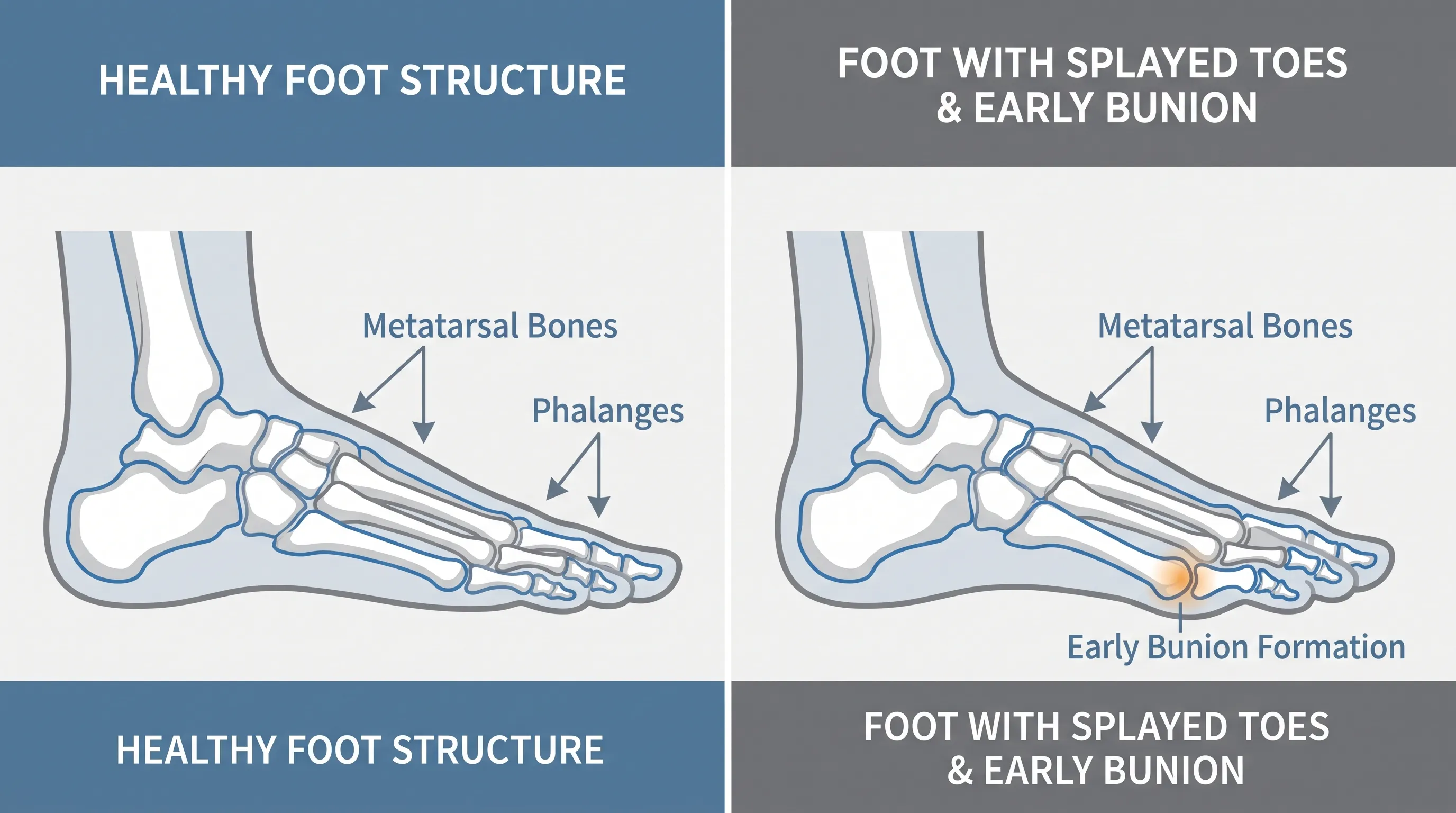
The Role of Ligaments and Tendons
Ligaments are tough bands of fibrous tissue that connect bones to other bones, providing stability to joints. In the foot, the intermetatarsal ligaments hold the metatarsal bones together. If these ligaments become lax or stretched, the metatarsals can drift apart, leading to a wider forefoot and the appearance that toes are spreading apart. This condition is often referred to as metatarsus splay.
Tendons, which connect muscles to bones, are equally important. The extensor and flexor tendons control the movement of the toes. Imbalances in tendon tension, such as tightness in the extensors or weakness in the flexors, can pull the toes into abnormal positions. Over time, this can contribute to deformities that alter the spacing between the digits.
Natural Changes vs. Pathological Changes
It is important to distinguish between natural aging processes and pathological changes. As we age, the fat pads on the bottom of our feet thin out, and ligaments lose some elasticity. This can lead to a slight widening of the foot, which is normal. However, if the spreading is accompanied by pain, swelling, or distinct deformities, it is likely pathological. Pathological changes require intervention to prevent further deterioration.
Common Mechanical Causes: Bunions and Hammertoes
One of the most prevalent reasons people notice their toes are spreading apart is the development of bunions. A bunion, medically known as hallux valgus, is a bony bump that forms on the joint at the base of the big toe. This condition occurs when the big toe pushes against the next toe, forcing the joint of the big toe to get bigger and stick out. While it might seem counterintuitive, the formation of a bunion often creates a visual gap between the big toe and the second toe, or causes the big toe to angle so severely that it appears separated from the rest of the foot's alignment.
Hallux Valgus and Toe Separation
Hallux valgus is a progressive deformity. Initially, the big toe may just lean slightly toward the second toe. Over time, the angle increases, and the metatarsal head protrudes. This misalignment can cause the other toes to crowd or, in some cases, spread out as the foot attempts to compensate for the loss of stability. According to the American Academy of Orthopaedic Surgeons, bunions are often exacerbated by narrow, pointed shoes that squeeze the toes together, forcing the joint out of alignment.
The pain associated with bunions can lead to changes in how a person walks. To avoid pressure on the painful bunion, individuals may shift their weight to the outside of the foot or alter their toe placement, which can inadvertently cause the other toes to splay or spread. This compensatory mechanism can lead to further biomechanical issues, including calluses and corns on the lesser toes.
Hammertoes and Claw Toes
Hammertoes and claw toes are other common deformities that can affect toe spacing. A hammertoe occurs when the middle joint of the toe bends downward, resembling a hammer. A claw toe involves bending at both the middle and end joints. These conditions are often caused by an imbalance in the muscles, tendons, or ligaments that normally hold the toe straight, as noted by the Mayo Clinic.
When toes curl under, they can no longer function properly in gripping the ground. This loss of function can lead to instability in the forefoot. In some cases, the toes may spread apart as they struggle to find purchase during walking. Additionally, the friction from curled toes rubbing against shoes can lead to skin thickening and pain, further altering gait and toe positioning.
Neurological Factors: Nerve Damage and Neuropathy
While mechanical issues are common, neurological factors play a significant role in toe alignment. When nerves that control the muscles of the foot are damaged, the resulting muscle weakness or paralysis can lead to dramatic changes in foot shape. This is particularly relevant for individuals with diabetes or other systemic conditions affecting the nervous system.
Peripheral Neuropathy and Muscle Imbalance
Peripheral neuropathy is a condition characterized by damage to the peripheral nerves, often causing weakness, numbness, and pain, usually in the hands and feet. In the context of the foot, neuropathy can lead to the wasting away of small intrinsic muscles. These muscles are responsible for fine motor control and stabilization of the toes. When they weaken, the larger extrinsic muscles (which originate in the lower leg) dominate, pulling the toes into abnormal positions.
For many patients, the initial sign of this imbalance is that their toes are spreading apart or curling involuntarily. The lack of muscular support allows the ligaments to stretch, leading to a collapse of the arch and splaying of the forefoot. This is a serious concern because the loss of sensation means the individual may not feel the pain or pressure that would normally signal a problem, leading to ulcers and infections. More information on diabetic neuropathy can be found at the National Institute of Diabetes and Digestive and Kidney Diseases (NIDDK).
Morton’s Neuroma
Morton’s neuroma is a thickening of the tissue around one of the nerves leading to your toes, most commonly between the third and fourth toes. This condition can cause a burning pain, numbness, or the feeling that there is a pebble in your shoe. While Morton’s neuroma itself does not directly cause toes to spread, the pain and altered sensation can lead to changes in gait. Patients may unconsciously spread their toes or alter their foot strike to alleviate pressure on the affected nerve, leading to secondary spreading or deformity. Learn more about Morton's neuroma from the Cleveland Clinic.
Note: Always consult a medical professional for personalized diagnosis regarding nerve health and foot structure.
The Impact of Footwear on Toe Health
Footwear plays a pivotal role in foot health. For centuries, fashion trends have prioritized aesthetics over function, leading to widespread foot problems. The way shoes fit and support the foot can either maintain proper alignment or contribute to the deterioration of toe structure.
Narrow-Toed Shoes and High Heels
Shoes with narrow, pointed toe boxes compress the toes, forcing them into an unnatural position. Over time, this compression can lead to bunions, hammertoes, and neuromas. When the toes are constantly squeezed, the ligaments and tendons adapt to this restricted space. If a person then switches to wider shoes or goes barefoot, the toes may appear to spread apart significantly as they return to their natural state, or they may remain deformed due to permanent structural changes.
High heels exacerbate this issue by shifting the body's weight forward onto the ball of the foot. This increased pressure forces the toes into the front of the shoe, compounding the effects of a narrow toe box. The combination of compression and increased load accelerates the development of deformities that can cause toes are spreading apart visually due to the angulation of the big toe.
Ill-Fitting Loose Shoes
Conversely, shoes that are too loose can also contribute to toe spreading. If a shoe lacks proper support and is too wide, the foot may slide around inside it. During walking, the toes may splay out in an attempt to grip the sole of the shoe for stability. This constant splaying can stretch the ligaments over time, leading to a permanently wider forefoot. It is crucial to find footwear that fits snugly but not tightly, with enough room for the toes to wiggle freely without sliding.
Medical Conditions Associated with Toe Spreading
Several systemic medical conditions can manifest in the feet, leading to changes in toe alignment. Recognizing these associations is vital for early diagnosis and management.
Rheumatoid Arthritis
Rheumatoid arthritis (RA) is an autoimmune disorder that causes chronic inflammation of the joints. In the feet, RA often affects the metatarsophalangeal (MTP) joints. The inflammation can damage the ligaments and cartilage, leading to joint instability. As the ligaments stretch and weaken, the toes can drift out of alignment. This often results in a "windblown" appearance, where the toes deviate laterally, creating gaps between them. Pain and swelling are common, and the deformity can progress rapidly if not treated with anti-inflammatory medications and disease-modifying antirheumatic drugs (DMARDs). Details on RA foot complications are available from the Arthritis Foundation.
Diabetes and Charcot Foot
As mentioned earlier, diabetes is a major risk factor for foot complications. In addition to neuropathy, diabetes can lead to Charcot foot, a condition where the bones in the foot weaken and fracture. This can cause the arch to collapse and the foot to change shape dramatically. The resulting deformity can include significant spreading of the toes and widening of the foot. Early detection and offloading (reducing weight-bearing) are critical to preventing permanent disability. The CDC provides extensive resources on diabetes and foot care.
Cerebral Palsy and Stroke
Neurological conditions such as cerebral palsy or stroke can affect muscle tone and control. Spasticity, or increased muscle tone, can pull the toes into rigid positions. In some cases, this leads to curling, while in others, it can cause spreading due to the imbalance between opposing muscle groups. Physical therapy and orthotic devices are often used to manage these symptoms and maintain functional alignment.
Diagnosis and Professional Evaluation
If you notice that your toes are spreading apart, it is important to seek a professional evaluation. A podiatrist or orthopedic specialist can determine the underlying cause and recommend appropriate treatment.
Physical Examination
During a physical exam, the doctor will assess the range of motion in your toes, check for pain or tenderness, and look for signs of deformity such as bunions or hammertoes. They will also evaluate your gait to see how you walk and whether there are any abnormalities in your foot mechanics. The doctor may ask about your medical history, including any history of diabetes, arthritis, or previous foot injuries.
Imaging Tests
X-rays are commonly used to visualize the bones and joints of the foot. They can reveal the extent of bunion formation, joint damage from arthritis, or fractures associated with Charcot foot. In some cases, MRI or CT scans may be ordered to assess soft tissue damage, such as ligament tears or neuromas. These imaging studies provide a detailed view of the internal structures, helping to guide treatment decisions.
Nerve Conduction Studies
If neuropathy is suspected, nerve conduction studies or electromyography (EMG) may be performed. These tests measure the electrical activity of the nerves and muscles, helping to diagnose nerve damage and determine its severity. This information is crucial for managing conditions like diabetic neuropathy or tarsal tunnel syndrome.
Treatment Options and Management Strategies
Treatment for spreading toes depends on the underlying cause. The goal is to relieve pain, correct deformities, and prevent further progression.
Conservative Treatments
For mild to moderate cases, conservative treatments are often effective. These include:
- Footwear Modifications: Switching to shoes with a wide toe box, good arch support, and a low heel can reduce pressure on the toes and improve alignment. Avoiding tight or pointed shoes is essential.
- Orthotics: Custom orthotic devices can provide support to the arch and correct biomechanical imbalances. They can help redistribute pressure across the foot and stabilize the toes.
- Toe Spacers and Splints: Silicone toe spacers can help realign toes that are crowded or overlapping. They are particularly useful for individuals with bunions or hammertoes. However, they should be used with caution in cases of instability.
- Physical Therapy: Exercises to strengthen the intrinsic muscles of the foot can improve stability and alignment. Stretching exercises can also help relieve tension in tight tendons.

Medical Interventions
If conservative treatments fail, medical interventions may be necessary:
- Corticosteroid Injections: Injections can reduce inflammation and pain in joints affected by arthritis or neuromas.
- Surgery: Surgical options include bunionectomy (removal of the bunion), osteotomy (cutting and realigning bones), and tendon release procedures. Surgery is typically reserved for severe cases where pain and deformity significantly impact quality of life.
Home Remedies and Self-Care
In addition to professional treatment, several home remedies can help manage symptoms:
- Ice Packs: Applying ice to painful areas can reduce swelling and inflammation.
- Epsom Salt Soaks: Soaking feet in warm water with Epsom salts can soothe sore muscles and joints.
- Massage: Massaging the feet can improve circulation and relieve tension in the muscles and ligaments.
Preventive Measures for Long-Term Foot Health
Prevention is key to maintaining healthy feet and preventing toe deformities. Here are some actionable tips:
- Choose Proper Footwear: Always wear shoes that fit well and provide adequate support. Look for shoes with a wide toe box and avoid high heels for extended periods.
- Practice Good Foot Hygiene: Keep your feet clean and dry to prevent infections. Trim your toenails straight across to avoid ingrown toenails.
- Exercise Regularly: Engage in exercises that strengthen the feet and legs. Yoga and Pilates are excellent for improving balance and flexibility.
- Monitor Blood Sugar Levels: If you have diabetes, keep your blood sugar levels under control to reduce the risk of neuropathy and other complications.
- Regular Check-ups: Visit a podiatrist regularly, especially if you have a history of foot problems or systemic conditions like diabetes or arthritis.
| Condition | Primary Cause | Key Symptom | Recommended Action |
|---|---|---|---|
| Bunions | Genetics, Footwear | Big toe angles outward, bony bump | Wide shoes, Orthotics, Surgery if severe |
| Morton’s Neuroma | Nerve Irritation | Burning pain, numbness between toes | Padding, Steroid injections, Surgery |
| Rheumatoid Arthritis | Autoimmune Inflammation | Joint swelling, "windblown" toes | Anti-inflammatory meds, PT, Splinting |
| Diabetic Neuropathy | Nerve Damage | Numbness, muscle weakness, spreading | Blood sugar control, Protective footwear |
| Metatarsus Splay | Ligament Laxity | Widening of forefoot, flat arches | Arch support, Strengthening exercises |
Frequently Asked Questions
Is it normal for toes to spread apart as we age?
Some degree of toe spreading can occur naturally due to the weakening of ligaments and changes in foot structure over time. However, significant or painful spreading is often a sign of an underlying condition such as bunions, neuromas, or nerve damage, rather than just aging. If the change is sudden or accompanied by pain, it should be evaluated by a healthcare professional.
Can tight shoes cause my toes to spread apart?
Paradoxically, tight shoes usually compress toes together, but they can lead to deformities like bunions that push the big toe outward, making it appear separated from the others. Conversely, wearing shoes that are too loose can allow the foot to slide and splay unnaturally during movement. Proper fit is crucial for maintaining alignment.
What is the connection between diabetes and spreading toes?
Diabetes can cause peripheral neuropathy, leading to muscle weakness and imbalance in the foot. This can result in structural changes, including the collapse of arches and the spreading or curling of toes. Additionally, diabetic patients are at higher risk for Charcot foot, a severe condition involving bone fractures and joint dislocation.
Do toe spacers help if my toes are spreading apart?
Toe spacers are primarily designed to correct toes that are crowded or overlapping, such as in cases of bunions or hammertoes. If your toes are spreading due to instability or nerve issues, spacers may not be the primary solution and could potentially worsen instability if not used under professional guidance. Consult a podiatrist before using them.
When should I see a doctor for spreading toes?
You should consult a podiatrist if you experience pain, numbness, tingling, visible deformities like bunions, or if the spreading is rapid. Immediate care is needed if you have diabetes and notice any changes in foot shape or sensation, as this could indicate a serious complication.
Conclusion
Noticing that your toes are spreading apart can be a sign of various underlying issues, ranging from benign mechanical changes to serious neurological conditions. While some widening of the foot is a natural part of aging, significant separation, pain, or deformity should not be ignored. Conditions such as bunions, hammertoes, Morton’s neuroma, and diabetic neuropathy can all contribute to changes in toe alignment.
Early intervention is crucial for preventing long-term complications. By choosing appropriate footwear, practicing foot-strengthening exercises, and seeking professional medical advice when necessary, you can maintain healthy feet and enjoy an active lifestyle. Remember, your feet are the foundation of your body, and taking care of them is an investment in your overall well-being. If you have concerns about your foot health, do not hesitate to consult a podiatrist for a comprehensive evaluation and personalized treatment plan.
By understanding the causes and implementing preventive measures, you can ensure that your feet remain strong, stable, and pain-free for years to come. Whether through conservative management or medical intervention, there are effective solutions available to address the issue of spreading toes and restore optimal foot function.
How we work
Researched and drafted with AI assistance, then reviewed by a human editor against the cited sources.
This article is general health information, not medical advice. Consult a qualified healthcare professional about your own situation.