Why Your Testis Hurt After Sex: Causes, Relief & Medical Guidance

Experiencing testicular discomfort following intimacy or masturbation is far more common than most men realize, yet societal stigma often prevents open conversation about it. When you notice that your testis hurt after sex, it is natural to feel concerned about underlying infections, structural damage, or long-term reproductive health implications. The reality is that post-coital testicular pain exists on a broad clinical spectrum. At one end lies a completely benign, self-limiting physiological response to prolonged arousal. At the other end are identifiable urological conditions that require targeted medical evaluation and evidence-based treatment. Understanding the difference between temporary vasocongestion and pathological pain is essential for maintaining both physical wellness and peace of mind.
The male reproductive system is highly vascularized and intricately connected to the nervous, muscular, and lymphatic networks of the pelvic region. Sexual stimulation triggers a complex cascade of hemodynamic changes, smooth muscle contractions, and neurochemical releases designed to facilitate ejaculation. When this physiological sequence is interrupted, altered, or followed by an underlying inflammatory process, the resulting sensation can manifest as aching, heaviness, or sharp pain in the scrotum. This article provides a comprehensive, medically grounded exploration of why testicular discomfort occurs after sexual activity, how to differentiate benign causes from serious conditions, and which evidence-backed strategies offer the most effective relief. By reviewing current urological guidelines, anatomical mechanisms, and clinical research, you will gain actionable insights into managing this symptom safely and knowing precisely when professional evaluation is warranted.
Understanding the Anatomy and Physiology of Post-Coital Discomfort
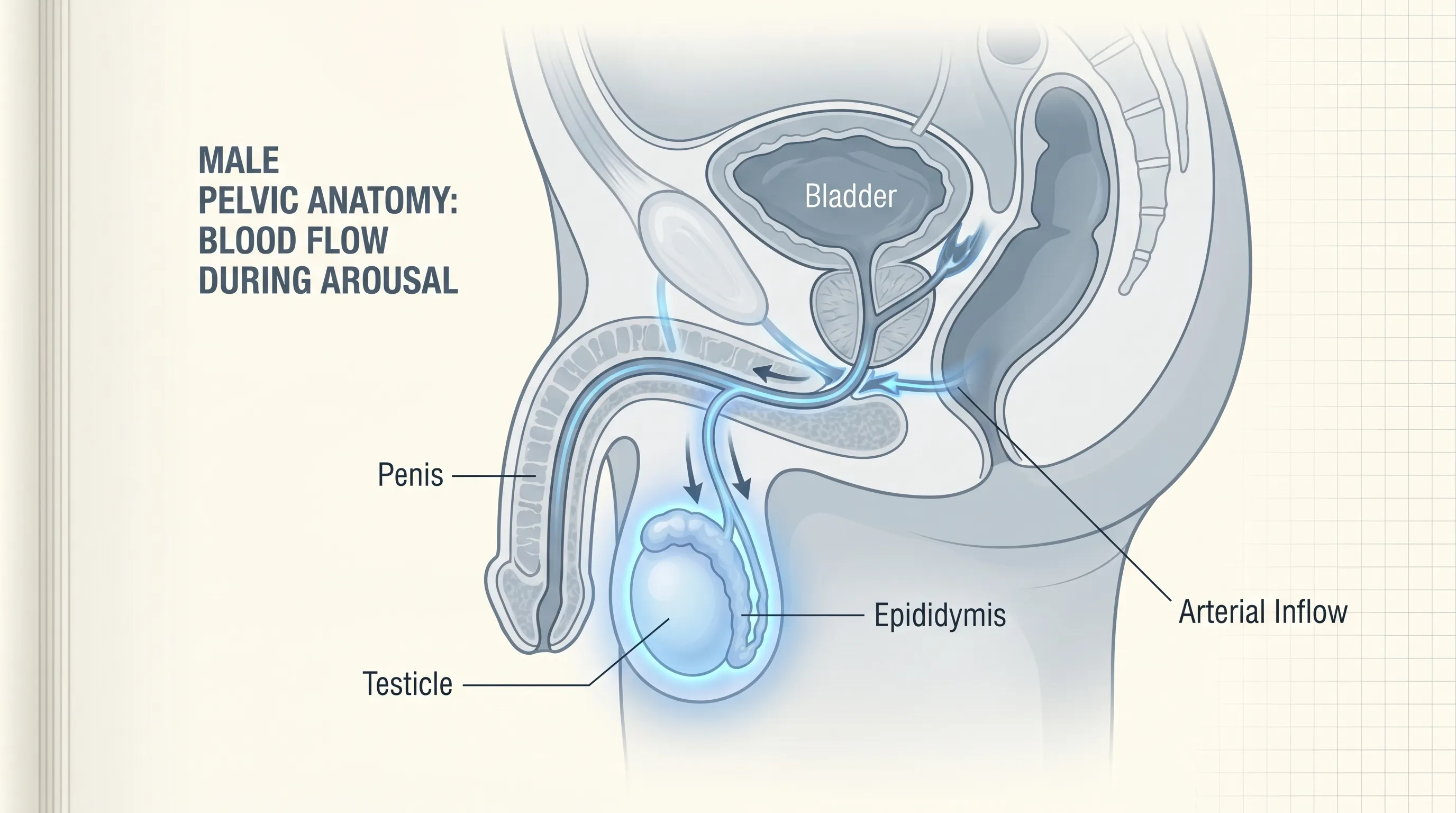
To comprehend why testicular discomfort occurs, it is necessary to examine the vascular and muscular architecture of the male reproductive tract. The testicles are suspended within the scrotum by the spermatic cords, which contain the vas deferens, testicular arteries, pampiniform plexus veins, lymphatic vessels, and autonomic nerves. During sexual arousal, sympathetic and parasympathetic nervous system activity increases significantly. Arterial blood flow to the genital region can increase by up to four hundred percent, delivering oxygenated blood to the penile tissues, testicles, and epididymis. This heightened perfusion supports erectile function and prepares the accessory sex glands for seminal fluid production.
Free calculatorWater Intake CalculatorCalculate daily water needsOpen the calculatorWhat Happens During Sexual Arousal
The physiological process begins with nitric oxide release in the vascular endothelium, leading to smooth muscle relaxation and vasodilation. As blood enters the cavernous tissues of the penis, the venous outflow is temporarily restricted, creating the rigid erection. Simultaneously, the cremasteric muscle contracts, drawing the testicles closer to the perineum to protect them and optimize temperature regulation. The epididymis, a coiled tube responsible for sperm maturation and storage, also experiences increased vascular engorgement. When sexual stimulation continues without interruption, the prostate, seminal vesicles, and bulbourethral glands secrete fluid into the urethra in preparation for ejaculation. If orgasm occurs, coordinated rhythmic contractions of the pelvic floor, vas deferens, and urethral sphincters expel semen while simultaneously triggering rapid vascular drainage, allowing blood flow to return to baseline levels within minutes.
The Role of Blood Flow and Muscle Contraction
When the natural progression from arousal to ejaculation is altered, prolonged vasocongestion occurs. The testicles and epididymis remain engorged with blood and seminal components. The smooth muscle layers surrounding the vas deferens and epididymal duct experience sustained tension. This state creates internal pressure that stimulates nociceptors, the sensory nerve endings responsible for transmitting pain signals. The resulting sensation is typically described as a dull, heavy, or aching discomfort rather than acute pain. Physical activity, temperature changes, and prolonged standing can exacerbate this discomfort by increasing hydrostatic pressure within the scrotal veins. Understanding this physiological baseline is crucial when evaluating why your testis hurt after sex, as it establishes the foundation for distinguishing normal hemodynamic responses from pathological inflammation or structural compromise.
The Most Common Culprit: Epididymal Hypertension
Epididymal hypertension is the clinical term for the condition colloquially referred to as blue balls. Despite the informal nature of this nickname, the phenomenon is well-documented in urological literature and represents a predictable vascular response. It occurs when prolonged sexual arousal is not followed by ejaculation, leading to sustained pooling of blood and seminal fluid within the testicular and epididymal tissues. The discomfort is entirely physiological and resolves once the congestion dissipates.
Mechanism of Vasocongestion
The primary driver of epididymal hypertension is the mismatch between arterial inflow and venous drainage. During extended periods of stimulation without release, the autonomic nervous system maintains vasodilation in the pelvic region. The pampiniform plexus, a network of veins designed to regulate testicular temperature through countercurrent heat exchange, becomes overloaded with blood that has nowhere to go. This congestion increases tissue pressure and stretches the tunica albuginea, the fibrous capsule surrounding each testicle. Nerve endings within this capsule interpret the stretching and pressure as discomfort. The epididymal ducts also experience fluid backup, as the glands continue producing seminal components that are not expelled. Research published in the Journal of Andrology emphasizes that this congestion is entirely reversible and does not compromise spermatogenesis or long-term testicular function.
Myths vs. Medical Reality
Cultural myths have historically exaggerated the severity of this condition, with some claiming that prolonged arousal without ejaculation causes permanent tissue damage, infertility, or chronic pain syndromes. Modern urology firmly debunks these claims. Clinical studies demonstrate that epididymal hypertension causes zero structural injury. The body naturally reabsorbs excess fluid and gradually redirects blood flow back to systemic circulation through venous valves and lymphatic drainage. The discomfort is temporary, typically lasting between one to four hours, and does not require medical intervention. Recognizing this distinction is vital for reducing unnecessary anxiety when you experience a testis hurt after sex, particularly following extended periods of intimacy that do not culminate in orgasm.
How Long Does It Last?
Symptoms generally peak within the first hour following prolonged arousal and gradually diminish as parasympathetic dominance restores normal vascular tone. Gentle movement, hydration, and time facilitate venous return. In most cases, the aching sensation resolves completely within two to four hours. Persistent discomfort beyond this timeframe suggests an alternative etiology, such as low-grade inflammation, pelvic floor spasm, or early-stage infection, warranting further clinical assessment. Tracking the duration and intensity of symptoms provides valuable diagnostic information for healthcare providers.
When It’s More Than Just Congestion: Medical Causes to Consider
While benign vasocongestion accounts for a significant portion of post-coital testicular discomfort, several identifiable medical conditions can produce similar or more severe symptoms. Accurate differentiation is critical, as some conditions require prompt antibiotic therapy, surgical intervention, or specialized physical rehabilitation. Understanding these differential diagnoses ensures that serious pathology is never dismissed as ordinary post-arousal congestion.
Epididymitis and Urinary Tract Infections
Epididymitis involves inflammation of the epididymis, most frequently triggered by bacterial infection. Common pathogens include Chlamydia trachomatis and Neisseria gonorrhoeae in sexually active younger men, and enteric bacteria such as Escherichia coli in older males or those with urinary tract abnormalities. Unlike benign congestion, epididymitis produces progressive, often unilateral pain that intensifies over hours to days. Accompanying symptoms typically include scrotal swelling, erythema, warmth, fever, dysuria, and occasionally penile discharge. If left untreated, chronic inflammation can lead to abscess formation or impaired sperm transport. The American Urological Association (AUA) guidelines for epididymitis emphasize that clinical evaluation must include urinalysis, STI screening, and often targeted antibiotic therapy based on culture results. When your testis hurt after sex and the discomfort is accompanied by urinary symptoms or localized swelling, prompt medical consultation is strongly recommended.
Varicoceles and Venous Reflux
A varicocele is an abnormal dilation of the pampiniform venous plexus within the scrotum, analogous to varicose veins in the legs. This condition occurs when venous valves become incompetent, allowing blood to pool rather than drain efficiently toward the heart. Varicoceles are present in approximately fifteen percent of adult men and often cause a chronic, dragging ache that worsens with prolonged standing, heavy lifting, or sexual activity. The increased intra-scrotal pressure during arousal can exacerbate venous reflux, leading to noticeable discomfort following ejaculation. While many varicoceles are asymptomatic, clinically significant cases may contribute to testicular atrophy or reduced sperm motility due to elevated testicular temperature. Diagnostic confirmation requires physical examination and scrotal Doppler ultrasound. Management ranges from observation to surgical ligation or embolization for symptomatic or fertility-affecting cases.
Chronic Prostatitis and Pelvic Floor Dysfunction
Chronic prostatitis and chronic pelvic pain syndrome (CPPS) represent a complex spectrum of conditions characterized by recurrent or persistent pain in the pelvic region, perineum, and testicles, often exacerbated by ejaculation. The pathophysiology involves a combination of prostatic inflammation, autonomic nervous system dysregulation, and hypertonicity of the pelvic floor musculature. During sexual climax, the prostate and surrounding pelvic muscles contract forcefully. In individuals with CPPS, these contractions can trigger prolonged muscle spasms that refer pain to the testicles via the pudendal and ilioinguinal nerves. Patients frequently report pain that begins immediately post-ejaculation and may persist for hours or days. The Cleveland Clinic urology team notes that differentiating CPPS from infectious prostatitis requires careful evaluation of symptom patterns, prostate fluid analysis, and exclusion of bacterial pathogens. Management typically focuses on pelvic floor physical therapy, alpha-blockers, anti-inflammatory medications, and stress reduction techniques.
Post-Vasectomy Pain Syndrome (PVPS)
Following vasectomy, a small percentage of men develop chronic testicular pain that often intensifies with ejaculation. Known as post-vasectomy pain syndrome, this condition arises from epididymal congestion, sperm granuloma formation, or nerve entrapment within scar tissue. After the vas deferens is surgically occluded, sperm continue to be produced but cannot exit through the normal pathway. This creates increased pressure within the epididymis, which becomes particularly noticeable during sexual arousal and orgasm when the accessory glands contract vigorously. PVPS typically manifests as a persistent, dull ache that worsens predictably after ejaculation. While many cases improve with conservative measures like NSAIDs and scrotal support, refractory symptoms may require surgical intervention such as vasectomy reversal or denervation procedures. Urological follow-up is essential for accurate diagnosis and staged treatment planning.
The Emergency Warning: Testicular Torsion
Although rarely triggered specifically by sexual activity, testicular torsion represents a critical urological emergency that can coincidentally occur during or after intimacy. Torsion involves the twisting of the spermatic cord, which completely cuts off arterial blood supply to the testicle. Symptoms include sudden, excruciating, unilateral testicular pain, often accompanied by nausea, vomiting, abdominal discomfort, and an abnormally high-riding testicle. The condition is most common in adolescents but can occur at any age. Immediate surgical detorsion and fixation are required to preserve testicular viability, with a narrow six-hour window before irreversible ischemic damage occurs. Any presentation of sudden, severe scrotal pain demands immediate emergency department evaluation. Differentiating torsion from benign congestion or epididymitis is critical, and scrotal ultrasound with Doppler flow assessment is the standard diagnostic tool. The Mayo Clinic and MedlinePlus both emphasize that time-sensitive intervention is the single most important factor in preventing permanent testicular loss.
Proven Strategies for Immediate and Long-Term Relief
Effective management of post-coital testicular discomfort requires a tiered approach that addresses immediate symptom relief while identifying underlying contributing factors. Evidence-based strategies combine physiological interventions, pharmacological support, and lifestyle modifications tailored to the specific etiology of the pain.
Natural and Home-Based Interventions
The most rapid and reliable relief for benign epididymal hypertension is achieving orgasm, which triggers coordinated smooth muscle contractions that expel pooled seminal fluid and accelerate venous drainage. When ejaculation is not feasible or desirable, alternative methods can significantly reduce discomfort. Applying a cold compress to the scrotum for ten to fifteen minutes constricts superficial blood vessels and reduces inflammatory signaling. The compress should always be wrapped in a thin cloth to prevent tissue irritation. Gentle physical activity, such as walking or light stretching, promotes venous return through skeletal muscle pumping in the lower extremities. Wearing supportive underwear or an athletic supporter minimizes gravitational traction on the spermatic cords and stabilizes scrotal contents during movement. Additionally, practicing the Valsalva maneuver carefully can transiently increase intra-abdominal pressure, encouraging blood flow away from the pelvic region. These conservative measures are highly effective for vasocongestion-related discomfort and carry minimal risk when applied correctly.
Over-the-Counter Medications
For persistent aching or mild inflammatory symptoms, nonsteroidal anti-inflammatory drugs (NSAIDs) such as ibuprofen or naproxen provide targeted relief by inhibiting cyclooxygenase enzymes and reducing prostaglandin synthesis. A typical adult dose of 200 to 400 milligrams of ibuprofen taken with food can effectively diminish scrotal aching and pelvic muscle tension. Acetaminophen is an alternative for individuals who cannot tolerate NSAIDs, though it lacks direct anti-inflammatory properties. It is crucial to adhere to recommended dosing limits and avoid concurrent use of multiple analgesics without medical supervision. When pain follows vasectomy, post-procedural inflammation may require a short course of prescription-strength anti-inflammatories or neuropathic pain modulators like gabapentin, as directed by a healthcare provider.
Lifestyle Adjustments and Prevention
Long-term management focuses on optimizing pelvic and reproductive health through consistent lifestyle habits. Maintaining regular sexual activity or masturbation prevents chronic epididymal congestion by ensuring periodic vascular drainage and fluid clearance. Staying adequately hydrated supports healthy seminal fluid viscosity and facilitates efficient ductal transport. Pelvic floor relaxation techniques, including diaphragmatic breathing, progressive muscle relaxation, and guided stretching, are highly beneficial for individuals with suspected CPPS or hypertonic pelvic muscles. Using adequate lubrication during intercourse reduces friction, minimizes muscular strain, and promotes smoother physiological transitions. Avoiding excessive caffeine, alcohol, and spicy foods can also reduce pelvic congestion and irritability in susceptible individuals. Integrating these habits creates a resilient physiological baseline that significantly reduces the frequency and intensity of post-coital discomfort.

Diagnostic Pathways and Medical Evaluation
When self-care measures fail to resolve symptoms or when red flag indicators emerge, professional medical evaluation becomes necessary. Urological assessment follows a systematic approach designed to differentiate benign physiological responses from pathological conditions requiring targeted treatment.
Physical Examination and Patient History
A thorough clinical evaluation begins with a detailed medical history focusing on symptom onset, duration, relationship to sexual activity, urinary patterns, and prior surgical or infectious history. The provider will ask whether pain occurs before, during, or after ejaculation, whether it is unilateral or bilateral, and whether it radiates to the groin, abdomen, or lower back. Physical examination includes visual inspection of the scrotum for swelling, erythema, or asymmetry, followed by gentle palpation to identify tenderness, masses, or structural abnormalities. The cremasteric reflex is tested to assess neurological integrity. In cases of suspected epididymitis or torsion, prehn sign assessment (pain relief with scrotal elevation) may provide diagnostic clues, though it is no longer relied upon as a definitive indicator.
Imaging and Laboratory Testing
When clinical findings are inconclusive or symptoms persist, targeted diagnostic testing is indicated. Scrotal ultrasound with color Doppler is the gold standard for evaluating testicular perfusion, identifying varicoceles, ruling out torsion, and detecting epididymal inflammation or cystic formations. Urinalysis and urine culture screen for bacterial infections and inflammatory markers. Nucleic acid amplification testing (NAAT) for Chlamydia and Gonorrhea is routinely performed in sexually active individuals presenting with epididymitis symptoms. Prostate fluid analysis or expressed prostatic secretion testing may be utilized for chronic prostatitis evaluation. In complex or refractory cases, pelvic MRI or specialized urodynamic studies may be recommended. These diagnostic tools provide objective data that guide precise treatment planning and eliminate guesswork.
When to Consult a Urologist
Timely specialist referral is indicated when pain exceeds four hours without improvement, when symptoms recur frequently despite conservative management, or when accompanying urinary, systemic, or dermatological signs suggest infection or systemic disease. Urologists possess specialized training in male reproductive pathology, advanced imaging interpretation, and surgical or medical management of complex pelvic pain syndromes. Early consultation prevents complications, accelerates recovery, and ensures that treatable conditions are not misattributed to benign causes. The NHS (UK) guidance on painful testicles strongly advises urgent evaluation for severe, sudden, or progressive symptoms to safeguard long-term reproductive and urinary health.
Key Points and Clinical Guidelines
Contemporary urological practice emphasizes evidence-based differentiation between physiological congestion and organic pathology. Research and clinical guidelines consistently highlight the importance of accurate symptom profiling and patient education.
What Leading Urologists Say
Dr. Lauren N. Byrne and Dr. Randall B. Meacham, publishing in the Journal of Andrology, emphasize that post-ejaculatory perineal and testicular pain requires careful differentiation between benign epididymal congestion, chronic prostatitis/CPPS, and organic urological pathology. They note that a thorough clinical history focusing on timing relative to ejaculation, pain quality, and associated urinary symptoms directly guides appropriate diagnostic workup and prevents unnecessary interventions. Similarly, urologists at the Cleveland Clinic stress that epididymal hypertension is a legitimate physiologic phenomenon that resolves naturally but should not be confused with persistent pain indicating infection or structural compromise. Patient education remains central to reducing anxiety and promoting appropriate healthcare-seeking behavior when symptoms deviate from expected physiological patterns.
Evidence-Based Management Protocols
Modern clinical protocols prioritize conservative management for benign conditions while reserving targeted therapies for confirmed pathological diagnoses. For epididymal hypertension, patient reassurance, cold therapy, and NSAIDs constitute first-line recommendations. Epididymitis requires pathogen-directed antibiotics based on age, sexual history, and culture sensitivity, typically spanning seven to fourteen days. CPPS management integrates multimodal therapy, including alpha-blockers, anti-inflammatory agents, pelvic floor physical therapy, and cognitive behavioral strategies to address the biopsychosocial components of chronic pain. Varicocele intervention is reserved for symptomatic cases, fertility impairment, or progressive testicular atrophy. Testicular torsion demands immediate surgical exploration and bilateral orchiopexy. These structured approaches ensure that treatment aligns with pathophysiology, minimizes unnecessary medication exposure, and optimizes patient outcomes.
| Condition | Typical Pain Onset | Key Differentiating Symptoms | Standard Diagnostic Approach | Primary Treatment | Emergency Status |
|---|---|---|---|---|---|
| Epididymal Hypertension | During or immediately after prolonged arousal | Dull ache, heaviness, resolves in 1-4 hours, no swelling | Clinical history, physical exam | Ejaculation, cold therapy, NSAIDs | None |
| Epididymitis | Hours to days post-activity or spontaneous | Progressive unilateral pain, swelling, fever, dysuria | Urinalysis, NAAT, ultrasound | Pathogen-directed antibiotics, scrotal elevation | Urgent evaluation needed |
| Chronic Prostatitis/CPPS | Immediately post-ejaculation, persists hours | Perineal ache, urinary urgency, pelvic floor tension | Prostatic fluid analysis, symptom mapping | Physical therapy, alpha-blockers, lifestyle modification | Routine urology follow-up |
| Varicocele | Worsens with arousal, standing, or exercise | Dragging ache, visible "bag of worms" veins, dullness | Scrotal ultrasound with Doppler | Observation or surgical ligation | Elective management |
| Testicular Torsion | Sudden, often during or after activity | Severe sharp pain, nausea, high-riding testicle, no relief | Doppler ultrasound, surgical exploration | Immediate detorsion and fixation | True emergency |
| Post-Vasectomy Pain | Predictably after ejaculation | Chronic dull ache, epididymal fullness, history of procedure | Physical exam, ultrasound, symptom diary | NSAIDs, nerve blocks, surgical revision if refractory | Non-emergent, requires follow-up |
Frequently Asked Questions
Is it normal to experience testicular discomfort after sexual activity?
Yes, mild to moderate discomfort is relatively common and typically results from benign epididymal hypertension, which occurs when prolonged arousal causes temporary blood and fluid pooling in the scrotal tissues. This condition is harmless, resolves spontaneously within a few hours, and does not require medical treatment unless symptoms persist or worsen. Maintaining open communication with a healthcare provider can help confirm the diagnosis and rule out inflammatory or structural conditions.
When should I seek emergency care for post-coital pain?
Immediate emergency evaluation is warranted if you experience sudden, severe, or rapidly escalating pain, particularly when accompanied by nausea, vomiting, fever, visible scrotal swelling, redness, or an abnormally positioned testicle. These symptoms may indicate testicular torsion, acute infection, or other conditions that require time-sensitive intervention. Delaying care beyond six hours for suspected torsion significantly increases the risk of permanent tissue damage and potential loss of the testicle.
Can lifestyle changes prevent recurrent testicular discomfort?\Absolutely. Regular sexual activity or masturbation prevents chronic congestion by promoting consistent vascular drainage and fluid clearance. Adequate hydration supports healthy seminal viscosity, while pelvic floor relaxation exercises, proper lubrication, and supportive undergarments reduce mechanical strain and muscular tension. Avoiding excessive alcohol, caffeine, and prolonged arousal without release further minimizes the physiological triggers that commonly cause a testis hurt after sex.
How do urologists differentiate between blue balls and epididymitis?
Clinicians rely on symptom progression, timing, and accompanying clinical signs. Benign epididymal hypertension typically presents with diffuse aching that resolves within hours and lacks urinary or systemic symptoms. Epididymitis features progressive, often unilateral pain, localized swelling, warmth, and frequently includes dysuria or discharge. Diagnostic confirmation involves urinalysis, STI screening, and scrotal ultrasound to assess vascular flow and tissue inflammation, ensuring accurate treatment selection.
Are there long-term risks if post-sex testicular pain is ignored?
While benign congestion carries zero long-term risk, ignoring persistent or worsening symptoms can allow underlying conditions like infection, varicocele, or chronic prostatitis to progress. Untreated epididymitis may lead to abscess formation or impaired fertility. Chronic pelvic pain syndromes can become centralized, complicating future treatment. Addressing symptoms early through appropriate self-care or professional evaluation preserves reproductive health and prevents unnecessary complications.
Conclusion
Experiencing a testis hurt after sex is a common physiological occurrence that rarely indicates serious pathology. The vast majority of cases stem from benign epididymal hypertension, a temporary vascular response to prolonged arousal that resolves naturally through physiological drainage or targeted self-care strategies. However, persistent, severe, or progressively worsening discomfort warrants careful clinical evaluation to exclude infection, structural abnormalities, or pelvic floor dysfunction. By understanding the underlying mechanisms, recognizing red flag symptoms, and applying evidence-based relief protocols, men can effectively manage post-coital discomfort while safeguarding long-term urological health. Open communication with healthcare providers, adherence to proven lifestyle modifications, and timely diagnostic intervention ensure that this symptom remains a manageable aspect of male wellness rather than a source of unnecessary anxiety. Prioritizing informed self-care and professional guidance when needed creates a sustainable foundation for reproductive vitality and overall quality of life.
How we work
Researched and drafted with AI assistance, then reviewed by a human editor against the cited sources.
This article is general health information, not medical advice. Consult a qualified healthcare professional about your own situation.