The Truth About Eye Drops Redness: Safety, Science, and Safer Alternatives
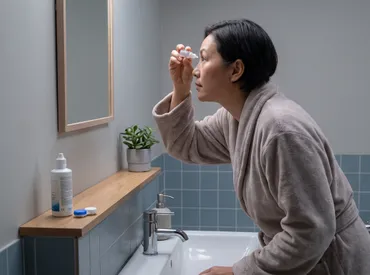
Reaching for a bottle of over-the-counter eye drops to instantly clear bloodshot eyes has become a deeply ingrained daily ritual for millions. Whether preparing for a high-stakes presentation, a professional photoshoot, or simply trying to look awake after a restless night, the immediate cosmetic whitening effect is undeniably appealing. However, behind that quick-fix promise lies a complex pharmacological reality that most consumers never consider. The widespread reliance on eye drops redness treatments has created a public health paradox: a product designed for cosmetic relief frequently exacerbates the very condition it aims to hide. Understanding the physiological mechanisms, clinical risks, and evidence-based alternatives is no longer optional; it is essential for preserving long-term ocular health and preventing iatrogenic harm. As the ophthalmology community continues to raise alarms about chronic misuse, it is imperative that consumers shift from symptom masking to root-cause resolution.

The Science Behind Conjunctival Vasculature and Vasoconstriction
To comprehend why certain formulations rapidly clear bloodshot eyes, one must first understand the intricate vascular network of the ocular surface. The conjunctiva, a thin, transparent mucous membrane covering the white part of the eye (sclera), contains an extensive web of superficial capillaries, arterioles, and venules. Under normal physiological conditions, these vessels maintain a baseline tone regulated by autonomic nervous system signals. When exposed to irritants, allergens, dry air, digital screen fatigue, or minor trauma, local inflammatory mediators such as histamine, prostaglandins, and cytokines trigger vasodilation. This increased blood flow manifests clinically as conjunctival hyperemia, commonly referred to as redness.
Free calculatorLab Values Reference ChartComplete reference chart for medical lab valuesOpen the calculatorTraditional eye drops redness remedies operate through a highly targeted pharmacological pathway. They contain potent alpha-adrenergic agonists, primarily naphazoline, tetrahydrozoline, phenylephrine, and oxymetazoline. Upon instillation, these compounds rapidly diffuse across the corneal epithelium and bind to alpha-1 adrenergic receptors located on the smooth muscle cells of superficial conjunctival arterioles. This binding triggers a cascade of intracellular signaling that increases intracellular calcium, prompting the smooth muscle to contract. As the vessels constrict, blood flow to the superficial capillary bed decreases, effectively draining the engorged vessels and restoring the eye's characteristic white appearance within minutes.
The onset of action is remarkably swift, typically occurring between 1 and 10 minutes post-instillation. Peak efficacy is usually achieved around the 30-minute mark, with clinical whitening sustained for approximately 3 to 4 hours. While this rapid vasoconstriction provides immediate cosmetic satisfaction, it does not address the underlying inflammatory or lubricative deficiency causing the initial redness. In fact, by artificially restricting blood flow, these agents temporarily reduce the delivery of oxygen and nutrients to the superficial conjunctival tissues. Repeated daily use can subtly compromise ocular surface homeostasis, creating a fragile environment where the eye becomes increasingly dependent on external chemical intervention to maintain baseline clarity.
The Hidden Danger of Rebound Redness and Tachyphylaxis
Perhaps the most insidious consequence of chronic vasoconstrictor use is rebound redness, medically termed rhinitis medicamentosa of the eye or pharmacological tachyphylaxis. This phenomenon occurs when the ocular vasculature becomes physiologically dependent on the continuous presence of the exogenous agonist. The mechanism is rooted in receptor biology and compensatory homeostasis. With frequent exposure to alpha-1 adrenergic stimulants, the smooth muscle receptors undergo downregulation and desensitization. The body actively attempts to restore equilibrium by upregulating vasodilatory pathways, including increased nitric oxide production and enhanced sensitivity to endogenous inflammatory mediators.
The timeline for this dependency is alarmingly short. Clinical observations indicate that rebound vasodilation can manifest after as few as 3 to 5 consecutive days of use. When the medication wears off, the previously constricted vessels do not simply return to baseline; they overshoot it, dilating more profoundly than the original state. This creates a vicious dependency cycle where patients require progressively higher doses and more frequent administration to achieve diminishing whitening results. Studies estimate that up to 30% of chronic red-eye patients report significant rebound symptoms following prolonged vasoconstrictor exposure.
The psychological and physiological toll of this cycle is substantial. Patients often report increased baseline redness, persistent ocular discomfort, and a heightened sensitivity to environmental triggers. Experts at the National Institutes of Health (NIH) explicitly warn that relying on these drops for daily symptom management fundamentally alters conjunctival autoregulation. Instead of healing the underlying irritation, the eye becomes trapped in a pharmacological feedback loop. Breaking this cycle requires complete cessation of the offending agent, a process that can take several weeks of discomfort as the receptor density gradually normalizes and endogenous vascular tone stabilizes. Medical professionals strongly advise that consumers recognize eye drops redness solutions as strictly temporary cosmetic aids, not therapeutic interventions.
Traditional Vasoconstrictors vs. Modern Alpha-2 Agonists
The landscape of OTC ocular medications has evolved significantly with the introduction of newer-generation formulations designed to mitigate the well-documented risks of traditional alpha-1 agonists. The most notable advancement is brimonidine tartrate 0.025%, which received FDA approval for cosmetic redness relief in December 2017. Unlike its predecessors, brimonidine operates through a highly selective alpha-2 adrenergic agonist mechanism. This pharmacological distinction is crucial for understanding its improved safety profile and clinical efficacy.
Alpha-2 receptors are predominantly located on the postsynaptic venules rather than the presynaptic arterioles targeted by naphazoline or tetrahydrozoline. By selectively constricting venules, brimonidine reduces conjunctival redness while preserving arterial blood flow, thereby maintaining crucial oxygen and nutrient delivery to the superficial ocular tissues. This targeted approach dramatically reduces the likelihood of compensatory vasodilation and receptor downregulation. Clinical data demonstrates that brimonidine exhibits less than 5% rebound incidence compared to the 25-30% rebound rate associated with traditional alpha-1 agonists.
A pivotal Phase 3 randomized controlled trial published in Cornea (Donshik et al., 2018) rigorously evaluated brimonidine tartrate 0.025% against placebo and traditional comparators. The study revealed that over 80% of participants achieved clinically meaningful conjunctival whitening within 30 minutes, with effects sustained for up to 8 hours. More importantly, after six weeks of twice-daily administration, subjects demonstrated minimal tachyphylaxis and no significant rebound hyperemia upon discontinuation. This evidence-based superiority has positioned brimonidine as a bridge between traditional cosmetic drops and safer long-term alternatives, as detailed in Cleveland Clinic's pharmacological guides.
| Feature | Traditional Vasoconstrictors (Naphazoline, Tetrahydrozoline) | Brimonidine Tartrate 0.025% | Preservative-Free Artificial Tears |
|---|---|---|---|
| Primary Mechanism | Non-selective alpha-1 agonist (arteriolar constriction) | Selective alpha-2 agonist (venular constriction) | Lubrication, tear film stabilization, osmotic regulation |
| Onset of Action | 1-10 minutes | 2-5 minutes | Immediate (mechanical flushing) |
| Duration of Effect | 3-4 hours | Up to 8 hours | Variable (2-6 hours depending on formulation) |
| Rebound Redness Risk | High (25-30% with frequent use) | Low (<5% clinical incidence) | None |
| Preservative Toxicity | High risk (often contain BAK) | Moderate risk (formulation dependent) | None (single-use vials) |
| Clinical Recommendation | Occasional use only (max 3 days) | Occasional cosmetic use, safer profile | First-line for chronic daily management |
Despite these advancements, ophthalmologists universally caution that even modern alpha-2 agonists should not replace targeted therapy for underlying ocular pathology. They remain cosmetic interventions. When evaluating eye drops redness treatments, consumers must prioritize formulations that align with their specific clinical needs and usage frequency, always erring on the side of preservative-free lubrication for routine care.
Decoding the Underlying Causes of Ocular Hyperemia
Redness is universally a symptom, never a primary diagnosis. Treating conjunctival hyperemia without identifying its etiological driver is analogous to silencing a fire alarm without extinguishing the flames. The conjunctival vasculature dilates in response to a vast array of physiological stressors, each requiring a distinct therapeutic approach. Failing to differentiate these causes leads to inappropriate medication use and delayed recovery.
Dry eye disease remains the most prevalent driver of chronic ocular redness in modern populations. Affecting up to 30% of adults globally according to the National Eye Institute (NIH), it manifests in two primary subtypes: aqueous-deficient (inadequate tear production) and evaporative (tear film instability due to meibomian gland dysfunction). When the ocular surface dries, epithelial cells release pro-inflammatory cytokines, triggering reflex vasodilation to increase nutrient delivery and immune cell recruitment. Vasoconstrictor drops temporarily mask this sign while the underlying tear film instability persists, often accelerating corneal epithelial breakdown.
Allergic conjunctivitis represents another major etiological pathway. Exposure to environmental allergens triggers mast cell degranulation, releasing histamine and leukotrienes. This induces both vasodilation and increased vascular permeability, leading to redness, itching, and chemosis. As outlined by the Cleveland Clinic, while vasoconstrictors reduce redness, they do not inhibit histamine receptors, making them ineffective for the hallmark symptom of ocular allergy. Antihistamine and mast cell stabilizer combinations are clinically indicated here.
Infectious etiologies, including viral and bacterial conjunctivitis, cause profound hyperemia through direct pathogen invasion and subsequent immune response. Viral cases, particularly adenoviral keratoconjunctivitis, produce intense follicular reactions and diffuse injection. CDC guidelines emphasize that applying traditional redness drops during active infection can suppress local immune surveillance, potentially prolonging viral shedding and increasing transmission risk. Similarly, contact lens-related complications such as giant papillary conjunctivitis or early microbial keratitis require immediate lens discontinuation and professional evaluation, not cosmetic masking.
More severe inflammatory conditions like uveitis, episcleritis, and scleritis demand urgent medical intervention. Uveitis involves intraocular inflammation that can rapidly threaten vision, while scleritis presents with severe, boring pain and deep, violaceous redness. Acute angle-closure glaucoma, a sight-threatening emergency, presents with a markedly red, painful eye, fixed mid-dilated pupil, and profound vision loss. Relying on eye drops redness formulations in these scenarios delays critical treatment and risks irreversible ocular damage. Recognizing these differential diagnoses is paramount for patient safety.
FDA Warnings, Preservative Toxicity, and Professional Guidelines
The regulatory and clinical communities have issued increasingly stringent guidance regarding the unsupervised use of ocular vasoconstrictors. The U.S. Food and Drug Administration has published multiple consumer updates emphasizing that OTC redness drops are strictly symptomatic treatments, not cures for underlying ocular conditions. Warnings specifically highlight the dangers of tetrahydrozoline toxicity if ingested, particularly by young children, and caution against systemic absorption leading to central nervous system depression, bradycardia, and hypothermia.
Beyond systemic risks, topical application carries significant local hazards primarily driven by preservative toxicity. The vast majority of multi-dose OTC bottles contain benzalkonium chloride (BAK), a quaternary ammonium compound utilized to prevent microbial contamination. While effective as an antimicrobial agent, BAK is profoundly cytotoxic to the ocular surface. Research published by NIH demonstrates that it disrupts the lipid bilayer of corneal and conjunctival epithelial cells, induces apoptosis, reduces goblet cell density (critical for mucin production), and exacerbates tear film instability. Clinical trials consistently demonstrate that preservative-containing drops worsen dry eye disease markers, with BAK exposure correlating directly with increased ocular surface inflammation, conjunctival squamous metaplasia, and reduced conjunctival impression cytology viability.
The American Academy of Ophthalmology (AAO) maintains a firm stance against chronic reliance on these formulations. Their Preferred Practice Patterns explicitly state that OTC redness-relief drops should be used sparingly, strictly for occasional cosmetic purposes, and never as a substitute for targeted medical therapy. Leading eye health experts at Mayo Clinic emphasize that daily use fundamentally undermines ocular homeostasis. The analogy frequently used in clinical practice is apt: using vasoconstrictors for daily eye care is like applying heavy makeup to cover a severe rash. It hides the appearance while allowing the underlying pathology to progress unchecked.
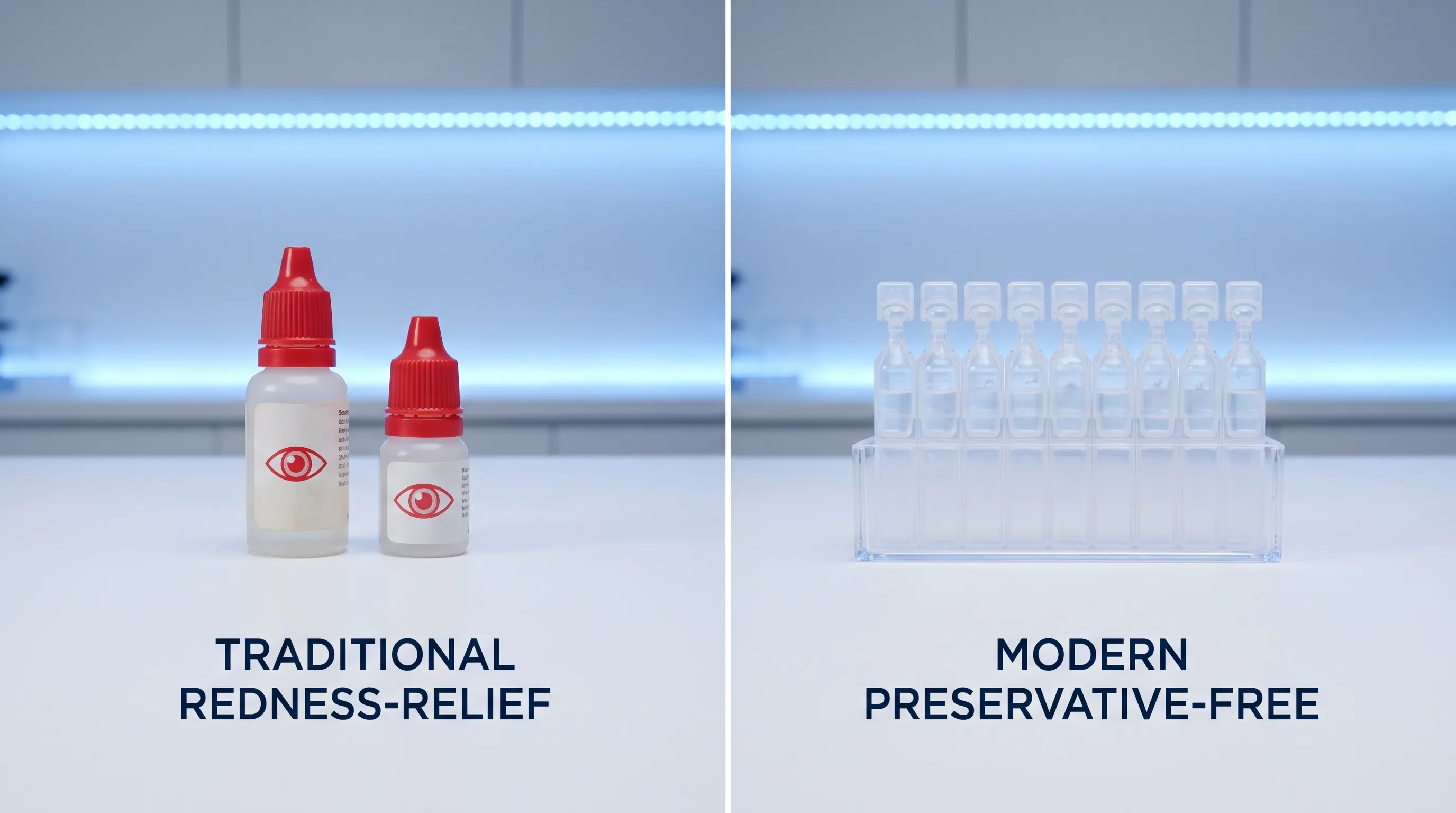
Furthermore, frequent application alters the natural tear film osmolarity and pH, disrupting the delicate enzymatic and immunological defenses of the ocular surface. The tear film contains lysozyme, lactoferrin, and secretory IgA, all of which require a stable physiological environment to function optimally. Chronic chemical exposure compromises this defense matrix, increasing susceptibility to secondary bacterial colonization and mechanical friction during blinking. Regulatory bodies now recommend that patients switch to preservative-free single-use vials if lubrication is required more than four times daily, effectively eliminating BAK exposure and preserving epithelial integrity.
Evidence-Based Alternatives for Chronic Red Eye Management
Transitioning away from chronic vasoconstrictor dependency requires implementing a comprehensive, pathophysiology-driven management strategy. Modern ocular surface therapy focuses on restoring tear film stability, modulating inflammation, and promoting epithelial healing. The foundation of this approach lies in preservative-free artificial tears. Formulated with electrolytes, osmoprotectants, and polymers like hyaluronic acid or carboxymethylcellulose, these drops replicate the natural composition of human tears. They mechanically flush irritants, reduce osmotic stress, and provide a protective coating that minimizes friction between the eyelid and cornea during blinking. Clinical trials demonstrate that consistent use of preservative-free formulations reduces ocular surface inflammatory markers by 40-60%, making them the gold standard for daily maintenance.
For allergy-driven hyperemia, antihistamine and mast cell stabilizer combinations offer targeted relief without vasoconstrictive risks. Agents like ketotifen fumarate and olopatadine hydrochloride block H1 histamine receptors and inhibit mast cell degranulation, directly addressing the immunological cascade responsible for redness and pruritus. These formulations are approved for long-term use and do not induce tachyphylaxis or rebound vasodilation. Patients with seasonal or perennial allergic conjunctivitis should transition to these targeted therapies rather than masking symptoms with alpha-agonists.
Meibomian gland dysfunction, a leading contributor to evaporative dry eye and secondary redness, responds optimally to mechanical and thermal interventions. Daily application of warm compresses at 40-45°C liquefies inspissated meibum, while gentle lid massage and specialized lid hygiene scrubs remove bacterial biofilms and demodex mites. As recommended by the Cleveland Clinic, these non-pharmacological protocols address the root cause of tear film evaporation, reducing the reflex vasodilation that manifests as chronic redness. Omega-3 fatty acid supplementation, particularly EPA and DHA, has also demonstrated efficacy in modulating ocular surface inflammation and improving meibomian gland secretion quality, though results vary based on baseline dietary intake and formulation purity.
When conservative measures prove insufficient, prescription anti-inflammatory agents become necessary. Topical cyclosporine A (Restasis, Cequa) and lifitegrast (Xiidra) are FDA-approved immunomodulators that inhibit T-cell activation and LFA-1/ICAM-1 binding, respectively. These therapies break the chronic inflammatory cycle driving aqueous-deficient dry eye, restoring natural tear production and reducing conjunctival hyperemia over weeks to months. While they require a prescription and consistent adherence, they represent the only disease-modifying treatments for chronic ocular surface inflammation, fundamentally contrasting with the purely symptomatic nature of traditional eye drops redness products.
Clinical Best Practices for Safe Application and Usage
Proper administration technique and adherence to usage parameters significantly impact both efficacy and safety. When eye drops redness solutions are deemed appropriate for occasional cosmetic use, strict guidelines must be followed. Instill no more than one to two drops per eye, up to four times daily, and strictly limit continuous use to a maximum of three consecutive days. This window allows the conjunctival vasculature to recover baseline autoregulation without triggering receptor desensitization.
Application technique is equally critical. Always wash hands thoroughly with soap and water before handling bottles to prevent bacterial introduction. Tilt the head backward, gently pull down the lower eyelid to create a conjunctival sac, and instill the drop without allowing the dropper tip to touch the eye, eyelashes, or fingers. This prevents cross-contamination and microbial proliferation within the bottle. After instillation, close the eyes gently for 30 seconds and lightly press the nasolacrimal duct (inner corner) to minimize systemic absorption and maximize ocular surface retention.
Contact lens wearers must exercise heightened caution. Traditional vasoconstrictors and BAK-containing drops should never be applied while lenses are in situ. Remove lenses prior to application, wait a minimum of 10 to 15 minutes before reinsertion, and consider switching to daily disposable lenses during periods of ocular irritation to reduce allergen and deposit accumulation. CDC contact lens hygiene guidelines strongly advise discontinuing wear entirely if lens discomfort persists until evaluated by an eye care professional, as continued use risks corneal neovascularization and microbial keratitis.
Absolute contraindications for OTC redness drops include known narrow-angle glaucoma, where vasoconstrictors can precipitate pupillary block and intraocular pressure spikes; pregnancy and breastfeeding, due to uncertain systemic fetal absorption profiles; children under six years of age, due to high risk of severe systemic toxicity; and any presentation accompanied by moderate to severe pain, photophobia, purulent discharge, or sudden vision loss. These symptoms indicate sight-threatening pathology requiring immediate clinical intervention, not cosmetic masking.
Frequently Asked Questions
How quickly do eye drops for redness start working, and how long do they last?
Traditional vasoconstrictor drops typically begin constricting superficial conjunctival blood vessels within 1 to 10 minutes of instillation. The cosmetic whitening effect generally peaks around 30 minutes and lasts for approximately 3 to 4 hours. Newer alpha-2 selective formulations like brimonidine tartrate 0.025% can provide sustained relief for up to 8 hours with a more stable physiological profile.
Can overusing redness-relief eye drops cause permanent damage?
While permanent structural damage is rare, chronic overuse can lead to severe ocular surface disease due to preservative toxicity, particularly benzalkonium chloride (BAK). Prolonged use also causes tachyphylaxis and rebound redness, where blood vessels dilate more severely than before. Additionally, frequent reliance can mask serious conditions like uveitis, glaucoma, or corneal infections, delaying critical medical intervention.
Are preservative-free artificial tears better for daily red eye management?
Yes. Preservative-free artificial tears are widely recommended by the American Academy of Ophthalmology and FDA for chronic management. They lubricate the ocular surface, flush out environmental irritants, and stabilize the tear film without the risk of chemical-induced toxicity. Unlike vasoconstrictors, they address the underlying inflammation and dryness rather than temporarily masking symptoms.
Is it safe to use redness drops while wearing contact lenses?
No, it is not safe to instill traditional redness-relief drops directly onto contact lenses. Vasoconstrictors and their preservatives can bind to the lens material, causing prolonged ocular exposure, increased irritation, and potential corneal toxicity. Always remove lenses, apply drops, and wait at least 10 to 15 minutes before reinserting. Preservative-free formulations are safer but should still be used with caution.
What should I do if I experience rebound redness after stopping the drops?
Discontinue all vasoconstrictor drops immediately. Switch exclusively to preservative-free artificial tears used 4 to 6 times daily to soothe the ocular surface and support natural healing. Apply warm compresses to reduce inflammation and promote meibomian gland function. If redness, pain, or blurred vision persists beyond two weeks, consult an ophthalmologist or optometrist for a comprehensive evaluation.
Conclusion
The pursuit of clear, bright eyes is a natural and entirely understandable goal, but the path to sustainable ocular wellness requires moving beyond quick cosmetic fixes. While traditional and modern eye drops redness formulations offer rapid, temporary whitening, they fundamentally operate as pharmacological bandages that obscure the true health status of the ocular surface. The risks of receptor desensitization, rebound hyperemia, preservative-induced cytotoxicity, and disease masking are well-documented and clinically significant. Major ophthalmological and regulatory bodies universally agree that these products should be reserved for rare, situational use rather than incorporated into daily health routines.
True ocular health is cultivated through consistent, evidence-based practices: prioritizing preservative-free lubrication, implementing targeted anti-allergy therapies when indicated, maintaining strict lid hygiene, addressing environmental stressors, and seeking prompt professional evaluation for persistent or painful symptoms. By shifting the paradigm from symptom suppression to root-cause resolution, patients can break the dependency cycle and restore natural conjunctival homeostasis. The World Health Organization recognizes that proactive eye care is a fundamental component of overall physiological balance. Treating them with informed, medically sound strategies not only preserves their clarity and comfort but safeguards their irreplaceable function for a lifetime.
How we work
Researched and drafted with AI assistance, then reviewed by a human editor against the cited sources.
This article is general health information, not medical advice. Consult a qualified healthcare professional about your own situation.