Prism Glasses for Diplopia: A Complete Clinical and Practical Guide

Waking up to see two overlapping images instead of one clear view of your surroundings can be profoundly disorienting. For individuals experiencing double vision, even routine activities like reading, walking down stairs, or navigating traffic become exhausting exercises in mental compensation. Fortunately, modern optical science offers a highly effective solution that restores single binocular vision and dramatically improves daily function. By redirecting light entering the eyes, specialized corrective lenses realign visual inputs, allowing the brain to fuse them into a coherent single image. This article provides a comprehensive, evidence-based exploration of how prism glasses for diplopia work, who benefits from them, what to expect during the fitting process, and how to successfully integrate them into your daily routine. Drawing from clinical guidelines, peer-reviewed ophthalmic research, and decades of optometric practice, we will guide you through every stage of diagnosis, prescription, adaptation, and long-term management. Whether you are experiencing sudden double vision due to a neurological event, managing a chronic strabismus condition, or exploring non-surgical alignment options, this guide will equip you with the knowledge needed to make informed decisions alongside your eye care professional.
Understanding Diplopia and How Prism Lenses Correct It
Double vision, clinically known as diplopia, occurs when the visual axes of the two eyes fail to align on the same object, resulting in the brain perceiving two separate images. This misalignment disrupts the fundamental process of binocular vision, which relies on precise muscular coordination to fuse two slightly different retinal images into one unified perception of depth and spatial orientation. When the extraocular muscles or their neural pathways malfunction, the eyes deviate horizontally, vertically, or torsionally, triggering either monocular or binocular diplopia. Prism glasses for diplopia address binocular misalignment through precise optical compensation rather than surgical intervention.
Free calculatorLab Values Reference ChartComplete reference chart for medical lab valuesOpen the calculatorWhat Triggers Double Vision?
The etiology of diplopia is highly diverse, ranging from benign refractive imbalances to serious neurological conditions. Binocular diplopia typically stems from strabismus, cranial nerve palsies (particularly the third, fourth, or sixth cranial nerves), thyroid eye disease, myasthenia gravis, or traumatic brain injury affecting the brainstem or cerebellum. Monocular diplopia, where double vision persists when one eye is closed, usually originates from ocular surface irregularities, uncorrected astigmatism, early cataracts, or keratoconus. It is crucial to note that sudden-onset binocular diplopia requires immediate medical evaluation to rule out stroke, aneurysm, or intracranial mass. Chronic or gradual-onset cases are more commonly managed through conservative optical interventions, with prism lenses serving as the cornerstone of non-invasive therapy. Understanding the root cause determines whether the prescribed optical correction will remain stable or require periodic adjustments.
The Optical Mechanics of Light Refraction
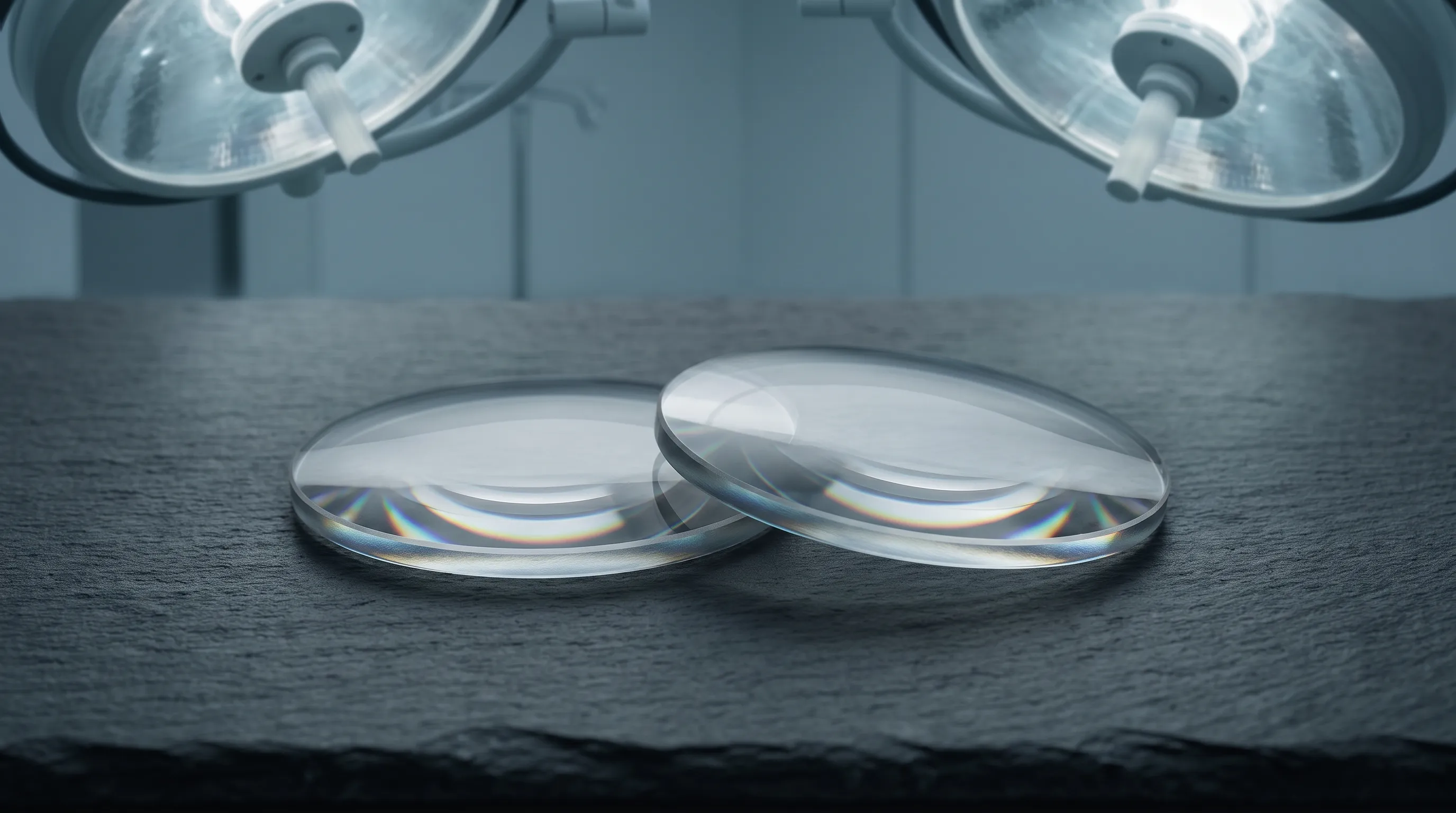
Prism lenses operate on fundamental principles of geometric optics. Unlike traditional spherical or cylindrical lenses that correct refractive errors by focusing light onto the macula, prisms alter the trajectory of incoming light rays. A prism deviates light toward its base, which means the retinal image is displaced toward the apex. When a clinician prescribes prism glasses for diplopia, they are essentially instructing the lenses to shift the perceived image toward the deviated eye. This optical redirection compensates for the muscular misalignment, tricking the brain into perceiving a single, unified image without requiring the extraocular muscles to work harder. The strength of a prism is measured in prism diopters, where one diopter corresponds to a displacement of one centimeter at a distance of one meter. Precise calculation of base direction and magnitude is essential for optimal therapeutic outcomes.
Types of Prism Lenses Available
Clinicians typically select between two primary categories of prismatic correction based on disease stability, visual demands, and patient tolerance. Each type offers distinct advantages, and understanding their differences ensures appropriate expectations regarding comfort, clarity, and durability.
Fresnel Press-On Prisms
Fresnel prisms are thin, flexible vinyl sheets with a series of microscopic concentric ridges that mimic the light-deviating properties of solid glass or plastic prisms. They adhere directly to the inner surface of existing prescription lenses using water or specialized adhesive. These lenses are exceptionally lightweight and allow rapid adjustments as the patient's ocular alignment fluctuates, making them ideal for post-surgical recovery, thyroid eye disease stabilization, or neurological rehabilitation where measurements change frequently. The primary limitation involves light scatter across the grooved surface, which can slightly reduce contrast sensitivity and visual acuity. Regular cleaning and replacement every six to twelve months maintain optimal optical performance. For individuals transitioning from surgical intervention or awaiting definitive strabismus alignment, Fresnel prisms provide immediate functional relief without the commitment of permanent lens fabrication.
Ground-In (Permanent) Prism Lenses
Once ocular deviation stabilizes for several months, clinicians typically transition patients to ground-in prisms, where the prismatic power is permanently incorporated into the lens material during laboratory manufacturing. Modern digital surfacing technology allows precise integration of horizontal, vertical, and torsional corrections while maintaining exceptional optical clarity and scratch resistance. Ground-in lenses eliminate the light scatter associated with Fresnel sheets, providing superior visual acuity for demanding tasks like night driving, precision reading, and prolonged screen use. High-index and aspheric lens designs further reduce weight and peripheral distortion, enhancing wearer comfort. While the initial fabrication process is more time-consuming and expensive, the long-term optical superiority and durability make ground-in prisms the standard of care for stable binocular misalignment. Proper measurement techniques and advanced freeform manufacturing ensure that the prescribed prism integrates seamlessly with the patient's underlying refractive correction.
Who Is an Ideal Candidate for Prism Glasses?
Not all patients with visual misalignment will experience optimal outcomes with prismatic correction. Clinical candidacy depends on underlying etiology, fusional capacity, age, and lifestyle demands. A thorough evaluation by a neuro-ophthalmologist or behavioral optometrist determines whether optical compensation aligns with the patient's physiological capabilities.
Neurological and Systemic Contributors
Patients recovering from traumatic brain injury, stroke, or cranial neuropathies often exhibit significant fusional deficits that improve gradually with time and rehabilitation. In these cases, prism glasses for diplopia serve as a temporary bridge while neuroplasticity restores neural pathways. Conversely, individuals with progressive neuromuscular diseases may require periodic prescription updates as muscle weakness advances. Thyroid eye disease patients experience dynamic fluctuations in extraocular muscle volume and tension, necessitating flexible correction strategies. Clinicians carefully monitor disease progression, adjusting prism magnitude to match current ocular alignment. Patients with decompensated phorias or intermittent exotropia frequently achieve immediate symptomatic relief, as the optical shift reduces the fusional burden on the extraocular muscles, minimizing headaches, eye strain, and compensatory head tilts.
Pediatric and Developmental Cases
Children experiencing binocular vision dysfunction due to amblyopia, congenital strabismus, or accommodative esotropia respond exceptionally well to early optical intervention. The developing visual system demonstrates remarkable neuroplasticity, allowing young patients to achieve sensory fusion more readily than adults. Pediatric prescriptions typically start with minimal prismatic power to encourage natural fusional development, gradually increasing as needed. Early intervention prevents suppression, amblyopia, and permanent stereoscopic deficits, aligning with global pediatric vision health guidelines. School-aged children wearing corrective prisms often demonstrate improved reading comprehension, reduced fatigue, and enhanced coordination during sports and playground activities. Parental education regarding compliance, proper lens care, and follow-up scheduling remains critical for successful pediatric management.
The Clinical Evaluation and Prescription Process
Obtaining an accurate prism prescription requires meticulous diagnostic protocols beyond standard visual acuity testing. The process integrates subjective symptom assessment with objective measurement techniques to determine precise optical requirements.
Diagnostic Testing and Measurement Protocols
The foundational assessment includes the cover-uncover test, alternate cover test, and Maddox rod evaluation to quantify the angle and direction of deviation across primary and diagnostic positions of gaze. Synoptophores and haploscopes provide quantitative measurements of fusional vergence ranges and suppression patterns. Modern digital retinal imaging and computerized perimetry help rule out neurological pathology requiring urgent intervention. Clinicians measure prism requirements in prism diopters, noting the base direction relative to the deviated eye. Horizontal deviations require base-in or base-out configurations, while vertical imbalances necessitate base-up or base-down orientations. Torsional deviations, though less common, demand customized cylindrical prism integration. Multiple measurements across varying distances ensure the prescription accommodates both near and far vision demands. Comprehensive binocular vision assessments also evaluate accommodative facility, convergence insufficiency, and divergence excess, guiding adjunctive therapy recommendations.
Customization and Laboratory Fabrication
Once measurements stabilize, the prescribing clinician transmits detailed parameters to a certified optical laboratory. Advanced freeform digital surfacing technology calculates lens curvature, prism orientation, and optical center alignment to sub-millimeter precision. Patients select frame styles that maintain stable positioning during daily activities, as improper frame fit compromises prismatic alignment. High-index materials reduce edge thickness for higher prism powers, while anti-reflective coatings minimize glare and enhance contrast. Laboratory technicians verify the finished product using digital lensmeters and optical alignment jigs before dispensing. Patients receive thorough fitting instructions, including pupillary distance verification, vertex distance optimization, and pantoscopic tilt adjustments. This meticulous fabrication process ensures that the prescribed prism delivers accurate optical compensation across the entire visual field.
Navigating the Adaptation Period Successfully
The initial weeks following prism lens dispensation represent a critical neurosensory adjustment phase. Patients frequently experience temporary spatial distortion, mild dizziness, or altered depth perception as the brain recalibrates to the newly redirected visual input. Structured adaptation protocols minimize discomfort and accelerate functional recovery.
Initial Visual Adjustment Strategies
Begin by wearing the glasses in controlled indoor environments for one to two hours daily, gradually extending usage as comfort improves. Avoid sudden head movements, uneven terrain, or high-speed activities until spatial judgment stabilizes. Focus exercises, such as alternating near-far gaze shifting and convergence tracking, reinforce neural adaptation. Maintain consistent lens positioning; frequent frame slipping disrupts optical alignment and prolongs adjustment. If headaches or nausea persist beyond ten days, consult your clinician for possible power modification or axis realignment. Keeping a symptom journal tracking duration, intensity, and triggers provides valuable data for clinical refinement.
Integrating Vision Therapy for Optimal Outcomes
Prismatic correction addresses optical misalignment, but targeted vision therapy strengthens the underlying neuromuscular coordination. Supervised orthoptic exercises, including Brock string training, stereogram viewing, and computerized vergence tracking, enhance fusional ranges and suppressive threshold tolerance. Many patients report accelerated stabilization when combining prism glasses for diplopia with weekly therapeutic sessions. Home exercise programs reinforce clinical progress, ensuring long-term binocular stability. Research from the National Eye Institute indicates that integrated optical and therapeutic approaches reduce relapse rates and decrease eventual dependence on higher prismatic powers.
Lifestyle Integration and Practical Management
Successfully incorporating corrective lenses into daily routines requires strategic modifications and consistent maintenance habits. These actionable strategies maximize visual comfort and prolong optical performance.
Safe Driving and Spatial Navigation
Driving demands precise depth perception and rapid visual processing. Before resuming vehicular operation, complete a supervised trial in low-traffic conditions to verify accurate distance judgment and peripheral awareness. Clean lenses daily to prevent glare accumulation, and consider photochromic tints for variable lighting conditions. Maintain proper frame alignment; frequent adjustments at the optician prevent lateral prism displacement during turns. Keep a spare pair accessible to avoid sudden visual disruption if lenses are damaged. Adhering to CDC recommendations for vision and driving safety ensures responsible adaptation to corrected binocular vision.
Ergonomic Screen Habits and Break Protocols
Prolonged digital device usage exacerbates binocular fatigue, particularly during prism adaptation. Implement the 20-20-20 rule, shifting focus to distant objects every twenty minutes to relax accommodative muscles. Adjust monitor positioning to eye level, ensuring minimal neck flexion and optimal gaze alignment. Use screen dimming settings during evening hours to reduce retinal strain and support circadian rhythm regulation. Blink consciously and apply preservative-free artificial tears to maintain tear film integrity, as dry ocular surfaces compromise optical clarity and fusional efficiency.

Cost Considerations, Insurance Navigation, and Long-Term Value
Understanding the financial landscape of prismatic correction ensures patients secure appropriate coverage without unexpected expenses. Pricing varies significantly based on lens material, prism magnitude, and fabrication complexity. Basic Fresnel sheets remain cost-effective, typically ranging from fifty to two hundred dollars per lens, while ground-in high-index prisms with specialized coatings may reach four hundred to nine hundred dollars. Medical insurance frequently classifies prism lenses for diplopia as medically necessary when accompanied by documented neurological or strabismic diagnoses, covering a substantial portion of laboratory and dispensing fees. Vision plans often apply standard allowances, with patients responsible for premium upgrades or out-of-network laboratory charges. Securing detailed diagnosis documentation, pre-authorization approvals, and itemized billing statements streamlines claims processing. Investing in properly prescribed prismatic correction yields substantial returns through reduced accident risk, improved occupational performance, and enhanced quality of life. Many patients report significant decreases in chronic headaches, neck tension, and reading fatigue, validating the long-term economic and therapeutic value.
Frequently Asked Questions
How long does it take to adapt to prism glasses for diplopia?
Most patients experience initial adaptation within 3 to 7 days, with full neurological and muscular adjustment taking 2 to 4 weeks. Consistent daily wear, starting with short indoor periods, significantly accelerates comfort. Patients experiencing persistent headaches, nausea, or spatial distortion beyond two weeks should schedule a follow-up with their prescribing clinician. Learn more about binocular adaptation timelines.
Can prism glasses permanently cure double vision?
Prism glasses for diplopia do not cure the underlying condition; they function as an optical compensatory tool that redirects incoming light to facilitate binocular fusion. However, when combined with targeted vision therapy or used during neurological recovery, they can significantly improve long-term visual stability. Some patients eventually require lower prism powers as neural pathways adapt or underlying inflammation resolves.
Are Fresnel prisms safe for long-term use?
Fresnel press-on prisms are medically approved for temporary or intermediate use, particularly during fluctuating conditions or post-surgical recovery. While safe, they may reduce visual acuity by one line due to light scatter and require frequent replacement. Many clinicians transition stable patients to ground-in prisms for superior optical clarity and durability after 3 to 6 months of stable measurements.
Is it safe to drive with prism glasses?
Yes, once fully adapted to prism glasses for diplopia, driving is generally safe and often significantly improved. During the initial adaptation phase, patients are advised to avoid driving until depth perception and spatial judgment stabilize. Clinicians typically recommend a supervised trial drive in low-traffic areas, gradual exposure to highway speeds, and consistent lens cleaning to prevent glare or distortion. Review driving safety guidelines for vision-impaired individuals before resuming regular commutes.
Does insurance cover prism lenses?
Coverage varies by plan and jurisdiction. Most medical insurance policies cover prism lenses when prescribed for diagnosed neurological or strabismic diplopia, treating it as a medical necessity rather than a refractive upgrade. Vision insurance plans often apply standard frame and lens allowances. Patients should verify coverage codes with their provider, secure a detailed diagnosis from an optometrist or ophthalmologist, and request pre-authorization when required.
Conclusion
Navigating double vision requires patience, clinical expertise, and strategic optical intervention. Prism glasses for diplopia represent a scientifically validated, non-invasive approach that restores single binocular vision, reduces ocular fatigue, and significantly enhances daily functionality. By understanding the underlying mechanics, selecting appropriate lens technology, adhering to structured adaptation protocols, and integrating complementary visual therapies, patients achieve sustainable improvements in spatial awareness and overall quality of life. Successful management hinges on collaboration between patients, optometrists, ophthalmologists, and vision therapists to monitor progression, refine prescriptions, and address lifestyle demands. Whether you are recovering from neurological trauma, managing chronic misalignment, or exploring conservative alignment strategies, modern prismatic correction offers reliable, evidence-based relief. Schedule a comprehensive binocular vision assessment to determine your specific optical requirements and begin your journey toward restored visual harmony today.
How we work
Researched and drafted with AI assistance, then reviewed by a human editor against the cited sources.
This article is general health information, not medical advice. Consult a qualified healthcare professional about your own situation.