Complete Guide to the Removal of Moles and Warts: Methods, Risks, and Recovery

Key points
- Asymmetry: One half of the mole does not match the other.
- Border: Edges are ragged, notched, or blurred.
- Color: Color is not uniform and may include shades of brown, black, pink, red, white, or blue.
- Diameter: The spot is larger than 6 millimeters across (about the size of a pencil eraser), although melanomas can sometimes be smaller.
- Evolving: The mole is changing in size, shape, or color.
Skin serves as our body's primary shield against the external environment, but it is also susceptible to various growths and lesions that can affect both our health and our confidence. Among the most common skin concerns are moles and warts. While often harmless, these growths can become sources of physical discomfort, emotional distress, or medical concern. The decision to pursue the removal of moles and warts is one that many individuals face, yet the path to clear skin is often clouded by misinformation, fear of scarring, and confusion about medical necessity versus cosmetic desire.
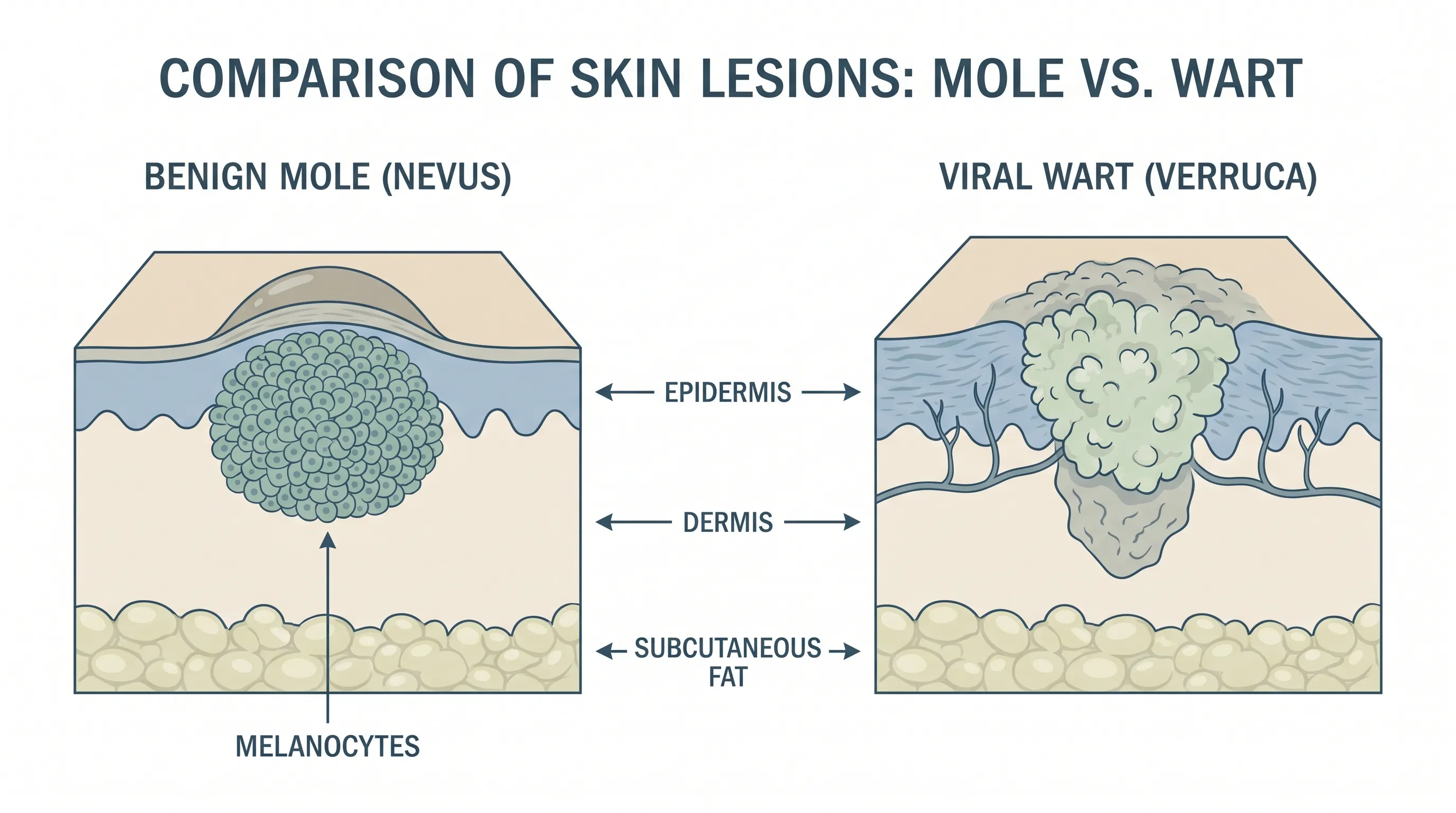
Understanding the fundamental differences between these two types of skin growths is the first step toward making an informed decision. Moles, medically known as nevi, are clusters of pigment-producing cells that can appear anywhere on the body. Warts, conversely, are viral infections caused by the human papillomavirus (HPV) that result in rough, raised bumps. Although they may look similar to the untrained eye, their origins, behaviors, and treatment protocols differ significantly. This comprehensive guide aims to demystify the processes involved in the removal of moles and warts, providing you with evidence-based information on professional procedures, potential risks, recovery expectations, and the critical importance of professional evaluation.
Whether you are dealing with a mole that has changed shape, a wart that refuses to go away, or simply seeking to improve your skin's aesthetic, this article will walk you through every aspect of the journey. From the initial dermatological consultation to post-procedure care, we will explore the safest and most effective methods available in modern dermatology. By arming yourself with knowledge, you can navigate the healthcare system with confidence, ensuring that your skin health is prioritized above all else.
Understanding the Difference: Moles vs. Warts
Before diving into removal techniques, it is imperative to distinguish between moles and warts. Misidentifying a lesion can lead to inappropriate treatment attempts, which may worsen the condition or mask serious underlying issues like skin cancer. While both are common skin growths, their biological origins are distinct.
Free calculatorSun Protection GuideSPF guide and sun protection recommendationsOpen the calculatorWhat Are Moles?
Moles are benign growths on the skin formed by a cluster of melanocytes, the cells responsible for producing pigment (melanin). They can be present at birth (congenital nevi) or develop during childhood and early adulthood (acquired nevi). Most adults have between 10 and 40 moles. These growths are influenced by genetics and sun exposure.
Moles typically appear as small, dark brown spots, but they can vary widely in color (pink, tan, brown, black), shape (round, oval, raised, flat), and texture (smooth, wrinkled, hairy). The majority of moles are harmless and do not require removal unless they are cosmetically bothersome or show signs of changing. However, because moles involve pigment cells, they carry a risk of developing into melanoma, the most serious type of skin cancer. Therefore, any new mole or change in an existing mole should be evaluated by a professional before considering the removal of moles and warts. For more detailed information on skin changes, refer to the American Academy of Dermatology's guide on moles.
What Are Warts?
Warts are non-cancerous skin growths caused by an infection with the human papillomavirus (HPV). There are over 100 types of HPV, and different strains cause different types of warts. The virus enters the body through tiny cuts or breaks in the skin, causing the top layer of skin to grow rapidly and thicken.
Unlike moles, warts are contagious. They can spread from person to person through direct contact or indirectly through surfaces like shower floors or towels. They can also spread from one part of your body to another if you touch a wart and then touch another area. Common characteristics of warts include a rough, cauliflower-like surface, tiny black dots (which are actually clotted blood vessels), and a tendency to appear on hands, feet, and face. While most warts resolve on their own within two years, many people seek treatment due to pain, embarrassment, or the desire to prevent spread. Learn more about HPV and warts from the Centers for Disease Control and Prevention (CDC).
Key Differences at a Glance
| Feature | Moles (Nevi) | Warts (Verrucae) |
|---|---|---|
| Cause | Cluster of pigment cells (melanocytes) | Viral infection (HPV) |
| Contagious | No | Yes |
| Appearance | Smooth or raised, uniform color | Rough, irregular, may have black dots |
| Onset | Birth or early adulthood | Any age, after viral exposure |
| Cancer Risk | Low, but can become melanoma | Very low (except specific genital strains) |
| Primary Treatment | Surgical excision, laser | Cryotherapy, salicylic acid, immune therapy |
Recognizing these differences is crucial because the removal of moles and warts requires different medical approaches. Treating a mole with wart remover will likely fail and cause irritation, while treating a wart with surgical excision might be unnecessary if simpler topical treatments would suffice.
When Is Removal Medically Necessary?
Not every mole or wart needs to be removed. In fact, many dermatologists advise leaving benign lesions alone to avoid unnecessary scarring. However, there are specific medical indicators that make removal not just an option, but a recommendation.
Suspicious Moles and the ABCDE Rule
The primary medical reason for mole removal is the suspicion of skin cancer. Dermatologists use the ABCDE rule to evaluate moles for potential melanoma:
- Asymmetry: One half of the mole does not match the other.
- Border: Edges are ragged, notched, or blurred.
- Color: Color is not uniform and may include shades of brown, black, pink, red, white, or blue.
- Diameter: The spot is larger than 6 millimeters across (about the size of a pencil eraser), although melanomas can sometimes be smaller.
- Evolving: The mole is changing in size, shape, or color.
If a mole exhibits any of these characteristics, a biopsy is required. This involves removing part or all of the mole for laboratory analysis. If cancer is detected, further surgical removal with wider margins is necessary to ensure all cancerous cells are eliminated. Additionally, moles that bleed, itch, or become painful without injury should be evaluated immediately. You can review the Melanoma Research Foundation's ABCDE guidelines for visual examples.
Problematic Warts
While warts are rarely dangerous, they can become medically problematic. Removal is often recommended if:
- Pain: Plantar warts (on the soles of the feet) can grow inward due to pressure from walking, causing significant pain and altering gait.
- Spread: If warts are multiplying rapidly or spreading to sensitive areas like the face or genitals, treatment is advised to control the viral load.
- Resistance: Warts that do not respond to over-the-counter treatments after several months may require professional intervention.
- Immune Compromise: Individuals with weakened immune systems are at higher risk for complications from HPV and may need more aggressive management.
In these cases, the removal of moles and warts transitions from a cosmetic choice to a therapeutic necessity, aimed at preserving function, preventing infection, and ruling out malignancy.
Professional Removal Methods for Moles
When a dermatologist determines that a mole needs to be removed, they will select a method based on the mole's size, depth, location, and whether cancer is suspected. It is vital to note that professional removal ensures that tissue samples can be sent for pathology if needed, a step that is impossible with home remedies.
Surgical Excision
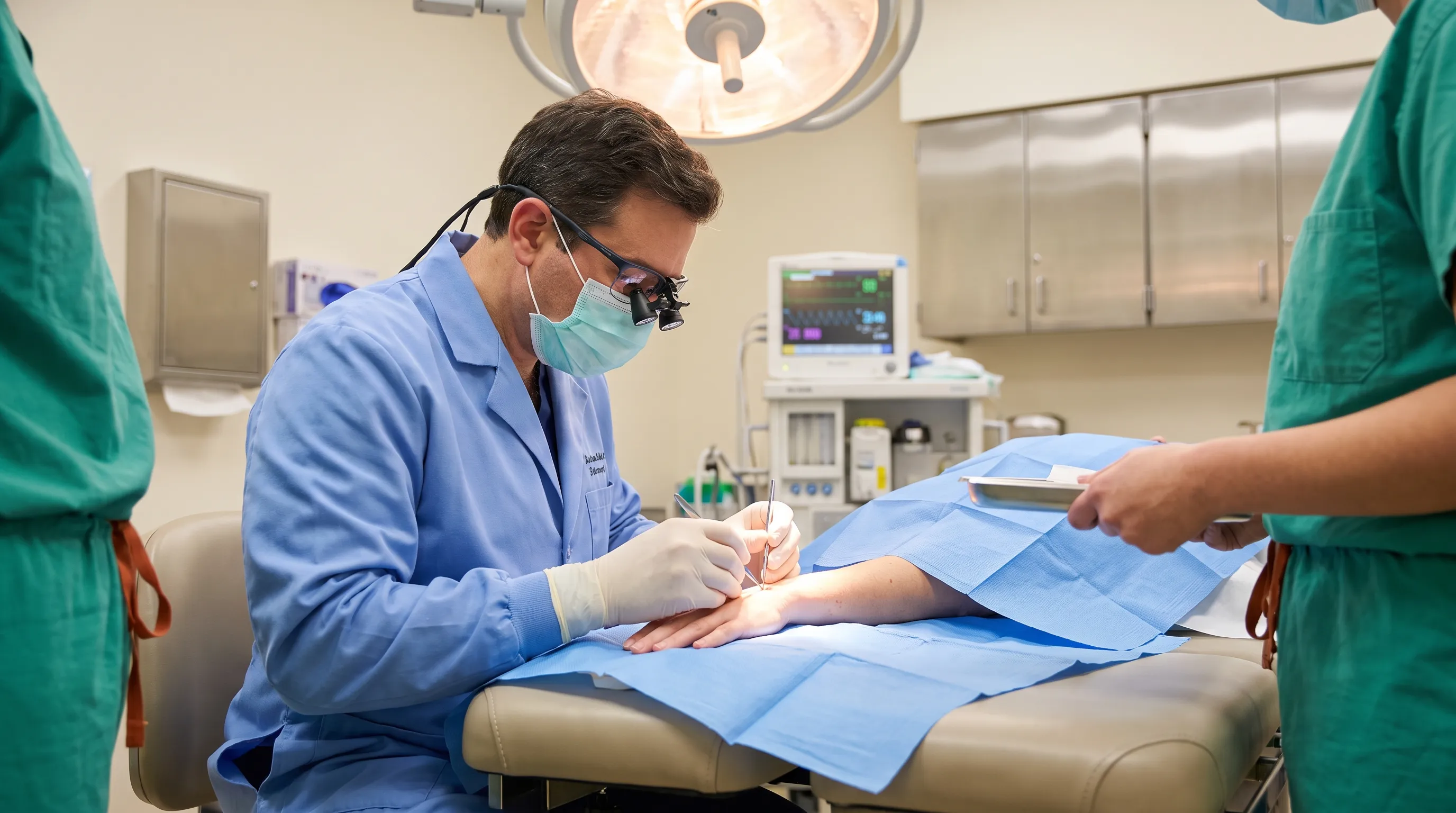
Surgical excision is the gold standard for removing moles, especially those suspected of being cancerous. This procedure involves numbing the area with a local anesthetic and using a scalpel to cut out the entire mole along with a small margin of surrounding healthy skin.
Because the cut goes deep into the dermis, stitches are required to close the wound. This method ensures complete removal of the mole roots, significantly reducing the chance of recurrence. The removed tissue is always sent to a lab for biopsy. While this method leaves a linear scar, skilled surgeons place incisions along natural skin lines to minimize visibility. This is a definitive approach for the removal of moles and warts when certainty and completeness are paramount.
Shave Excision (Shave Biopsy)
For moles that are raised and appear clearly benign, a shave excision may be used. In this procedure, the doctor uses a small surgical blade to shave off the mole flush with the surrounding skin. No stitches are needed, and the wound heals by forming a scab.
This method is less invasive and leaves a smaller, round scar compared to excision. However, it is not suitable for suspicious moles because it does not remove the deeper roots, meaning the mole could grow back. Furthermore, if the mole turns out to be cancerous, the shallow removal may not provide enough tissue for an accurate diagnosis of how deep the cancer extends. Therefore, this method is primarily used for cosmetic removal of benign, raised moles.
Laser Removal
Laser removal uses focused beams of light to break down the pigment cells in the mole. This method is typically reserved for flat, non-cancerous moles that are cosmetically bothersome. It is less effective for raised moles and cannot be used if a biopsy is needed, as the laser destroys the tissue.
Multiple sessions may be required to fully remove the pigment. While laser removal minimizes scarring, it carries a risk of hypopigmentation (lightening of the skin) or hyperpigmentation (darkening of the skin) at the site. It is a popular choice for facial moles where aesthetic outcomes are a priority, but it should only be performed after a dermatologist has confirmed the mole is benign.
Professional Removal Methods for Warts
Treating warts often requires a combination of patience and persistence, as the goal is to destroy the infected tissue and stimulate the immune system to fight the virus. Professional treatments are generally more effective and faster than over-the-counter options. According to the Mayo Clinic, several professional options exist.
Cryotherapy
Cryotherapy, or freezing, is one of the most common professional treatments for warts. The dermatologist applies liquid nitrogen to the wart using a spray or a cotton swab. The extreme cold causes a blister to form under and around the wart. As the blister heals, the dead tissue sloughs off, taking the wart with it.
This procedure can be slightly painful and may cause temporary blistering or darkening of the skin, particularly in individuals with darker skin tones. Multiple sessions, spaced two to four weeks apart, are often necessary to completely eradicate the wart. Cryotherapy is highly effective for common warts and plantar warts, making it a cornerstone in the removal of moles and warts toolkit.
Electrosurgery and Curettage
Electrosurgery involves burning the wart with an electric current, while curettage involves scraping the wart off with a sharp instrument. These two methods are often combined. The area is numbed with local anesthesia, and the wart is scraped away and cauterized to stop bleeding and destroy any remaining viral tissue.
This method is effective for stubborn warts but carries a higher risk of scarring compared to cryotherapy. It is typically reserved for warts that have not responded to other treatments. Because it involves cutting and burning, the recovery time is longer, and careful wound care is essential to prevent infection.
Cantharidin Treatment
Cantharidin is a chemical derived from the blister beetle. A doctor paints this substance onto the wart, which causes a blister to form underneath it. The blister lifts the wart off the skin, allowing it to be clipped away at a follow-up visit. This treatment is painless during application but can be quite painful once the blister forms. It is often used for children or patients who are afraid of needles or freezing, offering an alternative pathway for the removal of moles and warts in sensitive populations.
Home Remedies and Over-the-Counter Options
While professional care is the safest route, many people attempt to treat warts at home. It is crucial to reiterate that home removal of moles is strongly discouraged. However, for common warts, several over-the-counter (OTC) options exist.
Salicylic Acid
Salicylic acid is the most common OTC treatment for warts. It works by peeling away the infected skin layers over time. Available as patches, gels, or liquids, it requires daily application. Before applying, the wart should be soaked in warm water and filed down with a pumice stone to enhance absorption. Treatment can take several weeks to months. Consistency is key, and if no improvement is seen after 12 weeks, a doctor should be consulted.
Duct Tape Occlusion
Some studies suggest that covering a wart with duct tape for six days, removing it, soaking the wart, and filing it down before reapplying the tape can help remove warts. The mechanism is unclear but may involve irritating the skin to trigger an immune response. While anecdotal evidence supports this method, clinical results are mixed. It is a low-risk option but requires significant patience.
Why You Should Never Remove Moles at Home
Attempting to cut, tie off, or burn a mole at home is dangerous. Without sterile conditions, the risk of bacterial infection is high. More critically, if the mole is melanoma, home removal will not eliminate the cancer cells that may have spread deeper into the tissue or lymphatic system. It also destroys the evidence needed for diagnosis. Always leave the removal of moles and warts involving pigmented lesions to licensed professionals.
Recovery, Aftercare, and Scarring Management
Proper aftercare is essential to minimize scarring and prevent infection after the removal of moles and warts. The specific instructions will depend on the method used, but general guidelines apply.
Immediate Post-Procedure Care
For surgical excisions, keep the bandage on for 24 to 48 hours as directed. Afterward, wash the area gently with mild soap and water. Apply an antibiotic ointment to keep the wound moist, which promotes faster healing and reduces scarring. Cover the wound with a fresh bandage until it is fully healed. Avoid soaking the wound in baths, pools, or hot tubs until the skin has closed.
For cryotherapy, a blister may form. Do not pop the blister, as it protects the underlying skin. If it breaks on its own, clean the area and apply an antibiotic ointment. The blister will dry up and form a scab, which will fall off naturally. Picking at the scab can lead to scarring and infection.
Long-Term Scar Management
Once the wound has healed, the new skin may appear pink or red. This is normal and will fade over time. To minimize scarring:
- Sun Protection: UV exposure can darken scars permanently. Apply broad-spectrum sunscreen (SPF 30 or higher) to the area daily, even if it is covered by clothing.
- Silicone Sheets or Gel: These products can help flatten and soften scars if used consistently for several months.
- Massage: Gently massaging the healed scar with moisturizer can help break down scar tissue and improve flexibility.
Most scars from mole removal are thin and faint, especially if the surgeon used careful techniques. Scars from wart removal are less common but can occur if the treatment was deep or if the patient picked at the healing skin.
Cost and Insurance Considerations
The cost of the removal of moles and warts varies widely depending on the method, location, and provider. In the United States, without insurance, a simple shave excision might cost between $150 and $400, while a surgical excision with stitches can range from $300 to $1,000 or more. Laser removal is often the most expensive, costing $200 to $500 per session.
Insurance coverage is determined by medical necessity. If a mole is suspicious, bleeding, or caught in clothing, insurance will likely cover the removal as a diagnostic or therapeutic procedure. Similarly, painful or infected warts are often covered. However, if you request removal solely for cosmetic reasons, you will likely have to pay out-of-pocket. It is advisable to check with your insurance provider and dermatologist beforehand to understand your coverage and any potential out-of-pocket expenses.
Frequently Asked Questions
Is it safe to remove moles at home?
No, it is generally not safe to remove moles at home. Attempting to cut, shave, or burn off a mole can lead to infection, significant scarring, and incomplete removal. More importantly, if the mole is cancerous, removing it at home destroys the tissue needed for a biopsy, potentially delaying a life-saving diagnosis. Always consult a dermatologist for mole evaluation and removal.
What is the difference between a mole and a wart?
Moles (nevi) are clusters of pigmented cells that can be present at birth or develop over time due to sun exposure and genetics. They are generally benign but require monitoring for changes. Warts are caused by the human papillomavirus (HPV) infecting the top layer of skin. They are contagious, often have a rough texture, and may contain tiny black dots (clotted blood vessels). Unlike moles, warts are viral infections.
Does insurance cover the removal of moles and warts?
Insurance coverage depends on the medical necessity of the procedure. If a mole is suspicious for cancer, bleeding, or causing pain, or if a wart is painful and resistant to treatment, insurance typically covers the removal as a medical procedure. However, if the removal is purely for cosmetic reasons, such as improving appearance without medical symptoms, it is usually considered an elective procedure and is not covered.
How long does it take to recover from mole removal surgery?
Recovery time varies by method. For shave excision, the wound typically heals within one to two weeks. For full surgical excision with stitches, the area may take two to three weeks to heal, and stitches are usually removed after 7-14 days. During this time, it is crucial to keep the area clean, apply antibiotic ointment, and protect it from sun exposure to minimize scarring.
Can warts come back after removal?
Yes, warts can recur because the underlying human papillomavirus (HPV) may remain in the skin even after the visible wart is removed. The virus can lie dormant and cause new warts to appear later. Consistent treatment and boosting the immune system can help prevent recurrence. It is also important to avoid picking at warts to prevent spreading the virus to other parts of the body.
Conclusion
The removal of moles and warts is a common dermatological procedure that can improve both health and quality of life. While warts are viral nuisances that can often be treated with patience and consistent care, moles require a more cautious approach due to their potential link to skin cancer. Understanding the distinction between these growths is the first step in ensuring you receive the appropriate care.
Professional evaluation is non-negotiable for any changing, bleeding, or suspicious mole. While home remedies offer convenience for common warts, they should never be used for moles. Modern dermatological techniques, from cryotherapy to surgical excision, provide safe and effective solutions with minimal downtime. By prioritizing professional guidance, adhering to aftercare instructions, and protecting your skin from sun damage, you can navigate the process of skin lesion removal with confidence and peace of mind. Remember, your skin is your body's largest organ—treating it with care and respect is an investment in your long-term health. For additional resources, visit the National Institutes of Health (NIH) MedlinePlus.
How we work
Researched and drafted with AI assistance, then reviewed by a human editor against the cited sources.
This article is general health information, not medical advice. Consult a qualified healthcare professional about your own situation.