Caffeine and Weed: Science-Backed Insights on Combining Coffee and Cannabis

The modern wellness landscape has increasingly embraced polyconsumption, and the combination of caffeine and weed has emerged as one of the most widely discussed intersections in recreational and therapeutic routines. From boutique CBD-infused coffee shops to homemade morning rituals, millions of adults are blending two of the world's most widely consumed psychoactive substances in pursuit of a balanced state of alert relaxation. Yet, beneath the cultural trend lies a complex neuropharmacological interaction that warrants careful consideration. Understanding how these compounds converge in the brain, influence cardiovascular function, and alter cognitive processing is essential for anyone considering this combination. This article explores the scientific evidence, clinical implications, and practical harm-reduction strategies surrounding caffeine and weed, empowering you to make informed, health-conscious decisions based on peer-reviewed research rather than anecdotal folklore.
How Caffeine and Cannabis Interact in the Brain
To comprehend why combining these two substances produces such distinct physiological responses, we must first examine their individual mechanisms of action. Both caffeine and cannabis exert profound influence on central nervous system signaling, but they operate through entirely different receptor pathways. When introduced simultaneously, their overlapping effects on neurotransmitter systems create a pharmacodynamic environment that is far more complex than simple addition.
Free calculatorCaffeine Half-Life CalculatorCaffeine metabolism calculatorOpen the calculatorThe Neurochemistry of Caffeine
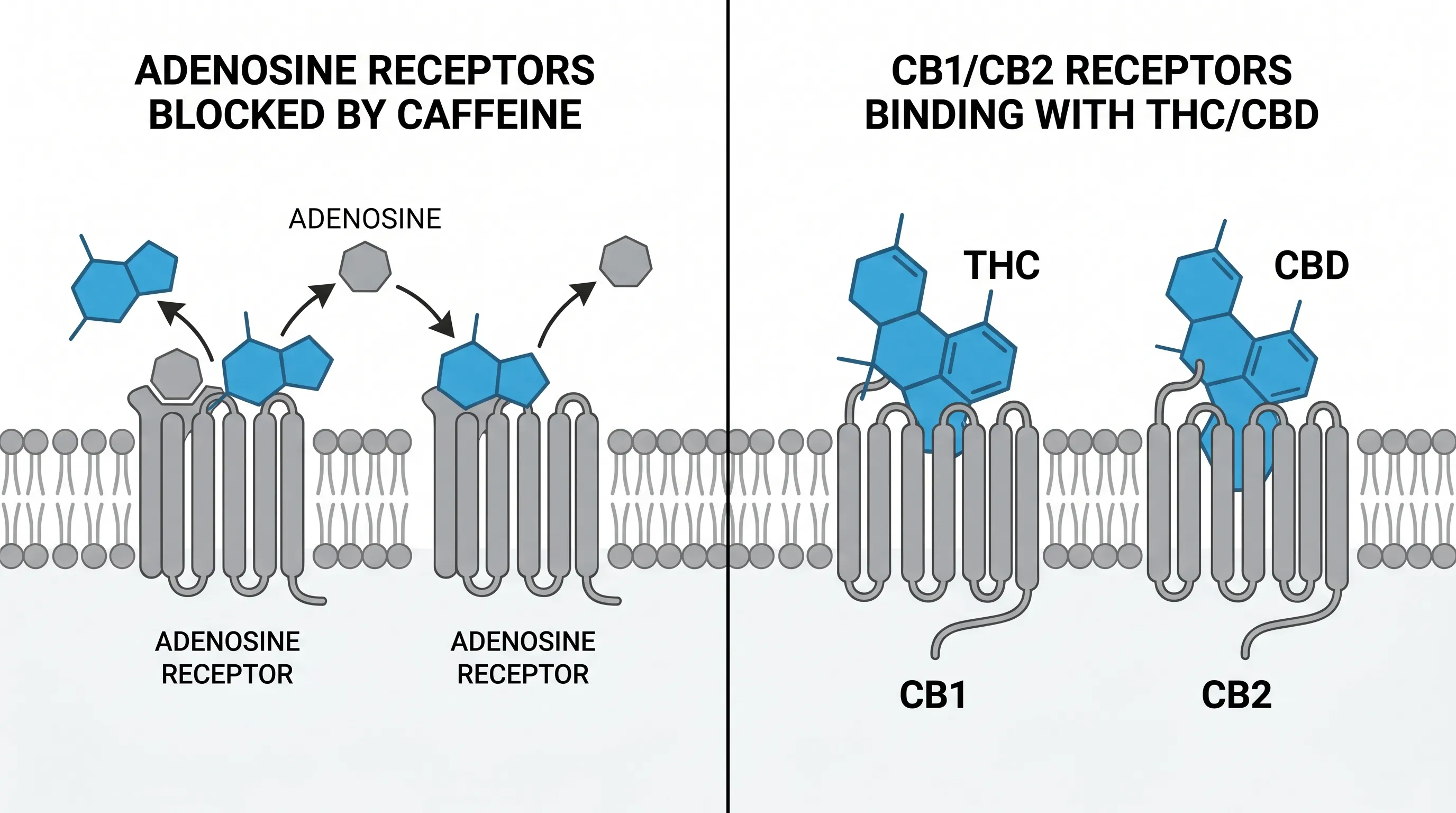
Caffeine functions primarily as a competitive antagonist at adenosine receptors, specifically targeting A1 and A2A subtypes throughout the brain. Adenosine is a neuromodulator that accumulates during waking hours and promotes sleepiness by slowing down neural activity. By blocking these receptors, caffeine prevents adenosine from binding, which indirectly increases the release of excitatory neurotransmitters like dopamine, norepinephrine, glutamate, and acetylcholine. This cascade is responsible for the familiar sensations of heightened alertness, improved focus, reduced fatigue, and enhanced motor coordination. According to comprehensive metabolic studies reviewed by the Mayo Clinic, caffeine's half-life ranges from three to seven hours in healthy adults, meaning its neurochemical footprint persists long after the initial energy surge subsides. The compound also influences cortisol secretion and peripheral sympathetic nervous system activation, which explains why elevated caffeine intake frequently correlates with increased heart rate, mild diuresis, and heightened stress responsiveness.
How THC and CBD Work on the Endocannabinoid System
Cannabis operates through the endocannabinoid system, a widespread neuromodulatory network that regulates mood, appetite, pain perception, memory consolidation, and autonomic function. Tetrahydrocannabinol, the primary psychoactive compound in marijuana, acts as a partial agonist at cannabinoid receptors CB1 and CB2. CB1 receptors are densely concentrated in the cerebral cortex, hippocampus, basal ganglia, and cerebellum, regions critical for executive function, coordination, and memory encoding. When THC binds to these sites, it disrupts normal endocannabinoid signaling, producing euphoria, altered time perception, and impaired short-term recall. Cannabidiol, by contrast, exhibits negligible psychoactivity and functions through allosteric modulation, receptor desensitization, and inhibition of fatty acid amide hydrolase, which breaks down the endogenous cannabinoid anandamide. CBD's anxiolytic, anti-inflammatory, and neuroprotective properties have led to extensive clinical research into its therapeutic potential, particularly for epilepsy, chronic pain, and anxiety disorders. The National Institute on Drug Abuse maintains an extensive resource library detailing these mechanisms.
Where the Two Substances Converge
The intersection of caffeine and cannabis pharmacology centers on their shared influence over dopaminergic pathways and cerebral blood flow dynamics. While caffeine increases dopamine availability through adenosine blockade and enhanced neuronal firing, THC indirectly modulates dopamine release in the mesolimbic pathway, which governs reward and reinforcement. Preclinical and human trial data indicate that caffeine pre-exposure can amplify THC absorption and alter its subjective intensity. A landmark human study published in Psychopharmacology demonstrated that caffeine administration significantly enhanced the cardiovascular and subjective effects of THC. Participants reported stronger intoxication and exhibited more pronounced short-term memory deficits when both substances were co-administered. You can review the full clinical findings at the PubMed/NIH database. The synergistic stimulation of central arousal circuits, combined with THC's impairment of hippocampal encoding, creates a neurochemical environment where users feel highly stimulated yet cognitively fragmented. This paradox explains why many individuals report feeling simultaneously energized and mentally scattered when mixing caffeine and weed.
Documented Effects: What Happens When You Combine Them?
When caffeine and weed are consumed together, the physiological cascade extends beyond subjective perception. Clinical pharmacology reviews consistently highlight that the combination produces measurable changes in cardiovascular function, motor coordination, and psychological stability. These effects are dose-dependent, highly variable across individual genetics, and influenced by factors like hydration, sleep quality, prior tolerance, and consumption method. Understanding these documented outcomes is crucial for responsible use and harm minimization.
Cardiovascular and Physical Responses
Both caffeine and THC independently stimulate the sympathetic nervous system, leading to transient increases in heart rate and, in some cases, elevated systolic blood pressure. Caffeine achieves this through catecholamine release and adenosine receptor antagonism in the myocardium, while THC triggers vasodilation followed by compensatory tachycardia as blood pressure initially drops. When combined, these cardiovascular responses can compound rather than neutralize. Research published in Frontiers in Pharmacology notes that the pharmacodynamic interaction between caffeine and THC is complex, and while caffeine may partially offset sedation, it frequently increases the risk of adverse cardiovascular events, particularly palpitations, arrhythmias, or orthostatic hypotension upon standing. Individuals with underlying heart conditions, hypertension, or caffeine sensitivity are disproportionately affected. The Cleveland Clinic and major clinical guidelines emphasize monitoring baseline vitals and avoiding high-stimulant combinations if preexisting cardiac vulnerabilities exist. The Centers for Disease Control and Prevention also provides comprehensive public health data regarding cannabis consumption and cardiovascular stress.
Cognitive and Memory Implications
A persistent misconception is that caffeine's alerting properties will counteract THC-induced brain fog. However, human trials consistently demonstrate the opposite. Short-term memory encoding relies heavily on hippocampal long-term potentiation, a process that THC disrupts through CB1 receptor overstimulation. Caffeine, while improving sustained attention and vigilance, does not restore hippocampal plasticity compromised by cannabinoids. Instead, the combination often produces a state of hyperarousal coupled with impaired working memory. In controlled settings, participants administering both substances performed significantly worse on delayed recall and reaction time tasks compared to those receiving THC alone. The stimulant properties of caffeine mask subjective awareness of impairment, leading users to overestimate their cognitive readiness for complex tasks like driving or operating machinery. This dangerous disconnect between perceived alertness and actual neurological deficit underscores why public health authorities consistently warn against polyconsumption before activities requiring sustained executive function.
Psychological Effects: Anxiety, Paranoia, and Mood Shifts
Mood regulation following combined consumption varies dramatically based on dosage ratios, strain chemovars, and individual psychiatric history. High-THC cannabis frequently elevates amygdala reactivity, which can manifest as situational anxiety, paranoia, or emotional lability, particularly at doses exceeding ten milligrams. Caffeine amplifies this response by increasing norepinephrine turnover and reducing adenosine-mediated calming signals in the prefrontal cortex. Consequently, individuals prone to generalized anxiety, panic disorder, or PTSD often experience exacerbated psychological symptoms when mixing caffeine and weed. Conversely, some users report a perceived mood lift characterized by creative flow and social disinhibition, largely attributed to the dual dopaminergic activation. However, clinical consensus indicates that the anxiety-potentiating effects far outweigh transient mood benefits in sensitive populations. The Substance Abuse and Mental Health Services Administration (SAMHSA) highlights the importance of screening for co-occurring mental health conditions before experimenting with stimulant-cannabinoid combinations.
The Myth of "Sobering Up": Why Caffeine Doesn't Cancel Cannabis
Pop culture has long propagated the idea that drinking coffee after consuming marijuana will rapidly reverse intoxication. This belief likely stems from caffeine's ability to promote wakefulness and reduce drowsiness. However, sobriety involves more than mere alertness; it encompasses motor coordination, decision-making capacity, spatial awareness, and short-term memory retrieval. Caffeine does not accelerate THC metabolism in the liver, nor does it displace cannabinoids from neural receptors. Instead, it masks fatigue while leaving motor impairment and cognitive deficits intact. This dissociation between subjective alertness and objective impairment creates a hazardous false sense of competence. Clinical toxicology studies confirm that caffeine administration does not reduce blood THC concentrations or improve standardized field sobriety test performance. In fact, the combined cardiovascular stimulation may elevate stress hormones, which can prolong the subjective perception of intoxication. Public safety organizations consistently warn that caffeine is not an antidote to cannabis impairment, and driving or operating heavy machinery after combining both substances remains legally and medically unsafe. Relying on caffeine to neutralize the effects of weed reflects a fundamental misunderstanding of pharmacokinetics and poses unnecessary risks to personal and public safety.
CBD-Infused Coffee and Modern Consumption Trends
The wellness industry has responded to the caffeine-weed intersection by commercializing cannabidiol-infused coffee, marketed as a functional beverage that delivers calm alertness. Unlike THC, CBD lacks psychoactive properties and exhibits mild anxiolytic, anti-inflammatory, and neuroprotective effects. Preliminary research suggests that CBD may modulate caffeine's pharmacokinetic profile by inhibiting the cytochrome P450 enzyme CYP1A2, which is primarily responsible for caffeine demethylation in the liver. This enzymatic inhibition can extend caffeine's half-life, potentially prolonging its stimulating effects while smoothing abrupt energy crashes. Some consumers report that CBD reduces caffeine-induced jitters, gastrointestinal discomfort, and anxiety spikes, creating a more balanced physiological state. However, large-scale randomized controlled trials remain limited, and commercial CBD coffee products frequently suffer from inconsistent dosing, poor bioavailability, and unverified ingredient sourcing. The U.S. Food and Drug Administration continues to regulate CBD marketing claims, emphasizing that dietary supplements are not substitutes for clinically validated treatments. Consumers interested in this combination should prioritize third-party tested products, verify certificate of analysis documentation, and consult healthcare providers before integrating daily CBD coffee into their routines, especially if taking medications metabolized by CYP1A2, CYP3A4, or CYP2C19 pathways.
Practical Guidelines and Harm Reduction Strategies
Navigating the combination of caffeine and weed requires intentionality, dose awareness, and continuous self-monitoring. While polyconsumption is increasingly normalized, applying evidence-based harm reduction principles significantly minimizes adverse outcomes and enhances subjective safety. The following protocols reflect clinical best practices, pharmacological research, and expert consensus recommendations.
Dosing and Timing Protocols
Precision in dosing remains the most effective strategy for mitigating combined substance interactions. Experts recommend initiating with microdoses of both compounds: caffeine intake should not exceed one hundred milligrams initially, equivalent to approximately eight ounces of brewed coffee or a single espresso shot. THC exposure should be capped at five milligrams or lower, preferably delivered via low-dose edibles, microdosed tinctures, or vaporized flower with THC concentrations below ten percent. Timing significantly influences pharmacokinetic overlap. Since inhaled THC peaks within five to fifteen minutes while caffeine reaches peak plasma concentration between thirty and sixty minutes, staggering consumption allows users to assess baseline impairment before introducing stimulants. Waiting at least forty-five minutes after cannabis consumption before drinking coffee provides a safer window for evaluating tolerance. Avoid rapid consecutive dosing, as the delayed onset of edibles and prolonged caffeine metabolism frequently lead to accidental overconsumption.
Who Should Avoid Mixing Caffeine and Weed?
Not all physiological profiles are suited for combined stimulant-cannabinoid exposure. Individuals diagnosed with arrhythmias, uncontrolled hypertension, or structural heart disease should strictly avoid the combination due to compounded sympathetic activation. Patients with anxiety spectrum disorders, panic disorder, bipolar disorder, or schizophrenia may experience exacerbated psychiatric symptoms from dual CNS stimulation. Pregnant or breastfeeding individuals should abstain entirely, as both substances cross the placenta and enter breast milk, potentially affecting fetal neurodevelopment and infant sleep architecture. Adolescents and young adults with developing prefrontal cortices face heightened risks of long-term cognitive alterations, while elderly individuals with polypharmacy regimens may experience dangerous drug interactions through CYP enzyme competition. Consulting a licensed healthcare provider before combining these substances is essential, particularly for those managing chronic conditions or taking prescription medications. The World Health Organization provides additional global health perspectives on cannabis safety and vulnerable populations.
Monitoring Your Body’s Response
Self-awareness remains the cornerstone of responsible consumption. Utilizing wearable biometric devices to track resting heart rate, heart rate variability, and sleep architecture provides objective feedback on how your body processes combined exposure. Maintain a consumption journal documenting dose ratios, timing, subjective mood shifts, cognitive performance, and physical symptoms. Hydration plays a critical role in mitigating dry mouth, thermoregulatory stress, and renal load, so consuming at least sixty-four ounces of water daily alongside moderate caffeine and cannabis intake is strongly advised. Avoid heavy, high-sugar snacks immediately after consumption, as altered appetite and glycemic fluctuations can exacerbate energy crashes and mood instability. If experiencing tachycardia, severe anxiety, or cognitive fragmentation, discontinue use immediately, sit in a quiet environment, practice paced diaphragmatic breathing, and seek medical attention if symptoms persist beyond two hours.

Frequently Asked Questions
Does mixing caffeine and weed cancel out the high?
No, combining caffeine and cannabis does not reverse intoxication or restore full cognitive function. Clinical research demonstrates that caffeine actually amplifies THC's subjective psychoactive effects and cardiovascular stimulation while worsening short-term memory deficits. The perceived sobriety is a neurochemical illusion caused by caffeine's ability to mask fatigue, leaving motor coordination and decision-making capacity impaired.
Is CBD coffee safe to drink daily?
For most healthy adults, moderate CBD coffee consumption is generally well-tolerated and may reduce caffeine-induced jitters due to CBD's anxiolytic properties. However, CBD inhibits the CYP1A2 enzyme, which metabolizes caffeine, potentially extending its half-life and prolonging stimulation. Individuals should start with low doses, verify third-party lab testing, and consult healthcare providers if taking medications metabolized through hepatic enzyme pathways.
What are the cardiovascular risks of combining caffeine and cannabis?
Both substances independently activate the sympathetic nervous system, raising heart rate and influencing blood pressure. When consumed together, these effects can compound, leading to tachycardia, palpitations, orthostatic dizziness, or elevated cardiac workload. Individuals with preexisting heart conditions, hypertension, or caffeine sensitivity face significantly higher risks and should avoid concurrent use. The American Heart Association and Cleveland Clinic provide detailed guidance on cardiovascular stressors.
How long after consuming cannabis can I safely drink coffee?
Timing profoundly impacts safety and subjective experience. Inhaled THC typically peaks within five to fifteen minutes, while caffeine reaches maximum blood concentration between thirty and sixty minutes. Experts recommend waiting at least forty-five to sixty minutes after cannabis consumption before introducing caffeine, allowing you to accurately assess impairment levels and adjust stimulation accordingly.
Can caffeine worsen cannabis-induced anxiety?
Yes, high doses of caffeine frequently exacerbate cannabis-induced anxiety, paranoia, or emotional instability. Caffeine increases norepinephrine release and reduces adenosine-mediated calming signals, which can intensify amygdala reactivity triggered by THC. Individuals with underlying anxiety disorders, panic susceptibility, or stress sensitivity should avoid high-stimulant combinations and prioritize low-THC, high-CBD alternatives instead.
Conclusion
The combination of caffeine and weed represents a pharmacologically complex intersection that extends far beyond casual cultural trends. While the promise of balanced energy and creative relaxation appeals to many, clinical evidence consistently demonstrates that combining these substances amplifies cardiovascular stress, impairs short-term memory, and does not reverse cognitive or motor deficits. Caffeine functions as a central nervous system stimulant that masks fatigue without neutralizing THC's neuropharmacological footprint, creating a dangerous disconnect between perceived alertness and actual impairment. Individuals with cardiovascular vulnerabilities, anxiety disorders, or polypharmacy requirements should exercise extreme caution or avoid concurrent use entirely. By prioritizing low-dose initiation, strategic timing, rigorous self-monitoring, and third-party verified CBD products when appropriate, consumers can navigate this intersection with greater safety and intentionality. As research continues to evolve, maintaining a science-first approach to substance interaction ensures that personal wellness decisions align with physiological reality rather than anecdotal myth. Always consult licensed healthcare professionals before integrating polyconsumption into your routine, and remember that responsible moderation remains the most reliable pathway to long-term health optimization.
For further clinical context on cannabis pharmacology and public health guidelines, visit the National Institute on Drug Abuse, review peer-reviewed interaction studies via PubMed/NIH, and consult official resources from the World Health Organization and Mayo Clinic. Prioritize hydration, verify product purity, track biometric responses, and never operate vehicles or heavy machinery after combining stimulants with cannabinoids.
How we work
Researched and drafted with AI assistance, then reviewed by a human editor against the cited sources.
This article is general health information, not medical advice. Consult a qualified healthcare professional about your own situation.