Comprehensive Guide to White Composite Fillings: Procedure, Care & Science

Modern dentistry has evolved far beyond the metallic silver restorations of the past, offering patients a seamless blend of clinical precision and aesthetic refinement. When tooth decay compromises the structural integrity of your smile, the choice of restorative material can significantly impact both oral function and visual harmony. Enter the white composite filling, a sophisticated dental solution that mimics natural tooth structure while providing reliable, long-lasting reinforcement. Whether you are addressing a newly discovered cavity, replacing an aging amalgam restoration, or exploring options for a minor chip, understanding the science, procedure, and maintenance of these tooth-colored restorations is essential for making an informed healthcare decision. This comprehensive guide will walk you through everything you need to know, from the molecular composition of composite resins to post-procedural care strategies that maximize longevity. By examining clinical research, recommendations, and patient-focused insights, we aim to equip you with the knowledge necessary to navigate your dental restoration journey confidently. You will learn how to evaluate material options, what to expect during treatment, and the practical daily habits that protect your investment for years to come. For a foundational overview of how dental fillings work, the Mayo Clinic provides extensive patient education on modern restorative options.
Understanding the Science Behind White Composite Fillings
Material Composition and Polymerization Process
At its core, a modern dental composite is an engineered biomaterial designed to replicate the optical and mechanical properties of human enamel and dentin. The formulation consists of three primary components: a resin matrix, inorganic filler particles, and a silane coupling agent. The resin matrix typically features dimethacrylate monomers such as Bis-GMA or UDMA, which serve as the foundational polymer network. These monomers are selected for their high strength, favorable viscosity, and ability to bond chemically to tooth structure when combined with appropriate adhesives.
Free calculatorBMI CalculatorCalculate Body Mass IndexOpen the calculatorThe inorganic filler component is equally critical. Manufacturers incorporate microscopic particles of silica, glass, quartz, or ceramic, ranging from 0.01 to 1.0 microns in size. These fillers dramatically improve the material's wear resistance, compressive strength, and radiopacity, allowing the restoration to appear on diagnostic X-rays for future monitoring. The silane coupling agent acts as a molecular bridge, chemically bonding the organic resin to the inorganic fillers, preventing micro-fractures under masticatory forces.
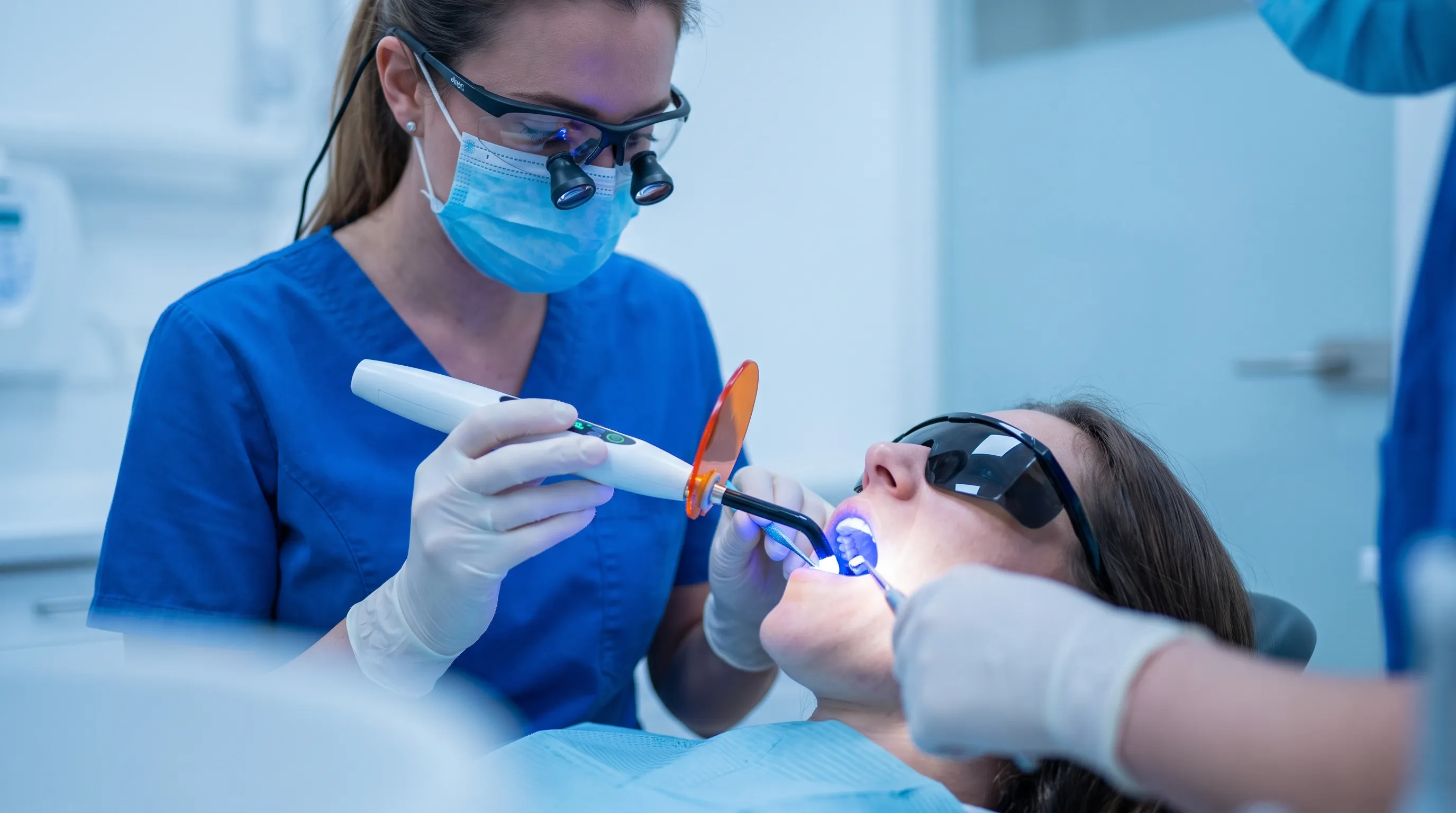
The hardening process, known as photopolymerization, relies on a visible light-curing unit emitting blue light at a wavelength of approximately 460 to 480 nanometers. When this specific spectrum interacts with a photoinitiator within the resin (commonly camphorquinone), it triggers a free-radical chain reaction that transforms the pliable paste into a rigid polymer network. Modern LED curing lights have largely replaced older halogen systems, offering higher intensity, cooler operation, and more predictable depth of cure, which directly influences the longevity of the white composite filling.
How They Differ from Traditional Amalgam
Historically, silver amalgam dominated restorative dentistry due to its low cost, ease of manipulation, and proven durability. However, its fundamental limitations have accelerated the widespread adoption of tooth-colored alternatives. Amalgam relies on mechanical retention, meaning dentists must remove additional healthy tooth structure to create undercuts that lock the material in place. In contrast, composite resins utilize adhesive dentistry. By etching the enamel with phosphoric acid and applying hydrophilic bonding agents, the resin micromechanically interlocks with the tooth's microscopic tubules, creating a monolithic seal that reinforces rather than compromises the remaining structure.
From a physiological standpoint, composites exhibit a coefficient of thermal expansion much closer to natural enamel than amalgam does. This minimizes microleakage caused by temperature fluctuations in the oral environment, reducing post-operative sensitivity and preventing bacterial infiltration. Additionally, the absence of mercury and heavy metals addresses patient safety concerns while offering superior aesthetic integration. Research published by the American Dental Association confirms that contemporary composites meet rigorous performance standards, making them the material of choice for anterior and increasingly, posterior restorations. Regulatory bodies and health organizations continue to monitor dental material safety, with the FDA and WHO providing ongoing guidance regarding mercury-free alternatives.
The Step-by-Step Clinical Placement Procedure
Initial Examination and Isolation
Successful restorative dentistry begins long before the drill touches the tooth. A comprehensive clinical assessment, including visual inspection, tactile exploration with an explorer, and digital radiography, determines the exact extent of demineralization. Once the diagnosis is confirmed, local anesthesia is administered to ensure complete patient comfort. Effective moisture control is then established using cotton rolls, high-volume suction, or preferably, a rubber dam. The rubber dam isolates the operative field, preventing saliva contamination, protecting the airway, and maintaining an optimal environment for adhesive bonding. Studies consistently demonstrate that rubber dam isolation significantly reduces failure rates and postoperative sensitivity, aligning with strict infection control protocols recommended by the Centers for Disease Control and Prevention (CDC).
Conservative Tooth Preparation and Etching
Modern preparation techniques prioritize preservation. Using fine-grit diamond or carbide burs, the dentist carefully removes only the decayed tissue while maintaining as much healthy enamel and dentin as possible. For a white composite filling to bond effectively, the tooth surface must be meticulously prepared. A 37% phosphoric acid etching gel is applied to the enamel for 15 to 30 seconds, creating microscopic porosities that dramatically increase surface energy. The gel is thoroughly rinsed away, leaving a frosty, chalky appearance. Modern universal adhesives then bridge the gap between the etched tooth and the composite material, utilizing either etch-and-rinse or selective-etch protocols depending on the specific clinical scenario and manufacturer guidelines. The adhesive is applied in thin layers, gently air-thinned, and light-cured to create a durable hybrid layer.
Incremental Layering and Light Curing
Composite resins undergo volumetric contraction during polymerization, typically shrinking by 1.5% to 4%. If placed in a single large mass, this shrinkage generates significant stress at the bonded interface, potentially causing marginal gaps, microleakage, or cuspal deflection. To mitigate this, dentists employ an incremental layering technique. Small portions of composite, usually no thicker than 2 millimeters, are placed sequentially. Each increment is individually light-cured for 20 to 40 seconds, ensuring complete polymerization throughout the entire depth of the restoration. This method dramatically reduces shrinkage stress and allows for precise anatomical sculpting. High-intensity curing units with real-time radiometric monitoring ensure optimal energy delivery, a critical factor in the long-term clinical success of the white composite filling.
Final Contouring, Occlusal Adjustment, and Polishing
Once the final layer is placed and cured, the dentist uses fine finishing burs and abrasive discs to refine the restoration's anatomy, ensuring it aligns perfectly with the patient's natural bite. Articulating paper is used to check occlusion; any premature contacts are carefully adjusted to prevent excessive forces that could lead to microfractures or accelerated wear. The final step involves a multi-stage polishing protocol using progressively finer abrasives, rubber cups, and specialized pastes. This process transforms the rough, cured surface into a highly smooth, enamel-like finish. A properly polished restoration not only enhances aesthetics but also significantly reduces plaque accumulation and gingival inflammation, contributing to overall periodontal health.
Key Benefits and Clinical Advantages
Superior Aesthetics and Custom Shade Matching
One of the most compelling reasons patients and clinicians choose a white composite filling is its unparalleled ability to blend seamlessly with natural dentition. Modern composite systems offer extensive shade guides based on the Vita Classical system, encompassing a broad spectrum of hues, translucencies, and opacities. Dentists can use layering techniques, placing different shades in specific areas to replicate the natural gradient of a tooth, where incisal edges are more translucent and cervical areas are more opaque. Fluorescent additives mimic how natural teeth interact under various lighting conditions, including ultraviolet environments. This level of customization ensures that the restoration becomes virtually indistinguishable from adjacent teeth, restoring confidence and eliminating the aesthetic compromise of metallic fillings.
Conservative Tooth Structure Preservation
Adhesive dentistry represents a paradigm shift toward minimally invasive treatment. Because composite resin bonds micromechanically to etched tooth structure, it does not rely on bulk or mechanical retention. This allows clinicians to remove only the compromised, decayed tissue while leaving healthy dentin and enamel intact. Preserving natural tooth structure is clinically paramount. It maintains the structural integrity of the crown, reduces the need for future complex procedures like root canals or crowns, and prevents the brittleness that can develop when teeth are excessively prepared. Long-term studies indicate that teeth restored with conservative composite techniques maintain higher fracture resistance compared to those prepared for traditional amalgam or full-coverage restorations.
Versatility Beyond Simple Cavity Repair
While primarily utilized for caries management, composite resins are incredibly versatile. They are the gold standard for treating fractured teeth, closing diastemas (gaps), correcting minor malalignments, and rebuilding worn occlusal surfaces in cases of bruxism or erosion. Direct composite bonding allows dentists to perform complex aesthetic transformations in a single visit, often without the need for laboratory fabrication or temporary restorations. The material's radiopacity enables clinicians to monitor secondary caries development during routine examinations, and its repairability means that minor defects can often be addressed without complete removal of the existing restoration. This adaptability makes it an invaluable tool in comprehensive dental care.
Potential Limitations and Clinical Considerations
Longevity and Wear Factors in High-Stress Areas
Despite remarkable advancements, composite resins remain susceptible to long-term wear, particularly in the posterior dentition where masticatory forces can exceed 200 pounds per square inch. Over years of function, occlusal surfaces may exhibit gradual attrition, marginal staining, or micro-chipping. The degree of wear is influenced by material formulation, placement technique, patient parafunctional habits (such as clenching or grinding), and occlusal load distribution. While modern microhybrid and nanofilled composites offer exceptional durability, they may still require replacement sooner than cast gold or ceramic onlays in patients with severe bruxism. Dentists often recommend protective nightguards to distribute forces evenly and extend the functional lifespan of the restoration.
Polymerization Shrinkage and Microleakage Risks
As previously discussed, volumetric contraction during curing is an inherent property of resin-based materials. Even with meticulous incremental placement and modern low-shrinkage formulations, marginal gaps can occasionally develop over time. These microscopic discrepancies may permit bacterial ingress, leading to secondary caries or postoperative sensitivity. Clinical success heavily depends on proper technique, optimal moisture control, and the use of modern adhesive systems with stress-absorbing properties. Regular professional monitoring ensures that any marginal deterioration is detected early and addressed proactively before extensive structural compromise occurs.
Cost Implications and Insurance Coverage Dynamics
From a financial perspective, composite restorations typically command a higher fee than amalgam due to the increased clinical time, advanced materials, and technical expertise required. Many dental insurance plans categorize composite fillings on posterior teeth as a "cosmetic upgrade" and may only reimburse at the amalgam rate, leaving the patient responsible for the difference. However, the aesthetic and structural preservation benefits often outweigh the upfront cost. Patients are encouraged to review their policy benefits, discuss phased treatment options with their dental team, and recognize that conservative, tooth-colored restorations frequently reduce the need for more expensive interventions down the line.
Comparative Analysis of Dental Restoration Materials
| Material Type | Aesthetic Quality | Structural Preservation | Durability/Longevity | Cost Range | Ideal Clinical Use |
|---|---|---|---|---|---|
| White Composite Resin | Excellent (custom shade match) | Excellent (minimal removal) | 7-15+ years | $$ | Small to moderate cavities, anterior/posterior |
| Dental Amalgam | Poor (metallic silver) | Moderate (requires mechanical retention) | 10-20 years | $ | Posterior cavities where moisture control is difficult |
| Ceramic/Porcelain Onlay | Excellent to Superior | Good to Excellent | 15-25+ years | $$$ | Large posterior defects, high aesthetic demands |
| Glass Ionomer | Good (translucent but limited shades) | Excellent (chemical bond to tooth) | 3-7 years | $$ | Non-load bearing areas, pediatric dentistry, root caries |
| Gold Alloy | Poor | Excellent (conservative but requires specific prep) | 20-40+ years | $$$$ | Patients seeking maximum longevity regardless of aesthetics |
This comparison highlights why the white composite filling has become the predominant choice for everyday restorative needs. It strikes an optimal balance between aesthetics, function, and tissue conservation. While gold and ceramics offer superior longevity in specific scenarios, composites provide unparalleled versatility for direct, chairside procedures without requiring multiple visits or laboratory fabrication.
Post-Procedure Care and Longevity Optimization
Immediate Aftercare and Sensitivity Management
Following the placement of a composite restoration, the anesthetic effect will gradually diminish over two to four hours. During this period, patients should avoid chewing on the treated side to prevent accidental trauma to the numb tissues. It is entirely normal to experience mild thermal sensitivity or pressure tenderness for the first few days as the periodontal ligament and pulpal tissues recover. This transient sensitivity can be effectively managed using desensitizing toothpaste containing potassium nitrate or stannous fluoride, and by consuming lukewarm beverages. If pain escalates or persists beyond two weeks, contacting the dental office for an occlusal evaluation is recommended.
Daily Oral Hygiene and Plaque Prevention
A well-placed and polished white composite filling should feel indistinguishable from your natural teeth, but it still requires meticulous care. Brush twice daily with a soft-bristled toothbrush and fluoride toothpaste, focusing on the gingival margin where the restoration meets the tooth. Flossing daily is non-negotiable; use a floss threader or water flosser if interproximal spaces are tight. Consider incorporating an antimicrobial mouthwash to reduce bacterial load, particularly if you are prone to gingivitis. Avoid abrasive whitening toothpastes or harsh scrubbing motions, as these can degrade the polished surface of the composite over time, leading to premature dullness and increased stain susceptibility. Consistent hygiene practices are heavily emphasized by global health authorities to prevent secondary decay, as outlined in the World Health Organization's oral health guidelines.
Dietary Modifications and Lifestyle Habits
Oral health is profoundly influenced by dietary choices. Limiting the frequency of acidic and sugary exposures prevents the recurrent demineralization that threatens the margins of any restoration. When consuming staining agents like espresso, black tea, red wine, or curry, rinse with water immediately afterward to minimize pigment absorption into the micro-porous resin matrix. Smoking or chewing tobacco drastically accelerates marginal discoloration and compromises periodontal health, significantly shortening the lifespan of dental work. For patients who grind their teeth during sleep, wearing a custom-fabricated occlusal guard is essential to protect both the composite filling and opposing dentition from catastrophic wear.
Making an Informed Decision for Your Oral Health
Choosing a restorative material is a collaborative process between patient and clinician. During your consultation, your dentist will evaluate the size and location of the defect, assess your bite dynamics, review your medical history, and discuss your aesthetic expectations. Modern composite technology continues to advance, with newer nanoceramic hybrids and bulk-fill formulations offering faster placement times and improved marginal adaptation. Research from the National Institutes of Health (NIH) and clinical guidelines from the American Dental Association consistently support the safety, efficacy, and superior aesthetic outcomes of contemporary resin systems. Additional patient resources are available through the Cleveland Clinic, which provides detailed breakdowns of filling materials and recovery expectations.
When planning your treatment, consider asking your provider about the specific composite brand they utilize, their adhesive protocol, and whether they employ rubber dam isolation. These technical details directly correlate with clinical longevity. Additionally, review the post-operative instructions carefully and commit to a six-month maintenance schedule. Early intervention on minor wear or marginal staining often prevents the need for more invasive treatments later. Ultimately, a white composite filling represents a sophisticated, minimally invasive solution that honors both the biological integrity of your tooth and the aesthetic harmony of your smile.
Frequently Asked Questions
How long does a white composite filling typically last?
When properly placed and maintained with excellent oral hygiene, a white composite filling typically lasts between 7 to 10 years, though many can endure 15 years or longer. Longevity depends heavily on the size of the restoration, bite forces, dietary habits, and routine dental checkups. Replacing a worn filling before it fractures prevents secondary decay and preserves more natural tooth structure.
Is the placement of a white composite filling painful?
The procedure is generally very comfortable. Local anesthesia completely numbs the treatment area, eliminating pain during tooth preparation. Some patients experience mild temperature sensitivity or soreness for a few days after the anesthetic wears off, which can be managed with over-the-counter pain relievers and avoiding extreme temperatures. Modern minimally invasive techniques and rubber dam isolation further enhance comfort and clinical outcomes.
Can white composite fillings be whitened if I plan to get teeth whitening later?
Composite resin materials do not respond to professional or over-the-counter bleaching agents the way natural enamel does. If you plan to whiten your teeth, dental professionals strongly recommend completing the whitening process first and waiting at least two weeks before placing new composite restorations. This ensures the dentist can match the filling material precisely to your newly achieved, brighter shade.
Why does a white composite filling sometimes stain over time?
While highly polishable, composite resin is slightly porous at a microscopic level and can absorb pigments from coffee, tea, red wine, tobacco, and certain foods over time. Regular professional cleanings remove surface stains, and avoiding excessive exposure to deeply pigmented substances helps maintain the original shade. If significant discoloration occurs, the filling can be polished or replaced to restore its aesthetic appearance.
Are there health risks associated with the materials used in composite fillings?
Extensive clinical research and regulatory reviews by organizations like the ADA and FDA confirm that modern composite resins are safe for clinical use. The materials contain trace amounts of bisphenol A (BPA)-related compounds, but the exposure during placement is minimal and well below safety thresholds. Dental practices utilize high-volume suction, proper ventilation, and fully cured resins to eliminate any potential chemical exposure, making it a highly biocompatible option for patients of all ages.
Conclusion
The transition toward a white composite filling represents a significant milestone in modern restorative dentistry, blending advanced material science with conservative, patient-centered care. By leveraging adhesive technology, precise incremental layering, and meticulous finishing protocols, dental professionals can deliver restorations that are not only highly functional but virtually indistinguishable from natural tooth structure. While composite resins require diligent maintenance and periodic professional evaluation, their aesthetic versatility, structural preservation benefits, and excellent safety profile make them the preferred choice for millions of patients worldwide. Success ultimately hinges on a partnership between skilled clinical execution and consistent, informed home care. By understanding the procedure, recognizing potential limitations, and adhering to evidence-based maintenance strategies, you can confidently protect your smile, preserve your natural dentition, and maintain optimal oral health for decades to come. Always consult a licensed dental professional to determine the most appropriate treatment plan tailored to your unique clinical needs and lifestyle goals.
How we work
Researched and drafted with AI assistance, then reviewed by a human editor against the cited sources.
This article is general health information, not medical advice. Consult a qualified healthcare professional about your own situation.