Understanding Turkey Neck: Causes, Prevention, and Evidence-Based Treatments

The neck is one of the most vulnerable anatomical regions when it comes to visible signs of aging, yet it is frequently neglected in daily skincare routines. Many individuals invest heavily in facial anti-aging regimens, completely overlooking the cervical area until the characteristic drooping, horizontal banding, and crepe-like texture become pronounced. This common aesthetic concern is widely referred to as turkey neck, a colloquial term that describes the loss of definition along the jawline and anterior neck. Understanding the physiological mechanisms behind this condition is the first step toward effective management and prevention. Unlike the thicker, more resilient skin of the face, the neck contains a thinner dermal layer with fewer sebaceous glands, making it inherently prone to dehydration and structural fatigue. Over time, repetitive gravitational pull, declining protein synthesis, and external stressors compound to create noticeable laxity. Fortunately, modern dermatology and aesthetic medicine offer a wide spectrum of interventions, from scientifically backed daily routines to advanced energy-based therapies and surgical techniques. This comprehensive guide explores the anatomy of the aging neck, evidence-based prevention strategies, clinically validated treatment modalities, and actionable lifestyle adjustments that support long-term cervical firmness and skin health.
What Is Turkey Neck? Understanding the Anatomy and Physiology
The term turkey neck describes a specific pattern of neck aging characterized by vertical banding, horizontal creases, sagging skin, and a loss of the natural cervicomental angle. To effectively address this condition, it is essential to look beyond surface-level aesthetics and examine the underlying anatomical structures that maintain youthful neck contours. The cervical region relies on a complex interplay between muscular support, connective tissue integrity, and subcutaneous fat distribution. When any of these components deteriorate, the characteristic drooping appearance emerges.
Free calculatorSun Protection GuideSPF guide and sun protection recommendationsOpen the calculatorThe Role of the Platysma Muscle
The platysma is a broad, thin sheet of superficial muscle that extends from the fascia of the pectoralis major and deltoid regions upward across the clavicle and into the lower face. In youth, this muscle lies relatively flat against the deeper structures, providing subtle tension that helps maintain a sharp jawline. As aging progresses, the platysma undergoes natural attenuation and loses its elastic recoil. More importantly, the muscle fibers begin to separate into distinct medial and lateral bands. This separation becomes particularly visible when the platysma weakens and the overlying skin loses its structural support. The resulting vertical cords are a hallmark of advanced turkey neck. Additionally, the platysma's dynamic movements during facial expressions, swallowing, and talking create repetitive mechanical stress on the overlying dermis, accelerating the formation of permanent creases if collagen regeneration cannot keep pace with tissue turnover.
How Skin Structure Changes Over Time
The dermis is the structural foundation of the skin, composed primarily of type I and type III collagen fibrils, elastin networks, and glycosaminoglycans like hyaluronic acid. In the neck region, the dermal thickness is approximately two-thirds that of facial skin, and fibroblast activity naturally declines with age. Studies published by the American Academy of Dermatology highlight that collagen production decreases by roughly one percent annually after the age of twenty, a decline that accelerates significantly during perimenopause due to estrogen reduction, as detailed by the Cleveland Clinic. As elastin fibers become fragmented through a process called elastosis, the skin loses its ability to snap back after movement or stretching. Simultaneously, the subcutaneous fat compartments undergo redistribution. Some fat migrates inferiorly, creating submental fullness, while other areas experience atrophy, resulting in a hollowed or uneven cervical contour. The combined effect of muscle laxity, dermal thinning, and fat displacement manifests as the classic turkey neck appearance.
Primary Causes and Risk Factors
While chronological aging is the most obvious driver of neck laxity, the timeline and severity are heavily influenced by a combination of genetic, environmental, and behavioral factors. Recognizing these contributors allows individuals to implement targeted preventive measures before structural changes become irreversible.
Genetic Predisposition and Hormonal Shifts
Genetics play a substantial role in how the cervical skin ages. Inherited traits such as baseline dermal thickness, natural collagen density, and facial bone structure dictate how well the neck maintains its definition over decades. Individuals with naturally thinner skin or a recessive chin structure often develop turkey neck earlier because the underlying skeletal support is insufficient to counteract soft tissue descent. Furthermore, hormonal fluctuations significantly accelerate neck aging. Estrogen is a potent regulator of fibroblast activity, glycosaminoglycan synthesis, and microcirculation. During menopause, the sharp decline in circulating estrogen leads to a rapid reduction in collagen content, dermal water retention, and vascular perfusion. This biological shift explains why many women notice a sudden worsening of neck laxity and crepe-like texture in their late forties and fifties.
UV Exposure, Smoking, and Environmental Stressors
Cumulative ultraviolet radiation exposure is arguably the most preventable yet impactful catalyst for premature turkey neck. UVA rays penetrate deeply into the dermis, triggering oxidative stress that directly damages collagen cross-links and stimulates inflammatory enzymes that degrade elastin. Clinical research consistently demonstrates that photoaged neck skin exhibits pronounced solar elastosis, irregular pigmentation, and accelerated thinning compared to protected skin, according to the National Institutes of Health. Similarly, chronic tobacco use severely compromises cervical aesthetics. Nicotine induces peripheral vasoconstriction, reducing oxygen and nutrient delivery to dermal fibroblasts, while carbon monoxide displaces oxygen in hemoglobin. The thousands of free radicals generated by each cigarette accelerate extracellular matrix breakdown, leading to premature sagging and a sallow complexion, a process extensively documented by the CDC. Environmental pollutants, including particulate matter and ozone, further exacerbate oxidative damage, making comprehensive antioxidant protection a critical component of neck preservation.
Weight Fluctuations and Postural Habits
Rapid or significant weight changes place immense mechanical strain on the cervical skin. When substantial weight is lost, the subcutaneous fat volume diminishes faster than the dermal envelope can contract, leaving behind excess tissue that sags under gravity. Repeated cycles of gaining and losing weight progressively stretch and weaken the supporting connective tissue, making elastic recovery increasingly difficult. Modern postural habits also contribute significantly. The widespread use of smartphones, tablets, and laptops has led to an epidemic of forward head posture, commonly referred to as tech neck. Constant downward gazing places excessive compressive and tensile forces on the anterior cervical spine and overlying skin. Over years, this sustained flexion deepens horizontal neck lines, accelerates platysmal weakening, and disrupts optimal lymphatic drainage, all of which exacerbate the development of turkey neck, as noted in posture guidelines from the Mayo Clinic.
Evidence-Based Prevention Strategies
Prevention remains the most cost-effective and sustainable approach to maintaining a firm, youthful neckline. By integrating scientifically supported skincare practices, nutritional optimization, and postural awareness, individuals can significantly delay the onset of structural laxity and preserve dermal resilience.
Building a Targeted Neck Skincare Routine
Effective neck care requires products formulated for thinner, more delicate tissue. Cleansing should be gentle, using non-stripping, pH-balanced formulations that remove debris without compromising the lipid barrier. Exfoliation must be approached cautiously; mild polyhydroxy acids or low-concentration lactic acid are preferred over aggressive physical scrubs that cause micro-tears. Hydration is paramount. Serums containing multi-molecular weight hyaluronic acid, ceramides, and panthenol attract and seal moisture into the upper dermal layers, temporarily plumping the appearance of fine lines and improving elasticity. Most importantly, broad-spectrum sun protection must be applied daily. Dermatologists recommend extending facial SPF down to the clavicles and reapplying every two hours during prolonged outdoor exposure (Mayo Clinic). Antioxidant serums featuring vitamin C, vitamin E, and ferulic acid should be layered beneath sunscreen to neutralize free radicals and provide synergistic UV protection.
Nutritional Support for Dermal Resilience
The skin's structural integrity is directly dependent on adequate micronutrient intake. Vitamin C serves as an essential cofactor for prolyl hydroxylase, the enzyme responsible for stabilizing collagen triple helices. Without sufficient vitamin C, newly synthesized collagen remains unstable and rapidly degrades. Omega-3 fatty acids from fish oil, flaxseeds, and walnuts incorporate into cell membranes, maintaining fluidity and reducing systemic inflammation that accelerates tissue breakdown. High-quality protein provides the amino acids glycine, proline, and lysine that form the backbone of collagen fibers. Additionally, dietary polyphenols from green tea, berries, and dark leafy vegetables modulate inflammatory pathways and upregulate endogenous antioxidant systems. Maintaining stable hydration levels ensures optimal turgor and cellular function, while excessive sugar and refined carbohydrates promote glycation, a process where glucose molecules bind irreversibly to collagen and elastin, rendering them stiff and brittle.
Ergonomics and Tech Neck Mitigation
Correcting chronic postural imbalances is crucial for mechanical preservation of the neck. Ergonomic adjustments such as raising computer monitors to eye level, using smartphone stands, and practicing regular posture resets reduce sustained anterior cervical loading. Incorporating brief mobility breaks every thirty minutes helps reset the deep cervical flexors and prevents adaptive shortening of the upper trapezius and suboccipital muscles. Mind-body practices like Pilates and tai chi emphasize spinal alignment and core engagement, naturally encouraging neutral cervical positioning. When combined with consistent skin protection and muscular conditioning, these behavioral modifications create a holistic defense against premature turkey neck development.
Non-Invasive and Minimally Invasive Treatment Options
When prevention alone cannot reverse established laxity, modern aesthetic medicine offers a graduated spectrum of interventions tailored to individual anatomical needs and tolerance for downtime.
Clinically Proven Topical Actives
Topical retinoids remain the gold standard for stimulating dermal remodeling. Prescription tretinoin and over-the-counter retinol derivatives accelerate epidermal turnover, normalize keratinization, and directly signal fibroblasts to produce new collagen and normalize matrix architecture. For the sensitive neck area, dermatologists often recommend starting with low-concentration retinol (0.1 to 0.3 percent) applied twice weekly, gradually increasing frequency as tolerance builds. For comprehensive guidance on retinoid usage and skin remodeling, the American Academy of Dermatology provides evidence-based recommendations. Peptide complexes, particularly copper peptides and matrixyl, mimic natural cellular signaling pathways to encourage extracellular matrix synthesis without the irritation potential of retinoids. Niacinamide (vitamin B3) strengthens the barrier, reduces transepidermal water loss, and inhibits inflammatory mediators that contribute to photoaging. While topicals cannot lift significantly descended tissue, they substantially improve skin quality, reduce crepiness, and enhance the longevity of procedural results.
Energy-Based Skin Tightening Devices
Radiofrequency and microfocused ultrasound represent the cornerstone of non-surgical neck tightening. Radiofrequency devices deliver controlled electromagnetic energy that heats the deep dermal and subdermal layers, inducing immediate collagen contraction and triggering a wound-healing cascade that continues remodeling for up to six months. Technologies like fractional radiofrequency or microneedling RF create precise thermal columns while preserving the epidermal surface, making them highly effective for moderate turkey neck with minimal recovery. Microfocused ultrasound, particularly high-intensity focused ultrasound (HIFU), targets specific tissue depths, including the superficial muscular aponeurotic system (SMAS) equivalent in the neck, producing a lifting effect through precise coagulative points. Clinical studies demonstrate measurable improvements in skin laxity scores, though multiple sessions are often required for optimal outcomes. Patients should seek board-certified practitioners who utilize FDA-cleared devices and understand cervical anatomical safety zones to avoid nerve injury or fat atrophy, as outlined in clinical safety guidelines from the Cleveland Clinic.
Neuromodulators, Fillers, and PDO Threading
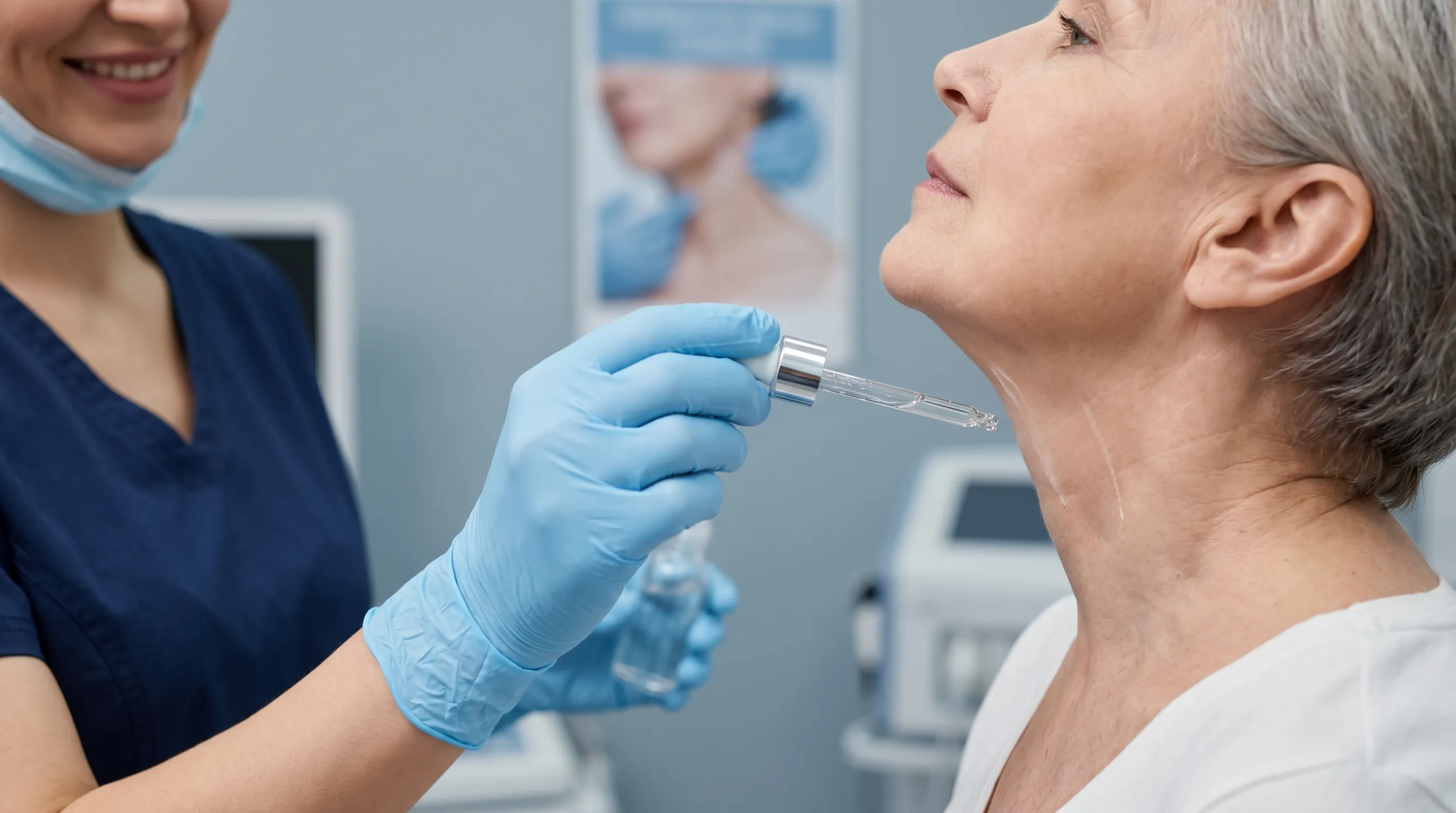
For patients with prominent platysmal banding, targeted injections of neuromodulators like botulinum toxin can temporarily relax the hyperactive vertical cords, creating a smoother contour. When administered conservatively by experienced clinicians, this approach prevents the over-elevation of adjacent structures and maintains natural neck movement. Hyaluronic acid fillers are occasionally used to restore the cervicomental angle and improve jawline definition, though caution is required due to the dynamic nature of the cervical region and risk of migration. Polydioxanone (PDO) threading offers a minimally invasive lifting mechanism by inserting absorbable sutures beneath the skin to provide immediate mechanical support. As the threads dissolve over several months, they stimulate localized collagen production, gradually transitioning from physical lifting to biological tissue reinforcement. This modality is best suited for mild to moderate laxity and requires careful patient selection to avoid visible thread outlines or asymmetry.
Surgical Interventions and Recovery Expectations
When structural laxity is severe, skin redundancy is pronounced, or platysmal separation has created deep vertical cords, surgical intervention offers the most definitive and long-lasting correction.
Indications for Traditional vs. Mini Neck Lifts
A traditional platysmaplasty combined with cervicoplasty addresses the neck comprehensively. The procedure involves repositioning or partially suturing the medial edges of the platysma to recreate a unified muscular sling, followed by excision of excess skin and redraping of the remaining tissue under controlled tension. This approach is indicated for advanced turkey neck with significant submental fat, muscle separation, and substantial skin laxity. In contrast, a mini neck lift or limited-incision procedure targets isolated submental fullness and mild laxity, typically utilizing shorter incisions and less aggressive tissue manipulation. Patient selection is critical: younger individuals with good skin elasticity may benefit from liposuction alone, while older patients with photodamaged, inelastic tissue generally require formal excision. Board-certified plastic surgeons evaluate tissue quality, anatomical proportions, and aesthetic goals during comprehensive consultations to determine the optimal surgical plan, adhering to standards established by the Mayo Clinic.
Postoperative Care and Long-Term Maintenance
Surgical recovery follows a structured timeline designed to optimize healing and minimize complications. Initial swelling and bruising peak within the first forty-eight to seventy-two hours, followed by gradual resolution over two to three weeks. Patients are advised to sleep elevated, avoid strenuous activity, and wear a prescribed compression garment to support tissue adherence and reduce seroma formation. Scar management begins once incisions are fully closed, incorporating silicone sheeting, gentle massage, and diligent sun protection to prevent hyperpigmentation. Long-term results typically endure for a decade or more, though the natural aging process continues indefinitely. Maintaining a stable weight, adhering to a consistent skincare regimen, and utilizing periodic non-invasive maintenance treatments like radiofrequency or laser resurfacing significantly prolong surgical outcomes and preserve cervical definition.
At-Home Neck Exercises and Facial Yoga
Targeted muscular engagement can complement clinical treatments and daily skincare by improving tone, circulation, and lymphatic drainage in the cervical region.
The Science Behind Muscular Engagement
Facial and neck yoga operate on the principle of neuroplastic adaptation and muscular hypertrophy. Gentle, controlled resistance training stimulates mechanotransduction pathways, signaling satellite cells to repair and strengthen muscle fibers. Improved muscular tone provides a firmer foundation beneath the skin, potentially reducing the appearance of mild sagging. Additionally, rhythmic movements enhance microcirculation, delivering oxygenated blood and nutrients to dermal fibroblasts while facilitating the removal of metabolic waste products. However, the cervical region requires careful technique. Overstretching the anterior neck or applying excessive force can strain the superficial fascia and potentially exacerbate laxity. Professional guidance ensures that exercises target the platysma, sternocleidomastoid, and deep cervical flexors without compromising joint integrity or skin elasticity.
Step-by-Step Routine for Firmness
A sustainable home routine should be performed three to four times weekly, always on clean, lightly moisturized skin to prevent friction-induced microtrauma. Begin with gentle cervical rotations, slowly turning the head side to side for ten repetitions to mobilize joints. Progress to the chin tuck exercise: sitting or standing with a neutral spine, gently retract the head straight back as if creating a double chin, hold for five seconds, and release. Perform fifteen repetitions to strengthen the deep neck flexors and counteract forward posture. For platysmal toning, place two fingers lightly beneath the clavicle and gently slide them upward toward the jawline while applying minimal downward resistance from the muscle. Repeat ten times, focusing on controlled contraction rather than aggressive pulling. Follow with a lymphatic drainage massage using upward and outward strokes from the collarbone toward the ears, using only the pads of the fingers to avoid dragging the skin. Consistency, combined with adequate hydration and sun protection, yields gradual improvements in neck contour and skin resilience over several months.

| Treatment Modality | Ideal Candidate | Average Downtime | Longevity of Results | Primary Mechanism |
|---|---|---|---|---|
| Topical Retinoids & Peptides | Mild crepiness, prevention-focused | None | Continuous with consistent use | Collagen stimulation, epidermal renewal |
| Radiofrequency Microneedling | Moderate laxity, uneven texture | 2-4 days redness | 12-24 months | Thermal coagulation, dermal remodeling |
| High-Intensity Focused Ultrasound | Mild to moderate sagging, SMAS targeting | Minimal swelling | 18-36 months | Deep tissue heating, structural tightening |
| Neuromodulator Injections | Prominent platysmal banding | None | 3-4 months | Muscle relaxation, band smoothing |
| Surgical Platysmaplasty | Severe redundancy, advanced laxity | 2-3 weeks | 10+ years | Tissue excision, muscular repositioning |
Frequently Asked Questions
Is turkey neck reversible without surgery?
Mild to moderate turkey neck can often be improved significantly with non-surgical approaches. Clinically formulated topicals like retinoids, radiofrequency skin-tightening devices, ultrasound therapy, and consistent neck-strengthening exercises can stimulate collagen production and improve muscle tone. However, once structural laxity reaches an advanced stage due to severe platysmal banding or excessive skin redundancy, surgical intervention remains the most definitive solution.
At what age does turkey neck typically become noticeable?
The earliest signs of neck laxity usually appear between the late thirties and mid-forties, as natural collagen and elastin production decline. However, the timeline varies widely based on genetic factors, cumulative sun exposure, weight fluctuations, and lifestyle habits. Some individuals may notice early banding in their early thirties, while others maintain firm neck contours well into their fifties.
Can facial exercises worsen neck wrinkles?
When performed correctly, targeted neck and facial exercises can improve muscular tone and lymphatic drainage without worsening wrinkles. However, repetitive, aggressive movements that stretch the skin downward or cause excessive friction can actually contribute to crepe-like texture. It is essential to use gentle, controlled motions, pair exercises with adequate skin hydration, and avoid overtraining the platysma.
How does sunscreen help prevent turkey neck?
Chronic ultraviolet exposure is responsible for approximately eighty percent of visible neck aging through a process known as photoaging. UV radiation breaks down dermal collagen fibers, fragments elastin, and triggers matrix metalloproteinases that accelerate skin thinning. Daily application of broad-spectrum SPF thirty or higher to the anterior neck and décolletage significantly slows this degradation, preserving structural integrity and delaying the onset of laxity, as recommended by global skin health authorities (WHO).
Do neck creams actually work for sagging skin?
Neck-specific formulations can deliver measurable improvements in hydration, barrier function, and superficial texture. Key actives like peptides, retinol, and niacinamide support cellular turnover and collagen synthesis in the thinner neck dermis. However, topical products cannot lift severely redundant skin or reposition descended fat pads. They work best as preventive tools and adjuncts to in-office procedures for mild to moderate laxity.
Conclusion
The development of turkey neck is a multifactorial process driven by intrinsic biological aging, extrinsic environmental damage, and cumulative mechanical stress. Understanding the underlying anatomy of the platysma muscle, the progressive loss of dermal collagen, and the impact of lifestyle choices empowers individuals to make informed decisions about prevention and intervention. While no single product or treatment can completely halt chronological aging, a strategic combination of diligent sun protection, targeted skincare, postural correction, and evidence-based aesthetic procedures can significantly improve cervical firmness and restore youthful definition. Whether opting for gradual at-home routines or clinically supervised treatments, consistency and patience remain essential. Always consult board-certified dermatologists or plastic surgeons when evaluating treatment options to ensure safety, efficacy, and personalized care tailored to your unique anatomical profile. By prioritizing comprehensive neck care alongside facial wellness, you can maintain a balanced, confident appearance that reflects long-term skin health and vitality.
How we work
Researched and drafted with AI assistance, then reviewed by a human editor against the cited sources.
This article is general health information, not medical advice. Consult a qualified healthcare professional about your own situation.