Shoulder Injury at Work: Causes, Treatment, and Prevention Guide

Workplace-related musculoskeletal disorders represent one of the most prevalent categories of occupational health challenges globally (CDC/NIOSH), and a shoulder injury at work consistently ranks among the most frequently reported conditions. The shoulder is an extraordinarily complex biomechanical structure designed for exceptional mobility, which inherently sacrifices some stability. When combined with repetitive motions, heavy lifting, awkward postures, or prolonged overhead tasks, this anatomical compromise frequently manifests into acute trauma or gradual degeneration. Understanding how occupational demands interact with shoulder physiology is essential for prevention, accurate diagnosis, and sustainable recovery.
A shoulder injury at work not only disrupts professional responsibilities but can also significantly impact daily living activities, mental well-being, and long-term physical health. Early recognition, evidence-based medical intervention, and systematic workplace modifications form the foundation of effective occupational health management (WHO). Whether you are a healthcare worker transferring patients, a warehouse employee lifting inventory, or an office professional maintaining static postures for extended periods, your shoulder joints face continuous mechanical stress. This comprehensive guide explores the medical realities, diagnostic pathways, treatment options, and legal protections surrounding occupational shoulder conditions, empowering workers and employers to prioritize musculoskeletal health and foster safer work environments.
Understanding the Anatomy and Biomechanics of the Shoulder
Joint Structure and Range of Motion
The shoulder complex consists of three primary articulations: the glenohumeral joint, the acromioclavicular joint, and the sternoclavicular joint, with the scapulothoracic articulation functioning as a dynamic muscular interface. The glenohumeral joint, a ball-and-socket synovial joint, features a shallow glenoid fossa that allows approximately 180 degrees of flexion and abduction, extensive circumduction, and significant internal and external rotation. While this configuration provides unparalleled functional versatility, it relies heavily on soft tissue stabilizers rather than bony congruence for joint integrity (Mayo Clinic). The shallow socket architecture means that every movement requires precise neuromuscular coordination to prevent subluxation, impingement, or tissue overload.
Free calculatorBMI CalculatorCalculate Body Mass IndexOpen the calculator
Key Muscles, Tendons, and Nerves
The rotator cuff complex, composed of the supraspinatus, infraspinatus, teres minor, and subscapularis muscles, plays a critical role in dynamic stabilization and movement initiation. These tendons form a continuous sleeve around the humeral head, maintaining centralization within the glenoid cavity during motion. The subacromial space, located between the acromion process and the humeral head, contains the subacromial bursa, which minimizes friction between tendons and surrounding bone. The brachial plexus traverses the region, providing motor and sensory innervation to the shoulder, arm, and hand structures. When occupational forces exceed physiological tolerance, microtrauma accumulates in tendons, bursae, or neural pathways, leading to pain, inflammation, and functional decline.
How Workplace Demands Impact Shoulder Function
Occupational tasks frequently disrupt optimal biomechanical alignment. Prolonged elevation above shoulder height compresses the subacromial space by up to 50%, drastically increasing tendon-bone contact pressure. Repetitive overhead assembly, sustained computer keyboard positioning without forearm support, and asymmetric lifting patterns create cumulative tissue fatigue. Over time, adaptive changes such as tendon degeneration, capsular tightening, and muscular imbalances compromise the shoulder injury at work threshold, making even routine movements progressively painful and functionally limiting.
Common Types of Workplace Shoulder Injuries
Rotator Cuff Tears and Tendinopathy
Rotator cuff pathology encompasses a spectrum ranging from tendinosis (chronic degenerative changes without significant inflammation) to partial-thickness and full-thickness tears. Tendinopathy typically develops insidiously through repetitive loading and inadequate recovery cycles, causing pain during overhead activities and weakened external rotation. Acute tears often result from sudden heavy lifting or traumatic falls, presenting with immediate sharp pain, pronounced weakness, and sometimes a palpable defect in the tendon contour. Workers in construction, manufacturing, and healthcare frequently develop progressive rotator cuff deterioration due to sustained mechanical demands (Cleveland Clinic).
Shoulder Impingement Syndrome
Shoulder impingement occurs when soft tissue structures, primarily the supraspinatus tendon and subacromial bursa, become compressed between the humeral head and the coracoacromial arch. Occupational overhead work, poor scapular mechanics, and postural rounding significantly elevate impingement risk. Symptoms typically worsen with arm elevation between 60 and 120 degrees, known as the painful arc. Without intervention, chronic compression leads to tendon thickening, bursal fibrosis, and eventual tear formation (NIH MedlinePlus). Early ergonomic adjustments and targeted mobility training often reverse early-stage impingement before surgical intervention becomes necessary.
Labral Tears and Dislocations
The glenoid labrum is a fibrocartilaginous rim that deepens the shoulder socket and enhances joint stability. Traumatic falls, forceful overhead throwing motions, or sudden traction injuries during manual labor can cause labral detachment (SLAP tears or Bankart lesions). Recurrent subluxations may indicate underlying ligamentous laxity or structural compromise. Dislocations require prompt medical reduction to prevent neurovascular compromise and cartilage damage. Athletes, firefighters, and warehouse personnel handling heavy loads face elevated labral injury risk.
Bursitis and Overuse Syndromes
Subacromial bursitis frequently accompanies rotator cuff tendinopathy and impingement. Repetitive friction and microtrauma provoke inflammatory cascades, causing localized swelling, warmth, and constant aching discomfort. Overuse syndromes also include medial epicondylitis radiating proximally, cervical-thoracic posture dysfunction, and scapular dyskinesis. Addressing inflammation through rest, targeted loading, and biomechanical optimization remains essential for long-term recovery.
Acute Traumatic Injuries vs. Repetitive Strain
A shoulder injury at work manifests along two distinct pathways: acute trauma and repetitive strain. Acute injuries follow identifiable incidents such as falls from heights, crushing mechanisms, or sudden heavy load failures. Repetitive strain injuries develop gradually over months or years through continuous microtrauma without adequate tissue recovery. Both pathways require different diagnostic approaches, yet both respond favorably to early intervention, structured rehabilitation, and workplace accommodations.
| Feature | Acute Traumatic Injury | Repetitive Strain Injury |
|---|---|---|
| Onset | Sudden, identifiable incident | Gradual, progressive development |
| Mechanism | High-impact force, sudden overload | Cumulative microtrauma, inadequate recovery |
| Pain Pattern | Sharp, immediate, severe | Dull, intermittent, activity-related |
| Swelling | Rapid, pronounced inflammation | Minimal or delayed tissue response |
| Imaging Findings | Fractures, dislocations, full tears | Tendinosis, bursal thickening, impingement |
| Recovery Timeline | Months to over a year | Weeks to several months with rehab |
Identifying Risk Factors and High-Risk Occupations
Overhead Work and Heavy Lifting
Occupations requiring frequent work above shoulder level place extraordinary demands on the glenohumeral joint. Electricians, painters, carpenters, and automotive technicians routinely sustain arms in elevated positions, compressing subacromial structures and accelerating tendon degeneration. Heavy lifting exacerbates this stress by increasing compressive joint forces and demanding excessive stabilizer muscle activation. Proper body mechanics, team lifting protocols, and mechanical assistance significantly mitigate biomechanical overload and reduce shoulder injury at work incidence.
Repetitive Motions and Vibration Exposure
Assembly line workers, data entry professionals, and manufacturing operators perform highly repetitive movements with minimal variation. Repetition without adequate recovery diminishes tissue resilience, promoting tendinosis and capsular adaptation. Hand-arm vibration from power tools additionally compromises microcirculation, accelerates connective tissue fatigue, and impairs proprioceptive feedback, further elevating injury risk.
Ergonomic Deficits and Poor Posture
Workstation design profoundly influences shoulder health. Monitors positioned too low force cervical flexion and protracted scapulae, while keyboards placed too far forward require sustained forward reach. These postural deviations increase levator scapulae and upper trapezius tension while weakening mid-trapezius and lower trapezius stabilizers. Chronic postural imbalance alters scapulohumeral rhythm, predisposing workers to impingement, muscle strain, and joint irritation.
Age, Physical Condition, and Previous Injuries
Biological aging naturally reduces tendon vascularity and collagen elasticity, lowering tissue tolerance thresholds. Workers over 40 experiencing a shoulder injury at work often require extended rehabilitation due to diminished regenerative capacity. Prior shoulder trauma, inadequate core strength, and systemic conditions like diabetes or thyroid disorders further compromise healing. Comprehensive occupational health assessments should integrate age-related physiological changes into preventive planning and accommodation strategies.
Recognizing Early Warning Signs and Symptoms
Acute vs. Chronic Pain Presentation
Acute shoulder trauma typically produces immediate, localized pain with rapid swelling and functional restriction. Patients often recall the exact moment of injury and describe sharp, stabbing sensations during movement. Chronic occupational shoulder conditions present more subtly: a persistent dull ache that intensifies with specific activities, stiffness after prolonged rest, and gradual loss of overhead reach. Pain radiation to the neck, upper back, or lateral arm is common due to referred neural pathways and compensatory muscular recruitment.
Functional Limitations in Daily Tasks
Beyond workplace performance, a shoulder injury at work frequently disrupts personal routines. Difficulty reaching overhead cabinets, dressing, driving, or sleeping without shoulder positioning aids indicates significant functional impairment. Nighttime pain that awakens individuals when rolling onto the affected side strongly suggests subacromial impingement or rotator cuff pathology. Tracking functional limitations provides objective benchmarks for clinical evaluation and rehabilitation progression.
Red Flags Requiring Immediate Medical Attention
Certain symptoms demand urgent medical evaluation. Inability to actively elevate the arm may indicate complete tendon rupture or neurological compromise. Severe swelling, joint deformity, crepitus with movement, or palpable step-offs suggest fracture or dislocation. Radiating numbness, tingling, or weakness extending into the forearm and hand warrants immediate assessment for cervical radiculopathy or brachial plexus involvement. Early intervention prevents permanent structural damage and optimizes long-term functional outcomes.
Evidence-Based Diagnosis and Treatment Pathways
Clinical Evaluation and Imaging Techniques
Accurate diagnosis begins with comprehensive physical examination. Clinicians perform specific provocative tests such as Neer and Hawkins-Kennedy impingement assessments, Empty Can and External Rotation Lag signs for rotator cuff integrity, and Apprehension-Relocation tests for labral stability. Strength grading, range-of-motion measurements, and palpation localize tissue involvement. Imaging modalities include radiographs for bony alignment and degenerative changes, ultrasound for dynamic tendon assessment and bursal evaluation, and magnetic resonance imaging (MRI) for detailed soft tissue visualization (Mayo Clinic). Advanced diagnostics often include arthrography when labral pathology is suspected.
Conservative Management: Rest, Ice, and Physical Therapy
Initial treatment for most non-surgical shoulder injury at work cases emphasizes inflammation control and progressive loading. Relative rest avoids aggravating movements while maintaining gentle mobility to prevent adhesive capsulitis. Cryotherapy reduces acute swelling and pain. Nonsteroidal anti-inflammatory drugs (NSAIDs) provide short-term symptom relief but should not replace mechanical rehabilitation. Physical therapy constitutes the cornerstone of conservative management, incorporating scapular stabilization, rotator cuff strengthening, posterior capsule mobilization, and thoracic spine mobility (Cleveland Clinic). Eccentric loading protocols demonstrate robust clinical evidence for tendinopathy reversal.
Medical Interventions: Injections and Surgery
When conservative management plateaus, corticosteroid injections into the subacromial space or glenohumeral joint provide targeted anti-inflammatory effects. Hyaluronic acid and platelet-rich plasma (PRP) injections show emerging evidence for tissue regeneration, though clinical consensus continues evolving. Surgical intervention becomes necessary for complete tendon ruptures, recurrent instability, severe impingement with structural bone spurs, or failed conservative rehabilitation. Arthroscopic repair, open tendon reconstruction, and acromioplasty restore anatomical integrity. Postoperative rehabilitation follows phased protocols emphasizing protected motion, progressive strengthening, and functional retraining.
The Role of Ergonomic Adjustments in Recovery
Recovery extends far beyond clinical settings. A shoulder injury at work requires systematic workplace modifications to prevent reinjury. Adjustable-height workstations, mechanical lifting assist devices, forearm supports, tool balancers, and anti-fatigue flooring redistribute mechanical loads. Job rotation schedules prevent cumulative tissue fatigue. Employers collaborating with occupational therapists to implement individualized ergonomic accommodations achieve significantly higher return-to-work rates and lower recurrence statistics (CDC/NIOSH).
Navigating Workers’ Compensation and Legal Protections
Reporting Procedures and Documentation
Prompt reporting establishes the occupational connection essential for compensation eligibility. Workers must notify supervisors immediately following acute incidents or upon recognizing progressive symptoms. Detailed documentation includes incident reports, witness statements, initial medical records, and ergonomic assessments. Consistent medical follow-up and treatment compliance strengthen claim validity. Delays in reporting frequently complicate case adjudication and reduce benefit approvals.
Filing a Claim and Medical Evaluations
Workers’ compensation systems vary by jurisdiction but universally require medical documentation linking the shoulder injury at work to occupational duties. Independent medical evaluations (IMEs) assess causation, treatment necessity, and functional capacity. Maintaining detailed records of work restrictions, job modifications, and rehabilitation progress facilitates transparent claim processing. Healthcare providers specializing in occupational medicine understand compensation documentation requirements and provide comprehensive impairment ratings (WHO).
Employer Responsibilities and Workplace Modifications
Employers must comply with occupational safety regulations, including maintaining safe working conditions, providing appropriate training, and implementing reasonable accommodations under disability legislation. Modified duty programs facilitate gradual workforce reintegration, reducing prolonged absenteeism and preserving institutional knowledge. Collaborative return-to-work planning involving human resources, occupational health providers, and employees yields optimal outcomes for both workforce health and organizational productivity.
When to Consult an Occupational Health Attorney
Legal consultation becomes advisable when claims are denied, treatment authorizations are delayed, retaliatory employment actions occur, or permanent disability evaluations significantly impact long-term earning capacity. Licensed workers’ compensation attorneys understand jurisdictional requirements, medical-legal reporting standards, and appeals procedures. Early legal guidance often streamlines resolution and protects worker rights throughout the recovery process.
Rehabilitation and Safe Return-to-Work Protocols
Phased Recovery Programs
Structured rehabilitation follows progressive phases: acute pain management, mobility restoration, strength rebuilding, and functional retraining. Each phase incorporates specific milestones before advancing. Rushing progression increases reinjury risk and prolongs overall recovery. Physical therapists utilize criterion-based advancement rather than time-based expectations, ensuring tissue readiness before increasing mechanical demands.
Strengthening and Mobility Exercises
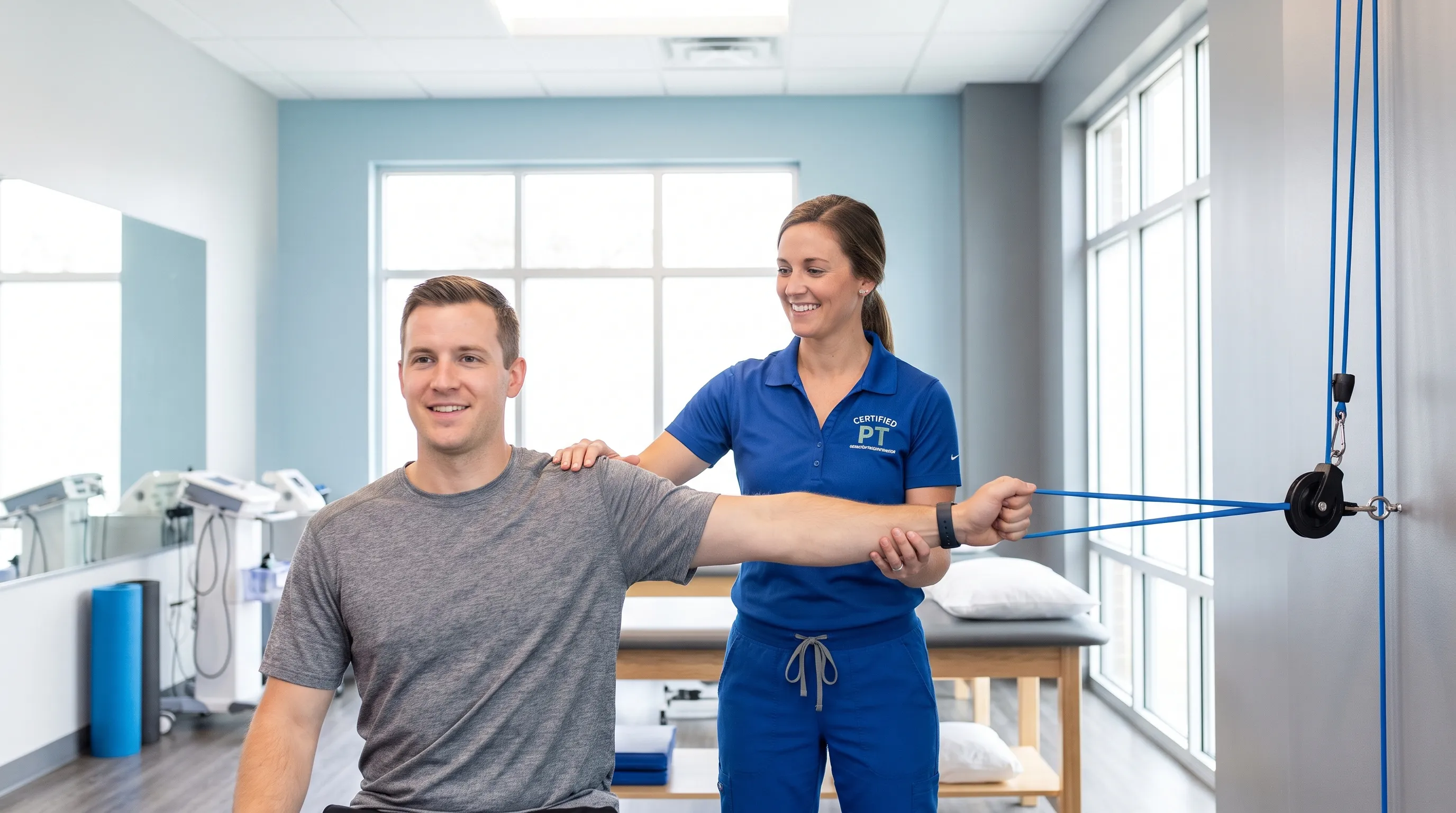
Targeted exercises restore scapulohumeral rhythm and muscular balance. Isometric contractions initially rebuild neural activation without joint compression. Progressive resistance training using elastic bands, light dumbbells, and cable systems enhances tendon load tolerance. Mobility drills address posterior capsule tightness, thoracic extension restrictions, and cervical mobility deficits. Consistency and proper form matter far more than exercise volume or intensity. Gradual loading stimulates collagen remodeling and restores structural integrity.
Gradual Workload Reintegration
A shoulder injury at work requires careful workload progression upon return. Modified duty schedules reduce repetitive overhead demands, limit lifting weights, and incorporate additional rest intervals. Supervisors and healthcare providers establish clear functional limitations and monitor compliance. Ergonomic workstation assessments ensure sustained joint protection during daily tasks. Ongoing communication between clinicians, employees, and management prevents premature full-duty returns that frequently trigger symptom recurrence.
Preventing Recurrence Through Ongoing Care
Long-term shoulder health demands continuous maintenance. Daily mobility routines, regular strength training, posture awareness, and scheduled micro-breaks preserve tissue resilience. Annual occupational health screenings identify early biomechanical deviations before clinical symptoms develop. Educational programs reinforce safe lifting mechanics, tool handling techniques, and self-management strategies. Empowering workers with sustainable health habits transforms occupational shoulder injury prevention from reactive treatment to proactive wellness.
Frequently Asked Questions
How long does it typically take to recover from a shoulder injury at work?
Recovery timelines vary significantly depending on the injury type and severity. Mild strains and tendinitis often resolve within 2 to 6 weeks with conservative treatment, while partial rotator cuff tears may require 3 to 6 months of structured rehabilitation. Complete tears or surgical repairs typically take 6 to 12 months for full functional restoration. Consistent adherence to physical therapy protocols and ergonomic modifications greatly accelerates the healing process (NIH MedlinePlus).
Can a repetitive strain shoulder injury qualify for workers' compensation?
Yes, most jurisdictions recognize gradual-onset occupational injuries as compensable, provided there is documented evidence linking the condition to workplace activities. Medical records, job duty analyses, and timely reporting to employers are essential to establish a clear occupational connection. Consult an occupational medicine specialist or licensed workers' compensation attorney to understand specific state or regional requirements.
What are the immediate steps to take after experiencing acute shoulder pain on the job?
Immediately stop the aggravating activity, notify your supervisor, and complete an incident report. Apply ice to the affected area for 15 to 20 minutes every two hours to reduce inflammation. Avoid heavy lifting or overhead movements until evaluated by a healthcare professional. Seek urgent medical attention if you experience severe swelling, joint deformity, inability to raise the arm, or radiating numbness down the arm.
How do ergonomic adjustments help prevent future shoulder injuries?
Ergonomic modifications reduce biomechanical stress by aligning tools, workstations, and lifting techniques with natural human posture. Adjusting desk height, using anti-fatigue mats, positioning monitors at eye level, and implementing mechanical lifts for heavy items significantly decrease muscular fatigue. Regular micro-breaks, job rotation, and targeted stretching further protect joint integrity by preventing cumulative tissue overload and repetitive microtrauma (CDC/NIOSH).
When is surgery necessary for a work-related shoulder injury?
Surgical intervention is typically considered when conservative treatments fail after 3 to 6 months, or when imaging reveals full-thickness rotator cuff tears, severe labral detachment, recurrent dislocations, or significant structural impingement. Arthroscopic debridement, tendon repair, or labral reconstruction may be recommended based on functional impairment and occupational demands. Postoperative rehabilitation is essential for safe workplace reintegration (Cleveland Clinic).
Conclusion
Navigating a shoulder injury at work requires a comprehensive, multidisciplinary approach that integrates accurate medical diagnosis, evidence-based rehabilitation, ergonomic optimization, and structured workplace reintegration. The shoulder’s remarkable mobility comes with inherent stability trade-offs, making it particularly vulnerable to occupational stressors. However, with early recognition, consistent therapeutic intervention, and proactive workplace modifications, workers can achieve sustainable recovery and minimize recurrence. Employers benefit significantly from implementing ergonomic assessments, fostering safety-conscious cultures, and supporting modified-duty programs. Whether managing acute trauma or addressing chronic repetitive strain, prioritizing occupational shoulder health safeguards both individual well-being and organizational productivity. By understanding the underlying mechanisms, adhering to structured treatment pathways, and embracing preventive strategies, workers can maintain optimal shoulder function throughout their careers and beyond.
How we work
Researched and drafted with AI assistance, then reviewed by a human editor against the cited sources.
This article is general health information, not medical advice. Consult a qualified healthcare professional about your own situation.