How Long Does Tirzepatide Stay in Your System? A Complete Pharmacokinetic Guide

Key points
- 1 Half-Life (5 days): 50% of the drug remains.
- 2 Half-Lives (10 days): 25% of the drug remains.
- 3 Half-Lives (15 days): 12.5% of the drug remains.
- 4 Half-Lives (20 days): 6.25% of the drug remains.
- 5 Half-Lives (25 days): ~3.1% of the drug remains.
Understanding the pharmacokinetics of modern weight loss and diabetes medications is crucial for anyone starting a new treatment regimen. Among the most prominent drugs in this category is tirzepatide, marketed under brand names such as Mounjaro and Zepbound. As a dual glucose-dependent insulinotropic polypeptide (GIP) and glucagon-like peptide-1 (GLP-1) receptor agonist, tirzepatide works by mimicking natural hormones to regulate blood sugar, suppress appetite, and slow gastric emptying (Eli Lilly and Company). While many users are eager to know how quickly they will see results, an equally important question often arises during the initial consultation or when considering discontinuation: how long does tirzepatide stay in your system?
The answer to this question is not merely a matter of curiosity; it has significant implications for managing side effects, planning surgical procedures, transitioning to other medications, and understanding the window of efficacy after a missed dose. Because tirzepatide is a long-acting injectable medication, its presence in the body persists well beyond the weekly dosing schedule. This prolonged duration is by design, allowing for steady-state concentrations in the blood that provide consistent therapeutic benefits. However, it also means that if adverse reactions occur, or if a patient needs to stop the medication for medical reasons, the drug does not leave the body immediately.
In this comprehensive guide, we will delve deep into the science behind tirzepatide’s elimination half-life, the biological processes involved in its metabolism, and the various factors that can influence its retention in the body. We will explore what "staying in your system" actually means from a medical perspective, distinguishing between the drug's therapeutic effects and its physical presence in your bloodstream and tissues. By the end of this article, you will have a clear, evidence-based understanding of the timeline for tirzepatide clearance, empowering you to make informed decisions about your health journey in collaboration with your healthcare provider.
Understanding the Half-Life of Tirzepatide
To accurately answer the question of how long does tirzepatide stay in your system, we must first understand the concept of pharmacokinetic half-life. In medical terms, the half-life of a drug is the time it takes for the concentration of the drug in the plasma (the liquid part of the blood) to reduce by half. This metric is the gold standard for determining how long a medication remains active in the body and how frequently it needs to be administered.
Free calculatorBMI CalculatorCalculate Body Mass IndexOpen the calculatorThe 5-Day Half-Life Rule
Clinical studies and prescribing information indicate that the half-life of tirzepatide is approximately 5 days (120 hours) (U.S. Food and Drug Administration). This is considered a long half-life compared to many oral medications, which may have half-lives ranging from a few hours to a day. The extended half-life of tirzepatide is achieved through structural modifications that allow the molecule to bind to albumin, an abundant protein in the blood. This binding protects the drug from rapid degradation by enzymes, allowing it to circulate longer and exert its effects on GIP and GLP-1 receptors throughout the week.
Because the drug is eliminated slowly, it accumulates in the body with each successive weekly dose. This accumulation continues until "steady state" is reached. Steady state occurs when the amount of drug entering the system equals the amount being eliminated. For tirzepatide, steady state is typically achieved after about 4 to 5 weeks of consistent weekly dosing. At this point, the concentration of the drug in your blood remains relatively stable, providing consistent appetite suppression and glycemic control.
Calculating Total Elimination Time
A general rule of thumb in pharmacology is that it takes approximately 4 to 5 half-lives for a drug to be effectively eliminated from the body. After 5 half-lives, less than 3% of the original drug concentration remains, which is generally considered negligible for clinical purposes.
Using the 5-day half-life of tirzepatide, we can calculate the estimated elimination timeline:
- 1 Half-Life (5 days): 50% of the drug remains.
- 2 Half-Lives (10 days): 25% of the drug remains.
- 3 Half-Lives (15 days): 12.5% of the drug remains.
- 4 Half-Lives (20 days): 6.25% of the drug remains.
- 5 Half-Lives (25 days): ~3.1% of the drug remains.
Therefore, if you ask how long does tirzepatide stay in your system after your last injection, the scientific answer is approximately 25 to 30 days. During this month-long window, trace amounts of the medication are still present in your bloodstream, although the therapeutic effects may diminish significantly before the drug is completely gone. This prolonged presence is why doctors often advise waiting at least a month before starting certain other medications or undergoing specific medical procedures after stopping tirzepatide.
Metabolism and Excretion Pathways
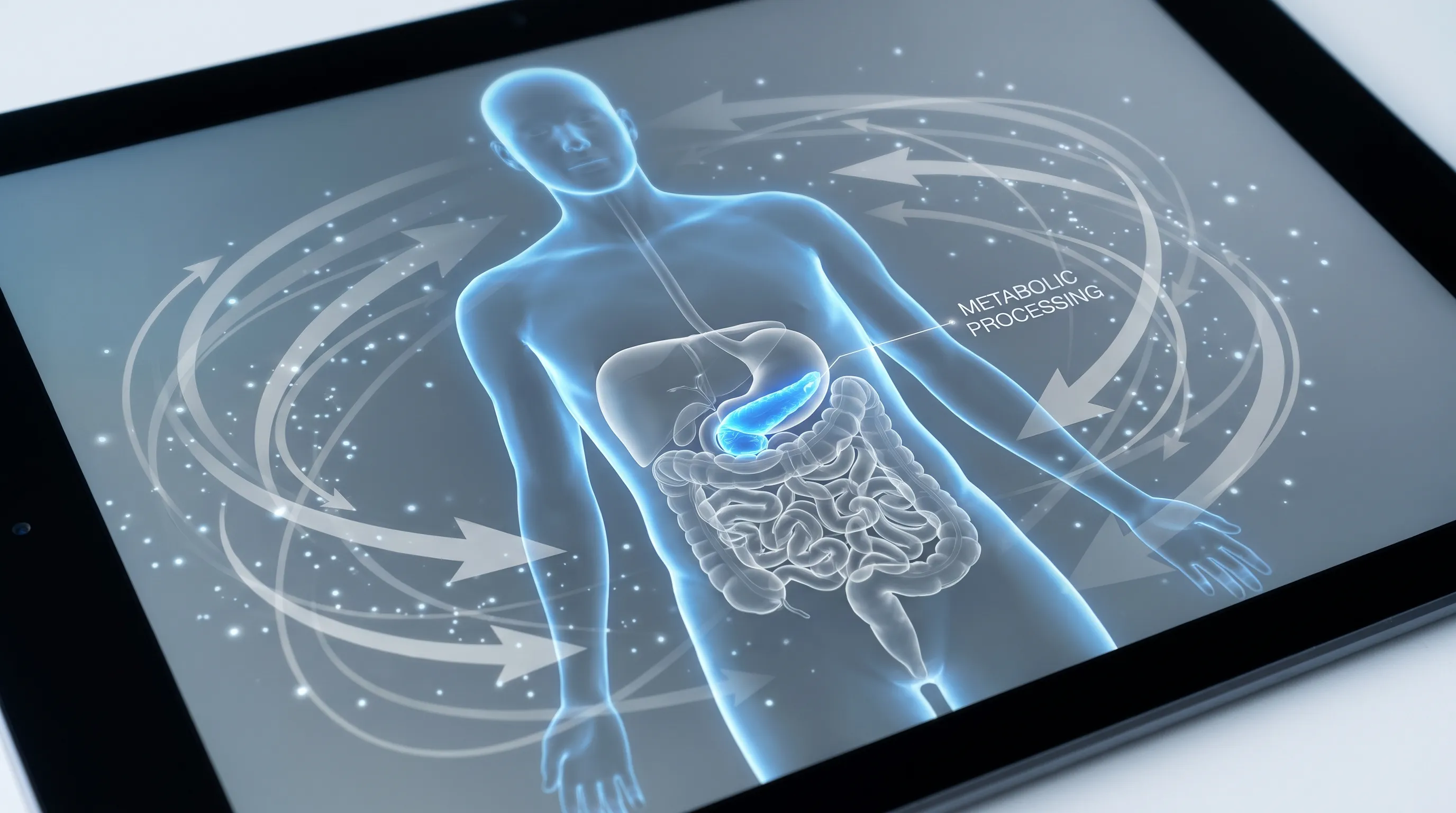
Understanding how the body processes tirzepatide provides further insight into why it stays in the system for an extended period. Unlike small-molecule drugs that are often filtered directly by the kidneys and excreted unchanged in urine, tirzepatide is a peptide—a chain of amino acids. Its metabolism resembles the way the body breaks down natural proteins.
Protein Degradation Pathways
Tirzepatide is not metabolized by the cytochrome P450 enzyme system in the liver, which is the primary pathway for many common pharmaceuticals. Instead, it undergoes general protein catabolism. This means that the body breaks the peptide down into its constituent amino acids and smaller peptides using ubiquitous enzymatic pathways. These resulting components are then either reused by the body to build other proteins or further metabolized and excreted (National Institutes of Health).
Because this process relies on widespread physiological mechanisms rather than a specific organ's filtration capacity, the clearance of tirzepatide is remarkably consistent across different populations. However, this also means that there is no simple "detox" method to accelerate its removal. You cannot flush it out with diuretics or special diets because the bottleneck is the rate of enzymatic breakdown, not renal filtration.
Role of the Kidneys and Liver
While the liver and kidneys are not the primary sites of metabolic breakdown in the traditional sense, they still play a role in the overall clearance of the drug's metabolites. Clinical trials have shown that patients with mild to moderate renal impairment (kidney disease) or hepatic impairment (liver disease) do not experience clinically significant changes in tirzepatide exposure. This suggests that the drug's elimination is robust and not heavily dependent on perfect organ function (Mayo Clinic).
However, in cases of severe renal impairment or end-stage renal disease, caution is advised. Although the drug itself is large and not easily filtered, the accumulation of metabolites or changes in overall protein metabolism could theoretically alter clearance rates. Similarly, while severe hepatic impairment has not been shown to drastically change tirzepatide levels, the liver's role in synthesizing albumin (which binds the drug) means that severe liver disease could potentially impact distribution and elimination. For most healthy individuals, however, the standard 5-day half-life holds true.
Factors Influencing Tirzepatide Clearance
While the average half-life is 5 days, individual variability exists. When patients wonder how long does tirzepatide stay in your system specifically for them, several physiological and lifestyle factors can subtly influence this timeline. It is important to note that these factors usually cause minor variations rather than drastic changes, but they are worth considering for a personalized understanding.
Body Mass Index (BMI) and Composition
Tirzepatide is widely used for weight management, and body composition can influence pharmacokinetics. Studies have indicated that body weight can affect the volume of distribution of the drug. Individuals with higher body mass may have a larger volume of distribution, which can sometimes lead to slightly lower peak concentrations but does not necessarily shorten the half-life. In fact, the dosing of tirzepatide is titrated upward over time partly to overcome the dilution effect in larger bodies and to achieve therapeutic efficacy. There is no strong evidence to suggest that higher BMI significantly accelerates or delays the total elimination time once the drug has reached steady state.
Age and Metabolic Rate
Age can influence drug metabolism generally. Older adults often have slower metabolic rates and reduced organ function. However, clinical data for tirzepatide includes a broad range of ages, and no significant dosage adjustments are recommended solely based on age. The half-life remains relatively stable across adult age groups. That said, elderly patients may be more sensitive to the side effects of the drug, such as gastrointestinal distress, which might persist as long as the drug is in the system.
Genetic Factors
Genetic variations in enzymes involved in protein degradation could theoretically affect how quickly an individual breaks down peptide medications. However, because tirzepatide is broken down by non-specific, ubiquitous pathways, single-gene polymorphisms are unlikely to cause major deviations in clearance time. This contrasts with drugs metabolized by specific CYP450 enzymes, where genetic testing can predict "fast" or "slow" metabolizers. For tirzepatide, such genetic testing is not currently relevant or available for predicting clearance.
Injection Site and Technique
Tirzepatide is administered via subcutaneous injection (under the skin), typically in the abdomen, thigh, or upper arm. While the injection site can affect the rate of absorption (how quickly the drug enters the bloodstream), it has minimal impact on the elimination half-life once the drug is in systemic circulation. Consistency in injection technique ensures stable blood levels, but changing sites will not help "flush" the drug out faster.
Practical Implications of Tirzepatide Retention
Knowing how long does tirzepatide stay in your system is not just academic; it has real-world applications for patient safety and treatment planning. Here are several scenarios where this knowledge is critical.
Managing Side Effects After Discontinuation
One of the most common reasons patients ask about elimination time is due to side effects. Nausea, vomiting, diarrhea, and constipation are frequent side effects of tirzepatide. If a patient experiences severe adverse reactions and stops the medication, they may wonder how long these symptoms will persist. Since the drug remains in the system for up to a month, side effects may not resolve immediately after the last dose. However, as the concentration of the drug drops by half every 5 days, the intensity of side effects should gradually diminish. Most patients report significant relief within 1 to 2 weeks, even though trace amounts remain.
Surgical Procedures and Anesthesia
Tirzepatide delays gastric emptying, meaning food stays in the stomach longer. This poses a risk during surgery requiring general anesthesia, as there is a higher risk of aspiration (vomiting into the lungs). Current guidelines from the American Society of Anesthesiologists suggest that patients taking GLP-1 receptor agonists like tirzepatide may need to hold their medication for a specific period before surgery (American Society of Anesthesiologists). While guidelines vary, knowing that the drug stays in your system for roughly 25 days helps surgeons and anesthesiologists plan appropriately. Some protocols recommend skipping the weekly dose prior to surgery, but in cases of daily use or high risk, a longer washout period might be considered.
Transitioning to Other Medications
If a patient decides to switch from tirzepatide to another weight loss medication or insulin therapy, the overlap of drugs in the system must be managed. Because tirzepatide lingers for nearly a month, starting a new medication with similar mechanisms (like semaglutide) too soon could lead to additive effects and increased side effects. Healthcare providers typically recommend a washout period of at least 2 to 4 weeks before initiating a new GLP-1 or GIP/GLP-1 agonist to ensure the previous drug has cleared sufficiently.
Comparing Tirzepatide to Other GLP-1 Agonists
To better contextualize the elimination timeline, it is helpful to compare tirzepatide with other popular medications in the same class, such as semaglutide (Ozempic, Wegovy) and liraglutide (Victoza). Understanding these differences can help patients manage expectations regarding how long does tirzepatide stay in your system relative to alternatives.
| Medication | Brand Names | Half-Life | Estimated Time to Clear System (5 Half-Lives) | Dosing Frequency |
|---|---|---|---|---|
| Tirzepatide | Mounjaro, Zepbound | ~5 Days | ~25-30 Days | Weekly |
| Semaglutide | Ozempic, Wegovy | ~1 Week (7 Days) | ~35 Days | Weekly |
| Liraglutide | Victoza, Saxenda | ~13 Hours | ~2.5-3 Days | Daily |
| Dulaglutide | Trulicity | ~5 Days | ~25-30 Days | Weekly |
As seen in the table, tirzepatide has a similar half-life to dulaglutide but a shorter half-life than semaglutide. Semaglutide, with a 7-day half-life, can stay in the system for up to 5 weeks or more. Liraglutide, being a daily injection, clears the system much faster, within a few days. This comparison highlights that tirzepatide occupies a middle ground: it offers the convenience of weekly dosing with a clearance timeline that is slightly faster than semaglutide but significantly slower than daily options. This distinction is vital for patients who may need to stop medication quickly due to pregnancy planning or surgical needs.
Myths and Misconceptions About Drug Clearance
In the age of social media, misinformation about how to "detox" from medications spreads rapidly. It is essential to address common myths regarding how long does tirzepatide stay in your system and how to influence it.
Myth 1: Drinking Gallons of Water Flushes It Out
Many believe that increasing fluid intake will accelerate the removal of any drug. As previously mentioned, tirzepatide is not primarily excreted by the kidneys in its intact form. Therefore, hyper-hydration will not speed up its breakdown. While staying hydrated is crucial for managing side effects like constipation or nausea, it will not change the 5-day half-life.
Myth 2: Exercise Burns Off the Drug Faster
Exercise increases metabolic rate, but it does not significantly enhance the enzymatic breakdown of peptide drugs. While exercise is highly recommended for patients using tirzepatide to maximize weight loss and improve insulin sensitivity, it will not shorten the time the drug stays in your system.
Myth 3: Detox Teas and Supplements Work
There is no scientific evidence that herbal teas, supplements, or "cleanses" can accelerate the metabolism of tirzepatide. In fact, some supplements may interact with the drug or irritate the gastrointestinal tract, worsening side effects. Patients should avoid unproven detox methods and rely on the body's natural elimination processes.

Frequently Asked Questions
How long does tirzepatide stay in your system after the last dose?
Tirzepatide has a half-life of approximately 5 days. It typically takes about 5 half-lives for a drug to be fully eliminated from the body. Therefore, tirzepatide stays in your system for roughly 25 to 30 days after your final injection. During this time, the concentration of the drug decreases exponentially, with negligible amounts remaining after one month.
Does drinking water help flush tirzepatide out of your system faster?
No, drinking excessive amounts of water will not significantly speed up the elimination of tirzepatide. The drug is primarily broken down by protein degradation pathways in the body, not filtered directly by the kidneys like some smaller molecules. Hydration is important for general health and managing side effects but does not alter the pharmacokinetic half-life.
Can you drink alcohol while tirzepatide is still in your system?
While there is no strict contraindication, caution is advised. Tirzepatide can delay gastric emptying, which may affect how alcohol is absorbed, potentially leading to unexpected intoxication levels or hypoglycemia. Additionally, both alcohol and tirzepatide can impact blood sugar levels. It is best to consult your healthcare provider regarding alcohol consumption during treatment (Centers for Disease Control and Prevention).
Will tirzepatide show up on a standard drug test?
No, tirzepatide is not a controlled substance and will not appear on standard employment or legal drug screenings. These tests typically look for opioids, amphetamines, THC, cocaine, and other illicit substances. They do not screen for prescription peptides used for diabetes or weight management unless specifically requested for forensic medical purposes, which is rare.
What factors influence how long tirzepatide stays in your body?
Several factors can influence elimination, including individual metabolic rate, liver and kidney function, age, body mass index (BMI), and genetic factors. However, because tirzepatide has a long and consistent half-life mediated by widespread protein degradation pathways, these variations usually result in only minor differences in the total clearance time for most patients. The 25-30 day estimate is a reliable guideline for the majority of users.
Is it safe to get pregnant while tirzepatide is in your system?
Due to the long half-life of tirzepatide, it is recommended to discontinue the medication at least 2 months (approximately 8 weeks) before planning a pregnancy. This ensures that the drug is completely cleared from the system and minimizes any potential risk to the fetus. Always consult with your obstetrician and endocrinologist for personalized preconception counseling.
Conclusion
Understanding how long does tirzepatide stay in your system is a fundamental aspect of responsible medication management. With a half-life of approximately 5 days, tirzepatide remains in the body for roughly 25 to 30 days after the last dose. This prolonged presence ensures consistent therapeutic effects for weight loss and type 2 diabetes management but also requires careful planning when discontinuing the drug, managing side effects, or undergoing medical procedures.
While individual factors such as age, body composition, and organ function can slightly influence clearance rates, the general timeline remains consistent for most patients. It is crucial to dispel myths about "flushing" the drug out with water or supplements, as the body eliminates tirzepatide through natural protein degradation pathways that cannot be significantly accelerated. Instead, patients should focus on open communication with their healthcare providers, especially when planning surgery, pregnancy, or transitions to other medications.
By arming yourself with this knowledge, you can navigate your treatment journey with confidence and safety. Remember that while the drug may leave your system in a month, the lifestyle changes and health improvements you achieve during treatment can have lasting benefits far beyond the pharmacokinetic timeline. Always prioritize professional medical advice over general information, ensuring that your health decisions are tailored to your unique physiological needs.
How we work
Researched and drafted with AI assistance, then reviewed by a human editor against the cited sources.
This article is general health information, not medical advice. Consult a qualified healthcare professional about your own situation.