Crackling in Ear Without Pain: Causes, Diagnosis, and Evidence-Based Relief

It starts subtly: a soft pop when you swallow, a faint rustling sound when you tilt your head, or a steady crackle when you chew. For millions of people, hearing crackling in ear no pain becomes a recurring daily experience. While it can be mildly distracting, this auditory phenomenon rarely signals a dangerous medical condition. In fact, it is often a normal physiological response tied to how your ears regulate pressure, clear microscopic fluid, or interact with nearby jaw joints. Understanding the underlying mechanics behind these sounds can transform anxiety into awareness and empower you to take safe, evidence-based steps toward relief. This comprehensive guide explores the anatomical, pathological, and lifestyle factors that contribute to painless ear crackling, outlines clinically supported management strategies, and clarifies when professional evaluation is truly necessary.
The Anatomy Behind Audible Ear Sensations
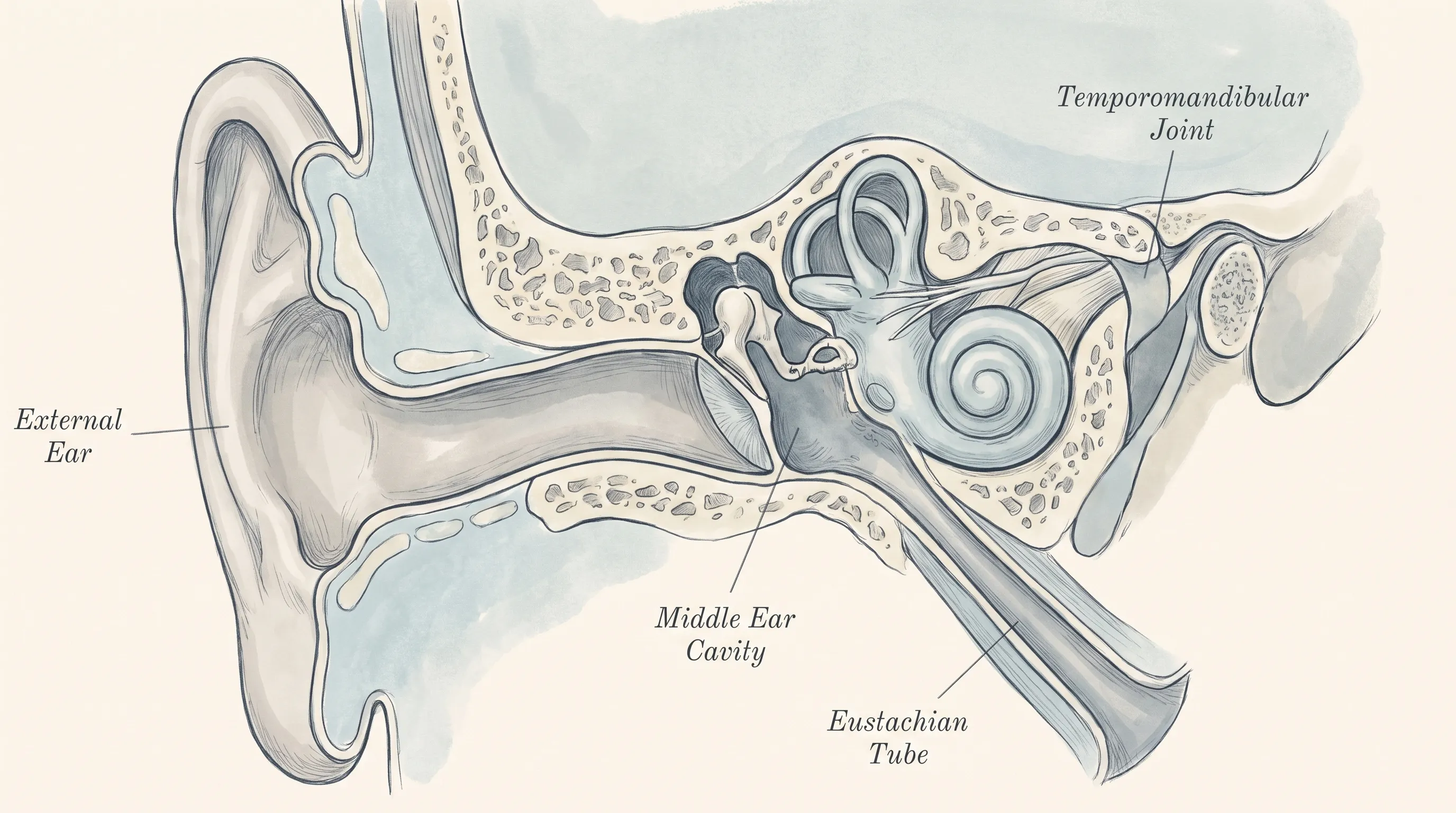
To fully grasp why your ears make these subtle noises, it helps to visualize the intricate structures involved. The human auditory system is divided into three primary compartments: the outer ear, middle ear, and inner ear. The NIH provides a detailed overview of ear anatomy and function. The outer ear consists of the visible pinna and the auditory canal, which channels sound waves toward the tympanic membrane, or eardrum. Behind this thin, translucent tissue lies the middle ear, an air-filled cavity containing three tiny bones known as the ossicles: the malleus, incus, and stapes. These bones transmit vibrations from the eardrum to the fluid-filled inner ear, which then converts them into electrical signals for the brain.
Free calculatorLab Values Reference ChartComplete reference chart for medical lab valuesOpen the calculatorConnecting the middle ear to the back of the throat is a narrow, collapsible passage called the Eustachian tube. Under normal conditions, this tube remains closed but opens briefly during swallowing, yawning, or chewing. Its primary functions are pressure equalization and mucous drainage. When ambient air pressure changes due to altitude shifts, weather fronts, or mild nasal congestion, the Eustachian tube must actively open to balance the pressure differential across the eardrum. The audible crackle you hear is simply the sound of trapped air rushing through a moist, narrow passage or the subtle click of the tube opening and closing.
Adjacent to the ear canal, separated only by a thin layer of bone and soft tissue, sits the temporomandibular joint (TMJ). Because of this close anatomical proximity, joint mechanics, muscle tension, or cartilage movement in the jaw can easily transmit vibrations that are perceived as internal ear sounds. Additionally, the tensor veli palatini muscle, which contracts to pull the Eustachian tube open, originates in the jaw region. Any tension or misalignment in this muscular chain can alter how smoothly air moves through the middle ear system, resulting in intermittent popping or crackling sensations.
Primary Causes of Crackling in Ear Without Pain
When evaluating persistent crackling in ear no pain, clinicians typically categorize the underlying triggers into mechanical, inflammatory, and neurological pathways. Most cases fall into benign, self-limiting categories that respond well to conservative interventions. However, distinguishing between normal physiological noise and early signs of dysfunction requires careful attention to accompanying symptoms and duration.
Eustachian Tube Dysfunction and Pressure Fluctuations
Eustachian tube dysfunction (ETD) is the most frequently identified cause of painless ear popping. The Cleveland Clinic explains how ETD disrupts normal pressure regulation. The tube can become temporarily obstructed due to mucosal swelling triggered by seasonal allergies, viral upper respiratory infections, or chronic sinus congestion. When inflammation narrows the lumen, air cannot flow freely between the nasopharynx and middle ear. This creates a subtle vacuum that pulls the eardrum inward. When the tube finally opens, either spontaneously or through swallowing, the sudden rush of equalizing air produces an audible crackle. Unlike acute otitis media, which involves infection and intense pain, benign ETD typically presents as isolated popping without systemic illness. Altitude changes during air travel or mountain driving can also provoke temporary ETD in otherwise healthy individuals.
Cerumen Impaction and Canal Debris
The external auditory canal naturally produces cerumen, a waxy substance that traps debris, maintains proper pH, and protects delicate skin from drying or infection. Normally, jaw movement and epithelial migration gradually transport old wax outward. The Mayo Clinic provides guidance on recognizing and safely managing earwax buildup. However, excessive production, improper cleaning attempts with cotton swabs, or naturally narrow canals can lead to cerumen accumulation. When hardened wax rests against the tympanic membrane, jaw motion or water exposure can cause microscopic shifts. These movements generate friction and create faint crackling or rustling sounds. While usually painless, significant impaction can dampen sound conduction, leading to mild, conductive hearing reduction rather than pain.
Temporomandibular Joint Mechanics and Bruxism
Because the TMJ capsule sits millimeters from the auditory canal, joint dysfunction frequently masquerades as ear pathology. Cartilage wear, disc displacement, or chronic teeth grinding (bruxism) can produce clicking, popping, or crackling that patients localize to the ear rather than the jaw. In early or mild stages, TMJ disorder rarely causes pain but often correlates with morning jaw stiffness, frequent headaches, or an uneven bite. NIH MedlinePlus details the connection between TMJ disorders and referred ear symptoms. The tensor tympani and tensor veli palatini muscles share innervation with jaw musculature, meaning excessive clenching can alter middle ear tension and amplify internal auditory feedback. Stress-related muscle hypertrophy often worsens these mechanical sounds over time.
Middle Ear Effusion and Serous Fluid Shifts
Otitis media with effusion, commonly referred to as glue ear or fluid ear, occurs when sterile fluid accumulates behind the eardrum following a resolved cold, allergic flare, or barotrauma. The CDC notes that middle ear fluid is a common, often painless complication of upper respiratory inflammation. Unlike infectious effusions, this fluid lacks pathogenic bacteria or white blood cells, which explains the absence of pain or fever. As head position changes, the viscous fluid moves across the tympanic membrane and middle ear space, producing bubbling, gurgling, or crackling noises. Children and adults with underlying allergic rhinitis are particularly susceptible. While typically self-resolving, persistent effusion can mildly muffle speech frequencies and create a sensation of underwater fullness.
Somatic Tinnitus and Neural Modulation
Tinnitus is frequently misunderstood as exclusively ringing or buzzing, but the National Institute on Deafness and Other Communication Disorders (NIDCD) confirms it frequently manifests as clicking, crackling, or pulsing sounds. Somatic tinnitus refers to auditory perceptions that can be modulated by head, neck, or jaw movements. Cervical spine misalignment, poor posture, or muscular trigger points in the sternocleidomastoid and masseter muscles can alter somatosensory input to the dorsal cochlear nucleus, effectively tricking the brain into interpreting normal joint or vascular sounds as internal ear noise. This form of tinnitus is subjective, non-damaging, and highly responsive to physical therapy and posture correction.
The Science of Pressure Equalization and Fluid Dynamics
Understanding why crackling occurs requires examining the physics of air pressure and fluid mechanics within a sealed biological cavity. The middle ear is essentially a pneumatic chamber maintained at ambient pressure under optimal conditions. According to Boyle's Law, as external pressure drops during ascent, trapped air expands; conversely, during descent, external pressure increases and compresses the air. The Eustachian tube acts as a one-way relief valve, preventing barotrauma by venting excess air or admitting fresh oxygen.
When the mucosal lining becomes edematous from allergic mediators like histamine or leukotrienes, the tubal ostium narrows significantly. Surface tension increases as moisture accumulates, creating a meniscus that resists opening. Each time you swallow, the tensor veli palatini muscle contracts, stretching the tubal walls. The audible pop represents the moment surface tension breaks and air rushes through a millimeter-wide passage. If mucus or transudate is present, the sound shifts from a crisp pop to a wet crackle. Repeated opening and closing without full clearance can create a cycle of micro-pressure differentials, leading to chronic popping without pain.
Fluid dynamics also play a role in middle ear effusion. The mucociliary escalator, a network of ciliated cells and goblet cells lining the tube and middle ear, normally pumps microscopic debris toward the nasopharynx. Allergic inflammation or viral damage temporarily paralyzes these cilia. Without active clearance, serum-like fluid pools behind the eardrum. Changes in head orientation cause this viscous layer to shift across the tympanic membrane, generating low-frequency crackling that aligns perfectly with gravitational movement rather than swallowing.
When to Seek Professional Medical Evaluation
While crackling in ear no pain is overwhelmingly benign, certain clinical red flags warrant prompt otolaryngological assessment. The World Health Organization emphasizes that persistent ear symptoms should be evaluated to prevent progressive hearing impairment. Persistent symptoms that exceed three weeks despite conservative self-care may indicate unresolved Eustachian tube dysfunction, chronic effusion, or early conductive hearing loss. The American Academy of Otolaryngology Head and Neck Surgery (AAO-HNS) recommends diagnostic tympanometry and pure-tone audiometry if popping persists alongside measurable hearing thresholds shifts.
Dizziness, vertigo, or sudden balance disturbances accompanying ear noises suggest vestibular involvement, potentially pointing to Meniere's disease, perilymphatic fistula, or vestibular migraine. Unilateral symptoms, especially in adults with no prior allergy or sinus history, should be evaluated to rule out structural abnormalities or asymmetric fluid accumulation. Drainage from the ear canal, whether clear, purulent, or bloody, immediately disqualifies the presentation as benign and requires infection or trauma workup.
Pulsatile tinnitus, characterized by crackling or whooshing synchronized precisely with the cardiac rhythm, demands vascular imaging. Unlike somatic or mechanical crackling, pulsatile sounds often originate from turbulent blood flow near the temporal bone, requiring MRI or MRV to exclude arteriovenous malformations, venous sinus stenosis, or carotid artery abnormalities. Following significant head trauma, barotrauma, or rapid altitude exposure, persistent popping with ear fullness warrants examination to rule out tympanic membrane perforation or ossicular chain disruption. Trusting your clinical intuition alongside evidence-based thresholds ensures early intervention when necessary.
Evidence-Based Management and Practical Self-Care Strategies
Conservative management forms the foundation of treating painless ear crackling. Most cases resolve with targeted lifestyle modifications, mechanical autoinflation techniques, and mucosal inflammation reduction. Implementing these strategies systematically can significantly reduce symptom frequency and improve overall ear comfort.
Autoinflation Techniques and Pressure Relief
Natural autoinflation harnesses your own musculature to safely open the Eustachian tube. The simplest method involves frequent, intentional swallowing during altitude changes or nasal congestion episodes. The Mayo Clinic outlines safe ear-popping techniques for pressure equalization. Chewing sugar-free gum stimulates repetitive jaw movement and tensor veli palatini activation, promoting consistent tube cycling. The Toynbee maneuver offers an alternative approach: swallow firmly while pinching your nostrils closed. This creates negative nasopharyngeal pressure that gently draws the tube open without forceful blowing. The Valsalva maneuver remains widely used but requires careful execution. Gently exhale against closed nostrils until a soft pop occurs, then immediately stop. Avoid excessive pressure, which can push nasopharyngeal bacteria into the middle ear or risk tympanic membrane trauma. Commercial autoinflation devices like the Otovent provide controlled, measurable balloon inflation that standardizes pressure delivery, demonstrating Level 1 clinical evidence for both pediatric and adult ETD.
Nasal Care and Targeted Anti-Inflammatory Therapy
Since mucosal edema is the primary driver of obstructive Eustachian tube function, nasal cavity management yields direct middle ear benefits. Daily isotonic saline irrigation using a squeeze bottle or mesh nebulizer physically removes allergens, thicken mucus, and improves ciliary beat frequency. The Cleveland Clinic recommends saline irrigation as a foundational therapy for nasal and eustachian tube health. Following irrigation, over-the-counter intranasal corticosteroids such as fluticasone or mometasone reduce lymphoid tissue hypertrophy around the tubal ostium. Consistency matters; clinical trials demonstrate maximum efficacy after seven to fourteen days of continuous use. Short-term oral or topical decongestants containing pseudoephedrine or oxymetazoline provide rapid relief during acute viral colds but should never exceed three to five days to prevent rebound congestion and rhinitis medicamentosa. Patients with hypertension, glaucoma, or prostate enlargement must consult a physician before using systemic decongestants.
TMJ Management and Postural Optimization
When jaw mechanics drive auditory crackling, addressing musculoskeletal tension becomes paramount. Soft-food diets during symptomatic periods reduce masticatory strain and minimize joint noise. Night guards or occlusal splints prevent bruxism-induced muscle hypertrophy and stabilize the TMJ disc. Physical therapy focusing on cervical spine alignment, suboccipital release, and masseter stretching significantly reduces somatic tinnitus intensity. The National Institute of Arthritis and Musculoskeletal and Skin Diseases (NIAMS) highlights how posture correction allevates neck and jaw tension. Ergonomic workstation adjustments prevent forward head posture, which chronically tensions the sternocleidomastoid and digastric muscles connected to the Eustachian tube apparatus. Stress reduction protocols including diaphragmatic breathing, progressive muscle relaxation, and mindfulness meditation lower sympathetic nervous system tone, indirectly reducing jaw clenching and middle ear muscle spasms.
Safe Earwax Protocols and Clinical Interventions
Attempting home extraction with cotton swabs, hairpins, or candle wax dramatically increases impaction risk by packing cerumen deeper against the tympanic membrane. Instead, maintain canal health with occasional mineral oil drops or carbamide peroxide solutions that soften wax for natural migration. Mayo Clinic advises against inserting objects into the ear canal and recommends professional evaluation for persistent blockage. If fullness, mild conductive hearing loss, or crackling persists, professional microsuction or irrigation by an audiologist or ENT specialist ensures safe, complete removal under direct visualization. Refractory Eustachian tube dysfunction unresponsive to six months of conservative therapy may qualify for balloon Eustachian tuboplasty, a minimally invasive procedure that dilates the tubal cartilage using a temporary balloon catheter. Recent systematic reviews in Otology & Neurotology confirm its high success rate for chronic pressure symptoms while preserving natural mucosal function.

Comparison of Common Causes, Symptoms, and Management
Understanding the distinct presentation of each condition helps patients and clinicians tailor appropriate interventions. The table below summarizes key differential characteristics for painless auditory crackling.
| Underlying Cause | Primary Mechanism | Typical Triggers | Associated Symptoms | First-Line Management |
|---|---|---|---|---|
| Eustachian Tube Dysfunction | Mucosal swelling restricts air flow | Allergies, colds, altitude changes | Fullness, frequent swallowing, mild hearing muffling | Saline irrigation, nasal steroids, chewing gum, Otovent |
| Cerumen Impaction | Hardened wax vibrates against eardrum | Swab use, narrow canals, aging skin | Mild conductive hearing loss, itching after showering | Professional microsuction, carbamide peroxide drops |
| TMJ Disorder | Joint cartilage displacement or bruxism | Stress, teeth grinding, poor posture | Jaw stiffness, morning headaches, bite misalignment | Occlusal splint, physical therapy, stress management |
| Middle Ear Effusion | Sterile fluid shifts behind tympanic membrane | Post-viral inflammation, allergic rhinitis | Underwater sensation, popping with head tilt | Watchful waiting, antihistamines, nasal decongestants |
| Somatic Tinnitus | Somatosensory input alters auditory processing | Neck tension, poor posture, anxiety | Sound modulated by movement, neck tightness | Cervical therapy, posture correction, CBT for tinnitus |
Frequently Asked Questions
Is crackling in ear no pain a normal physiological response?
Yes, intermittent crackling is a normal byproduct of Eustachian tube cycling and pressure equalization. Your middle ear constantly adjusts to atmospheric changes, swallowing, and jaw movement. The moist mucosal surfaces and microscopic cartilage shifts naturally produce soft audible feedback that the brain typically filters out. Increased awareness often occurs during quiet environments, nasal congestion, or altitude transitions, but it does not indicate tissue damage or infection.
Can allergies cause painless ear popping without congestion?
Absolutely. Allergic rhinitis triggers localized histamine release that causes mucosal swelling around the Eustachian tube ostium, even without overt nasal dripping or obvious stuffiness. This subtle edema narrows the tubal lumen enough to delay pressure equalization, resulting in delayed pops or crackles when the tube finally opens. Antihistamines and daily intranasal corticosteroids directly target this inflammatory pathway and significantly reduce symptom frequency within two to three weeks.
How long should I wait before seeing a doctor?
Clinical guidelines recommend conservative self-care for up to three weeks. If symptoms resolve spontaneously with swallowing techniques, nasal hygiene, and time, medical intervention is unnecessary. However, if popping persists beyond twenty-one days, worsens in intensity, or begins affecting sleep, concentration, or hearing clarity, schedule an appointment with a primary care physician or otolaryngologist. Early evaluation prevents chronic middle ear pressure complications and rules out structural abnormalities.
Does crackling indicate hearing damage or permanent tinnitus?
No. Benign crackling is mechanical or fluid-related and does not involve cochlear hair cell damage. It is fundamentally different from sensorineural tinnitus caused by noise exposure, aging, or ototoxic medications. Once the underlying trigger resolves, whether it is cleared wax, reduced inflammation, or equalized pressure, the crackling typically disappears completely. If you develop continuous ringing, buzzing, or roaring unrelated to movement, consult an audiologist for comprehensive hearing evaluation.
What daily habits worsen ear popping and how can I prevent it?
Frequent cotton swab use, chronic dehydration, excessive caffeine intake, and poor sleep posture all exacerbate symptoms. Swabs push wax deeper; dehydration thickens middle ear mucous; caffeine increases muscle tension and vascular sensitivity; sleeping on one side creates asymmetric pressure. Preventive strategies include maintaining adequate hydration, using a supportive cervical pillow, avoiding ear canal insertion of any objects, practicing nasal breathing instead of mouth breathing, and managing seasonal allergies proactively with nasal sprays before peak allergen exposure.
Conclusion
Experiencing crackling in ear no pain is an incredibly common, usually harmless phenomenon rooted in the delicate mechanics of pressure equalization, fluid dynamics, and adjacent joint movement. The Eustachian tube serves as a remarkable physiological regulator, and the sounds it produces during routine opening, closing, or mucosal clearance are simply audible markers of normal function. While earwax accumulation, mild middle ear fluid, and TMJ tension can amplify these sensations, evidence-based conservative management reliably restores comfort. Implementing gentle autoinflation techniques, maintaining nasal mucosal health with saline and targeted anti-inflammatory therapy, and addressing musculoskeletal tension provide sustainable relief for the majority of patients.
Remaining vigilant for red flags such as persistent hearing loss, vertigo, pulsatile rhythms, or symptoms exceeding three weeks ensures timely professional intervention when necessary. By understanding the anatomical origins of auditory crackling and applying clinically validated self-care protocols, you can navigate these symptoms with confidence rather than concern. Ear health thrives on gentle maintenance, proactive allergy management, and informed awareness. When in doubt, a consultation with an ENT specialist provides definitive reassurance and personalized guidance, ensuring your auditory system continues functioning smoothly for years to come.
How we work
Researched and drafted with AI assistance, then reviewed by a human editor against the cited sources.
This article is general health information, not medical advice. Consult a qualified healthcare professional about your own situation.