When Can I Stop Worrying About Dry Socket After Tooth Extraction

Recovering from a tooth extraction is one of the most routine procedures in modern dentistry, yet the days following surgery often trigger significant anxiety for patients. The most prevalent and deeply feared complication is alveolar osteitis, widely known in clinical and lay settings as dry socket. Understanding the biological healing cascade, recognizing critical recovery milestones, and knowing precisely when the risk window closes can transform your post-operative period from one of apprehension into a structured, confident recovery process. While localized discomfort and mild swelling are entirely normal aspects of tissue repair, distinguishing between routine surgical trauma and a genuine complication requires both clinical awareness and consistent self-monitoring. By navigating the science of wound healing and adhering to evidence-based care protocols, you will clearly understand when can i stop worrying about dry socket and how to actively protect your recovery. You will discover how the protective fibrin network stabilizes, which physiological and behavioral factors influence clot retention, and how to implement proven daily routines that significantly reduce your vulnerability. Let us explore the pathophysiology of oral wound closure, the exact clinical signs to monitor, and the actionable guidelines that ensure a smooth, complication-free journey back to optimal oral health.
Understanding Dry Socket: What Actually Happens in Your Mouth?
Dry socket, clinically termed alveolar osteitis, occurs when the protective blood clot that forms in the tooth socket either dislodges prematurely or fails to develop adequately following an extraction. This clot serves as a critical biological scaffold. It shields the underlying alveolar bone, protects exposed nerve endings from temperature fluctuations, saliva, and oral bacteria, and initiates the complex cascade of tissue regeneration. When this matrix breaks down or is lost, the socket becomes an open wound, leaving raw bone and nerve tissues directly exposed to the harsh oral environment.
Free calculatorWater Intake CalculatorCalculate daily water needsOpen the calculatorThe Role of the Blood Clot in Healing
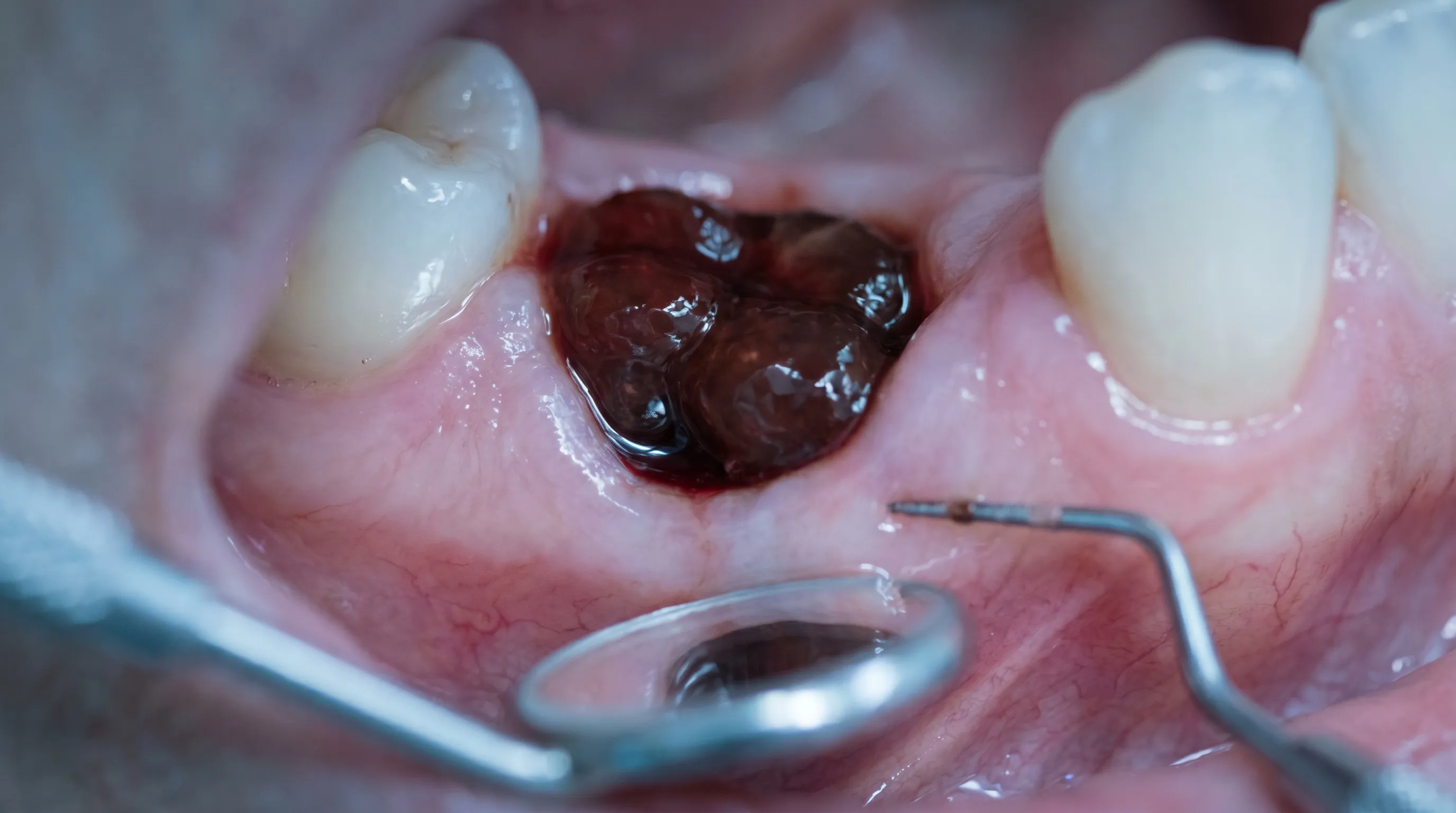
The formation of a stable blood clot begins immediately after the tooth is removed. Platelets aggregate at the extraction site, triggering a coagulation cascade that converts fibrinogen into fibrin strands. These strands weave together to form a robust, gelatinous matrix that fills the void. Within the first 24 to 48 hours, inflammatory cells migrate into the clot, clearing debris and initiating angiogenesis, or the formation of new blood vessels. By day four, fibroblasts infiltrate the clot, laying down collagen and transitioning it into granulation tissue. If this sequence is interrupted, the underlying bone becomes necrotic or inflamed, triggering the characteristic severe pain associated with the condition. Maintaining clot integrity during the initial inflammatory phase is absolutely paramount to preventing complications.
Why Dry Socket Develops
The exact etiology of alveolar osteitis remains multifactorial, but current dental research points to fibrinolysis as the primary mechanism. Certain bacteria produce enzymes that break down fibrin, while systemic and local factors can accelerate this process. Excessive physical trauma during the extraction, such as difficult surgical maneuvers or bone removal, generates high levels of tissue activators that promote clot dissolution. Additionally, poor oral hygiene, pre-existing periodontal disease, and localized infections create an unfavorable biochemical environment (Cleveland Clinic). Behavioral factors like smoking, using suction devices, or vigorous rinsing introduce mechanical stress that physically expels the clot. Hormonal fluctuations, particularly elevated estrogen levels from oral contraceptives or menstrual cycles, have also been clinically linked to increased fibrinolytic activity, making some patients inherently more susceptible. Understanding these mechanisms clarifies why adherence to post-operative guidelines is not optional, but essential.
The Typical Healing Timeline After a Tooth Extraction
Dental wound healing follows a predictable, staged biological progression. While individual variation exists based on age, systemic health, and extraction complexity, the fundamental timeline remains remarkably consistent across populations. Tracking your recovery against established clinical benchmarks provides an objective framework for monitoring progress and assessing risk levels.
Days 1-3: The Critical Window
The first 72 hours represent the most vulnerable period for clot stabilization. Immediately post-surgery, the extraction site is actively bleeding and oozing serosanguinous fluid. Applying firm, continuous pressure with sterile gauze facilitates initial clot formation. Swelling and localized throbbing typically peak around 48 hours as the inflammatory response reaches its maximum. During this window, the clot is extremely fragile. Capillary networks are just beginning to form, and the fibrin matrix has not yet been reinforced by fibroblast activity. Any disruption during these first three days almost invariably results in a compromised socket. Patients must prioritize rest, avoid all suction activities, and strictly adhere to soft dietary protocols. Ice application helps manage edema without interfering with hemostasis. This is the phase where vigilance directly correlates with successful healing.
Days 4-7: Transition and Stabilization
As you cross into the end of the first week, the wound undergoes significant structural transformation. The initial inflammatory phase subsides, transitioning into the proliferative stage. Granulation tissue, rich in new capillaries and collagen-producing fibroblasts, gradually replaces the temporary fibrin clot. The visible redness of the socket softens to a pinkish or whitish-yellow hue, which is entirely normal and represents healthy tissue maturation rather than pus formation. Pain levels should steadily decline and become easily manageable with standard analgesics. If you are still questioning when can i stop worrying about dry socket at day four or five, clinical consensus advises maintaining your precautions. While the immediate threat diminishes, the clot is not yet fully integrated with the surrounding gingiva, and the underlying bone remains partially exposed until complete epithelial coverage occurs.
Days 8-14: Complete Epithelialization
By the end of the second week, the extraction site enters the maturation and remodeling phase. Epithelial cells migrate from the gingival margins across the surface of the granulation tissue, effectively sealing the wound. The socket begins to contract and fill in with connective tissue, while underlying bone initiates the slow process of remodeling and density restoration. At this stage, the biological barrier against external contaminants is firmly re-established. Most patients experience minimal discomfort, capable of transitioning back to a normal diet without restriction. The structural integrity of the socket is robust enough to withstand normal chewing forces and routine oral hygiene practices. This milestone marks the definitive closure of the high-risk period.
When Can I Stop Worrying About Dry Socket? The Key Milestones
Anxiety surrounding post-extraction complications is incredibly common, but it must be balanced against physiological reality. The healing cascade is not instantaneous, but it is highly progressive. Identifying the precise checkpoints where the probability of alveolar osteitis plummets allows you to adjust your care routine and mental outlook accordingly. Understanding when can i stop worrying about dry socket requires examining three distinct clinical milestones.
The 3-Day Mark
Reaching day three without significant escalation in pain or visible clot loss is a strongly positive indicator. At this point, the initial inflammatory surge has peaked and should be trending downward. The fibrin network has begun integrating with the socket walls. However, day three is still within the danger zone. Many cases of dry socket present precisely between 72 and 96 hours as the initial protective dressing or residual fibrin dissolves prematurely. While you should feel cautiously optimistic, strict adherence to no-suction, no-smoking, and gentle care protocols remains absolutely necessary. Do not resume normal oral hygiene aggressively just yet. The clot is stabilizing, but it is not yet anchored.
The 7-Day Threshold
The seventh day is widely regarded by oral surgeons and dental researchers as the primary threshold for dry socket risk resolution. Studies indicate that over 95 percent of alveolar osteitis cases manifest within the first five to seven days post-extraction (Mayo Clinic). By day seven, granulation tissue has typically replaced the initial clot, and epithelial migration is well underway. The wound has transitioned from an open, highly vulnerable cavity to a protected, biologically active site. Pain should be mild or entirely absent. Swelling should have completely resolved. If you have reached this point without complications, you can safely conclude that the most critical phase has passed. This is the moment when many patients realize when can i stop worrying about dry socket and begin gradually reintroducing regular activities.
Beyond 10 Days: When the Risk is Effectively Zero
While the seventh day marks the statistical end of the high-incidence window, complete biological closure takes slightly longer. By day ten to fourteen, the extraction site is fully epithelialized. The gingival margins have fused, and the socket is no longer a direct conduit to the underlying alveolar bone. Even if minor tissue irritation occurs from chewing or brushing, the body has sufficient regenerative capacity to handle it without progressing to alveolar osteitis. At this stage, the risk drops to near zero. Patients can confidently return to all normal routines, including strenuous exercise, complex meals, and standard dental hygiene, knowing their recovery is on an irreversible upward trajectory. The lingering question of when can i stop worrying about dry socket is definitively answered at this milestone.
Recognizing the Symptoms of Dry Socket vs Normal Healing
Accurate symptom differentiation is crucial for timely intervention. Misinterpreting routine post-operative inflammation as a severe complication can lead to unnecessary panic, while dismissing genuine warning signs can delay critical professional treatment. Understanding the distinct clinical presentations empowers you to make informed decisions about when to contact your dental provider.
Pain Patterns That Signal Trouble
Normal extraction pain follows a predictable arc: it intensifies gradually after the local anesthetic wears off, peaks within 48 hours, and steadily diminishes thereafter. It responds well to nonsteroidal anti-inflammatory drugs (NSAIDs) like ibuprofen. Dry socket pain, conversely, often begins as a sudden, severe throbbing that radiates far beyond the immediate extraction site. Patients frequently report pain shooting into the ipsilateral ear, temple, eye, or lower jawline. The pain typically worsens at night and becomes unresponsive to standard over-the-counter medications. It may be accompanied by a sensation of exposed nerve endings or sharp, lancinating sensations when exposed to air or temperature changes.
Visual and Sensory Cues
A healthy healing socket gradually transitions from a dark red clot to a pink, granular surface covered by pale epithelial tissue. There may be a small amount of clear or slightly yellowish exudate, which is normal serous fluid. In contrast, a dry socket often presents with a partially or completely empty-looking cavity. You may see exposed, grayish-white bone at the base of the wound. A distinctly foul odor or unpleasant taste in the mouth is highly characteristic, resulting from food debris accumulation and bacterial colonization of the unprotected bone. Halitosis that persists despite gentle rinsing is a major clinical indicator. Additionally, localized lymphadenopathy or mild fever may accompany an active dry socket case, signaling a heightened inflammatory or secondary infectious response.
Normal Discomfort vs Complication Warning Signs
To clarify the distinction further, consider this comparative breakdown:
| Feature | Normal Healing Progression | Dry Socket (Alveolar Osteitis) |
|---|---|---|
| Pain Onset | Peaks at 24-48 hours, gradually improves | Often sudden onset or worsening at days 3-5 |
| Pain Radiation | Localized to extraction site | Radiates to ear, temple, neck, or jawline |
| Medication Response | Controlled with standard NSAIDs or acetaminophen | Poorly responsive to standard analgesics |
| Socket Appearance | Stable clot, pink granulation tissue | Partially empty socket, visible grayish bone |
| Odor/Taste | Mild, metallic, or absent | Foul, putrid, or noticeably unpleasant |
| Healing Timeline | Steady improvement daily | Stagnant or regressing condition |
Understanding these parameters helps you objectively assess your status. If your symptoms align with the left column, your recovery is proceeding normally. If you notice a shift toward the right column, prompt professional evaluation is necessary.
Risk Factors That Prolong Vulnerability
Certain physiological conditions, lifestyle habits, and procedural variables can extend the window during which the extraction site remains vulnerable to complications. Identifying your personal risk profile allows you to implement targeted preventive measures and adjust your expectations for when can i stop worrying about dry socket.
Smoking and Tobacco Use
Tobacco consumption is the single most significant modifiable risk factor for alveolar osteitis. Nicotine induces potent peripheral vasoconstriction, severely limiting blood flow to the surgical site. This ischemic environment impairs fibroblast function, delays collagen synthesis, and starves the healing tissue of oxygen and essential nutrients. Furthermore, the mechanical act of inhaling creates substantial negative intraoral pressure, which can literally vacuum the fragile clot from the socket. Studies consistently show that smokers face a three- to four-fold increased incidence of dry socket compared to non-smokers. Even vaping or smokeless tobacco products introduce similar chemical irritants and pressure dynamics. Abstaining completely for at least 72 hours post-surgery, though longer is highly recommended, dramatically alters the healing trajectory.
Oral Contraceptives and Hormonal Influences
Women who use estrogen-containing oral contraceptives exhibit a notably higher susceptibility to dry socket, with some studies reporting incidence rates approaching 20 percent during specific menstrual phases. Estrogen increases fibrinolytic enzyme production, accelerating the natural breakdown of the blood clot. The risk is particularly elevated when extractions are scheduled during the luteal phase or the hormone-free interval of the pill cycle. While discontinuation is rarely advised for short-term procedures, patients on high-dose estrogen formulations should inform their oral surgeon beforehand. The dental provider may implement enhanced preventive protocols, such as chlorhexidine irrigation or prophylactic medicated packing, to counteract the hormonal influence.
Traumatic Extractions and Medical Conditions
The complexity of the surgical procedure directly correlates with tissue trauma. Impacted mandibular wisdom teeth requiring flap elevation, bone sectioning, or prolonged operative time experience significantly higher rates of post-operative complications. The extensive tissue manipulation releases endogenous tissue plasminogen activators that promote clot breakdown. Additionally, underlying systemic conditions such as poorly controlled diabetes mellitus, immunosuppressive states, or chronic periodontal disease impair the body's natural regenerative capacity. Patients with these conditions may experience delayed epithelialization and prolonged vulnerability. Recognizing these factors ensures you maintain strict precautions for a longer duration and understand why your timeline may differ from the standard recovery curve.
Proven Strategies to Prevent Dry Socket and Speed Recovery
Prevention remains the most effective approach to managing post-extraction complications. Implementing a structured, evidence-based aftercare routine significantly enhances clot retention, minimizes inflammatory response, and accelerates the biological healing cascade. Consistency in these practices directly determines how quickly you reach the milestone of when can i stop worrying about dry socket.
Immediate Post-Extraction Care
The first 24 hours set the foundation for your entire recovery. Apply firm, steady pressure to the gauze packs provided by your dentist, replacing them only when fully saturated with blood. Avoid checking the site frequently, as unnecessary disturbance disrupts initial hemostasis. Keep your head elevated above heart level, even during sleep, to reduce venous pressure and minimize post-operative bleeding and edema. Apply cold compresses to the external cheek in 20-minute intervals during the first day to constrict superficial capillaries and limit swelling. Avoid hot foods, spicy seasonings, and hard, crunchy items that require aggressive mastication near the surgical site. Rest and hydration are your primary allies during this critical phase.
Dietary Adjustments and Hydration
Nutrition plays a pivotal role in tissue regeneration. Focus on soft, protein-rich, and vitamin-dense foods that require minimal chewing. Lukewarm broths, smoothies, mashed potatoes, scrambled eggs, and well-cooked grains provide essential amino acids, zinc, and vitamin C necessary for collagen synthesis and immune function. Crucially, consume all liquids from a cup or spoon, never from a straw or bottle with a narrow opening. The suction force created can easily dislodge the forming clot. Maintain adequate hydration to support mucosal moisture and systemic detoxification, but avoid extremely hot beverages that can dissolve fibrin strands. Limit alcohol consumption, as it interferes with medication metabolism and delays cellular repair processes.
Oral Hygiene Protocols
Maintaining oral cleanliness without traumatizing the socket requires precise technique. Do not rinse your mouth for the first 24 hours. After this period, begin gentle rinsing with warm saltwater (one-half teaspoon of salt in eight ounces of water) after meals and before bed. Tilt your head to allow the solution to passively flow over the site, then let it droop out into the sink without forceful spitting. Continue brushing your teeth, but carefully avoid the extraction site for the first three days. Use a soft-bristled brush and mild toothpaste. If prescribed, incorporate chlorhexidine gluconate 0.12 percent rinse exactly as directed by your provider. These practices control bacterial proliferation, prevent food impaction, and maintain a clean healing environment.
Medical Interventions for Dry Socket
Despite rigorous preventive efforts, dry socket occasionally occurs. Fortunately, it is a highly treatable condition with well-established clinical protocols. Prompt professional intervention not only alleviates severe pain but also actively restarts the delayed healing process, ensuring the timeline returns to normal.
Professional Dressing and Medicated Packing
The cornerstone of dry socket treatment involves debridement and medicated packing. Your dentist or oral surgeon will gently irrigate the socket with sterile saline or a dilute chlorhexidine solution to remove necrotic debris and food particles. A specialized dressing, often containing eugenol (a potent analgesic and antiseptic derived from clove oil), iodoform gauze, or zinc oxide, is carefully placed into the cavity. This packing physically blocks nerve exposure, neutralizes foul odors, creates a barrier against oral contaminants, and delivers localized pain relief. The dressing is typically left in place for 3 to 7 days before being gently removed or dissolving naturally. Multiple changes may be required if healing remains sluggish.
Pain Management and Adjunct Therapies
Pain control during active dry socket management requires a strategic approach. Because the bone is exposed, localized anesthetics and systemic analgesics are combined. Your provider may prescribe short-term opioid or high-dose NSAID therapy to manage acute inflammatory pain. Topical benzocaine gels can offer temporary, targeted relief but must be used sparingly to avoid tissue toxicity. In cases where secondary bacterial infection is suspected, a targeted course of antibiotics may be initiated. Adjunctive therapies include photobiomodulation (low-level laser therapy), which has shown promising results in accelerating fibroblast proliferation and reducing pain intensity. These interventions transform an intensely painful experience into a manageable recovery phase.
Psychological Aspects and Anxiety Management
Recovering from oral surgery involves both physical and mental components. The anticipation of pain and the uncertainty of healing can trigger significant stress, which paradoxically elevates cortisol levels and can subtly impair immune function and tissue repair. Addressing the psychological dimension is just as important as following physical care instructions.
Tracking Progress and Normalizing Discomfort
Keep a simple daily log of your symptoms, noting pain levels on a 1-10 scale, swelling reduction, and medication usage. Objectively documenting the gradual improvement helps counteract anxiety spikes. Recognize that minor aches, occasional stiffness, and slight variations in healing appearance are normal physiological responses. Avoid constantly inspecting the socket in the mirror, as excessive scrutiny can heighten perception of minor irregularities and trigger stress responses that hinder recovery. Trust the biological process.
When to Seek Reassurance from Your Provider
You should not hesitate to contact your dental office if you experience uncontrolled bleeding, escalating pain beyond standard expectations, difficulty swallowing or breathing, or a fever exceeding 100.4°F. These providers are experienced in post-operative management and will gladly assess your site to confirm normal healing or intervene appropriately. Knowing that professional support is readily available provides immense psychological relief and helps you understand exactly when can i stop worrying about dry socket with clinical certainty rather than guesswork.
Frequently Asked Questions
What is the exact timeframe when I can safely assume I no longer have dry socket risk?
Clinical guidelines and oral surgery research consistently indicate that the highest risk window for dry socket closes after day 7 to day 10 post-extraction. By the end of the second week, the extraction site has typically formed granulation tissue and a stable epithelial layer, effectively eliminating the likelihood of alveolar osteitis developing.
Does smoking delay when I can stop worrying about dry socket?
Yes, tobacco use significantly prolongs the vulnerable healing period. Nicotine causes vasoconstriction, reducing oxygen and nutrient delivery to the wound site, while the physical act of inhaling creates negative intraoral pressure that can dislodge the protective clot. Smokers are advised to abstain for at least 72 hours, though full cessation until complete healing drastically reduces complication risk.
How do I distinguish normal post-extraction pain from dry socket pain?
Normal extraction pain typically peaks within 48 hours and gradually improves with over-the-counter analgesics. Dry socket pain, conversely, usually begins or suddenly worsens between days 3 and 5, often radiating to the ear, temple, or neck. It is frequently unresponsive to standard pain medications and may be accompanied by a foul odor, visible bone in the socket, and localized tenderness.
Can I use mouthwash during the first week of healing?
Vigorous rinsing or using alcohol-based commercial mouthwashes within the first 24 hours is strongly discouraged, as it can disrupt the fragile blood clot. After the first day, a gentle warm saltwater rinse after meals helps maintain oral hygiene without causing trauma. Chlorhexidine gluconate rinses may be prescribed by your dentist to reduce bacterial load and lower dry socket incidence.
Is dry socket more common in certain teeth or extraction types?
Yes, mandibular third molars (lower wisdom teeth) exhibit the highest incidence rates due to denser bone structure, reduced blood supply in the posterior mandible, and the technical complexity of surgical extraction. Surgical extractions requiring bone removal or flap creation also carry a slightly higher risk compared to simple, non-traumatic tooth removal.

Key Takeaways
Navigating the recovery period after a tooth extraction requires patience, vigilance, and adherence to evidence-based care protocols. The most critical window for dry socket formation spans the first three to seven days, with risk effectively dropping to negligible levels by the end of the second week. Understanding the biological healing cascade, recognizing the distinct warning signs of alveolar osteitis, and avoiding high-risk behaviors like smoking or using straws dramatically improve your outcomes. Proactive pain management, gentle hygiene practices, and strategic nutritional support create the optimal environment for rapid tissue regeneration. By following these structured guidelines and trusting the natural regenerative capacity of oral mucosa, you will confidently reach the milestone of knowing when can i stop worrying about dry socket and successfully restore your dental health. Always consult your oral surgeon or general dentist if symptoms deviate from the expected trajectory, ensuring your recovery remains safe, monitored, and complication-free.
How we work
Researched and drafted with AI assistance, then reviewed by a human editor against the cited sources.
This article is general health information, not medical advice. Consult a qualified healthcare professional about your own situation.