What Does Wisdom Teeth Pain Feel Like? A Complete Guide

When you first notice an unusual ache deep in the back of your mouth, it is tempting to brush it off as temporary sensitivity or the lingering result of a tough chewing session. However, if you are asking what does wisdom teeth pain feel like, you are likely navigating a complex physiological process that demands careful attention. Unlike routine dental discomfort, wisdom tooth pain is deeply rooted in evolutionary anatomy, modern jaw development patterns, and localized inflammatory cascades. Understanding the precise characteristics of this pain can transform uncertainty into actionable knowledge. Many patients struggle to distinguish between normal eruption sensations and early signs of pathological impaction, often leading to delayed care or unnecessary anxiety. By exploring the exact neurological and structural mechanisms behind wisdom tooth discomfort, recognizing the subtle warning signals, and implementing clinically proven relief strategies, you can confidently manage your oral health journey. This guide will walk you through every dimension of wisdom tooth pain, from its initial presentation to long-term management, ensuring you are equipped with evidence-based information tailored to real-world dental care standards.
Understanding Wisdom Teeth and Their Role in Oral Health
Wisdom teeth, medically referred to as third molars, represent the final set of adult teeth to develop within the human dental arch. Historically, these teeth served a crucial functional purpose, providing additional chewing surfaces necessary for processing coarse, fibrous, and unprocessed foods in early human diets. As human diets evolved to become softer and food preparation techniques advanced, the necessity of these posterior molars significantly diminished. Concurrently, human jawbones gradually reduced in size due to genetic adaptations and dietary changes, leaving insufficient space for these late-arriving teeth to emerge properly. Today, approximately 85 percent of adults experience complications with at least one wisdom tooth, ranging from mild discomfort to severe impaction and infection.
Free calculatorHeadache Location ChartIdentify headache types by locationOpen the calculatorThe development and eruption timeline of third molars is highly variable. While most individuals begin experiencing noticeable wisdom tooth activity between the ages of 17 and 25, the physiological process often starts much earlier. The tooth follicles responsible for third molar formation develop within the mandible and maxilla during early childhood, but mineralization and positional shifting continue for over a decade. When these teeth finally attempt to breach the gingival tissue, they must navigate a crowded dental landscape. This mechanical struggle is precisely what generates the distinctive discomfort patients report. Understanding this evolutionary mismatch is essential to comprehending why modern populations experience such widespread third molar complications.
Anatomy and Eruption Timeline
The anatomy of the posterior jaw presents unique challenges during wisdom tooth emergence. The mandibular ramus and the dense cortical bone surrounding the alveolar process create a rigid environment that limits tooth movement. As a third molar attempts to erupt, it must resorb bone ahead of it through a biological process called osteoclastic remodeling. When this process outpaces bone deposition, inflammation naturally occurs. The surrounding periodontal ligament becomes highly vascularized, releasing prostaglandins and cytokines that sensitize local nerve endings.
Eruption rarely happens in a straightforward vertical path. Most wisdom teeth follow angled trajectories, emerging horizontally, distally, or mesially. This irregular movement increases friction against adjacent second molars, compressing the interproximal tissue and stimulating the inferior alveolar nerve in the lower jaw. Patients often report a deep, pressure-like ache that feels distinctly different from typical tooth sensitivity because it originates from structural crowding rather than enamel demineralization or pulp inflammation. The trigeminal nerve distribution further complicates the sensation, causing pain to radiate beyond the immediate dental site.
Why Do They Cause Problems?
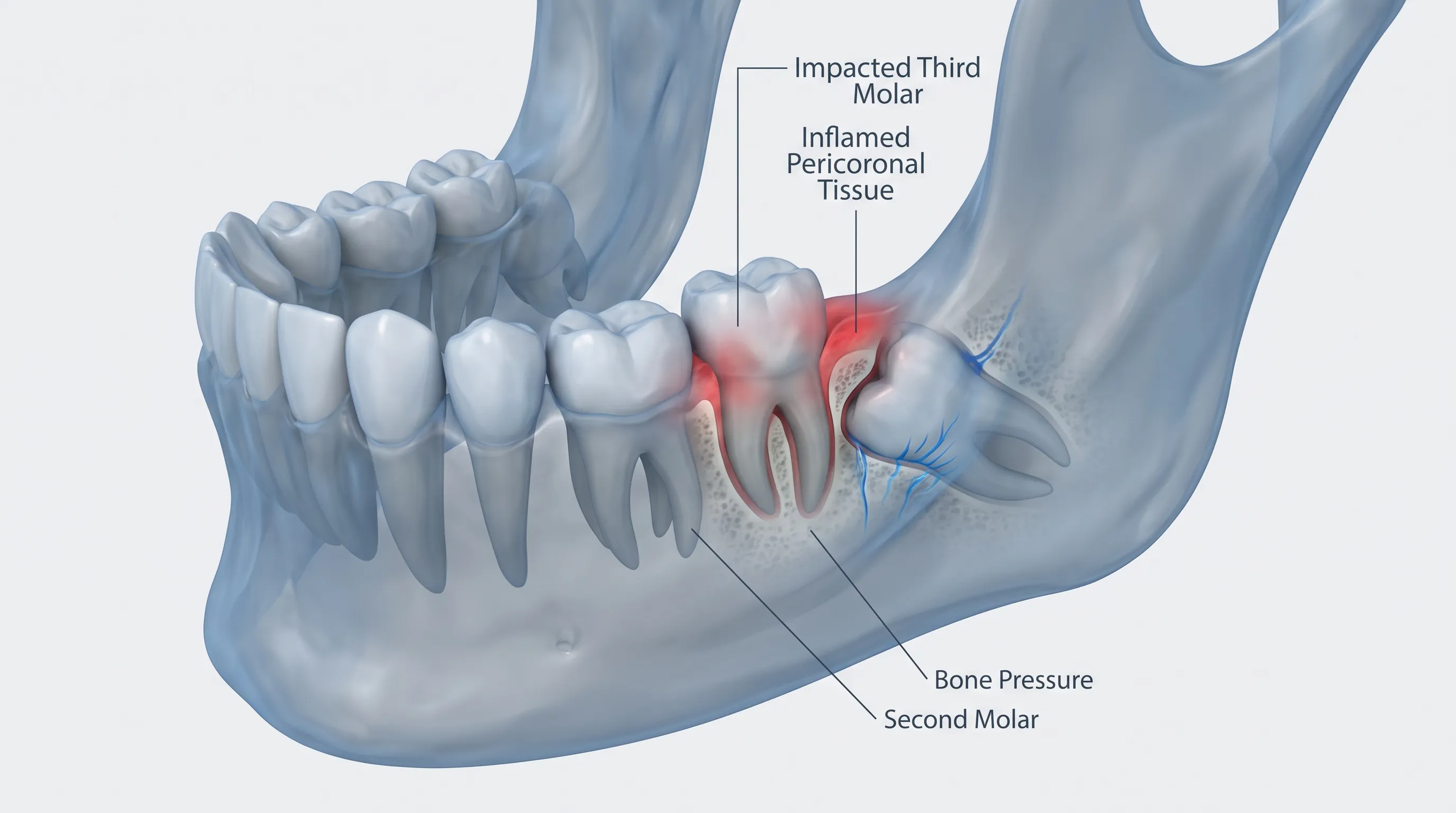
The fundamental issue with wisdom teeth stems from spatial incompatibility. When there is inadequate arch length to accommodate a 32-tooth complement, the body must either accommodate the teeth through compensatory shifting or retain them in an impacted state. Partial eruption creates a unique clinical scenario where the crown breaks through the gingiva but remains partially covered by a soft tissue flap called an operculum. This pocket becomes an ideal breeding ground for oral microbiota, leading to localized infections known as pericoronitis.
Furthermore, partially erupted or impacted wisdom teeth can exert continuous lateral pressure on adjacent molars. This chronic force can lead to root resorption of the neighboring teeth, shifting of the entire dental arch, and the development of malocclusion. The periodontal ligament responds to sustained pressure by initiating an inflammatory response, which patients perceive as a dull, throbbing ache. Recognizing that wisdom tooth discomfort is not merely a temporary nuisance but a structural and microbiological challenge helps patients approach management strategies with appropriate caution and clinical insight.
The Exact Sensations: What Does Wisdom Teeth Pain Feel Like?
Patients frequently struggle to articulate what does wisdom teeth pain feel like because it does not conform to the sharp, pinpoint sensations associated with typical dental cavities. Instead, wisdom tooth discomfort is multifaceted, often presenting as a combination of pressure, throbbing, and radiating neuralgia. The exact quality of pain depends heavily on the tooth's eruption angle, degree of impaction, presence of infection, and individual pain threshold. By categorizing these sensations, individuals can better communicate their symptoms to dental professionals and implement targeted relief measures.
The neurological basis of this discomfort lies in the extensive innervation of the posterior jaw. The inferior alveolar nerve, lingual nerve, and buccal nerve converge near the third molar region, creating a highly sensitive network. When inflammation compresses these nerve pathways, the resulting pain signals become amplified and diffuse. This explains why many patients describe the sensation as deep, heavy, and difficult to localize precisely. Understanding these physiological mechanisms clarifies why standard pain relief approaches sometimes require modification for third molar discomfort.
Throbbing vs. Sharp Pain
Throbbing wisdom tooth pain typically indicates active inflammation or early-stage infection. The rhythmic pulsation corresponds to vascular blood flow in the surrounding tissues, increasing with each heartbeat. As inflammatory mediators like histamine and bradykinin accumulate in the pericoronal space, blood vessels dilate, creating localized edema that presses against rigid tissue structures. This produces the characteristic pounding sensation that many patients find particularly disruptive to sleep and concentration.
In contrast, sharp or shooting pain often suggests nerve irritation or sudden mechanical interference. When a wisdom tooth shifts unexpectedly or contacts an opposing tooth in the opposing arch, it can trigger acute nociceptive responses. Sharp pain may also occur when biting down, indicating that the tooth has partially breached the occlusal plane but remains trapped beneath dense gingival tissue. Differentiating between these two pain types is clinically significant, as throbbing usually responds well to anti-inflammatory medication, while sharp, nerve-related pain may require occlusal adjustment or surgical intervention.
Referred Pain Patterns
One of the most confusing aspects of third molar discomfort is its tendency to manifest in seemingly unrelated areas. Patients often ask what does wisdom teeth pain feel like when it travels beyond the jawline, and the answer lies in trigeminal nerve branching. Pain frequently radiates to the ear, creating sensations that mimic otitis media or temporomandibular joint dysfunction. It may extend upward toward the temples, causing tension-type headaches, or downward into the neck and submandibular lymph nodes.
This referral phenomenon occurs because the trigeminal nerve shares common pathways with sensory branches innervating the ear, face, and scalp. When inflammation overwhelms local receptors, the central nervous system sometimes misinterprets the pain source. Consequently, individuals may experience persistent earaches, jaw clicking, or facial muscle tension without an actual problem in those structures. Recognizing this referral pattern prevents unnecessary medical consultations for unrelated conditions and directs patients toward appropriate dental evaluation.
Pain During Chewing and Speaking
Functional discomfort provides critical diagnostic clues. If you notice significant pain when chewing, especially when applying pressure to the posterior dental arch, your wisdom teeth are likely partially erupted and inflamed. The occlusal forces transmitted through the molar region compress the pericoronal pocket, forcing bacteria and inflammatory exudate deeper into vulnerable tissues. This mechanical irritation intensifies the inflammatory cascade, resulting in immediate pain that subsides only when the jaw rests.
Similarly, speaking and yawning can trigger sharp discomfort due to mandibular movement. The masseter and medial pterygoid muscles contract during jaw opening and closing, pulling against inflamed gingival tissue surrounding the erupting third molar. Patients frequently report stiffness, reduced mouth opening capacity, and audible clicking or popping when attempting full jaw excursion. These functional limitations strongly correlate with pericoronitis or severe impaction and warrant prompt clinical assessment.
Early Warning Signs and Accompanying Symptoms
Wisdom tooth discomfort rarely occurs in isolation. The body initiates a comprehensive inflammatory response that extends beyond localized dental pain, producing a cluster of systemic and regional symptoms. Recognizing these early warning signs allows individuals to intervene before mild irritation progresses to acute infection or structural damage. Monitoring symptom patterns provides valuable data for dental professionals and helps patients make informed decisions about treatment timelines.
The gingival tissue surrounding erupting wisdom teeth is exceptionally vulnerable due to its thin epithelium and limited keratinization. As the tooth attempts to penetrate the gum surface, microscopic tears develop, creating portals for oral bacteria. The resulting immune response releases chemokines that attract neutrophils and macrophages, initiating visible swelling, redness, and localized heat production. These physiological changes serve as the body's first line of defense but simultaneously generate the discomfort patients experience. Tracking these symptoms systematically improves diagnostic accuracy and treatment efficacy.
Swelling and Gum Inflammation
Gingival inflammation represents the most visible indicator of wisdom tooth complications. Initially, patients may notice mild puffiness along the distal aspect of the second molar. As inflammation progresses, the tissue becomes erythematous, edematous, and tender to palpation. In cases of partial impaction, a distinct operculum forms, creating a flap that partially covers the crown of the erupting tooth.
This swollen tissue is highly susceptible to trauma from opposing teeth, hard foods, or aggressive brushing. Repeated microtrauma prevents proper healing, establishing a cycle of chronic inflammation. Patients often report a feeling of fullness or tightness in the posterior cheek, making it difficult to comfortably close their mouth. Applying cold therapy and maintaining meticulous oral hygiene can temporarily reduce edema, but persistent swelling typically requires professional debridement and targeted antimicrobial therapy.
Bad Breath and Unpleasant Taste
Halitosis and a persistent foul taste are frequently overlooked symptoms of third molar complications. The pericoronal pocket created by partially erupted wisdom teeth functions as a bacterial reservoir, trapping food debris, desquamated epithelial cells, and anaerobic microorganisms. As these bacteria metabolize organic matter, they produce volatile sulfur compounds that generate characteristic oral malodor.
This bacterial overgrowth can progress to localized abscess formation, releasing purulent exudate that contributes to a metallic or salty taste. Patients often notice the symptom worsening after meals or upon waking, as nocturnal salivary flow decreases and bacterial proliferation accelerates. While mouthwash and tongue scraping may temporarily mask the odor, they do not address the underlying anatomical pocket. Professional irrigation and, if necessary, operculectomy or extraction remain the definitive solutions.
Jaw Stiffness and Limited Mouth Opening
Trismus, or restricted mandibular mobility, is a hallmark symptom of advanced wisdom tooth inflammation. When pericoronal infection spreads to the muscles of mastication, particularly the masseter and medial pterygoid, muscle fibers undergo protective spasm. This involuntary contraction severely limits mouth opening, often restricting vertical excursion to less than 20 millimeters.
Jaw stiffness typically develops gradually, beginning with mild discomfort during wide opening and progressing to significant functional impairment. Patients may struggle with basic tasks like eating, brushing, or dental impressions. Accompanying symptoms often include muscle tenderness upon palpation and radiographic evidence of periapical inflammation. Early intervention with anti-inflammatory medications and gentle jaw exercises can prevent fibrosis and restore normal mandibular function.
Common Underlying Causes of Wisdom Tooth Discomfort
Understanding what does wisdom teeth pain feel like requires recognizing the distinct pathological mechanisms driving the discomfort. Third molar complications do not arise from a single factor but rather from a combination of anatomical constraints, microbiological imbalance, and biomechanical stress. Identifying the specific underlying cause enables targeted treatment strategies and prevents unnecessary suffering through delayed or inappropriate interventions.
Clinical research consistently identifies three primary categories of wisdom tooth discomfort: mechanical impaction, infectious pericoronitis, and adjacent tooth compromise. Each presents with overlapping yet distinguishable symptom profiles, requiring different diagnostic approaches and management protocols. By differentiating these causes, patients and clinicians can develop personalized care plans that address the root issue rather than merely masking superficial symptoms.
Impaction and Partial Eruption
Impaction occurs when a wisdom tooth lacks sufficient space to emerge into proper occlusal alignment. Dental professionals categorize impactions into mesioangular, distoangular, vertical, and horizontal types, each producing unique pressure patterns. Mesioangular impactions, the most common, push against the second molar, creating chronic interproximal pressure and root compromise.
Partial eruption exacerbates the problem by establishing an irreversible communication between the oral environment and the underlying periodontal structures. Salivary contaminants continuously enter the eruption site, triggering persistent inflammatory responses. Patients often experience intermittent pain cycles that correspond with seasonal immune fluctuations or dietary changes. Surgical removal remains the definitive treatment for symptomatic impactions, particularly when conservative monitoring fails to provide sustained relief.
Pericoronitis and Bacterial Infection
Pericoronitis represents acute inflammation of the gingival tissue surrounding a partially erupted wisdom tooth. The condition is primarily polymicrobial, dominated by anaerobic species such as Prevotella, Porphyromonas, and Fusobacterium. These pathogens thrive in the oxygen-deprived pericoronal pocket, releasing endotoxins that stimulate intense inflammatory cascades.
Clinical presentation ranges from mild erythema and localized tenderness to severe cellulitis with systemic manifestations like fever, malaise, and lymphadenopathy. The infection can rapidly spread along fascial planes, potentially compromising the airway in extreme cases. Immediate management involves mechanical debridement, antimicrobial rinses, and targeted antibiotic therapy when systemic signs are present. Recurrent pericoronitis strongly indicates the need for definitive extraction.
Crowding and Pressure on Adjacent Teeth
Even fully covered wisdom teeth can generate significant discomfort through continuous lateral pressure. As the dental arch remains static while mandibular dimensions decrease with age, erupting third molars exert compensatory force against neighboring teeth. This chronic pressure can lead to enamel microfractures, periodontal ligament widening, and alveolar bone resorption.
Patients frequently report a dull, persistent ache that intensifies during mastication or clenching. Radiographic evaluation typically reveals distal bone loss on the second molar, root resorption, or mesial tipping. Orthodontic compromise often follows untreated pressure-induced crowding, requiring comprehensive bite correction. Proactive monitoring and timely extraction prevent irreversible structural damage and preserve adjacent tooth vitality.
| Impaction Type | Pain Characteristic | Common Symptoms | Typical Treatment Approach |
|---|---|---|---|
| Mesioangular | Dull pressure radiating forward | Second molar sensitivity, food impaction | Surgical extraction with bone grafting |
| Horizontal | Sharp, localized ache | Complete blockage of eruption, root compression | Full surgical removal under local anesthesia |
| Vertical | Mild to moderate throbbing | Intermittent discomfort, operculum formation | Monitoring or elective extraction |
| Distoangular | Deep jaw ache, ear referral | Limited opening, posterior gum swelling | Extraction with possible coronectomy |
Evidence-Based Pain Management and Relief Strategies
Managing third molar discomfort effectively requires a multifaceted approach that combines pharmacological intervention, mechanical debridement, and lifestyle modifications. Understanding the physiological basis of wisdom tooth pain allows patients to select interventions that target specific inflammatory pathways rather than relying solely on symptomatic masking. Clinical guidelines emphasize conservative management for mild cases while reserving surgical intervention for recurrent or complicated presentations.
Effective pain management begins with accurate symptom assessment. Patients should document pain intensity, duration, triggering factors, and accompanying symptoms to provide comprehensive data for dental professionals. Implementing a structured care routine reduces inflammation, prevents bacterial colonization, and minimizes discomfort during the critical eruption phase. Consistency in oral hygiene practices and adherence to evidence-based relief protocols significantly improve patient outcomes and quality of life.
Over-the-Counter Medications and Their Efficacy
Nonsteroidal anti-inflammatory drugs (NSAIDs) like ibuprofen and naproxen sodium represent the first-line pharmacological treatment for wisdom tooth discomfort. Unlike acetaminophen, which primarily affects central pain perception, NSAIDs inhibit cyclooxygenase enzymes responsible for prostaglandin synthesis. This mechanism directly reduces local inflammation, edema, and nociceptive signaling, making NSAIDs particularly effective for eruption-related pain.
Clinical studies demonstrate that alternating ibuprofen with acetaminophen provides superior analgesic coverage while minimizing gastrointestinal side effects. Patients should adhere to recommended dosing schedules and avoid exceeding maximum daily limits. Topical benzocaine gels offer temporary numbing but should be used sparingly due to potential mucosal irritation and methemoglobinemia risk. Combining systemic NSAIDs with targeted application provides comprehensive pain control during acute flare-ups.
At-Home Remedies That Actually Work
Warm saltwater rinses remain one of the most scientifically validated home remedies for wisdom tooth discomfort. Sodium chloride creates a hypertonic environment that draws excess fluid from inflamed tissues, reducing edema and mechanical pressure. Additionally, saline irrigation mechanically dislodges food debris and decreases bacterial load within the pericoronal pocket. Patients should rinse gently with a solution of one-half teaspoon of salt in eight ounces of warm water for thirty seconds, four to six times daily.
Clove oil (eugenol) provides natural analgesic and antimicrobial properties that temporarily soothe nerve endings and inhibit bacterial growth. Applying a cotton ball soaked in diluted clove oil directly to the affected area can provide immediate relief, though excessive use may cause mucosal burns. Cold compresses applied externally to the cheek constrict blood vessels, reducing inflammation and interrupting pain signal transmission. Combining these evidence-based home remedies creates a synergistic effect that addresses multiple aspects of wisdom tooth discomfort.

Dietary Adjustments During Flare-Ups
Nutritional intake significantly influences inflammation levels and tissue healing capacity. During wisdom tooth discomfort, patients should prioritize soft, nutrient-dense foods that require minimal masticatory effort. Greek yogurt, smoothies, mashed avocado, and pureed soups provide essential vitamins and proteins without stressing the posterior dental arch. Avoiding hard, crunchy, or sticky foods prevents mechanical trauma to inflamed gingival tissue and reduces bacterial trapping in eruption pockets.
Hydration plays a critical role in maintaining optimal salivary flow, which naturally cleanses the oral cavity and neutralizes acidic bacterial byproducts. Patients should consume at least eight glasses of water daily, avoiding sugary or highly acidic beverages that promote plaque accumulation. Incorporating anti-inflammatory foods like omega-3 fatty acids, leafy greens, and turmeric-infused dishes supports systemic healing while reducing localized tissue swelling. Consistent dietary modifications during eruption phases minimize discomfort and accelerate recovery.
When to Seek Professional Dental Care
While mild wisdom tooth discomfort often resolves with conservative management, certain symptoms indicate serious complications requiring immediate professional intervention. Delaying treatment for progressive pain, infection, or structural compromise can lead to permanent damage, costly reconstructive procedures, and systemic health risks. Establishing clear thresholds for dental consultation ensures timely care and prevents unnecessary suffering.
Dental professionals utilize comprehensive diagnostic protocols to evaluate third molar status, including clinical examination, periodontal probing, and panoramic radiography. Advanced imaging techniques reveal root morphology, proximity to neurovascular structures, and bone density changes that cannot be assessed through visual inspection alone. Early referral to an oral surgeon or general dentist with expertise in third molar management provides accurate diagnosis, personalized treatment planning, and optimal clinical outcomes.
Red Flags That Indicate Complications
Certain symptoms serve as unmistakable warning signs that wisdom tooth discomfort has progressed beyond manageable levels. Persistent swelling that extends to the cheek, neck, or submandibular region suggests spreading cellulitis or abscess formation that warrants prompt clinical intervention. Fever above 101°F, chills, and general malaise indicate systemic infection requiring immediate antimicrobial therapy and possible drainage.
Difficulty swallowing or breathing represents a medical emergency, often caused by space infections compromising the airway. Pus discharge, severe trismus, and rapidly escalating pain warrant same-day dental evaluation. Patients experiencing numbness or tingling in the lower lip and chin may have inferior alveolar nerve compression, necessitating urgent imaging and surgical consultation. Recognizing these red flags prevents life-threatening complications and ensures appropriate emergency care.
Diagnostic Imaging and Clinical Evaluation
Panoramic radiographs and cone-beam computed tomography (CBCT) provide three-dimensional visualization of third molar anatomy and surrounding structures. These imaging modalities reveal impaction angles, root curvature, proximity to the mandibular canal, and existing bone pathology. Accurate radiographic interpretation guides treatment planning, minimizes surgical risks, and predicts postoperative complications.
Clinical evaluation includes periodontal charting, vitality testing of adjacent teeth, and occlusal assessment. Dentists evaluate tissue quality, operculum size, and microbial colonization to determine whether conservative monitoring or extraction is appropriate. Patients should expect comprehensive explanations of their radiographic findings, treatment alternatives, and expected recovery timelines. Transparent communication empowers individuals to make informed decisions about their oral health management.
Extraction vs. Conservative Monitoring
The decision to extract wisdom teeth or monitor them conservatively depends on multiple clinical factors. Asymptomatic, fully erupted teeth with healthy periodontal tissues and proper occlusion rarely require intervention. Conversely, recurrent pericoronitis, adjacent tooth compromise, cyst formation, or orthodontic interference strongly indicate extraction. Current clinical guidelines recommend removing symptomatic third molars before age 25 to minimize surgical complexity and optimize healing outcomes.
Conservative monitoring involves regular radiographic evaluation, professional cleanings, and strict oral hygiene protocols. Patients choosing this pathway must commit to biannual dental visits and immediate reporting of symptom changes. When extraction is indicated, modern surgical techniques utilize minimally invasive approaches, local anesthesia, and guided bone preservation to ensure comfortable recovery. Understanding the risks and benefits of each approach allows patients to select the most appropriate treatment strategy for their specific clinical presentation.
Frequently Asked Questions
How can you tell the difference between wisdom teeth pain and regular toothache?
Wisdom teeth pain typically originates deep in the posterior jaw and radiates toward the ear, neck, or temples. It is often accompanied by gum flap inflammation, restricted mouth opening, and a dull, constant throbbing that worsens with chewing. Regular toothaches usually affect a specific tooth and are often triggered by hot, cold, or sweet stimuli.
Does wisdom tooth pain come and go?
Yes, wisdom tooth discomfort frequently fluctuates. It may subside temporarily when the tooth pauses its eruption or when inflammation naturally resolves, only to return with increased intensity as the tooth shifts further or becomes trapped under gum tissue.
Can impacted wisdom teeth cause pain without visible swelling?
Absolutely. Fully impacted wisdom teeth that press against neighboring molars or nerves can generate deep, pressure-like pain without external gum inflammation. This type of discomfort often requires panoramic X-rays for proper diagnosis and management.
How long does wisdom teeth pain typically last?
Mild eruption discomfort usually lasts a few days to a week. However, if the pain persists beyond seven to ten days, intensifies, or is accompanied by swelling and fever, it may indicate infection or severe impaction requiring professional dental intervention.
What is the fastest way to relieve wisdom tooth pain at home?
The most effective immediate relief combines warm saltwater rinses to reduce bacterial load, over-the-counter NSAIDs like ibuprofen to target inflammation, and cold compresses applied externally for 15-minute intervals to numb nerve endings and minimize swelling.
Should I wait for wisdom teeth pain to go away on its own?
While mild, short-lived discomfort may resolve, persistent or worsening pain should not be ignored. Delaying evaluation can lead to cyst formation, bone loss, damage to adjacent teeth, or systemic infection. Early clinical assessment is strongly recommended.
Conclusion
Navigating the complex landscape of third molar discomfort requires a clear understanding of what does wisdom teeth pain feel like and why it occurs. The sensations range from deep, throbbing pressure to sharp, radiating neuralgia, each reflecting specific physiological mechanisms and underlying complications. By recognizing early warning signs, implementing evidence-based pain management strategies, and seeking timely professional evaluation, patients can effectively manage wisdom tooth discomfort while preventing serious oral health consequences. Whether the appropriate course of action involves conservative monitoring or surgical extraction, informed decision-making rooted in clinical science remains the cornerstone of optimal dental care. Prioritize regular dental visits, maintain rigorous oral hygiene practices, and address emerging symptoms promptly to preserve your long-term oral health and overall well-being.
How we work
Researched and drafted with AI assistance, then reviewed by a human editor against the cited sources.
This article is general health information, not medical advice. Consult a qualified healthcare professional about your own situation.