Understanding the Location of Dehydration Headache: Symptoms, Relief, and Prevention

Waking up with a dull, persistent ache across your forehead or feeling a heavy, pressing sensation behind your eyes after a long workout can be deeply uncomfortable. Many people immediately assume it is a migraine or a tension headache, but the underlying culprit is often much simpler yet equally impactful. Fluid imbalance is one of the most overlooked triggers of head pain, and recognizing the specific location of dehydration headache is the first critical step toward effective relief. Unlike other neurological pain syndromes that present with sharp, localized, or pulsating sensations, head pain driven by fluid loss follows a distinctly different pattern. It tends to spread broadly rather than concentrate in a single focal point, often affecting your cognitive clarity, energy levels, and physical comfort. By understanding how water deficiency impacts cerebral blood flow, tissue tension, and neurological function, you can quickly identify the source of your discomfort, implement targeted rehydration strategies, and prevent future episodes from disrupting your daily life. For more on how hydration impacts overall health, visit the Cleveland Clinic's guide to dehydration.
Understanding the Location of a Dehydration Headache
When trying to pinpoint the source of your discomfort, the location of dehydration headache serves as a highly reliable diagnostic clue. Medical literature consistently describes this type of pain as diffuse, meaning it does not restrict itself to one isolated nerve pathway or muscle group. Instead, patients frequently report a broad, encompassing ache that spans across multiple regions of the skull. The forehead, crown, temples, and occipital areas are commonly involved, creating a sensation that feels like a tight band or a heavy weight pressing evenly from all sides. This bilateral presentation is a hallmark sign, helping clinicians and patients differentiate it from primary headache disorders that follow strict lateralization patterns.
Free calculatorWater Intake CalculatorCalculate daily water needsOpen the calculatorTypical Pain Patterns and Sensations
Patients experiencing this condition often struggle to describe it precisely because it lacks the distinct boundaries of nerve-related pain. Instead, they use terms like heaviness, pressure, throbbing, or tightness that encompass the entire scalp. The location of dehydration headache frequently radiates from the frontal sinus region upward through the parietal bones, sometimes extending to the back of the neck when muscle tension compounds the vascular response. Physical movement, bending forward, or sudden head turns typically intensify the discomfort, as these actions temporarily alter intracranial pressure and cerebrospinal fluid dynamics. Unlike inflammatory pain that responds well to localized cold compresses, fluid-driven head pain improves most rapidly when internal homeostasis is restored. Recognizing this diffuse, bilateral pattern early can prevent unnecessary medication overuse and guide you toward the correct physiological intervention.
Comparing It to Other Headache Types
Accurate self-assessment relies heavily on distinguishing between common primary headaches and secondary conditions triggered by fluid loss. Below is a structured comparison to help you identify the unique characteristics of each type.
| Headache Type | Typical Location | Pain Quality | Common Triggers | Associated Symptoms |
|---|---|---|---|---|
| Dehydration Headache | Entire head, forehead, bilateral | Dull, constant, pressing | Fluid loss, heat, fasting, illness | Thirst, dry mouth, dark urine, dizziness |
| Tension Headache | Band around forehead/temples/neck | Tight, squeezing, steady | Stress, poor posture, eye strain | Muscle stiffness, scalp tenderness, fatigue |
| Migraine | Often unilateral, behind one eye | Throbbing, pulsating, severe | Hormonal shifts, certain foods, sensory overload | Nausea, photophobia, aura, sensitivity to sound |
The table highlights how the location of dehydration headache contrasts sharply with other conditions. While migraines frequently attack one hemisphere with intense vascular pounding, fluid-related pain spreads symmetrically. Tension headaches mimic some aspects of this distribution but originate primarily from musculoskeletal tightness rather than vascular volume changes. By cross-referencing your pain pattern with accompanying physical cues, you can confidently identify whether water replenishment or stress management is the appropriate pathway forward.
The Science Behind Fluid Loss and Brain Function
The neurological and physiological cascade that occurs during water deficiency is remarkably complex, involving multiple organ systems working in tandem to preserve essential functions. Research highlights that total body water constitutes approximately 45 to 75 percent of adult body weight, serving as a critical solvent, transporter, and structural component for every cellular process. When this balance shifts, the central nervous system bears the brunt of the disruption, manifesting as head pain, reduced concentration, and slowed reaction times. Understanding these mechanisms empowers individuals to take proactive measures before mild imbalances progress into severe deficits. According to the National Institutes of Health (NIH), even mild fluid deficits can significantly impair cognitive performance and neurological signaling.
Blood Volume Reduction and Cerebral Perfusion
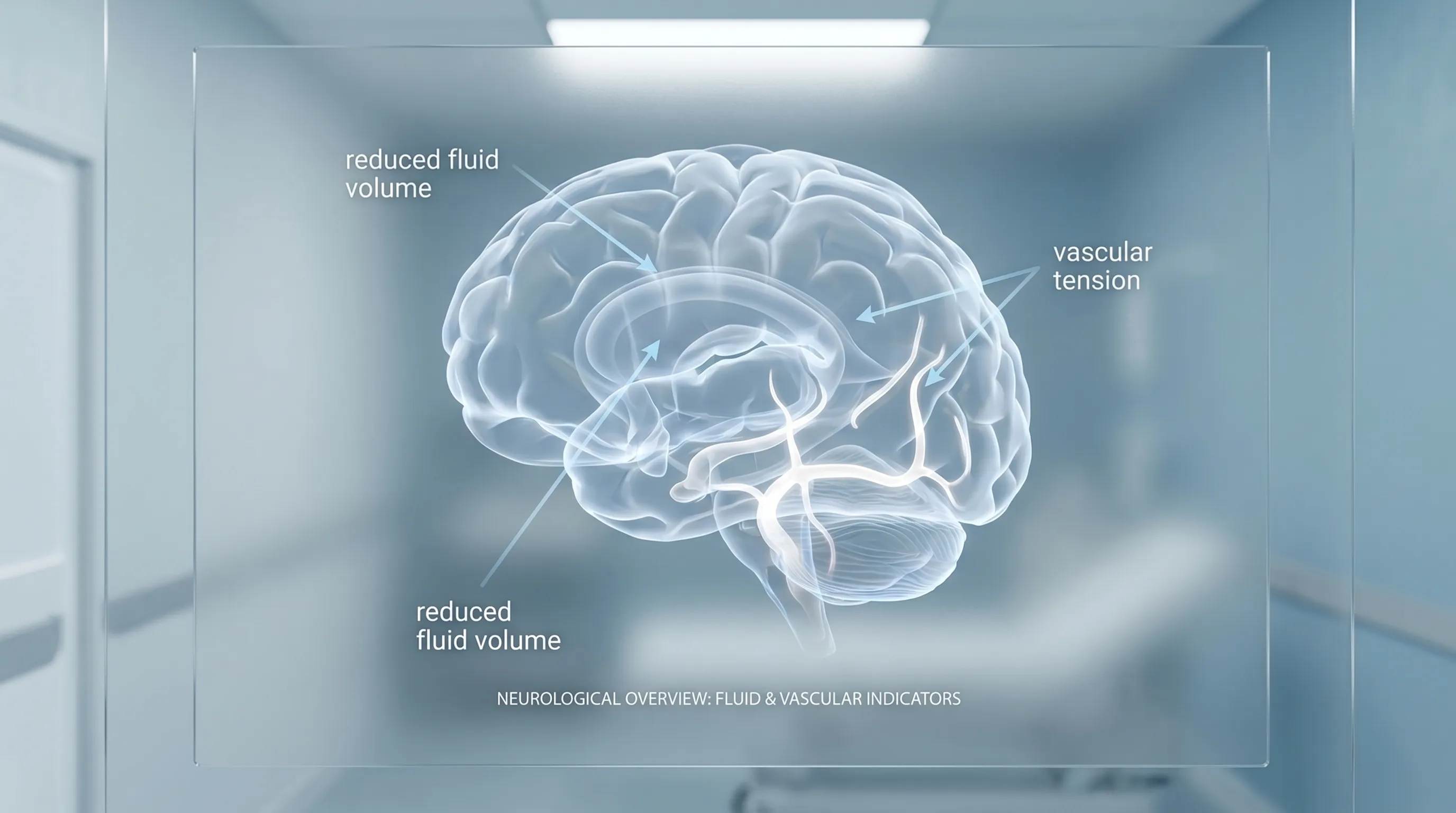
One of the most immediate consequences of inadequate fluid intake is a measurable decline in circulating plasma volume. Water is the primary component of blood, and its reduction directly impacts hemodynamic stability. As plasma volume decreases, the heart must work harder to pump thicker, more viscous blood through the cardiovascular network. This compensatory mechanism maintains arterial pressure in the short term but inevitably compromises microcirculation in highly perfused organs like the brain. Reduced cerebral blood flow triggers a localized ischemic response, even if only temporary, which activates pain receptors along the dural mater and cerebral arteries. The resulting discomfort serves as a biological alarm, signaling that oxygen and nutrient delivery are suboptimal. Restoring fluid balance quickly reverses this hemodynamic strain, allowing normal perfusion patterns to resume and alleviating the associated pain within a predictable timeframe.
Brain Tissue Shrinkage and Meningeal Tension
A lesser-known but well-documented physiological response to fluid loss involves the actual volume of brain tissue. The brain is approximately 75 percent water, and when systemic hydration drops, osmotic gradients shift to draw moisture out of intracellular compartments. This causes neurons and glial cells to temporarily contract, pulling the brain slightly away from the rigid inner surface of the skull. Because the brain itself lacks pain receptors, the discomfort does not originate from the tissue shrinking itself. Instead, the mechanical tension generated on the meninges, pain-sensitive blood vessels, and bridging veins creates the sensation of head pain. The dura mater, rich in nociceptive fibers, stretches slightly to accommodate the subtle positional shift, relaying a steady, aching signal to the cortex. Once fluids and electrolytes are reintroduced, osmotic balance normalizes, cellular volume is restored, and meningeal tension rapidly dissipates.
Electrolyte Imbalances and Neural Excitability
Fluid loss is rarely accompanied by pure water depletion alone. Sweating, gastrointestinal distress, and metabolic processes simultaneously expel critical electrolytes like sodium, potassium, magnesium, and calcium. These charged particles regulate action potentials, muscle contractions, and neurotransmitter release across neural pathways. When their concentrations fluctuate, neuronal membranes become hyperexcitable or sluggish, disrupting normal signaling patterns in pain-processing regions such as the thalamus and trigeminal system. This biochemical instability can lower the threshold for headache initiation, making the brain more susceptible to external triggers like bright lights, loud noises, or physical exertion. Replenishing both water and essential minerals ensures that cellular depolarization and repolarization cycles function smoothly, preventing the erratic neural firing that sustains chronic head pain.
Recognizing Symptoms and Risk Factors
Headache pain rarely exists in isolation when fluid balance is compromised. It is almost always accompanied by a cluster of physiological indicators that confirm systemic dehydration. Recognizing these accompanying signs allows for faster intervention and prevents the condition from escalating into moderate or severe stages. Medical authorities consistently emphasize that early recognition of the location of dehydration headache, paired with secondary symptom tracking, leads to more accurate self-diagnosis and safer home management strategies. For a comprehensive list of clinical signs, refer to Mayo Clinic's dehydration overview.
Early Warning Signals of Fluid Deficit
Before head pain fully manifests, the body typically emits several clear cues that hydration levels are dropping. Thirst is the most obvious indicator, though it is surprisingly delayed in older adults and chronically stressed individuals. A dry, sticky mouth or reduced saliva production often precedes intense head discomfort by several hours. Urine color serves as a highly reliable visual gauge; dark yellow, amber, or strongly scented urine signals concentrated waste products and insufficient water volume for proper filtration. Decreased urination frequency, typically fewer than four to six bathroom visits in a twenty-four-hour period, confirms that the kidneys are actively conserving fluid. Catching these early markers allows you to address the root cause before pain receptors in the cranial vault become fully activated.
Cognitive and Physical Manifestations
Beyond obvious physical cues, the neurological impact of fluid deficit profoundly affects mental clarity and physical coordination. Studies consistently demonstrate that a mere 1 to 2 percent drop in total body water impairs executive function, working memory, and attention span. Individuals often report brain fog, difficulty focusing on complex tasks, irritability, or unexplained fatigue. Physically, reduced plasma volume compromises thermoregulation, leading to warm skin, rapid heart rate upon standing, and mild dizziness or lightheadedness. Muscle cramps, particularly in the calves or shoulders, frequently accompany head pain due to electrolyte depletion. In more severe cases, confusion, extreme lethargy, and sunken eyes indicate that compensatory mechanisms are failing. Tracking these cognitive and physical symptoms alongside the location of dehydration headache provides a comprehensive clinical picture, guiding appropriate intervention intensity.
Who Is Most Vulnerable?
While anyone can experience fluid-related head pain, certain populations face substantially higher risks due to physiological, environmental, or lifestyle factors. Infants and older adults represent the two most vulnerable age demographics for dehydration complications. In young children, the high surface-area-to-body-mass ratio accelerates fluid loss through evaporation, while immature renal systems lack the concentrating ability to conserve water efficiently. Conversely, elderly individuals experience natural physiological shifts that increase risk, as thirst perception diminishes and kidney function declines. Modern lifestyles frequently expose individuals to scenarios that rapidly deplete fluid reserves, including vigorous exercise, occupational heat exposure, fasting regimens, and travel across dry climates. Chronic health conditions like diabetes, gastrointestinal disorders, or kidney dysfunction significantly alter baseline hydration requirements, while medications such as diuretics, laxatives, and antihistamines further elevate risk.

Immediate Relief and Treatment Strategies
Once the characteristic location of dehydration headache becomes apparent and accompanying symptoms are identified, prompt and structured intervention is essential. Delaying rehydration can prolong discomfort, exacerbate cognitive impairment, and increase the likelihood of developing secondary complications. Effective treatment focuses on restoring fluid volume, replenishing lost electrolytes, and supporting physiological stabilization through rest and environmental modifications.
Effective Rehydration Techniques
The cornerstone of headache relief is systematic fluid replacement. Drinking large quantities of water in a single sitting often triggers rapid gastric emptying and subsequent urinary excretion, meaning less fluid actually reaches systemic circulation. Instead, consume water consistently in smaller volumes, aiming for 8 to 12 ounces every 15 to 20 minutes over the course of several hours. Pairing plain water with oral rehydration solutions containing balanced sodium, potassium, and glucose significantly enhances intestinal absorption through co-transport mechanisms. Sports drinks, coconut water, and homemade electrolyte mixtures provide necessary minerals without excessive sugar content. The goal is steady, sustained absorption rather than rapid flooding of the digestive tract, which optimizes blood volume restoration and meningeal tension reduction.
When to Seek Professional Medical Care
While most fluid-related head pain resolves with home management, certain warning signs mandate immediate clinical evaluation. If rehydration efforts fail to produce noticeable improvement within 24 hours, underlying conditions such as severe electrolyte derangement, renal impairment, or neurological complications may be present. Emergency symptoms include persistent vomiting that prevents fluid retention, confusion or altered mental status, rapid weak pulse, severe abdominal pain, fainting, or the sudden onset of an extremely severe headache. Intravenous fluid therapy administered in urgent care or emergency settings rapidly restores plasma volume, corrects dangerous electrolyte imbalances, and alleviates cranial pressure in moderate to severe cases.
What to Avoid During a Dehydration Headache
Certain common habits inadvertently worsen fluid deficit and prolong head pain. Caffeinated beverages, despite providing temporary alertness, possess mild diuretic properties that increase urinary water loss and may intensify vascular constriction. Alcohol consumption severely impairs antidiuretic hormone production, leading to excessive fluid excretion. High-sodium processed foods draw water out of cells and into the extracellular space, worsening tissue-level dehydration. Overusing non-steroidal anti-inflammatory drugs without addressing fluid balance provides only temporary masking of pain while allowing the underlying physiological deficit to persist. Prioritizing rest in a cool, dimly lit environment minimizes metabolic demand and supports the body’s natural restoration processes.
Long-Term Prevention and Hydration Habits
Sustained wellness relies on consistent daily practices rather than reactive interventions. Building reliable hydration routines, understanding dietary water sources, and implementing practical monitoring techniques transform fluid balance from an occasional concern into an effortless lifestyle component. Preventing the location of dehydration headache from ever manifesting requires a proactive, individualized approach. The CDC recommends establishing consistent daily water intake habits tailored to personal activity levels and climate exposure.
Building a Consistent Fluid Intake Routine
Relying solely on thirst as a drinking cue is insufficient for optimal hydration, particularly for active individuals or those in temperature-controlled environments where evaporative water loss goes unnoticed. Establishing structured drinking intervals throughout the day ensures steady fluid availability for cellular processes. Start the morning with 16 ounces of water to replenish overnight losses. Keep a reusable water bottle visible at your workstation, in your vehicle, or beside your reading area to serve as a visual reminder. Gradually increasing daily consumption allows your bladder and kidneys to adapt, preventing frequent nighttime bathroom visits while ensuring adequate systemic volume.
Dietary Sources of Hydration
Approximately 20 percent of daily fluid intake originates from food rather than beverages alone. Incorporating water-rich produce into meals significantly contributes to hydration status while delivering essential vitamins, minerals, and antioxidants. Cucumbers, celery, watermelon, strawberries, oranges, and leafy greens contain over 85 percent water, making them excellent dietary supplements. Soups, broths, yogurt, and oatmeal also provide substantial fluid content alongside complex carbohydrates. During periods of heavy sweating or gastrointestinal illness, temporarily increasing consumption of hydrating foods reduces the burden on the digestive system while still meeting fluid requirements.
Monitoring Your Hydration Status
Self-assessment techniques enable continuous optimization of fluid intake without requiring clinical testing. The urine color chart remains one of the most accessible and accurate indicators of hydration status. Pale yellow or straw-colored urine reflects adequate fluid volume, while darker shades signal the need for increased intake. Tracking body weight before and after intense physical activity reveals sweat loss; every pound lost corresponds to roughly 16 ounces of fluid that should be replaced within the recovery window. Combining these practical methods with awareness of the location of dehydration headache creates a comprehensive feedback loop that empowers long-term health management.
Frequently Asked Questions
Where exactly is a dehydration headache typically located?
The location of dehydration headache is generally diffuse, affecting the entire head rather than concentrating in a single area. Most individuals experience bilateral pain across the forehead, temples, or the entire skull, often described as a heavy, pressing sensation that intensifies with movement.
How long does it take for a dehydration headache to go away after drinking water?
With consistent, gradual fluid replacement and electrolyte supplementation, relief typically occurs within 30 minutes to three hours. Full restoration of blood volume, cellular osmotic balance, and meningeal tension resolution may take up to 12 hours, depending on the severity of initial fluid loss.
Can drinking too much water quickly make the headache worse?
Yes, consuming excessive fluid volume rapidly can overwhelm intestinal absorption capacity, triggering gastric discomfort and rapid urinary excretion. This prevents adequate systemic hydration and may temporarily worsen head pressure. Sipping steadily over time is far more effective for sustained relief.
Are there specific electrolytes that help resolve dehydration headaches faster than water alone?
Sodium, potassium, magnesium, and calcium are essential for restoring cellular osmotic balance and stabilizing neural function. Oral rehydration solutions containing these minerals alongside a small amount of glucose significantly enhance fluid absorption and accelerate pain resolution compared to plain water consumption alone.
When should I stop self-treating and visit a doctor for this type of headache?
Seek professional medical care if your headache persists despite 24 hours of aggressive rehydration, or if it is accompanied by confusion, fainting, rapid heart rate, inability to retain fluids due to vomiting, severe muscle cramps, or sudden changes in mental clarity. These symptoms indicate moderate to severe dehydration requiring clinical intervention.
Conclusion
Recognizing the distinct location of dehydration headache provides a crucial advantage in managing head pain safely and effectively. Unlike migraines or tension-type disorders that require specialized neurological interventions, fluid-driven head pain responds predictably to structured hydration, electrolyte restoration, and environmental adjustments. The diffuse, bilateral nature of this discomfort serves as a reliable physiological signal that your body is requesting immediate attention to restore homeostasis. By understanding the underlying mechanisms of blood volume reduction, meningeal tension, and neural excitability, you can differentiate between benign fluid deficits and more complex neurological conditions. Implementing consistent daily hydration habits, monitoring urine color and body weight, and prioritizing water-rich foods transform prevention from a reactive chore into an effortless routine. Remember that optimal brain function, cognitive clarity, and physical resilience depend heavily on maintaining balanced fluid levels throughout the day. Whether you are navigating a busy workday, engaging in vigorous exercise, or recovering from minor illness, keeping a proactive approach to hydration ensures that the familiar pressure of a dehydration headache remains a distant memory. Prioritize your body’s fundamental needs, listen to its early warning signals, and build sustainable wellness practices that support long-term neurological and systemic health.
How we work
Researched and drafted with AI assistance, then reviewed by a human editor against the cited sources.
This article is general health information, not medical advice. Consult a qualified healthcare professional about your own situation.