Understanding Big Aerolas: Causes, Management, and Evidence-Based Care

Understanding variations in breast anatomy is a fundamental aspect of comprehensive women’s health and dermatological wellness. One of the most common questions patients bring to clinical consultations involves noticeable differences in areolar dimensions. When individuals notice big aerolas, they often wonder whether this falls within the spectrum of normal physiological variation or requires medical attention. The reality is that areolar tissue is highly responsive to hormonal fluctuations, life stage transitions, and genetic inheritance. While cultural narratives sometimes create unnecessary concern around natural anatomical diversity, modern medicine provides clear, evidence-based pathways for evaluation, management, and peace of mind. Whether you are navigating changes during puberty, experiencing postpartum adaptations, or simply seeking clarity about your body’s natural landscape, this guide offers a thorough exploration of the science, practical self-care strategies, and clinical options available. By combining dermatological research, gynecological guidelines, and psychological well-being principles, we aim to empower you with accurate information and actionable steps. Remember that bodily diversity is not a medical defect, but an inherent aspect of human biology. With the right knowledge, you can confidently distinguish between normal physiological processes and scenarios that genuinely warrant professional evaluation, ensuring your health journey remains informed, respectful, and proactive.
Understanding Areolar Anatomy and Size Variation
What Are the Areolas and How Do They Function?
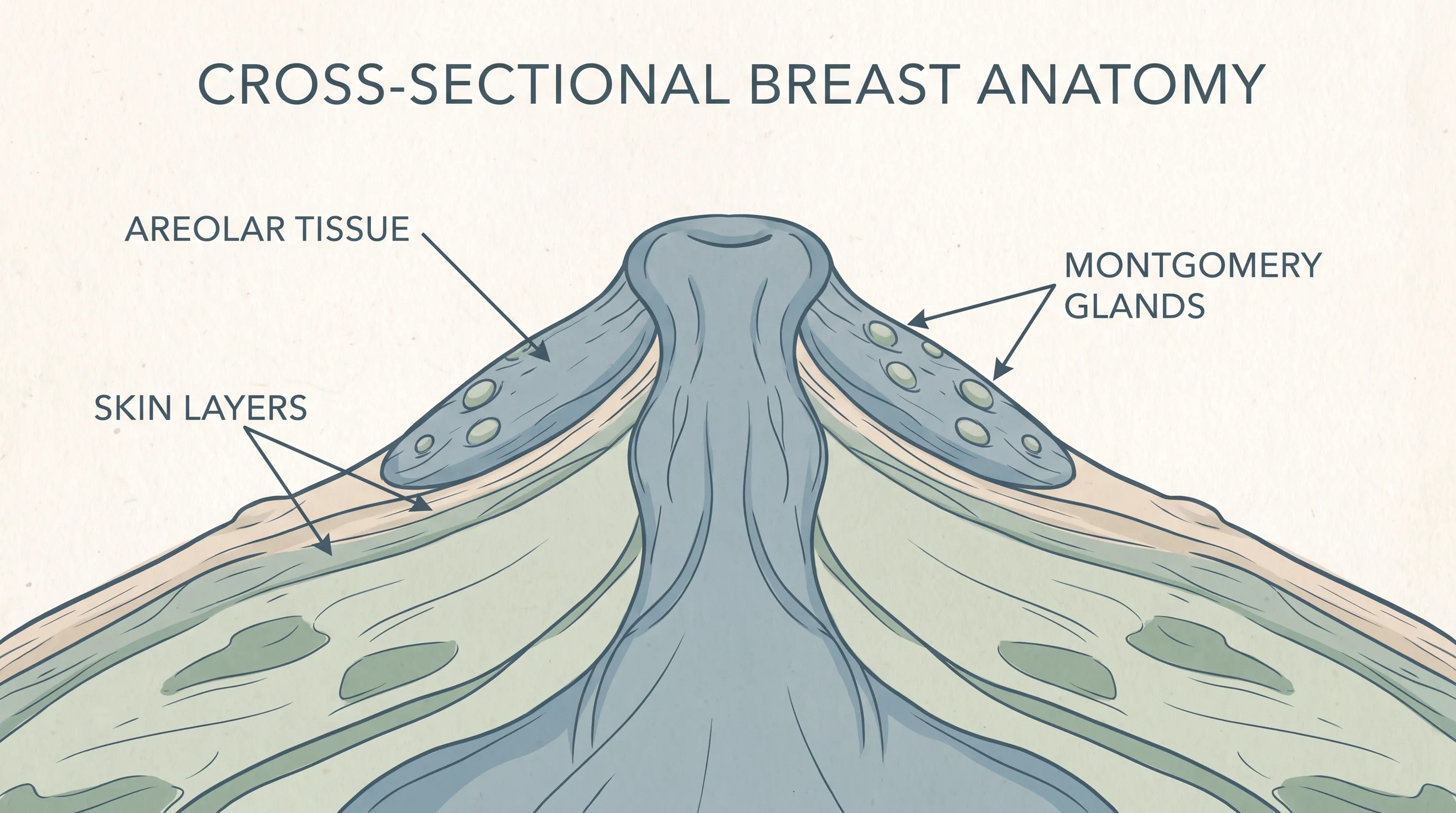
The areola is the circular, pigmented region of tissue surrounding the nipple, serving as both an anatomical landmark and a functional component of breast physiology. Structurally, it consists of specialized epidermal and dermal layers containing sebaceous glands, smooth muscle fibers, nerve endings, and Montgomery glands. These Montgomery glands produce natural lubricating secretions that protect the nipple during breastfeeding, reduce friction, and possess mild antimicrobial properties that help maintain a healthy microbiome. The tissue is highly vascularized and rich in sensory receptors, making it responsive to temperature, tactile stimulation, and emotional states. Blood flow increases during arousal, pregnancy, or cold exposure, causing temporary elevation, firming, or color deepening. These dynamic responses are normal and reflect a healthy, responsive integumentary system. When examining the baseline architecture, the areola operates independently from the underlying breast parenchyma and adipose tissue, meaning changes in breast volume do not automatically correlate with proportional changes in areolar dimensions. This distinction is crucial for understanding why size fluctuations occur independently and why localized changes require targeted assessment rather than generalized breast health protocols.
Free calculatorWater Intake CalculatorCalculate daily water needsOpen the calculatorNormal Size Ranges and Genetic Determinants
Clinical dermatology and gynecological literature consistently emphasize that areolar size exists on a broad, natural continuum. Research indicates that average diameters range from three to six centimeters, though variations well outside this range remain entirely within healthy parameters. Genetics play a foundational role, with familial patterns often dictating baseline pigmentation, texture, and circumference. Twin studies demonstrate high heritability coefficients for secondary sexual characteristics, including mammary gland development and surrounding tissue morphology. Additionally, embryonic differentiation during fetal development establishes the initial cellular framework, which then responds to pubertal hormone surges. Melanocyte distribution and density influence coloration, while collagen and elastin fiber arrangement determine structural resilience. Individuals with higher natural melanin levels may perceive pigmented areas as more prominent, even when dimensional measurements align with population averages. It is important to recognize that anthropometric diversity reflects evolutionary adaptations rather than pathological deviations. When patients express concern about big aerolas, clinicians routinely reference standardized growth charts and anatomical atlases to reassure them that their observations align with documented healthy variation. The absence of standardized medical thresholds for "normal" size underscores the clinical consensus that individual baselines dictate healthy parameters rather than population averages.
Primary Causes of Enlarged Areolas
Puberty and Hormonal Shifts
Adolescence marks a period of profound endocrine remodeling, with rising estrogen and progesterone levels driving secondary sexual maturation. The hypothalamic-pituitary-ovarian axis activates, triggering systemic hormonal cascades that stimulate ductal proliferation, adipose deposition, and specialized tissue expansion in the chest region. During this developmental window, areolar tissue undergoes hypertrophy and hyperplasia in response to circulating sex hormones. Estrogen receptors densely populate mammary and periareolar tissues, binding hormone molecules and activating gene expression pathways that promote cellular growth. Progesterone supports ductal branching and glandular differentiation, while prolactin prepares secretory pathways for future lactation potential. These biochemical processes naturally increase circumference, deepen pigmentation, and enhance surface texture. The transformation typically stabilizes by late adolescence, though residual responsiveness persists throughout reproductive years. Understanding this endocrine-driven expansion helps normalize developmental changes and reduces anxiety during formative life stages.
Pregnancy, Breastfeeding, and Postpartum Changes
Gestation initiates one of the most dramatic physiological transformations the human body experiences. Elevated human chorionic gonadotropin, placental lactogen, and sustained estrogen-progesterone surges prepare mammary tissue for milk production. Areolar expansion serves functional purposes, increasing surface area for infant latching, enhancing visual contrast to guide feeding, and stimulating Montgomery gland secretion. Blood volume increases by up to fifty percent during pregnancy, amplifying vascularity and tissue turgor. Postpartum lactation maintains elevated prolactin levels, sustaining functional adaptation. Following weaning, hormonal withdrawal initiates tissue involution, though elastic fibers stretched during pregnancy and feeding may not fully retract to pre-pregnancy dimensions. Clinical studies tracking longitudinal changes demonstrate that approximately forty to sixty percent of individuals observe permanent dimensional shifts after multiple pregnancies. These adaptations reflect successful reproductive biology rather than structural compromise.
Weight Fluctuations and Skin Elasticity
Body mass variations directly impact skin tension and connective tissue integrity. Significant weight gain stretches the epidermal and dermal layers, temporarily or permanently expanding surface area across the chest. Conversely, rapid weight loss reduces underlying adipose volume without proportional skin retraction, particularly in individuals with decreased collagen density, advanced age, or genetic predisposition to reduced elastin production. The integumentary system relies on fibroblast activity to synthesize structural proteins, but repeated stretching and contraction cycles degrade fiber alignment over time. Maintaining stable body composition supports optimal tissue tension and minimizes excessive stretching. Hydration status, nutritional intake rich in vitamin C, zinc, and protein, and gradual body composition management all contribute to skin resilience. When evaluating big aerolas in clinical settings, providers routinely assess weight history, nutritional markers, and connective tissue health to differentiate between physiological adaptation and dermatological concerns.
Medical Conditions and Medications
Certain endocrine disorders and pharmacological agents influence tissue morphology. Conditions such as polycystic ovary syndrome, hyperprolactinemia, and thyroid dysfunction alter hormone balance, occasionally triggering atypical tissue responses. Hormonal contraceptives, fertility treatments, and corticosteroid therapies modulate systemic hormone levels, sometimes inducing temporary or sustained changes in periareolar tissue. Medications affecting melanocyte activity or vascular tone may alter pigmentation and apparent size. Clinicians evaluate medication histories and laboratory panels when sudden or asymmetrical changes occur without clear lifestyle or reproductive triggers. Evidence-based guidelines recommend reviewing all supplements, prescription medications, and topical applications during comprehensive dermatological assessments to rule out iatrogenic factors.
Psychological Impact and Body Image Considerations
Navigating Self-Esteem and Societal Pressures
Visual representations in media, retail, and digital platforms frequently homogenize breast aesthetics, creating unrealistic benchmarks for anatomical normalcy. Exposure to curated imagery during formative years shapes perceptual standards, sometimes fostering dissatisfaction with natural variations. Research in health psychology demonstrates that internalizing narrow beauty standards correlates with increased body surveillance, reduced self-compassion, and heightened anxiety regarding physical appearance. When individuals focus exclusively on big aerolas without contextualizing them within overall health or functionality, psychological distress may emerge independently of medical necessity. Cognitive behavioral frameworks encourage reframing anatomical diversity as a marker of biological individuality rather than deviation. Body neutrality practices, which emphasize functionality over aesthetics, help shift focus from appearance-based evaluation to wellness-centered perspectives.
When to Seek Psychological Support
Persistent preoccupation with anatomical features that interferes with daily functioning, social engagement, or intimate relationships warrants professional evaluation. Signs of body dysmorphic patterns include compulsive mirror checking, excessive garment alterations to conceal features, avoidance of medical screenings due to self-consciousness, or emotional distress disproportionate to clinical findings. Licensed therapists specializing in cognitive behavioral therapy, acceptance and commitment therapy, or somatic psychology provide evidence-based interventions that restore body confidence and reduce appearance-related anxiety. Integrating psychological care with medical evaluation ensures holistic support that addresses both physiological reality and emotional well-being.
Non-Surgical Management and Care Strategies
Supportive Undergarments and Fit
Proper garment selection plays a critical role in tissue support, posture alignment, and visual comfort. Ill-fitting bras cause upward or lateral tissue displacement, potentially increasing visible stretching or asymmetry. Professional bra fittings assess band circumference, cup volume, strap tension, and center gore placement to ensure optimal weight distribution. Wireless, full-support styles with wide straps minimize focal pressure on the chest while maintaining natural tissue positioning. Fabric breathability, moisture-wicking properties, and seamless construction reduce friction and skin irritation. Rotating between supportive athletic wear, everyday bras, and sleep-friendly options maintains tissue comfort without constant compression, which can impair local circulation and lymphatic drainage.
Skin Hydration and Topical Treatments
Maintaining optimal epidermal hydration preserves barrier function and supports collagen matrix integrity. Daily application of fragrance-free moisturizers containing ceramides, hyaluronic acid, and niacinamide enhances skin resilience and reduces transepidermal water loss. While no topical formulation alters areolar dimensions, consistent skincare routines improve texture, elasticity, and overall dermatological health. Gentle cleansing with pH-balanced washes prevents microbiome disruption and irritation. During temperature extremes or high-intensity activity, barrier balms reduce friction-related microtrauma. Evidence from dermatological guidelines emphasizes that sustainable skin health relies on consistency, ingredient safety, and avoidance of unproven "tightening" compounds that may compromise the delicate periareolar environment.
Exercise and Postural Support
Strengthening the pectoralis major and minor muscles improves chest wall stability and reduces gravitational tissue strain. Resistance training incorporating controlled pressing movements, isometric holds, and scapular stabilization exercises enhances muscular support without targeting fat reduction in the breast area. Postural alignment, particularly addressing forward head and rounded shoulder patterns, redistributes anterior chest tension and improves breathing mechanics. Yoga and Pilates routines emphasize thoracic extension and core engagement, promoting balanced tissue distribution. Regular physical activity also supports hormonal regulation, stress reduction, and metabolic health, indirectly benefiting tissue homeostasis and overall wellness trajectories.
Medical and Surgical Treatment Options
Areola Reduction Surgery (Periareolar Mammoplasty)
For individuals experiencing significant discomfort, functional interference, or persistent psychological distress despite conservative measures, surgical intervention offers a validated pathway. Periareolar mammoplasty employs a circular excision technique with precise tissue removal and concentric suturing to reduce circumference while preserving nipple viability, sensory function, and glandular integrity. The procedure typically utilizes local anesthesia with sedation and lasts approximately one to two hours. Surgeons carefully map incision lines to align with natural tissue borders, minimizing visible scarring. Internal anchoring sutures maintain long-term structural stability while external layers heal through primary intention. Postoperative protocols include antibiotic prophylaxis, compression garments, and activity restrictions for four to six weeks. Long-term outcomes demonstrate high patient satisfaction when realistic expectations, thorough surgical planning, and board-certified expertise guide the process.
Laser Therapy and Pigmentation Treatments
For individuals primarily concerned with color contrast rather than dimensional size, dermatological laser modalities offer targeted approaches. Q-switched Nd:YAG and fractional resurfacing lasers address hyperpigmentation by fragmenting melanin clusters and stimulating controlled collagen remodeling. These treatments require multiple sessions spaced four to six weeks apart, with gradual lightening over several months. Strict sun protection, post-procedure cooling, and medical-grade topical maintenance optimize results and prevent rebound pigmentation. Laser therapy does not reduce tissue volume but improves visual harmony when color discrepancy drives primary concern. Clinical trials demonstrate safety and efficacy when performed by certified dermatologists with appropriate cooling parameters and energy calibration for sensitive chest tissue.
Recovery, Risks, and Long-Term Expectations
Postoperative recovery follows predictable timelines, with initial swelling subsiding within two to three weeks and final contour stabilization occurring by three to six months. Risks include temporary numbness, scar hypertrophy, asymmetry requiring revision, or altered lactation potential. Comprehensive informed consent processes detail all considerations, ensuring patients make decisions aligned with personal values and medical history. Long-term maintenance involves weight stability, skin care consistency, and routine self-examinations to monitor healing integrity. Realistic expectation setting remains the strongest predictor of post-surgical satisfaction, with patients who view the procedure as functional improvement rather than aesthetic perfection reporting superior quality-of-life outcomes.

Separating Myths from Medical Facts
Common Misconceptions About Areolar Changes
Misinformation frequently circulates through unverified digital platforms, claiming that certain exercises, topical compounds, or dietary regimens permanently shrink areolar tissue. None of these claims withstand clinical scrutiny, as specialized glandular structures do not respond to localized fat-loss protocols or unproven active ingredients. Another pervasive myth suggests that big aerolas indicate impaired fertility, hormonal deficiency, or underlying disease. In reality, functional reproductive capacity correlates with ovulatory cycles and systemic endocrine balance, not secondary sexual characteristic dimensions. Additionally, the belief that surgical alteration causes permanent loss of nipple sensitivity misrepresents modern microsurgical techniques that prioritize neurovascular preservation. Evidence from peer-reviewed plastic surgery literature confirms that when performed by qualified professionals, sensory changes are typically temporary and resolve within recovery windows.
Evidence-Based Insights for Informed Decisions
Making informed health choices requires consulting peer-reviewed journals, clinical practice guidelines, and licensed healthcare providers. Reputable organizations emphasize that natural anatomical diversity should not trigger unnecessary intervention unless functional impairment, pathological symptoms, or severe psychological distress exist. Patients considering treatment should verify provider credentials, review before-and-after galleries from certified surgeons, and request detailed procedural explanations. Integrating multidisciplinary perspectives—gynecology, dermatology, endocrinology, and psychology—ensures comprehensive evaluation before committing to irreversible steps. Transparent communication with healthcare teams fosters aligned expectations and reduces decision anxiety.
Comparison of Management Approaches
| Approach | Primary Target | Evidence Level | Typical Timeline | Cost & Accessibility | Maintenance Requirements |
|---|---|---|---|---|---|
| Supportive Garments | Tissue support & posture | High clinical consensus | Immediate comfort | Low cost, widely available | Regular fit assessments |
| Topical Skincare | Epidermal hydration & barrier function | Moderate dermatological evidence | 4-8 weeks for texture improvement | Low to moderate cost | Daily consistency |
| Laser Pigmentation | Melanin concentration & tone harmony | High dermatological trials | 3-6 months across sessions | Moderate to high cost | Sun protection, follow-ups |
| Surgical Reduction | Circumference & contour | High plastic surgery literature | 3-6 months full recovery | High cost, insurance varies | Scar care, weight stability |
| Psychological Support | Body image & emotional wellness | High behavioral health evidence | Ongoing, individualized | Varies by provider | Consistent engagement |
Frequently Asked Questions
Are big aerolas a sign of an underlying health condition?
In most cases, enlarged areolas represent normal physiological variation influenced by genetics, hormones, and life stage transitions. Clinical evaluation is only necessary if changes occur rapidly, present asymmetrically, or accompany symptoms such as pain, skin changes, discharge, or nipple inversion. Routine breast screenings and open dialogue with healthcare providers ensure early detection of any genuine pathological concerns.
Will my areolas return to their original size after breastfeeding?
Many individuals experience gradual reduction within six to twelve months following weaning as hormonal levels normalize and tissue involution occurs. However, permanent dimensional changes are common and reflect successful reproductive adaptation rather than structural damage. The body prioritizes functional resilience, and most variations do not require intervention unless they cause significant discomfort.
Can I use creams or essential oils to reduce areola size?
No clinical evidence supports the efficacy of topical formulations in permanently altering areolar dimensions. While moisturizers improve skin hydration and elasticity, they cannot modify specialized glandular tissue. Unregulated products may cause irritation, allergic reactions, or microbiome disruption. Dermatological guidance recommends fragrance-free, evidence-based skincare routines over unproven "tightening" claims.
Is it safe to undergo areola reduction surgery if I plan future pregnancies?
While the procedure preserves most functional tissue, surgical alteration may impact future lactation potential or milk duct alignment. Surgeons typically recommend delaying elective procedures until after family planning is complete. Comprehensive preoperative counseling addresses individual reproductive goals, ensuring decisions align with long-term health priorities and anatomical integrity.
How do I find a qualified provider for consultation or treatment?
Seek board-certified professionals in dermatology, gynecology, or plastic surgery with verifiable credentials, hospital affiliations, and patient-reviewed outcomes. Verify licensing through state medical boards, request detailed procedural explanations, and ensure informed consent covers all potential risks, benefits, and alternatives. Multidisciplinary evaluation guarantees personalized, evidence-based recommendations.
Key Takeaways
Variations in areolar dimensions represent a normal spectrum of human anatomy shaped by genetics, hormones, and life stage adaptations. Understanding the physiological basis behind big aerolas empowers individuals to differentiate between natural changes and clinical concerns requiring professional evaluation. Non-surgical strategies like proper garment support, consistent skincare, and strength training optimize tissue health and posture without unnecessary intervention. For those seeking permanent changes, surgical and dermatological options exist with well-documented safety profiles when performed by qualified providers. Psychological well-being remains integral to health journeys, with cognitive reframing and professional support available for appearance-related distress. Evidence-based decision-making, grounded in clinical literature and multidisciplinary care, ensures choices align with long-term wellness rather than transient aesthetic trends. By prioritizing accurate information, realistic expectations, and respectful body awareness, individuals can navigate anatomical changes with confidence, health literacy, and self-compassion. Always consult licensed healthcare professionals for personalized guidance, and rely on peer-reviewed medical sources when evaluating treatment options. Your body’s natural diversity is not a flaw to be corrected, but a biological reality to be understood, respected, and cared for with informed intentionality.
References and further reading can be explored through authoritative medical resources including the American College of Obstetricians and Gynecologists guidelines on breast changes, the Mayo Clinic comprehensive breast health library, and peer-reviewed dermatological publications available through Cleveland Clinic's Health Education Portal for evidence-based surgical and skincare insights.
How we work
Researched and drafted with AI assistance, then reviewed by a human editor against the cited sources.
This article is general health information, not medical advice. Consult a qualified healthcare professional about your own situation.