Pyoderma Faciale (Rosacea Fulminans): Causes, Symptoms, and Treatment

Key points
- Location: Affects only the face, typically the cheeks, chin, and forehead. It does not appear on the chest or back.
- Sudden Onset: The outbreak appears suddenly over days or weeks, often on previously clear skin.
- Severity: The lesions are severe and inflammatory, including papules (small red bumps), pustules (pus-filled pimples), and nodules (large, painful lumps).
- No Comedones: Unlike typical acne, blackheads or whiteheads (comedones) are absent, a key diagnostic clue.
- Who It Affects: It almost exclusively affects adult women, often in their 20s to 40s.
Introduction
Imagine waking up to find your face suddenly covered in painful, red bumps and pus-filled pustules. This is the reality for someone with pyoderma faciale, also known as rosacea fulminans. It is a rare but severe skin condition that causes an explosive onset of acne-like lesions, primarily affecting adult women, often without any prior history of severe acne or rosacea. This guide explores what pyoderma faciale is, its causes, symptoms, diagnosis, and treatment.
Free calculatorSun Protection GuideSPF guide and sun protection recommendationsOpen the calculator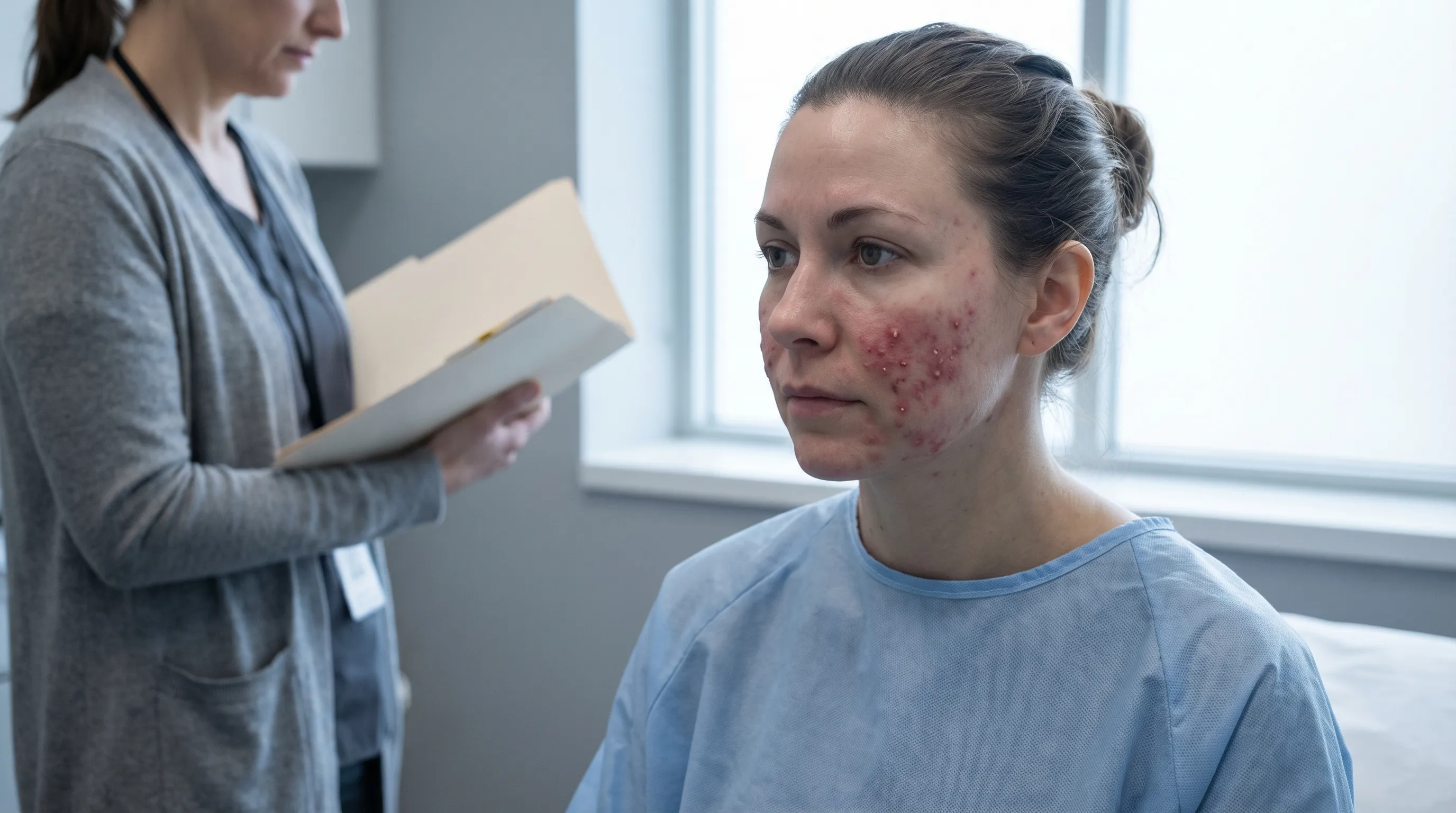
The sudden and dramatic nature of pyoderma faciale often catches both patients and general practitioners off guard. Historically documented in the mid-20th century, the condition was initially misclassified as an aggressive infectious process. Today, dermatology recognizes it as an extreme, acute variant of rosacea with a distinct pathophysiology. Because it strikes rapidly and progresses aggressively, early recognition is critical. Delaying specialist care can lead to prolonged discomfort, psychological distress, and permanent facial scarring. Understanding the nuances of this condition empowers patients to seek appropriate intervention quickly and navigate the treatment journey with confidence. This comprehensive resource breaks down the medical science, clinical management, and practical coping strategies associated with pyoderma faciale.
What is Pyoderma Faciale?
Pyoderma faciale (Latin for "facial skin with pus") is a rare, severe skin disorder characterized by a rapid eruption of painful, red pustules and nodules on the face. Despite its name, it is not a classic infection but is considered an unusual and extreme form of rosacea. This is why it is also called Rosacea Fulminans.
Key characteristics include:
- Location: Affects only the face, typically the cheeks, chin, and forehead. It does not appear on the chest or back.
- Sudden Onset: The outbreak appears suddenly over days or weeks, often on previously clear skin.
- Severity: The lesions are severe and inflammatory, including papules (small red bumps), pustules (pus-filled pimples), and nodules (large, painful lumps).
- No Comedones: Unlike typical acne, blackheads or whiteheads (comedones) are absent, a key diagnostic clue.
- Who It Affects: It almost exclusively affects adult women, often in their 20s to 40s.
Because of its dramatic appearance, pyoderma faciale can be emotionally challenging. However, the condition is treatable, and most people recover well with proper medical care.
Patient Story: “I felt like my face was on fire—swollen, red, and covered in painful bumps that seemed to appear overnight. I was afraid to leave the house. I had never had bad acne before, so I didn’t know what was happening. It turned out I had pyoderma faciale. With treatment, thankfully, my skin started to get better in a few months. It was a tough journey, but knowing what I was dealing with helped me cope.” – Anonymous patient.
From a dermatopathological perspective, pyoderma faciale represents a profound dysregulation of the innate immune system within the facial skin. Histological examination typically reveals a dense infiltrate of neutrophils and lymphocytes in the upper and mid dermis, perifollicular granulomatous inflammation, and significant vascular dilation. Unlike acne vulgaris, where follicular hyperkeratinization and Cutibacterium acnes colonization play central roles, pyoderma faciale is driven by an aberrant neurovascular and inflammatory cascade. The facial vasculature becomes hyperreactive, leading to plasma extravasation and tissue edema, which contributes to the intense swelling and erythema. Recognizing this distinct biological mechanism is essential, as it explains why traditional acne treatments often fail and why systemic immunomodulation becomes necessary.
What Causes Pyoderma Faciale?
The exact cause of pyoderma faciale is not fully understood. It is an inflammatory condition where the body's immune system overreacts in the skin of the face.
Potential causes and risk factors include:
- Hormonal Influence: Many cases appear shortly after pregnancy (postpartum) or after changes in oral contraceptive use, suggesting hormonal fluctuations may be a trigger.
- Stress and Immune Response: Severe emotional or physical stress has been noted in some cases prior to onset. It's thought to be a type of "immune system storm" in the skin.
- Underlying Rosacea: While many patients have no prior history of rosacea, experts believe a predisposition to it may be an underlying factor.
- Not a Bacterial Infection: Despite the "pyo-" prefix, it is not primarily a bacterial infection and is not contagious. While normal skin bacteria may be present, they are not the root cause.
- Possible Triggers: Other reported triggers include severe sun exposure, inappropriate use of topical steroids on the face, and high doses of certain B vitamins (B6 and B12).
Often, no single cause is identified, and the condition appears idiopathically (without a known reason).
Emerging research points toward a complex interplay between cutaneous microbiota, neuropeptide signaling, and barrier dysfunction. The density of Demodex folliculorum mites on the face has been implicated in rosacea pathogenesis, and while not causative for pyoderma faciale alone, an exaggerated immune response to these commensal organisms may amplify the inflammatory cascade. Additionally, disruptions in the skin's physical and microbiological barrier can allow environmental antigens and irritants to penetrate deeper into the dermis, triggering toll-like receptor 2 (TLR2) activation. This leads to the overproduction of antimicrobial peptides like cathelicidin LL-37 and matrix metalloproteinases, which break down collagen, promote angiogenesis, and sustain chronic inflammation. Understanding these pathways helps explain why barrier repair and immunosuppression form the cornerstone of therapeutic management.
Symptoms and Signs
Pyoderma faciale is characterized by a dramatic appearance. The common symptoms and clinical features include:
- Severe Red Bumps: Numerous red papules and larger, tender nodules appear in clusters on the cheeks, chin, and forehead.
- Pustules: Many bumps are filled with white or yellow pus.
- Facial Redness and Swelling: The surrounding skin is typically very red, inflamed, and swollen.
- Rapid Onset: The eruption develops quickly, over a few days to weeks.
- Burning or Pain: The lesions are often painful, with sensations of burning or stinging.
- No Body Involvement: The lesions are confined to the face, distinguishing it from conditions like acne fulminans or acne conglobata, which affect the chest and back.
- Emotional Distress: The sudden and severe facial changes can significantly impact self-esteem, leading to anxiety and social withdrawal.
The progression of symptoms often follows a recognizable clinical timeline. Initially, patients may experience a brief prodromal phase marked by facial flushing, heightened skin sensitivity, and mild edema. Within a matter of days, this escalates into a fulminant eruption. The pustules in pyoderma faciale are typically sterile, meaning they contain neutrophils and inflammatory debris rather than live bacteria, though secondary bacterial colonization can occasionally occur if the skin barrier is severely compromised. Patients frequently report that lesions weep clear or serosanguineous fluid, which dries into crusts. The intense inflammation can also lead to localized lymphadenopathy, where the lymph nodes under the jaw or in the neck become slightly enlarged and tender as they work to clear cellular debris. Importantly, the absence of comedones remains a hallmark feature, reinforcing that sebaceous gland plugging is not the primary driver of the eruption.
How is Pyoderma Faciale Different from Other Skin Conditions?
- Versus Common Acne (Acne Vulgaris): Acne typically includes blackheads and whiteheads (comedones), affects the chest and back, and develops gradually. Pyoderma faciale has no comedones, is confined to the face, and has a sudden onset.
- Versus Rosacea: Standard rosacea involves persistent redness, visible blood vessels, and milder papules/pustules that wax and wane. Pyoderma faciale is an explosive, severe, one-time eruption of nodules and pustules, often without a prior history of rosacea.
- Versus Acne Fulminans: Acne fulminans affects adolescent males, involves the face and body, and is accompanied by systemic symptoms like fever and joint pain. Pyoderma faciale affects adult women, is only on the face, and does not cause systemic illness.
- Versus Pyoderma Gangrenosum: This is an unrelated condition causing large, painful skin ulcers, typically on the legs, and is associated with systemic diseases.
"Pyoderma faciale is one of the most severe facial skin eruptions we encounter, but it’s also one we can treat effectively if diagnosed early. It’s crucial for patients to see a dermatologist promptly to prevent permanent scarring." - Board-Certified Dermatologist
Accurate differentiation is vital because misdiagnosis often leads to inappropriate treatment that exacerbates the condition. For instance, prescribing topical retinoids or benzoyl peroxide—standard for acne vulgaris—can severely irritate the already compromised barrier in pyoderma faciale, triggering further inflammation. Similarly, mistaking it for bacterial cellulitis may lead to unnecessary broad-spectrum antibiotic courses that fail to address the underlying immune dysregulation. Clinicians also carefully distinguish it from lupus miliaris disseminatus faciei, which presents with smaller, more uniform papules and typically lacks the acute, explosive onset and marked pustulation. Dermoscopy, a non-invasive imaging technique, can further aid differentiation by revealing characteristic vascular patterns, focal white areas, and yellowish crusting specific to pyoderma faciale.
Diagnosis
A diagnosis is typically made by a dermatologist based on a clinical examination and medical history.
- Medical History: The doctor will ask about the sudden timeline of symptoms and recent events like pregnancy, new medications, or high stress levels.
- Physical Examination: The dermatologist will look for the characteristic pattern: severe papules, pustules, and nodules on the face without comedones.
- Laboratory Tests: These are used to rule out other conditions.
- A bacterial culture can exclude a staph infection.
- A skin biopsy may be performed to examine the tissue, which will show intense inflammation consistent with a severe rosacea-like reaction.
An accurate diagnosis from a dermatologist is crucial, as the condition is rare and can be misdiagnosed.
The diagnostic process is largely clinical, but ancillary testing plays a supportive role. During the consultation, a comprehensive medication review is conducted to identify potential culprits like corticosteroid withdrawal, lithium therapy, or topical immunomodulators. In ambiguous cases, reflectance confocal microscopy (RCM) may be utilized as a non-invasive alternative to biopsy, allowing real-time visualization of inflammatory cells, vascular dilation, and follicular architecture at a cellular resolution. When a punch biopsy is performed, pathologists look for follicular rupture, mixed inflammatory infiltrates (predominantly neutrophils and lymphocytes), and dermal edema without evidence of true vasculitis or infectious organisms. Blood work, while not diagnostic, often includes a complete blood count, C-reactive protein, and erythrocyte sedimentation rate to assess systemic inflammatory burden and rule out underlying autoimmune disorders that could mimic the presentation.
Treatment Options for Pyoderma Faciale
Prompt and aggressive treatment is vital to control the condition and prevent scarring. Over-the-counter remedies are not effective.
- Oral Corticosteroids: A short course of a systemic steroid like prednisone is often prescribed first to quickly reduce severe inflammation, pain, and swelling.
- Oral Isotretinoin (Accutane): This is the mainstay of treatment. Isotretinoin, a powerful vitamin A derivative, reduces oil production and has potent anti-inflammatory effects. Treatment usually starts at a low dose while the patient is on steroids and continues for 4-6 months. Due to the risk of severe birth defects, women of childbearing age must use strict contraception.
- Antibiotics: Oral antibiotics with anti-inflammatory properties, such as doxycycline or minocycline, may be used initially but are generally not sufficient alone. They are stopped if isotretinoin is started.
- Skincare and Supportive Measures:
- Gentle Cleansing: Use a mild, non-irritating cleanser and pat skin dry.
- Moisturizing: A gentle, fragrance-free moisturizer helps repair the skin barrier.
- Sun Protection: Daily use of a broad-spectrum sunscreen (SPF 30+) is essential, as UV exposure can worsen inflammation. Mineral-based sunscreens are often best for sensitive skin.
- Avoid Triggers: Minimize exposure to common rosacea triggers like spicy foods, alcohol, and extreme temperatures.
- Don’t Pick Lesions: Picking or squeezing can worsen inflammation and increase the risk of scarring.
- Follow-up and Aftercare: After the active disease is controlled, your dermatologist may recommend maintenance therapy. If scarring has occurred, procedures like laser therapy or microneedling can be considered once the skin has fully healed.
Treatment requires a carefully calibrated, phased approach. The initial priority is rapid inflammation suppression. Prednisone is typically tapered over 4 to 6 weeks to avoid rebound flares. As the acute phase stabilizes, low-dose isotretinoin (0.3–0.5 mg/kg/day) is introduced and gradually adjusted. This slower, lower-dose initiation minimizes the risk of an initial flare that can sometimes occur with retinoid therapy. Throughout treatment, dermatologists monitor liver function tests and lipid panels, as isotretinoin can temporarily elevate triglycerides and transaminases. For patients who cannot tolerate isotretinoin or experience contraindications, alternative regimens may include dapsone, hydroxychloroquine, or biologic agents like adalimumab, though these are reserved for refractory cases and managed by specialized dermatologists. Adjunctive therapies such as topical azelaic acid or ivermectin may be incorporated during the maintenance phase to target Demodex mites and residual papulopustular activity. Consistent follow-up every 4 to 6 weeks ensures therapeutic efficacy while managing side effects like cheilitis, dry mucous membranes, and photosensitivity.
Prognosis
With appropriate treatment, the prognosis for pyoderma faciale is generally good.
- Response to Treatment: Most patients see significant improvement within a few months of consistent therapy.
- Scarring: Early and effective treatment minimizes the risk of permanent scarring.
- Recurrence: Pyoderma faciale is often a once-in-a-lifetime event. While some individuals may develop milder rosacea symptoms later, a recurrence of the same severity is rare.
Long-term outcomes heavily depend on treatment adherence and timely specialist intervention. When the inflammatory cascade is halted early, the skin's natural healing processes can restore architectural integrity without leaving significant textural damage. However, deep nodular involvement that extends into the reticular dermis may result in atrophic or hypertrophic scarring. These sequelae are best addressed only after complete disease remission, typically waiting 6 to 12 months post-flare to ensure skin stability before initiating laser resurfacing, subcision, or filler-based corrections. Patients should be counseled that while the acute episode resolves, the underlying rosacea diathesis may require ongoing, gentle maintenance skincare to prevent future mild flare-ups. With proper guidance, most individuals achieve clear skin and return to their normal quality of life within 6 to 12 months.
Living with Pyoderma Faciale: Tips and Advice
- Follow Your Treatment Plan: Adhere strictly to your dermatologist's instructions. Completing the full course of medication is key to a successful outcome.
- Adopt a Gentle Skincare Routine: Use products designed for sensitive or rosacea-prone skin. Avoid harsh scrubs, astringents, and fragrances.
- Protect Your Skin from the Sun: Sun protection is non-negotiable. Wear sunscreen, hats, and seek shade.
- Seek Psychological Support: The condition can be emotionally taxing. Talk to friends, family, or a mental health professional. Online support groups for rosacea and severe acne can also be a source of comfort.
Remember, pyoderma faciale is a treatable medical condition. Be patient with the healing process and maintain open communication with your healthcare provider.
Navigating daily life during an active flare requires practical adjustments and mindful self-care. Many patients find temporary relief with cool compresses applied for 5–10 minutes several times daily to reduce burning sensations and vasoconstrict superficial blood vessels. When it comes to cosmetics, non-comedogenic, mineral-based tinted sunscreens or green-tinted color correctors can help mask erythema without irritating the skin or clogging pores. Patients are advised to avoid steam rooms, hot yoga, and saunas until remission, as extreme heat can provoke neurovascular dilation. Dietary modifications, while not a cure, may help modulate inflammation: incorporating omega-3 fatty acids, reducing refined sugars, and maintaining adequate hydration support overall skin barrier recovery. On a psychosocial level, it is entirely normal to experience frustration, anxiety, or depression during recovery. Engaging with licensed therapists who specialize in chronic skin conditions, utilizing cognitive-behavioral techniques for body image concerns, and setting realistic expectations about the healing timeline can significantly improve emotional resilience. Employers and educators should be informed if temporary remote work or flexible scheduling is needed to reduce stress during acute treatment phases.
Research and Further Reading
- Mayo Clinic – Rosacea (Pyoderma Faciale): An excellent clinical resource with images and detailed information.
- American Academy of Dermatology – Rosacea Resource Center: Provides general information on rosacea types and skincare.
- Case Report: Rosacea Fulminans (Pyoderma Faciale) in a 15-Year-Old Girl Successfully Treated with Isotretinoin: A detailed case study from the Journal of Clinical and Aesthetic Dermatology.
- Cleveland Clinic – Rosacea Patient Guide: A patient-friendly overview of rosacea and its management.
For those interested in the latest clinical advances, peer-reviewed journals such as the Journal of the American Academy of Dermatology, British Journal of Dermatology, and Dermatology Practical & Conceptual regularly publish updated guidelines and therapeutic algorithms for severe rosacea variants. The National Rosacea Society (NRS) also maintains a comprehensive patient database, tracks ongoing clinical trials, and publishes expert consensus recommendations on diagnosis and management. Reviewing evidence-based literature empowers patients to engage in informed discussions with their healthcare providers and stay current on emerging therapies like novel cytokine inhibitors and microbiome-targeted topicals.
Conclusion
Pyoderma faciale (rosacea fulminans) is a rare but serious condition that can be physically and emotionally overwhelming. The most important takeaway is that effective treatments are available. With prompt diagnosis and a comprehensive treatment plan from a dermatologist, typically involving corticosteroids and isotretinoin, the condition can be brought into remission, minimizing the risk of scarring. Be kind and patient with yourself during the healing journey, and don't hesitate to seek support for both your skin and your mental well-being.
The journey through pyoderma faciale is often intense, but it is temporary and highly manageable under expert care. Advances in dermatopharmacology and a deeper understanding of cutaneous immunology have transformed what was once considered a disfiguring, treatment-resistant disorder into a highly responsive condition. By partnering closely with a board-certified dermatologist, adhering to a structured therapeutic regimen, and implementing gentle, consistent skincare practices, patients can expect a full recovery. Remember that seeking help early, advocating for your health, and prioritizing both physical and psychological wellness are the most powerful tools in overcoming this condition. Your skin can and will heal.
Disclaimer: This article is for informational purposes only and is not a substitute for professional medical advice. If you suspect you have pyoderma faciale, consult a qualified dermatologist for proper diagnosis and treatment.
Frequently Asked Questions
Is pyoderma faciale contagious?
No, pyoderma faciale is absolutely not contagious. Despite the "pyo-" prefix in its name, which translates to pus, the condition is driven by a severe, dysregulated inflammatory response rather than a bacterial, viral, or fungal infection. You cannot transmit it to others through skin-to-skin contact, sharing towels, or using cosmetics, and it does not require isolation precautions.
Can over-the-counter acne products help clear pyoderma faciale?
No, over-the-counter acne treatments like benzoyl peroxide, salicylic acid, or standard retinol creams are generally ineffective and can significantly worsen pyoderma faciale. These products are designed to treat follicular hyperkeratinization and C. acnes overgrowth, which are not the primary drivers of this condition. Using them on an already inflamed, compromised skin barrier typically increases redness, stinging, and tissue damage. Medical-grade systemic therapy is required for resolution.
How long does it take for the skin to completely heal after starting treatment?
While noticeable improvement usually occurs within 4 to 6 weeks of initiating appropriate therapy (often a combination of oral corticosteroids and isotretinoin), complete resolution typically takes 3 to 6 months. Isotretinoin treatment is generally continued for a full 4 to 6-month course to ensure deep inflammation is fully suppressed and to prevent rebound flares. Any residual erythema or textural irregularities continue to fade gradually over the subsequent 6 to 12 months as the skin remodels.
Will I need to take isotretinoin again in the future?
Most patients only require a single course of isotretinoin for pyoderma faciale, as it is typically considered a one-time, acute event. Once the medication course is completed and the skin stabilizes, long-term retinoid maintenance is usually unnecessary. However, because pyoderma faciale exists on the severe end of the rosacea spectrum, some individuals may develop mild rosacea symptoms later in life, which can often be managed with gentle skincare and occasional topical treatments rather than another systemic isotretinoin course.
What should I do if I'm pregnant or planning to become pregnant during treatment?
Isotretinoin is a potent teratogen that carries a severe risk of life-threatening birth defects, making it strictly contraindicated during pregnancy and breastfeeding. Women of childbearing potential must enroll in a strict pregnancy prevention program (such as iPLEDGE in the United States), which requires two forms of highly effective contraception starting one month before treatment, continuing throughout treatment, and for one full month after stopping the medication. If you suspect you are pregnant or are actively planning a pregnancy, inform your dermatologist immediately so alternative, pregnancy-safe anti-inflammatory treatments like specific oral antibiotics or topical azelaic acid can be discussed.
How we work
Researched and drafted with AI assistance, then reviewed by a human editor against the cited sources.
This article is general health information, not medical advice. Consult a qualified healthcare professional about your own situation.