Left Palm Itching: Medical Causes vs. Spiritual Superstitions

Key points
- Left Palm Itching: Often thought to mean you will have to pay out money.
- Right Palm Itching: Believed to signify you are about to receive money.
An unexpected itch in your left palm can make your mind wander. Does it mean money is coming your way, or is it a sign you’re about to lose some? For centuries, this simple sensation has been wrapped in folklore and superstition. But beyond the old tales, a persistent itch can also be your body's way of signaling an underlying medical issue.
This comprehensive guide delves into both worlds, exploring the rich tapestry of spiritual meanings associated with a left palm itching and the practical, science-backed medical reasons for it. We'll help you understand what your body might be telling you and when it's time to listen more closely.
Itching, clinically referred to as pruritus, is a remarkably common sensory complaint that affects millions of people worldwide. While it can occur anywhere on the body, localized palm pruritus often prompts immediate attention due to its impact on daily function and the dense concentration of sensory nerve endings in the hands. The skin on the palms lacks the sebaceous glands found elsewhere on the body, making it uniquely vulnerable to dehydration, environmental irritants, and inflammatory processes. Understanding whether your symptom stems from cultural symbolism or physiological dysfunction requires a careful evaluation of duration, severity, accompanying signs, and personal medical history. By bridging traditional beliefs with modern dermatological science, we can navigate the intersection of myth and medicine with clarity and confidence.
The Folklore and Superstitions Behind an Itchy Left Palm
The belief that itchy palms are connected to money is one of the most enduring superstitions. However, the specific meaning can be surprisingly contradictory, often changing based on which hand is itching, your gender, and your cultural background.
Free calculatorA1C CalculatorA1C to average blood glucoseOpen the calculatorHistorically, palm-related omens trace back to ancient divination practices. In Greco-Roman antiquity, bodily twitches and sensations were carefully cataloged in texts like the "Suda" and various dream interpretation manuals, where physical signs were believed to predict future events. During the medieval and Victorian eras, these beliefs became deeply embedded in Western folk culture. The association with currency emerged naturally in societies transitioning to coin-based economies, where the physical handling of silver and copper made tactile sensations highly symbolic. Over time, what began as practical observations about manual labor and skin irritation evolved into elaborate fortune-telling traditions.
A Tangled Web of Meanings: Money In or Money Out?
While many people associate an itchy left palm with receiving money or good fortune, this isn't a universal belief. In fact, one of the most common Western interpretations suggests the opposite:
- Left Palm Itching: Often thought to mean you will have to pay out money.
- Right Palm Itching: Believed to signify you are about to receive money.
To counteract the potential financial loss from an itchy left palm, folklore suggests you "knock on wood" or rub your palm on a piece of wood. This action is thought to ground the energy and prevent the money from leaving your possession.
Psychologists often point to confirmation bias and the Barnum effect as reasons why these superstitions persist. When an itchy left palm coincides with an unexpected expense, the mind reinforces the superstition; when it does not, the event is quickly forgotten. This selective memory strengthens cultural transmission across generations, even in an age of scientific literacy. Additionally, the tactile nature of the symptom makes it highly personal and memorable, which further cements its place in oral tradition and modern social media trends.
The Influence of Gender and Culture
The interpretation of an itchy palm can become even more complex when gender and culture are considered.
- Gender-Specific Beliefs: In India, the meaning is often reversed and gender-dependent. An itchy left palm is considered a sign of good fortune and incoming wealth for women, as it signifies the goddess Lakshmi's favor. For men, however, it can be an omen of financial loss.
- Cultural Variations: The superstition's roots trace back to ancient European cultures. The Saxons believed rubbing an itchy palm on silver could cure disease, which evolved into the belief that the itch itself was a sign of coming silver. The Celts believed in touching wood to ward off evil and secure good luck. In some Caribbean cultures, an itchy left palm is a sign you will soon lose money.
Spiritually, the left side of the body is often seen as the receptive or feminine side, connected to intuition and receiving energy. This is why many spiritual traditions interpret an itchy left palm as a sign you are about to receive a gift, whether it's material wealth, a spiritual insight, or a new opportunity.
In East Asian traditions, particularly within Chinese metaphysics, the left hand represents the "incoming" flow of Qi for women, while for men, the right hand typically governs active energy and career progression. African diasporic folklore often interprets an itchy left palm as a prompt to prepare for unexpected financial demands, sometimes accompanied by rituals involving coins or salt to "bind" wealth. Regardless of the specific tradition, the universal thread is the human desire to find meaning in physical sensations and to exert some sense of control over unpredictable economic outcomes through symbolic action.
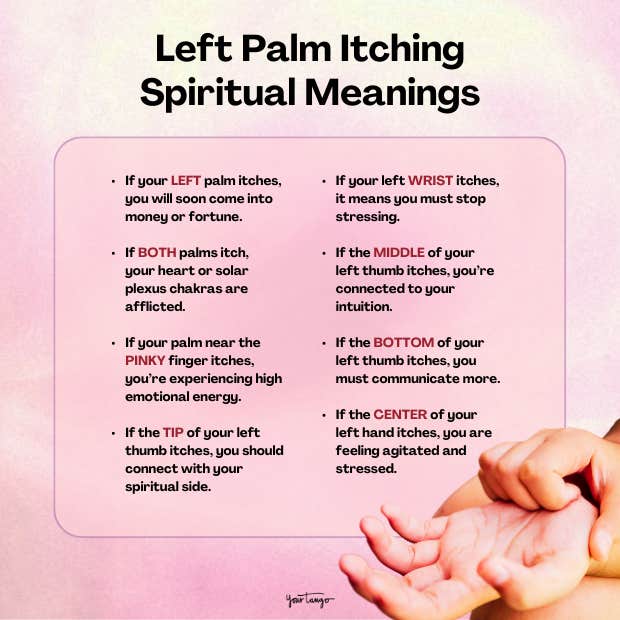
Image Source: YourTango
When to Listen to Your Body: Medical Causes of an Itchy Left Palm
While superstitions can be fun, a persistent or severe itch often has a clear medical explanation. If your left palm won't stop itching, it’s more likely a sign from your skin or an internal health issue than from your bank account. Pruritus without an obvious external trigger warrants a systematic approach, beginning with the integumentary system and expanding to systemic, neurological, and metabolic pathways if initial dermatological management proves insufficient.
Common Skin Conditions (Benign Causes)
Most often, itchy palms are caused by a condition that is localized to the skin and can be managed with proper care.
- Dry Skin (Xerosis): This is one of the most frequent culprits, especially during cold winter months or with frequent handwashing. The skin can feel tight and may show signs of flaking or cracking. The palms lack oil glands, relying instead on natural moisturizing factors and ceramide-rich lipid layers to maintain hydration. When environmental humidity drops or harsh surfactants strip the skin barrier, transepidermal water loss accelerates, triggering sensory nerve endings that signal itch. Repeated exposure to hot water or alcohol-based sanitizers exacerbates this process, creating micro-fissures that further compromise barrier integrity.
- Eczema (Atopic Dermatitis): A common inflammatory condition that causes itching, redness, and dryness. A specific type called dyshidrotic eczema can cause small, intensely itchy blisters to form on the palms and sides of the fingers. Also known as pompholyx, this condition is strongly linked to seasonal changes, stress, hyperhidrosis (excessive sweating), and nickel sensitivity. The blisters typically appear deep-seated and "tapioca-like," eventually drying and peeling. Chronic scratching can lead to lichenification, where the skin thickens and develops pronounced lines, creating a self-perpetuating itch-scratch cycle mediated by substance P and interleukin-31 release.
- Allergic Reactions (Contact Dermatitis): Your skin may be reacting to something it touched. Common triggers include nickel in jewelry, fragrances in soaps and lotions, latex gloves, and cleaning chemicals. Symptoms can include a rash, hives, or a burning sensation. Contact dermatitis is divided into allergic (type IV delayed hypersensitivity) and irritant (direct chemical damage) subtypes. Allergenic reactions often require 48-72 hours to manifest, making the culprit difficult to identify without patch testing. Occupational exposure to rubber accelerants, preservatives like methylisothiazolinone, or industrial solvents significantly increases risk for chronic palm involvement.
- Psoriasis: This chronic autoimmune disorder causes the rapid buildup of skin cells, resulting in thick, red, or silvery scaly patches that can be very itchy. Palmoplantar psoriasis specifically targets the hands and feet, often presenting with painful fissures, pustules, and well-demarcated erythematous plaques. The Koebner phenomenon—where new lesions form at sites of skin trauma or friction—is particularly relevant for individuals who perform repetitive manual labor. Unlike eczema, psoriatic plaques tend to be thicker with more defined borders, and the itch is frequently accompanied by a burning or stinging sensation rather than pure pruritus.
- Fungal Infections (Tinea Manuum): Often overlooked, dermatophyte infections can present unilaterally, meaning they may affect only the left palm while sparing the right. Commonly referred to as "two feet-one hand syndrome," tinea manuum frequently accompanies athlete's foot. The infection typically begins at the creases of the palm, spreading outward with a characteristic scaly, annular border. Microscopic examination or potassium hydroxide (KOH) prep can confirm the presence of hyphae. Antifungal resistance or improper topical application can prolong symptoms, mimicking chronic eczema or psoriasis if misdiagnosed.
Potential Signs of a Serious Underlying Condition
In some cases, itchy palms can be a symptom of a systemic health issue. These causes are less common and are usually accompanied by other symptoms.
- Liver Disease: Conditions like primary biliary cholangitis (PBC) and cirrhosis can cause intense itching, particularly on the palms and soles of the feet. This happens when bile salts build up under the skin. Other symptoms may include jaundice (yellowing skin/eyes), nausea, dark urine, and fatigue. Cholestatic pruritus is mediated by the accumulation of lysophosphatidic acid and autotaxin, which activate sensory nerve receptors. The itch is notoriously worse at night and on the palms and soles, significantly impacting sleep quality and mental well-being. It often precedes visible jaundice, making early hepatic function testing critical for unexplained, persistent palm itching.
- Diabetes: High blood sugar levels can lead to dry skin all over the body. Furthermore, a complication called diabetic neuropathy, which is damage to the nerves, can cause itching, tingling, and numbness in the hands and feet. Chronic hyperglycemia promotes advanced glycation end-product (AGE) formation, which damages microvasculature and impairs sweat gland function. Small fiber neuropathy alters nerve signaling, sometimes manifesting as localized pruritus before progressing to pain or complete numbness. Patients with long-standing or poorly controlled diabetes should undergo routine neurological screening, even if cutaneous symptoms are the primary complaint.
- Nerve Disorders: Conditions that compress or damage nerves in the wrist and hand, like carpal tunnel syndrome, can cause itching, pain, and numbness in the palm. This sensation is often worse at night. The median nerve governs sensation in the thumb, index, middle, and radial half of the ring finger, but nerve compression can sometimes produce atypical referred sensations, including dysesthetic itch. Cervical radiculopathy, particularly C6-C7 disc herniation, can also refer pruritic sensations to the palmar surface. Neurological pruritus typically does not respond to standard antihistamines, necessitating gabapentinoids, topical anesthetics, or nerve block interventions.
- Reactions to Medication: Some medications can trigger a histamine reaction in the body that leads to widespread itching, which can be particularly noticeable in the hands and feet. Common offenders include opioids, ACE inhibitors, statins, allopurinol, and certain antibiotics. Drug-induced pruritus can occur with or without a visible rash, and onset may be delayed weeks after initiating therapy. Opioids, in particular, directly stimulate mast cells and central opioid receptors, making localized palm itching a recognized side effect that often resolves with dose adjustment or alternative analgesia.
- Kidney Disease: When kidneys fail to filter waste from the blood properly, the buildup of toxins can cause severe skin itching. Known as uremic pruritus, this condition affects up to 40-70% of patients undergoing hemodialysis. The pathophysiology involves hyperphosphatemia, calcium-phosphate deposition, secondary hyperparathyroidism, and systemic inflammation. The itch is frequently symmetric but may feel disproportionately intense on the palms. Unlike typical allergic reactions, it resists conventional antihistamines and often requires specialized management including optimized dialysis adequacy, gabapentin, difelikefalin (a selective kappa-opioid receptor agonist), and strict dietary phosphorus control.
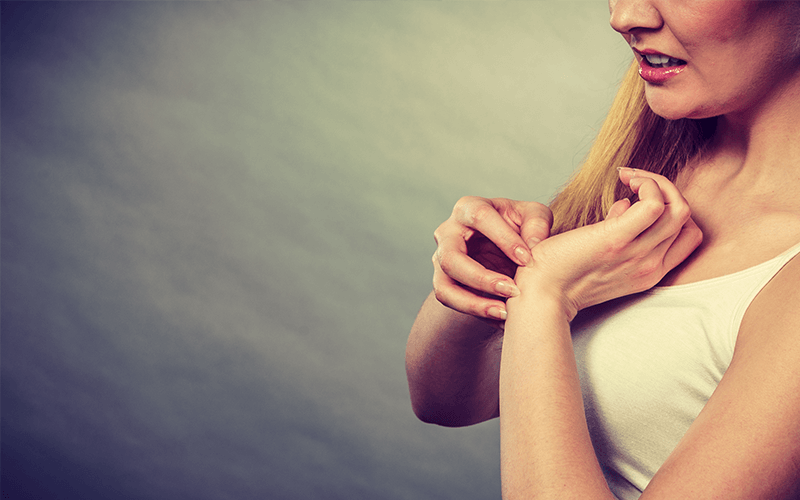
Image Source: U.S. Dermatology Partners
Differential Diagnosis: How to Tell the Difference
Distinguishing between a simple skin irritation and a more serious issue involves paying attention to the context and any other symptoms you may have. A structured clinical approach begins with a thorough patient history, focusing on occupational exposures, new personal care products, medication timelines, travel history, and family medical background. Clinicians will also assess the pattern of itch (paroxysmal vs. constant, circadian variation), response to prior treatments, and impact on sleep or daily activities.
| Clue | Likely a Benign Skin Issue | Potential Red Flag for a Serious Condition |
|---|---|---|
| Skin Appearance | A visible rash, blisters, dry patches, or scales are present. | The skin appears normal; there is itching without a rash. |
| Accompanying Symptoms | Itching and localized skin changes are the primary issues. | Systemic symptoms are present, such as jaundice, fatigue, numbness, tingling, or unexplained weight loss. |
| Triggers & Timing | Itching starts after using a new product, during allergy season, or in cold weather. | The itching is persistent, getting worse over time, and doesn't respond to home remedies. |
| Medical History | You have a known history of allergies, eczema, or psoriasis. | You have a personal or family history of diabetes, liver disease, or kidney disease. |
When primary care evaluation remains inconclusive, referral pathways are determined by clinical suspicion. Dermatologists utilize patch testing, skin biopsies, and potassium hydroxide preparations to rule out contact allergens and fungal infections. If systemic disease is suspected, a comprehensive metabolic panel, complete blood count, fasting glucose/HbA1c, liver enzymes, thyroid-stimulating hormone (TSH), and renal function tests provide crucial data. For neuropathic presentations, nerve conduction studies (NCS) and electromyography (EMG) assess median nerve integrity, while cervical MRI may be indicated if radiculopathy is suspected. Understanding that "pruritus without rash" is a distinct clinical entity requiring systematic investigation helps prevent delayed diagnosis of treatable systemic disorders.
How to Find Relief: Treatments and Home Remedies for Itchy Palms
Whether the cause is medical or just a temporary irritation, you can take steps to soothe the itch. Effective management requires addressing both the symptom and the underlying trigger, combining immediate relief strategies with long-term skin barrier restoration and lifestyle adjustments.
At-Home Care
- Apply a Cool Compress: Placing a cool, damp cloth or an ice pack on your palm for 5-10 minutes can provide immediate relief. Cold therapy temporarily slows nerve conduction velocity, reducing the transmission of itch signals to the spinal cord. For sustained relief, avoid direct ice contact to prevent cold-induced urticaria or frostbite, especially if the skin barrier is already compromised.
- Moisturize Regularly: Use a high-quality, fragrance-free moisturizer or a thick cream, especially after washing your hands. According to Dr. Sital Patel, a board-certified dermatologist, "Each time you wash your hands, some of the skin’s natural oils go down the drain... The best line of defense is to rinse your hands in lukewarm water and moisturize with thick cream or ointment often throughout the day." Look for formulations containing ceramides, hyaluronic acid, glycerin, and petrolatum. Ointments provide superior occlusion but may feel greasy, while creams offer a balance of hydration and cosmetic elegance. Apply moisturizer within three minutes of washing to trap residual water in the stratum corneum.
- Avoid Triggers: If you suspect an allergy, avoid contact with the irritant. Switch to gentle, fragrance-free soaps and cleaning products. Read ingredient labels carefully, avoiding methylisothiazolinone, formaldehyde releasers, and sodium lauryl sulfate (SLS), which are notorious for disrupting the skin microbiome and lipid barrier. Transition to pH-balanced, syndet (synthetic detergent) cleansers that match the skin's natural acidic mantle (pH 4.5-5.5).
- Wear Protective Gloves: Use waterproof gloves when washing dishes or cleaning to protect your hands from harsh chemicals and hot water. For tasks involving dry materials like flour, soil, or dust, cotton-lined gloves are preferable to prevent sweat accumulation, which can exacerbate dyshidrotic eczema. Remove gloves promptly after use and apply moisturizer to counteract microclimate-induced maceration.
- Modify Scratching Habits: Scratching provides momentary relief through pain-gate inhibition but ultimately damages the epidermis and releases more inflammatory mediators, worsening the itch-scratch cycle. Practice "pressure substitution" by gently pressing, tapping, or pinching the area instead of scratching. Keep fingernails trimmed short and filed smooth to minimize epidermal damage during involuntary nighttime scratching. Wearing thin cotton gloves to bed can further protect the skin barrier while you sleep.
Medical Treatments
If at-home care isn't enough, a doctor may recommend:
- Topical Steroids: Over-the-counter or prescription corticosteroid creams can reduce inflammation and itching associated with eczema and contact dermatitis. Low-potency steroids like hydrocortisone 1% are suitable for short-term facial or mild hand use, while higher-potency formulations (e.g., clobetasol propionate, triamcinolone acetonide 0.1%) require medical supervision to prevent skin atrophy, telangiectasia, and tachyphylaxis. Pulse therapy—applying steroids intermittently rather than continuously—maximizes efficacy while minimizing adverse effects.
- Antihistamines: Oral antihistamines can help relieve itching caused by allergic reactions. First-generation options like diphenhydramine or hydroxyzine cross the blood-brain barrier and provide sedation, which can be beneficial for nighttime itch. Second-generation agents like cetirizine, fexofenadine, and loratadine offer 24-hour relief with minimal drowsiness. However, it is crucial to note that antihistamines are largely ineffective for non-histaminergic itch, including neuropathic, uremic, or cholestatic pruritus.
- Underlying Condition Management: If the itch is due to a condition like diabetes or liver disease, treating the root cause is the most effective way to manage the symptom. This includes optimizing glycemic control with diet, exercise, and pharmacotherapy; administering bile acid sequestrants (cholestyramine, colestipol) or opioid antagonists (naltrexone) for cholestasis; and adjusting dialysis protocols or prescribing kappa-opioid agonists for uremic pruritus. Collaboration between dermatology, gastroenterology, nephrology, or endocrinology often yields the best outcomes.
- Light Therapy (Phototherapy): For severe cases of psoriasis or eczema, a dermatologist may use ultraviolet (UV) light therapy to help control symptoms. Narrowband UVB and targeted excimer laser therapy reduce inflammatory cell proliferation and induce T-cell apoptosis in affected skin. Treatment typically requires two to three sessions per week for 6-8 weeks. Handheld UV devices are available for home use under strict medical supervision, ensuring precise dosimetry and minimizing cumulative photodamage.
- Non-Steroidal Topical Agents: Topical calcineurin inhibitors (tacrolimus, pimecrolimus) and phosphodiesterase-4 inhibitors (crisaborole) offer steroid-sparing alternatives for long-term maintenance, particularly on thin-skinned areas or when skin atrophy is a concern. These modulate local immune responses without affecting systemic hormone levels.
Preventive Strategies & Long-Term Skin Maintenance
Beyond acute treatment, establishing a consistent hand care routine is essential for preventing recurrence. This includes maintaining indoor humidity at 40-60%, especially during heating seasons; staying adequately hydrated to support systemic tissue perfusion; incorporating omega-3 fatty acids and vitamin E into your diet to support lipid membrane integrity; and practicing stress-reduction techniques like mindfulness, yoga, or cognitive-behavioral therapy, as psychological stress directly elevates cortisol and histamine levels. Tracking symptoms in a dedicated journal can help identify patterns related to diet, weather, occupational exposures, or emotional triggers, empowering patients to participate actively in their care.
Conclusion
An itchy left palm sits at a unique crossroads of folklore and physiology. While it's enjoyable to hope for a financial windfall, it's crucial not to dismiss a persistent physical symptom. Pay attention to what your body is telling you. If the itch is severe, lasts for more than a few days, or is accompanied by any of the red-flag symptoms mentioned, it’s best to set superstition aside and consult a healthcare professional for an accurate diagnosis and effective treatment.
Understanding the dual nature of this common sensation allows you to appreciate its cultural richness while remaining vigilant about your health. Whether the solution lies in a simple moisturizer, a targeted prescription, or comprehensive management of an underlying condition, proactive care ensures that your hands remain both functional and comfortable. Never hesitate to seek professional guidance when home remedies fall short—modern medicine offers numerous pathways to lasting relief, and early intervention often prevents chronic complications. Your palms are tools of daily life; caring for them holistically supports your overall well-being, regardless of what fortune may predict.
References
- Medical News Today. (2018). Itchy palms: 6 causes, treatment, and prevention. https://www.medicalnewstoday.com/articles/321047
- U.S. Dermatology Partners. (2017). Itchy Palms Can Be a Serious Condition, Not Just a Superstition. https://www.usdermatologypartners.com/blog/itchy-palms-can-be-a-serious-condition-not-just-a-superstition/
- Everyday Health. (2023). Itchy Palms? Here's What Your Body's Trying to Tell You. https://www.everydayhealth.com/irritated-skin/itchy-palms/
- Parade. (2025). Left Hand Itching Meaning: The Spiritual Significance. https://parade.com/living/left-hand-itching-meaning
Frequently Asked Questions
Is there a medical difference between an itchy left palm and an itchy right palm?
Medically, there is no inherent physiological distinction between the left and right hands. Pruritus affecting one palm over the other typically points to asymmetric exposure (such as using the right hand more frequently with tools or chemicals, or resting the left hand on an allergen), unilateral dermatological conditions like dyshidrotic eczema or tinea manuum, or localized nerve compression. If itching alternates sides or becomes bilateral, systemic causes such as metabolic imbalance, medication reactions, or generalized dermatitis should be considered. The brain lateralization theories that govern spiritual interpretations do not influence dermatological or neurological pathophysiology.
How long should I wait before seeing a doctor for an itchy palm?
If the itch is mild, intermittent, and responds to basic moisturizing and trigger avoidance, a trial of 1-2 weeks of conservative care is reasonable. However, you should schedule a medical evaluation if the itching persists beyond two weeks despite home treatment, severely disrupts sleep or daily activities, is accompanied by visible blistering, open sores, signs of infection (warmth, pus, spreading redness), or systemic symptoms like fatigue, unexplained weight loss, jaundice, or numbness. Early clinical assessment prevents complications like lichenification, secondary bacterial infections, and delayed diagnosis of underlying metabolic or neurological disorders.
Can stress and anxiety actually cause itchy palms?
Yes, psychological stress and anxiety are well-documented triggers for localized and generalized pruritus. Stress activates the hypothalamic-pituitary-adrenal (HPA) axis and sympathetic nervous system, leading to increased release of cortisol, norepinephrine, and substance P. These neurochemical changes lower the itch threshold, amplify peripheral nerve signaling, and exacerbate inflammatory skin conditions like eczema and psoriasis. Chronic anxiety can also manifest as psychogenic pruritus, where the sensation occurs without primary dermatological or systemic pathology. Managing stress through cognitive-behavioral therapy, meditation, regular exercise, and adequate sleep often significantly reduces stress-induced itching.
Are there specific vitamins or supplements that help with itchy skin?
While vitamins are not standalone cures, certain deficiencies can contribute to pruritus, and supplementation may support skin barrier function. Vitamin D deficiency has been linked to increased severity of eczema and psoriasis, and targeted supplementation under medical guidance can improve immune modulation. Omega-3 fatty acids (EPA and DHA) help maintain cell membrane integrity and exhibit anti-inflammatory properties. Vitamin E and B-complex vitamins, particularly B3 (niacinamide) and B7 (biotin), support epidermal hydration and keratin production. However, high-dose supplementation without testing for deficiency can cause adverse effects, so always consult a healthcare provider before starting any regimen.
Could persistent palm itching be an early warning sign of diabetes or liver disease?
Yes, unexplained, chronic pruritus can occasionally precede the overt diagnosis of metabolic or hepatic disorders, though it is rarely the sole initial symptom. In liver disease, particularly primary biliary cholangitis or viral hepatitis, pruritus may develop months before jaundice appears due to early bile acid accumulation. In diabetes, neuropathic or xerotic itching can emerge alongside subtle glycemic dysregulation, often accompanied by mild polyuria, polydipsia, or slow wound healing. Routine screening with fasting glucose, HbA1c, liver enzymes, and a metabolic panel is recommended when palm itching is persistent, bilateral, resistant to dermatological treatment, or accompanied by constitutional symptoms, ensuring timely intervention and improved long-term outcomes.
How we work
Researched and drafted with AI assistance, then reviewed by a human editor against the cited sources.
This article is general health information, not medical advice. Consult a qualified healthcare professional about your own situation.