Why Is My Hair So Frizzy? Causes and Solutions
Why Is My Hair So Frizzy? The Science, Triggers, and Evidence-Based Solutions
You have just stepped out of the shower, your strands feel perfectly smooth, and your styling products are evenly distributed. Yet, within hours of leaving your home, your hair transforms into an unruly, halo-like cloud that defies every brush, serum, and blow-dry in your arsenal. If you have ever found yourself staring in the mirror wondering why is my hair so frizzy, you are not alone. Frizz is one of the most persistent cosmetic concerns affecting individuals across all hair types, climates, and demographics. While it is often dismissed as merely a styling nuisance, dermatologists and trichologists recognize it as a clear clinical indicator of compromised hair shaft integrity and disrupted moisture balance. At its core, frizz is a structural response to environmental and mechanical stressors that compromise the delicate outer layer of the hair. When the protective cuticle lifts or becomes damaged, the inner cortex becomes vulnerable to atmospheric changes, leading to uneven swelling, surface roughness, and light scattering. Understanding the underlying biology is the first step toward reclaiming smooth, resilient hair. This comprehensive guide will explore the exact scientific mechanisms behind cuticle disruption, analyze the most common triggers, and provide evidence-based management strategies endorsed by leading dermatological institutions. By aligning your daily routine with established trichological principles, you can effectively address the root causes of frizz rather than masking its symptoms with temporary fixes. Let us dive into the science of your hair shaft, decode the environmental interactions, and build a sustainable framework for lasting smoothness and structural health.
Free calculatorBMI CalculatorCalculate Body Mass IndexOpen the calculatorThe Science Behind Frizzy Hair: Understanding Hair Structure and Moisture
To properly answer why is my hair so frizzy, we must first examine the microscopic architecture that dictates how each strand behaves under stress. Hair is far more complex than a simple filament. It operates as a dynamic biological composite engineered from overlapping protein layers, natural lipids, and moisture-regulating chemical bonds. When these components function in harmony, hair appears glossy, resilient, and uniform. When they fall out of balance, frizz emerges as a visible warning signal.
The Architecture of the Healthy Hair Shaft
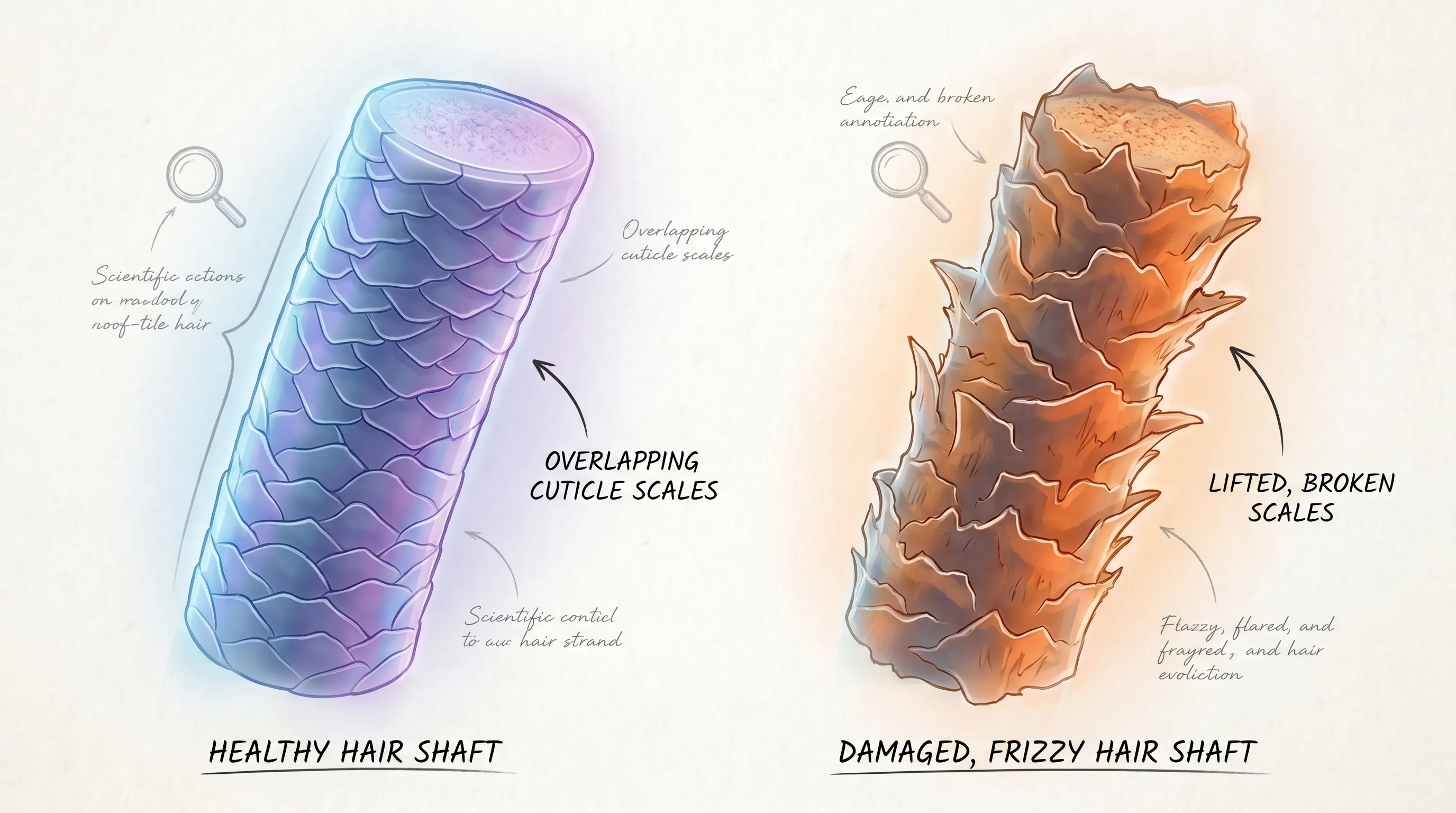
Every strand of hair consists of three primary layers: the medulla (inner core, often absent in fine hair), the cortex (middle layer containing keratin proteins, melanin, and structural strength), and the cuticle (outer protective shield). The cuticle is composed of overlapping, shingle-like cells made of hardened keratin and bound by a lipid-rich membrane. In optimal conditions, these scales lie flat against the shaft, creating a smooth surface that reflects light uniformly and prevents external moisture from penetrating too deeply. This flat alignment also helps retain internal hydration and protects the cortex from oxidative stress, ultraviolet radiation, and mechanical abrasion.
When the cuticle becomes compromised, the shingles lift, crack, or separate entirely. This exposes the cortex to the environment, allowing water vapor, pollutants, and friction to interact directly with the inner protein matrix. The lifted scales create microscopic ridges along the hair surface, which scatter light instead of reflecting it, resulting in the dull, rough appearance associated with frizz. Clinical research published by the National Institutes of Health (NIH) confirms that cuticle integrity is the single most important factor in determining hair smoothness, elasticity, and resistance to environmental damage.
Hydrogen Bonding and Environmental Interaction
Keratin proteins within the cortex are held together by a network of chemical bonds, with hydrogen bonds being the most environmentally sensitive. Hydrogen bonds form and break constantly in response to moisture levels. When you apply water to hair, these bonds temporarily break, allowing the hair to stretch, reshape, or curl. As hair dries, the bonds reform, locking the hair into a new configuration. In high humidity, however, the atmosphere contains excess water vapor that continuously breaks and reforms these bonds throughout the day. This constant molecular shifting causes the hair shaft to expand and contract unevenly.
Curly and wavy hair types are particularly vulnerable because their naturally irregular cuticle alignment creates uneven pathways for moisture absorption. When humidity penetrates the shaft, certain sections swell more rapidly than others, forcing the cuticle to lift further and creating the characteristic puffiness and flyaways. The Journal of the Society of Cosmetic Chemists notes that hair can absorb 15 to 20 percent of its weight in water under saturated conditions, increasing shaft diameter by 10 to 15 percent. This measurable expansion is the direct physical cause of why is my hair so frizzy during humid seasons.
Hair Porosity and Its Impact on Frizz Development
Porosity refers to the hair shaft’s ability to absorb and retain moisture. It is directly determined by cuticle compactness and the presence of the natural lipid layer, specifically 18-methyleicosanoic acid (18-MEA), which acts as a hydrophobic coating. Low-porosity hair has tightly packed cuticles that resist moisture absorption but can also repel beneficial conditioners. Normal-porosity hair maintains an ideal balance, absorbing just enough hydration to stay flexible without becoming swollen. High-porosity hair features gaps, tears, or missing cuticle scales, typically resulting from chemical processing, frequent heat styling, or genetic predisposition.
High-porosity strands act like sponges, rapidly pulling in atmospheric humidity while simultaneously losing internal moisture just as quickly. This constant influx and evaporation create a chaotic moisture cycle that destabilizes the hair’s structural equilibrium. The irregular swelling pulls at the cortex, causing the outer surface to fracture and split. Trichological studies consistently identify elevated porosity as a primary predictor of chronic frizz, emphasizing that moisture control must be paired with barrier sealing rather than hydration alone (NIH Research). Understanding your porosity type allows you to select products with appropriate molecular weights and formulation profiles, ensuring that moisture is delivered, retained, and sealed without overwhelming the shaft.
Primary Triggers: Why Is My Hair So Frizzy in Different Climates?
Environmental exposure and daily habits work together to determine whether your cuticles remain sealed or become chronically lifted. Identifying the specific triggers affecting your hair is essential for creating a targeted care strategy that addresses the underlying problem rather than applying temporary bandage solutions.
Atmospheric Humidity and Cuticle Swelling
Humidity is the most visible and immediate trigger of frizz. When relative humidity exceeds 60 percent, the air holds substantial water vapor that readily seeks equilibrium with drier surfaces. Since hair lacks active regulatory mechanisms, it passively absorbs moisture to balance its internal hydration with external conditions. The absorbed water disrupts the protein matrix, causing the shaft to swell radially. Because the cuticle scales are anchored at only one end, the swelling forces the free edges upward, creating roughness and separation.
Individuals living in coastal, tropical, or summer-climate regions experience this phenomenon daily. Even indoor environments with poor ventilation or steam exposure can elevate localized humidity enough to trigger frizz. Anti-humidity strategies must focus on creating a breathable yet water-resistant barrier that slows moisture penetration without suffocating the hair. routines emphasize humectant moderation, hydrophobic sealing, and film-forming polymers to stabilize the shaft during humidity spikes, as outlined by the American Academy of Dermatology.
Thermal and Chemical Damage to the Cuticle Barrier
Repeated exposure to temperatures above 350°F (177°C) causes irreversible denaturation of keratin proteins and destroys the 18-MEA lipid layer. Flat irons, curling wands, and blow dryers used without protection strip the hair of its natural hydrophobicity, leaving the cuticle brittle and prone to cracking. Once the lipid seal is compromised, the hair loses its ability to repel water effectively, making it highly susceptible to rapid moisture fluctuations and chronic frizz.
Chemical treatments such as bleaching, permanent coloring, perming, and relaxing alter the disulfide bonds within the cortex and lift the cuticle aggressively to deposit or remove pigment. These processes create microscopic gaps that persist long after the service is complete. Without adequate recovery time and protein reconstruction, the structural integrity continues to degrade with each subsequent wash and styling session. The International Journal of Trichology highlights that heat styling tools operating above 180°C permanently deplete natural lipids, directly correlating with persistent frizz and increased breakage. Limiting thermal exposure and incorporating lipid-replenishing treatments are critical steps in halting the downward spiral of cuticle degradation.
Genetic Factors, Follicle Shape, and Sebum Distribution
Your hair’s natural texture is genetically programmed by the shape of the hair follicle. Round follicles produce straight hair, while oval or asymmetrical follicles create waves, curls, or coils. As sebum (natural scalp oil) travels down the hair shaft, straight hair allows it to distribute evenly from root to tip. Curly and wavy hair creates bends and loops that impede sebum flow, leaving the mid-lengths and ends chronically under-lubricated.
This anatomical reality means that even with perfect genetics, curly hair types naturally experience higher surface friction, increased moisture evaporation, and greater vulnerability to humidity. The lack of natural oil along the shaft leaves the cuticle exposed and prone to lifting, which is why individuals with textured hair frequently ask why is my hair so frizzy despite following meticulous routines. Recognizing this biological baseline allows for realistic expectations and the implementation of targeted leave-in conditioners, pre-wash oil treatments, and protective styling methods that compensate for uneven natural lubrication.
Mechanical Stress and Daily Routine Friction
Everyday handling contributes significantly to cuticle damage. Rough towel drying, aggressive brushing while wet, sleeping on cotton pillowcases, and frequent ponytail or clip placement generate micro-abrasions along the shaft. Cotton fibers have a rough, absorbent texture that grips lifted cuticles and pulls them further apart. Wet hair is in its most fragile state, as water temporarily increases elasticity while reducing tensile strength. Brushing soaked hair with fine-toothed combs or bristle brushes creates immediate cuticle separation and cortical stress.
Transitioning to friction-reducing alternatives such as microfiber towels, 100 percent cotton t-shirts, wide-tooth combs, and silk or satin pillowcases dramatically reduces mechanical frizz. Gentle detangling from ends to roots, using ample slip from leave-in conditioners, and minimizing daytime manipulation preserve cuticle alignment throughout the week. The Cleveland Clinic emphasizes that reducing mechanical trauma is just as important as chemical protection when maintaining long-term hair integrity.
The Critical Moisture-Protein Equilibrium
Healthy hair requires a precise balance between hydration and structural reinforcement. Humectants like glycerin and panthenol attract water, while proteins like hydrolyzed keratin and wheat amino acids reinforce weakened areas of the cortex. However, overloading either component creates dysfunction. Excess moisture without adequate protein leads to hygral fatigue, where repeated swelling and shrinking weaken the cuticle attachments, resulting in a mushy, limp texture that frizzes easily. Conversely, excessive protein treatments make the hair stiff, brittle, and prone to surface snapping and flyaways.
Achieving equilibrium requires regular assessment of hair behavior. If strands feel overly soft, stretch excessively, or dry without definition, protein reinforcement is likely needed. If hair feels rigid, straw-like, or snaps with minimal tension, deep conditioning and moisture-rich treatments should take priority. Balancing these components prevents the internal structural instability that manifests externally as chronic frizz.
Evidence-Based Management Strategies to Restore Smoothness
Implementing a scientifically grounded routine transforms frizz management from guesswork into a predictable, repeatable process. Each step must be optimized to protect the cuticle, maintain moisture retention, and minimize environmental stress.
Optimizing Cleansing with Low-pH Formulations
Shampoo selection directly impacts the acid mantle of the scalp and hair shaft. Healthy skin and hair maintain a pH between 4.5 and 5.5, which keeps the cuticle tightly closed and inhibits bacterial or fungal overgrowth. Alkaline cleansers raise the pH, forcing the cuticle to open and stripping natural lipids. Sulfate-based surfactants, while effective at removing oil and buildup, are highly aggressive and can cause immediate dryness, especially in porous or chemically treated hair.
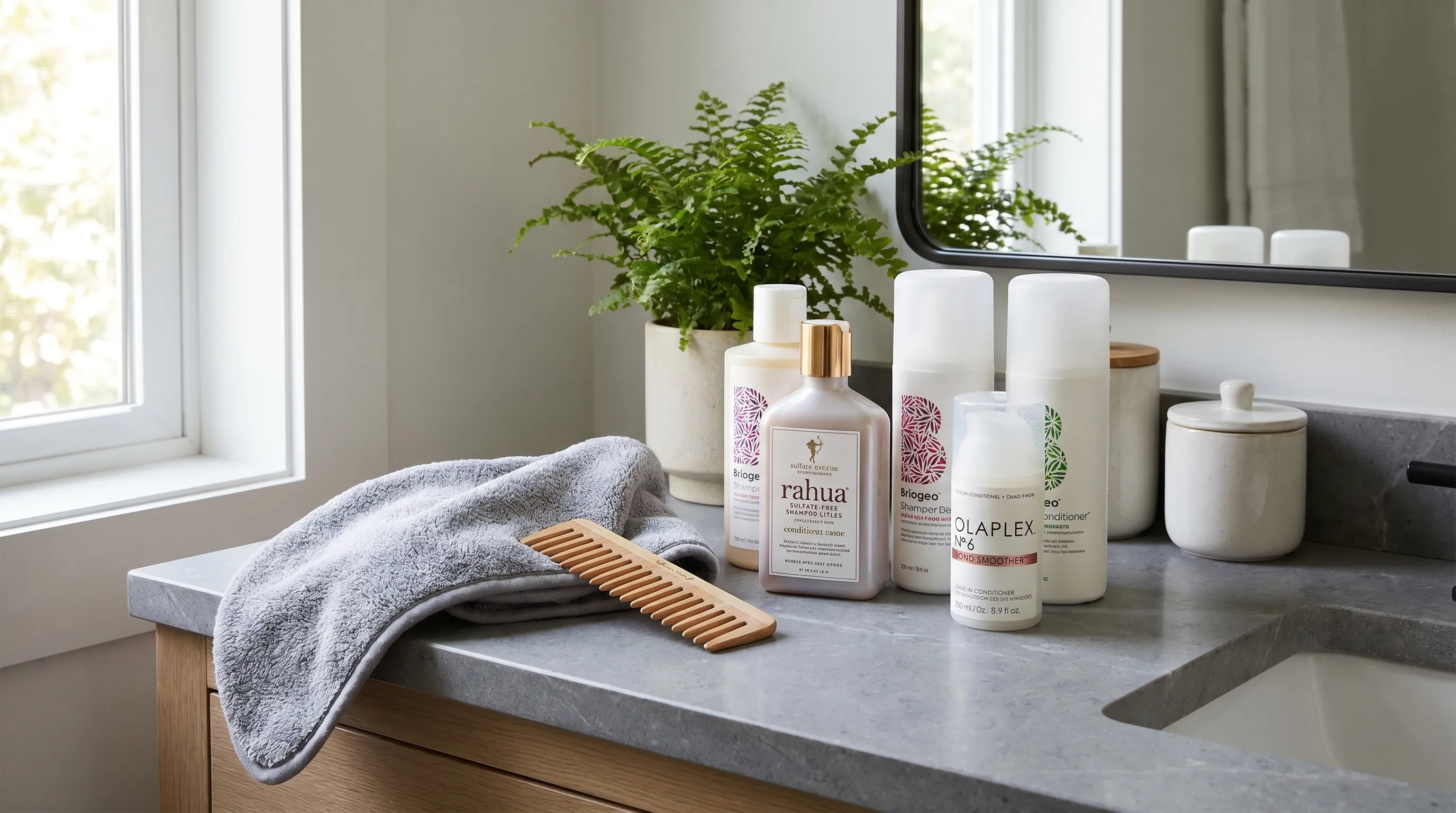
Dermatologists recommend switching to sulfate-free, low-pH cleansers that utilize gentler surfactants like coco-glucoside or sodium lauryl sulfoacetate. Washing frequency should align with hair type and lifestyle. Straight or oily hair may benefit from cleansing every two to three days, while curly, coily, or highly porous hair typically thrives on washing once or twice weekly. Over-washing depletes natural oils, while under-washing allows product and sebum buildup that weighs down strands and traps environmental pollutants. Pre-wash oil treatments, such as applying coconut or argan oil thirty minutes before cleansing, can penetrate the shaft to reduce protein loss during washing and minimize cuticle disruption.
Advanced Conditioning and the Squish to Condish Method
Conditioning is not merely about adding slip; it is about chemically and physically restoring the cuticle layer. Cationic conditioning agents carry a positive charge that binds electrostatically to the negatively charged damaged sites on hair, depositing silicones, fatty alcohols, and proteins exactly where they are needed. The American Academy of Dermatology recommends leaving conditioner on for a minimum of two to three minutes to allow adequate absorption and lipid replenishment.
For curly and wavy hair types, the squish to condish technique significantly improves hydration retention. This method involves applying a generous amount of conditioner to soaking wet hair, cupping the water and product upward into the strands, and gently squeezing until a squishing sound occurs. This motion forces water and emollients into the cuticle gaps without causing friction or disruption. Rinsing partially or not at all (depending on product weight) leaves a protective hydrophilic layer that enhances definition, reduces humidity absorption, and prevents the cuticle from drying in a raised position. Regular use of weekly deep conditioning masks containing hydrolyzed proteins and natural butters provides structural reinforcement for high-porosity strands.
Friction-Free Drying Techniques for Maximum Integrity
How hair dries determines its final texture and surface smoothness. Rubbing hair vigorously with a standard bath towel creates immediate cuticle lifting and microscopic tears. Instead, hair should be gently blotted or plopped using a microfiber towel or cotton t-shirt, which absorbs excess moisture without friction. Air drying is ideal for preserving cuticle alignment, though it may take longer for thick or highly porous strands.
When using a blow dryer, ionic technology and a diffuser attachment are essential. Ionic dryers emit negatively charged particles that neutralize static electricity and help flatten the cuticle, while diffusers distribute airflow evenly, preventing concentrated heat from blasting individual strands. Always dry on low or medium heat settings, keep the dryer moving continuously, and stop when hair reaches 80 to 90 percent dryness to prevent overdrying. The residual moisture will evaporate naturally without causing the shaft to shrink excessively or become brittle. These techniques are consistently recommended in clinical hair care guidelines to minimize structural stress and prevent chronic frizz, according to the Mayo Clinic.
Strategic Heat Protection and Styling Protocols
Thermal styling is not inherently destructive, but it requires meticulous preparation and temperature control. Heat protectants containing dimethicone, panthenol, or hydrolyzed silk proteins create a thermal barrier that distributes heat evenly and prevents direct protein denaturation. Apply protectant to damp hair before drying and reapply lightly in small sections before using flat irons or curling wands.
Never exceed 350°F when using thermal tools. Temperatures above this threshold cause immediate lipid depletion and irreversible keratin damage, regardless of how many protectant sprays are applied. Use tools with adjustable temperature settings, ceramic or tourmaline plates for even heat distribution, and limit thermal styling to once or twice weekly. When curling or straightening, work with small sections, move the tool continuously, and avoid repeated passes over the same area. These protocols dramatically reduce cuticle erosion and maintain long-term smoothness without sacrificing styling versatility.
Humidity Defense and Long-Term Barrier Maintenance
Managing environmental triggers requires proactive formulation selection and consistent protective habits. The goal is not to block moisture entirely but to regulate its exchange, ensuring that humidity does not penetrate the cortex while allowing the hair to maintain optimal internal hydration.
The Role of Hydrophobic Sealants and Film-Forming Polymers
Anti-frizz serums and leave-in creams rely on hydrophobic ingredients to create a breathable moisture barrier. Dimethicone, cyclomethicone, and amodimethicone are clinically proven to reduce cuticle friction, seal lifted scales, and prevent water vapor from penetrating the shaft during high-humidity exposure. Unlike heavy waxes or thick butters, these lightweight silicones do not accumulate excessively on the hair surface and can be removed easily with regular cleansing.
Film-forming polymers such as polyvinylpyrrolidone (PVP), hydroxyethylcellulose, and acrylates copolymer enhance this protection by creating a flexible microscopic coating that moves with the hair while resisting humidity-induced swelling. The Journal of the Society of Cosmetic Chemists confirms that cationic polymers combined with silicone blends significantly reduce moisture uptake and maintain cuticle alignment throughout the day. Select products that balance humectants for hydration with polymers for sealing, ensuring your routine adapts to seasonal humidity fluctuations rather than working against them.
Nighttime Protection and Sleep Surface Optimization
Overnight friction accounts for a substantial portion of daily cuticle wear. Sleeping on cotton pillowcases creates continuous abrasion as hair shifts against the fabric, lifting scales and causing morning frizz. Transitioning to silk or satin pillowcases drastically reduces surface friction, allowing hair to glide smoothly throughout the night. For curly and textured hair, protective styling before bed prevents tangling and moisture loss.
Loose pineapple buns, braided protective styles, or satin bonnets keep strands contained and minimize contact with bedding. Applying a lightweight overnight serum or hair oil to the ends seals in moisture accumulated during evening conditioning routines. These simple habits compound over weeks, resulting in noticeably smoother morning hair, reduced need for heat correction, and longer-lasting style retention. Consistency in nighttime care is one of the most underutilized yet highly effective strategies in clinical frizz management.
Professional Treatments and Chemical Service Spacing
Chemical processing requires strategic timing to allow cuticle recovery and lipid replenishment. The Cleveland Clinic advises spacing color, bleach, perming, and relaxing treatments by at least eight to ten weeks. This interval permits the natural acid mantle to stabilize and allows deep conditioning routines to rebuild structural deficits. Performing chemical services back-to-back overwhelms the hair’s repair capacity, leading to irreversible porosity, chronic dryness, and persistent frizz.
Incorporating bi-weekly protein treatments containing hydrolyzed keratin, wheat protein, or silk amino acids reinforces weakened cortical areas without causing stiffness. When combined with weekly deep conditioning, these treatments create a balanced cycle of structural reinforcement and hydration. For severely damaged strands, professional in-salon keratin treatments, bond builders, or glossing services can temporarily restore surface smoothness and improve manageability while natural regrowth occurs. Consulting a licensed trichologist or dermatologist ensures that treatments align with your hair’s current integrity level and long-term health goals, as supported by NIH clinical research.
Clinical Insights: When Frizz Indicates Underlying Structural Damage
Not all frizz responds to improved routines. When cuticle damage reaches advanced stages, clinical intervention and adjusted expectations become necessary. Recognizing the difference between environmental frizz and permanent structural compromise guides appropriate care and prevents wasted product investment.
Recognizing Irreversible Keratin Denaturation
Healthy hair stretches approximately 20 to 30 percent before returning to its original length. Chemically and thermally damaged hair loses this elasticity, becoming brittle, straw-like, and prone to breaking at mid-shaft rather than the ends. When frizz is accompanied by excessive shedding, split ends that travel upward, or a complete inability to hold definition regardless of product application, the keratin matrix may be denatured beyond surface repair. Dr. Paradi Mirmirani, MD, a board-certified dermatologist and trichologist, explains that frizz is essentially hair’s cry for moisture, but when the cortex is exposed and lipids are permanently depleted, no topical product can restore native elasticity. In these cases, gradual trimming of compromised sections combined with intensive bond-rebuilding treatments provides the most realistic path forward.
Differentiating Between Breakage, Split Ends, and True Frizz
Frizz, breakage, and split ends share visual similarities but require different interventions. Frizz originates from lifted cuticles and moisture imbalance, appearing as fuzzy, undefined strands that expand outward. Breakage occurs when structural weakness causes the shaft to snap mid-length, leaving short, uneven pieces that cannot be smoothed. Split ends result from terminal cuticle deterioration traveling up the shaft, causing the strand to fork. Understanding these distinctions prevents misapplication of heavy sealants on broken hair or protein treatments on purely dry cuticles. A simple strand stretch test and microscopic examination of the ends reveal the primary issue, guiding targeted care.
The Importance of Professional Scalp and Hair Assessment
Persistent frizz can sometimes signal underlying scalp conditions such as seborrheic dermatitis, fungal overgrowth, or nutritional deficiencies affecting follicle health. When routine adjustments yield minimal improvement over three to four months, a dermatological evaluation becomes necessary. Blood work assessing iron, vitamin D, B vitamins, and thyroid function can uncover systemic factors contributing to poor hair quality. Professional trichologists can perform microscopic cuticle analysis, porosity testing, and customized treatment planning that addresses both surface symptoms and internal triggers. Early intervention prevents progressive damage and ensures that your regimen targets the correct physiological pathway. For comprehensive guidance on scalp and hair hygiene standards, refer to resources from the World Health Organization (WHO) and the Centers for Disease Control and Prevention (CDC).
| Factor | Low-Porosity Hair | Normal-Porosity Hair | High-Porosity Hair |
|---|---|---|---|
| Cuticle Structure | Tightly closed, overlapping | Uniformly aligned | Lifted, gapped, or missing |
| Moisture Absorption | Slow, water beads on surface | Balanced, absorbs efficiently | Rapid, becomes heavy quickly |
| Common Frizz Trigger | Product buildup, humidity on surface | Seasonal changes, mild over-processing | Chemical damage, heat, dry climates |
| Ideal Products | Lightweight leave-ins, clarifying shampoos, moderate heat | Balanced conditioners, thermal protectants, weekly masks | Hydrolyzed proteins, heavy emollients, sealing silicones, low-pH cleansers |
| Care Frequency | Wash every 4-5 days, avoid heavy oils | Wash every 2-3 days, maintain balance | Wash every 5-7 days, focus on deep hydration and protein |
This comparative framework simplifies product selection and prevents routine mismatching, which is a primary reason many individuals struggle to answer why is my hair so frizzy despite consistent product use.
Frequently Asked Questions
Why does my hair become frizzy immediately after washing?
Washing opens the cuticle to remove sebum, product buildup, and impurities. If you use high-pH shampoos, rough drying methods, or skip conditioning, the cuticle remains lifted and porous. When exposed to air, the exposed cortex rapidly absorbs ambient moisture or loses hydration unevenly, creating immediate frizz. Switching to low-pH cleansers and following with a sealing conditioner restores the acid mantle and flattens the cuticle before it dries.
Can drinking more water reduce hair frizz from the inside out?
While adequate hydration supports overall scalp health and cellular turnover, the hair shaft itself is composed of dead keratinized tissue with no active metabolic processes. Drinking water does not directly moisturize existing strands or seal lifted cuticles. Topical humectants, emollients, and occlusive agents remain the only scientifically proven methods to manage external moisture exchange and control frizz effectively.
Are natural oils better than silicones for sealing frizz?
Both serve distinct functions. Natural oils like argan, jojoba, and squalane penetrate partially to nourish and mimic hair lipids, but they lack the uniform film-forming capability required for strong humidity resistance. Silicones, particularly dimethicone and cyclomethicone, create a lightweight, hydrophobic seal that consistently prevents atmospheric water from penetrating the shaft. For optimal frizz control, dermatologists often recommend combining light silicones for barrier sealing with botanical oils for mid-shaft nourishment.
How long does it take to reverse heat-induced frizz?
Irreversible thermal damage cannot be biologically repaired because the keratin proteins and protective 18-MEA lipids are permanently denatured. However, consistent use of protein reconstructors, deep conditioning, and heat-protective styling can restore functional smoothness within 6 to 10 weeks by compensating for structural deficits and masking lifted cuticles. Complete resolution typically requires gradual trimming of the most damaged sections over 4 to 8 months.
Is frizz more common during hormonal fluctuations?
Yes. Hormonal shifts during pregnancy, postpartum recovery, perimenopause, or thyroid dysfunction alter sebum production, scalp oil composition, and the hair growth cycle. Fluctuating androgen and estrogen levels can temporarily increase hair porosity, reduce natural lubrication along the shaft, and accelerate moisture loss. Managing frizz during these periods requires intensified moisture maintenance, gentle cleansing frequencies, and dermatological guidance to address underlying endocrine factors.
Conclusion
Frizz is fundamentally a structural and moisture-regulation issue rooted in cuticle integrity. While environmental humidity is the most visible trigger, underlying factors like genetic hair type, chemical and thermal damage, mechanical friction, and moisture-protein imbalance dictate how severely your strands react. The answer to why is my hair so frizzy rarely lies in a single product or quick fix. Instead, it requires a systematic approach that respects the biology of the hair shaft, minimizes daily stressors, and maintains consistent barrier protection. By implementing low-pH cleansing, targeted conditioning, friction-free drying, strategic heat protection, and hydrophobic sealing, you can significantly reduce cuticle lifting and restore lasting smoothness. When routine adjustments plateau, professional evaluation ensures that systemic or advanced structural factors are properly addressed. Sustainable hair health emerges from patience, scientific alignment, and consistent care practices that protect the delicate architecture of each strand. Armed with evidence-based strategies and a clear understanding of trichological principles, you can move beyond temporary frizz masking and cultivate hair that remains resilient, defined, and beautifully balanced across all seasons and environments.
How we work
Researched and drafted with AI assistance, then reviewed by a human editor against the cited sources.
This article is general health information, not medical advice. Consult a qualified healthcare professional about your own situation.