Understanding Calories in Chicken Thigh with Skin: A Complete Nutritional Guide

When navigating the complex landscape of modern nutrition, understanding the precise caloric value of everyday foods is essential for maintaining metabolic health, supporting fitness goals, and making informed dietary choices. Among the most widely consumed protein sources worldwide, poultry stands out for its versatility, affordability, and impressive nutritional profile. Yet, a common question remains a frequent point of confusion for both health-conscious individuals and culinary enthusiasts alike: how do we accurately calculate the calories in chicken thigh with skin, and does this value change depending on preparation? The answer requires more than a simple glance at a nutrition label. It involves a nuanced understanding of tissue composition, lipid biochemistry, cooking thermodynamics, and individual metabolic demands. Skin-on poultry has experienced a dramatic resurgence in dietary popularity, particularly among adherents of low-carbohydrate, paleolithic, and ketogenic frameworks, primarily due to its higher fat content and superior moisture retention during cooking. However, evaluating its place in a balanced diet requires examining both the macronutrient distribution and the physiological impact of dietary lipids. This comprehensive guide delves into the precise nutritional architecture of chicken thighs, explores how culinary techniques alter their caloric density, and provides evidence-based dietary strategies for integrating this flavorful cut into sustainable meal plans without compromising health objectives. Whether you are tracking macros for athletic recovery, managing caloric intake for weight optimization, or simply seeking to understand the science behind your favorite comfort food, the following analysis will equip you with the knowledge needed to make data-driven decisions about your daily nutrition.
Nutritional Breakdown: What’s Inside a Chicken Thigh with Skin?
To fully grasp the metabolic impact of any food, we must first deconstruct its biochemical composition. The United States Department of Agriculture (USDA) provides extensive standardized nutritional data, allowing researchers and dietitians to establish baseline nutritional values. A standard 100-gram portion of roasted chicken thigh, prepared with the skin intact, typically contains approximately 229 calories. This figure serves as the foundational reference point for meal tracking software, dietary planning templates, and clinical nutrition assessments. However, the caloric value is only one dimension of its nutritional footprint.
Free calculatorMacros CalculatorCalculate protein, carbs, and fatOpen the calculatorMacronutrient Profile: Protein, Fat, and Carbohydrates
Chicken thighs are classified as dark meat, which inherently contains a higher concentration of myoglobin, a specialized protein responsible for oxygen storage in muscle tissue. This biochemical characteristic not only gives the meat its darker hue and richer flavor but also influences its nutritional density. A 100-gram serving provides roughly 23 to 25 grams of complete protein, containing all nine essential amino acids required for tissue repair, enzymatic synthesis, and immune function. The high-quality protein matrix supports muscle protein synthesis, particularly when combined with resistance training or during periods of metabolic stress, aligning with Mayo Clinic protein recommendations.
The fat content is where the caloric distinction between light and dark meat becomes most pronounced. The skin-on thigh contains approximately 15 to 16 grams of total dietary fat. This lipid component is not uniform; it consists of triglycerides, cholesterol, phospholipids, and fat-soluble vitamins. Unlike refined seed oils, poultry fat contains a balanced ratio of saturated, monounsaturated, and polyunsaturated fatty acids. Monounsaturated fats, primarily oleic acid, constitute over half of the lipid profile, contributing positively to cellular membrane fluidity and endocrine regulation. Polyunsaturated fats, including linoleic and alpha-linolenic acids, play crucial roles in inflammatory modulation and neurological health. Carbohydrates are virtually absent in plain roasted or baked thighs, making this cut highly compatible with glycemic control strategies and insulin-sensitizing dietary protocols.
Micronutrients and Essential Vitamins
Beyond macros, the micronutrient density of chicken thighs is frequently overlooked. Dark meat is significantly richer in B-complex vitamins compared to breast meat, particularly vitamin B12, riboflavin (B2), and pyridoxine (B6). These cofactors are indispensable for mitochondrial energy production, red blood cell formation, and neurotransmitter synthesis, as detailed by the NIH Office of Dietary Supplements. Additionally, chicken thighs provide meaningful amounts of bioavailable heme iron, zinc, selenium, and phosphorus. Zinc supports wound healing and immune surveillance, while selenium functions as a primary cofactor for glutathione peroxidase, a critical endogenous antioxidant enzyme. When evaluating the calories in chicken thigh with skin, it is essential to contextualize the energy content alongside these vital micronutrients, as they synergistically enhance metabolic efficiency and cellular resilience.
Cooking Methods and Their Impact on Calorie Count
Thermal processing fundamentally alters the structural and chemical properties of poultry tissue. The method you choose to cook a chicken thigh directly influences its final caloric density, moisture retention, and bioavailability of nutrients. Heat induces protein denaturation, collagen hydrolysis, and lipid rendering, all of which modify the edible yield and metabolic impact of the food. Understanding these transformations is critical for accurate dietary tracking.
Baking vs. Roasting: How Heat Alters Nutrient Density
Baking and roasting both utilize dry, ambient heat, typically between 350°F and 425°F (175°C to 220°C). During these processes, the subcutaneous fat layer beneath the skin gradually liquefies and migrates outward. As the temperature rises, moisture evaporates from the muscle fibers, leading to a concentration of protein and a relative increase in calorie density per gram of cooked weight. A 100-gram raw thigh may yield approximately 75 to 80 grams of cooked product after a 20 percent moisture loss. If you calculate calories based on raw weight, the values align precisely with USDA standards. However, weighing after cooking requires adjusting for water loss. Roasting at higher temperatures promotes Maillard browning on the skin, creating complex flavor compounds and a crisp texture without necessarily adding extra calories, provided no additional oils are applied.
Frying, Grilling, and Air Frying: A Comparative Look
Deep frying introduces an entirely different thermal environment. Submerging chicken thighs in heated oil (350°F to 375°F) causes rapid dehydration and simultaneous lipid absorption through capillary action. The porous crust formed during frying can absorb up to 15 to 30 percent of its weight in cooking oil, dramatically elevating the total caloric load. Conversely, grilling exposes the meat to direct radiant heat, allowing a significant portion of rendered fat to drip away from the food source. This natural drainage often results in a lower net calorie count compared to pan-frying, though charring can introduce polycyclic aromatic hydrocarbons (PAHs) if not carefully monitored.
Air frying represents a modern compromise between baking and deep frying. By circulating superheated air at high velocity, it achieves a comparable crispy texture to deep frying while utilizing up to 80 percent less added oil. Studies indicate that air-fried skin-on thighs retain their protein integrity and render out a substantial portion of subcutaneous fat, which collects in the frying basket. When tracking the calories in chicken thigh with skin prepared this way, the final count remains remarkably close to baked or roasted preparations, making it an excellent option for those seeking flavor without excessive lipid accumulation.
The Role of the Skin: To Remove or Not to Remove?
The skin acts as a natural barrier during cooking, preventing excessive moisture loss and shielding delicate muscle proteins from direct thermal degradation. Nutritionally, it contains the highest concentration of lipids, along with structural proteins like collagen and elastin. While culinary trends often advocate for skin removal to reduce caloric intake, retaining it during cooking can actually improve the bioavailability of fat-soluble vitamins and provide a more palatable texture that reduces the need for high-calorie sauces or gravies. Removing the skin post-cooking retains much of the moisture and flavor transfer from the rendered fats, offering a middle-ground approach for moderate-calorie meal planning. Ultimately, the decision hinges on individual dietary targets and metabolic goals.
Health Implications of Dietary Fat and Cholesterol
Public perception of dietary fats and cholesterol has undergone significant scientific revision over the past two decades. Historical guidelines strictly limited saturated fat and cholesterol intake, but contemporary research emphasizes the importance of food matrix effects, overall dietary patterns, and individual genetic responses to lipids.
Saturated vs. Unsaturated Fat in Poultry
The lipid composition of chicken thighs challenges simplistic categorizations. As noted, monounsaturated fats dominate the profile, contributing to improved endothelial function and favorable HDL-to-LDL ratios when replacing refined carbohydrates or trans fats. Saturated fats, while present, are primarily medium-chain and short-chain triglycerides that are metabolized more rapidly than long-chain variants. Current cardiology guidelines, including those from the American Heart Association and the Cleveland Clinic dietary fat recommendations, recommend focusing on the quality and source of fats rather than rigid percentage restrictions. Consuming poultry fat within a Mediterranean or DASH-style dietary framework demonstrates neutral to positive cardiovascular outcomes, particularly when paired with fiber-rich plant foods that bind bile acids and support lipid clearance.
Cholesterol Myths vs. Current Medical Guidelines
A 100-gram portion of chicken thigh with skin contains approximately 85 to 90 milligrams of dietary cholesterol. Decades ago, this figure raised concerns, but modern evidence confirms that endogenous hepatic cholesterol synthesis adjusts inversely to dietary intake in approximately 70 percent of the population. For hyper-responders, dietary cholesterol has a more pronounced effect, but recent systematic reviews published by the National Institutes of Health indicate that moderate consumption of poultry, including skin-on portions, does not independently elevate cardiovascular risk when integrated into an overall balanced diet. The emphasis has shifted toward reducing ultra-processed foods, refined sugars, and industrial trans fats rather than demonizing whole food cholesterol sources.
Practical Dietary Integration and Meal Preparation
Translating nutritional data into actionable daily habits requires strategic planning, accurate measurement, and an understanding of behavioral nutrition principles. Incorporating chicken thighs into your routine doesn't require rigid restriction; rather, it demands intentional portioning and complementary food pairing.
Calculating Your Daily Caloric Needs
Before integrating poultry into your diet, establish a baseline energy expenditure using validated equations such as the Mifflin-St Jeor formula or the Harris-Benedict equation, adjusted for activity level. Once your total daily energy expenditure (TDEE) is determined, allocate macronutrients based on your physiological objectives. For weight maintenance, a moderate protein intake of 0.8 to 1.2 grams per kilogram of body weight is sufficient. Athletes or individuals in caloric deficit may benefit from 1.6 to 2.2 grams per kilogram to preserve lean mass, as outlined in CDC weight management guidelines. Tracking the exact calories in chicken thigh with skin allows precise alignment with these targets. Use digital food scales rather than volume measurements, as visual estimates frequently deviate by 20 to 30 percent from actual values.
Pairing Chicken Thighs with Low-Calorie Sides
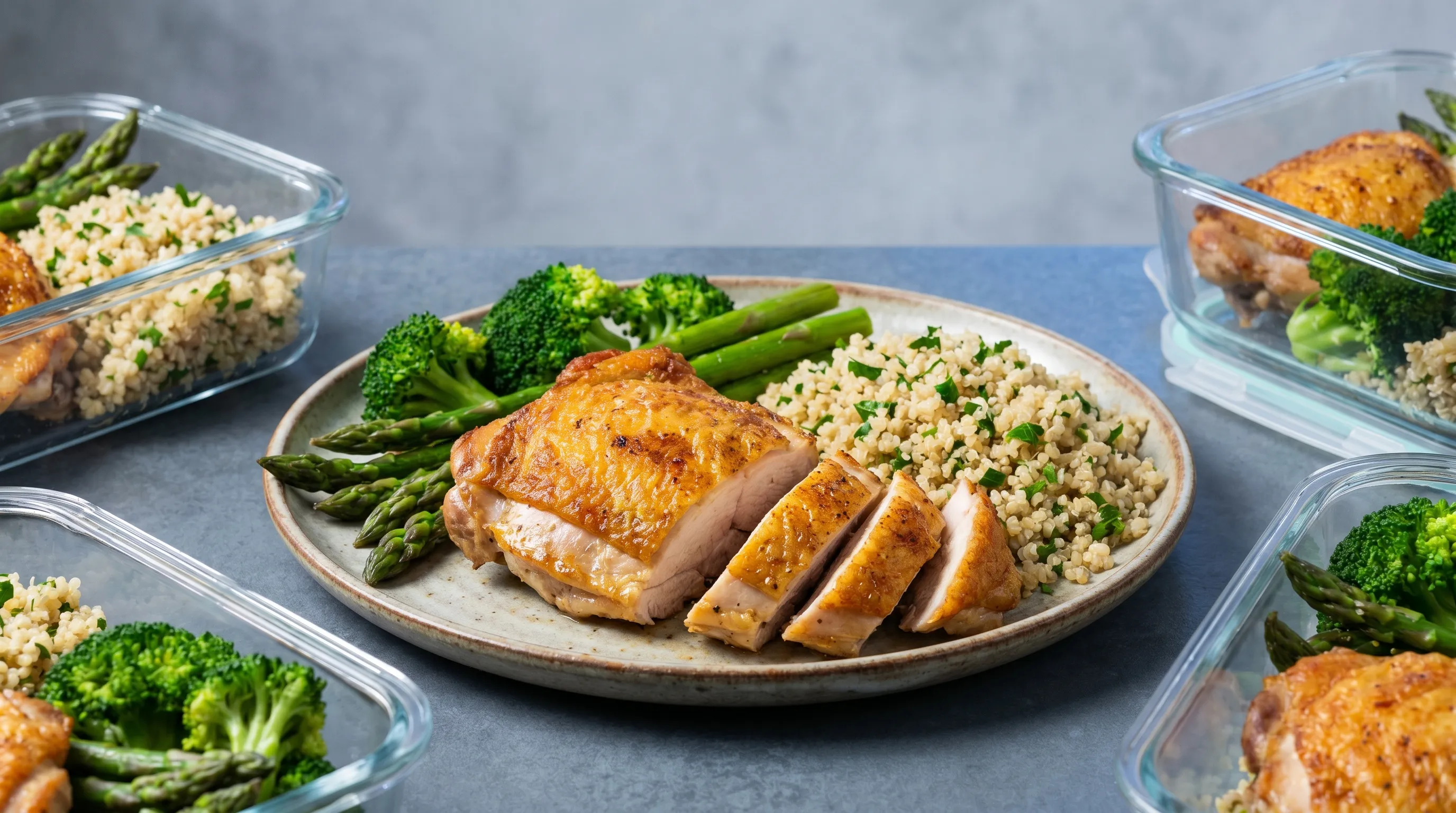
The satiety value of a meal heavily depends on its volumetric density and fiber content. Pairing a moderate portion of chicken thighs with non-starchy vegetables like broccoli, spinach, asparagus, or zucchini creates a nutrient-dense plate that promotes fullness through gastric distension and delayed nutrient transit. Adding complex carbohydrates such as sweet potatoes, quinoa, or legumes provides sustained glucose release and supports gut microbiome diversity. This combination mitigates postprandial blood sugar spikes and reduces cravings for high-calorie snacks later in the day.
Flavor Without the Extra Calories: Herbs and Marinades
Culinary enhancement doesn't require heavy sauces or excessive sodium. Dry rubs combining paprika, garlic powder, cumin, black pepper, and dried oregano deliver profound flavor with negligible caloric impact. Acidic marinades using lemon juice, apple cider vinegar, or yogurt break down connective tissue through enzymatic and pH-driven tenderization while adding bright, refreshing notes. Avoid commercial glazes and store-bought barbecue sauces, which often contain concentrated fructose syrups and thickeners that can quickly double the caloric load of an otherwise lean protein source.

Comparative Analysis with Other Protein Cuts
Understanding how different poultry cuts compare provides essential context for meal planning and budget optimization. Chicken thighs occupy a unique position between lean breast meat and energy-dense wings or drumsticks.
| Cut (100g cooked) | Calories | Protein (g) | Total Fat (g) | Iron (mg) | Zinc (mg) |
|---|---|---|---|---|---|
| Skinless Breast | 165 | 31 | 3.6 | 1.1 | 1.0 |
| Thigh (with Skin) | 229 | 24.5 | 15.5 | 1.8 | 2.4 |
| Drumstick (Skin) | 172 | 25.9 | 6.7 | 1.5 | 2.0 |
| Wing (with Skin) | 287 | 18.8 | 22.6 | 1.3 | 2.1 |
As the table illustrates, thighs offer a robust balance of protein, essential minerals, and moderate caloric density. They are particularly advantageous for active individuals requiring higher caloric intake, growing adolescents, or patients recovering from illness who benefit from increased energy availability. Breast meat remains optimal for strict caloric restriction, while wings skew heavily toward fat and should be consumed sparingly. Drumsticks provide a middle ground but contain a higher bone-to-meat ratio, reducing edible yield per purchase weight.
Practical Tips for Meal Prep and Healthy Consumption
Optimizing the nutritional value of chicken thighs extends beyond cooking and tracking. It encompasses procurement, storage, food safety, and long-term dietary consistency.
Shopping Smart: Organic, Free-Range, or Conventional?
While all poultry cuts provide similar baseline macronutrients, labeling distinctions influence secondary nutritional factors. Free-range and pasture-raised birds typically exhibit a more favorable omega-6 to omega-3 fatty acid ratio due to diverse foraging diets. Organic certification guarantees the absence of routine antibiotics and synthetic growth promoters, which aligns with broader public health initiatives aimed at reducing antimicrobial resistance. Conventional poultry remains nutritionally valid and often more budget-friendly, but verifying processing standards and sourcing practices supports both personal health and agricultural sustainability.
Storing and Thawing Safely to Preserve Nutrition
Proper cold chain management prevents bacterial proliferation and nutrient degradation. Store raw chicken at or below 40°F (4°C) and consume or freeze within one to two days of purchase. When freezing, portion thighs individually using vacuum-sealed bags or heavy-duty freezer wrap to minimize oxidation and freezer burn. Thawing should occur gradually in the refrigerator or through cold-water immersion in a sealed container; avoid room-temperature thawing, which rapidly multiplies pathogens like Salmonella and Campylobacter, per CDC food safety protocols. Proper handling ensures the calories in chicken thigh with skin remain bioavailable and safe for consumption.
Batch Cooking and Portioning Strategies
Meal prepping reduces decision fatigue and minimizes reliance on processed convenience foods. Roast multiple thighs simultaneously, then portion them into glass or BPA-free containers alongside pre-washed vegetables and measured carbohydrate sources. Reheating to an internal temperature of 165°F (74°C) guarantees safety while preserving moisture, as recommended by CDC cooking temperature guidelines. Utilize airtight storage to prevent oxidative degradation of polyunsaturated fats, which can alter flavor and reduce nutrient potency over extended periods.
Frequently Asked Questions
How do the calories in chicken thigh with skin compare to chicken breast?
When evaluating poultry options, skin-on thighs deliver more energy due to higher intramuscular and subcutaneous lipid concentrations. A 100-gram serving typically contains 229 calories versus 165 calories for a boneless, skinless breast. However, thighs provide greater concentrations of heme iron, zinc, and B-vitamins, making them highly valuable for individuals with increased micronutrient demands or those following higher-calorie dietary protocols.
Does removing the skin significantly reduce the calorie count?
Yes, stripping the skin before or after cooking eliminates the majority of the dietary fat, reducing total calories by approximately 30 to 35 percent. The skin itself contains dense adipose tissue and collagen. Removing it drops the caloric value to roughly 144 calories per 100 grams, aligning it more closely with leaner cuts while sacrificing some moisture and fat-soluble vitamin delivery.
Is the fat in chicken thighs considered healthy?
The lipid matrix of poultry is predominantly composed of unsaturated fatty acids, particularly oleic acid, which supports cardiovascular health and cellular signaling when consumed as part of a balanced diet. While saturated fat is present, it accounts for a minority of the total profile. Replacing refined carbohydrates and industrial trans fats with whole-food animal fats often improves lipid panels and reduces systemic inflammation markers, according to research from the National Institutes of Health.
How does air frying affect the nutritional profile of skin-on thighs?
Air frying utilizes convection heating to achieve textural crispness with minimal added oil. This method promotes substantial rendering of subcutaneous fat away from the meat, which drains into the collection tray. The final caloric count closely matches baked preparations, and the rapid cooking cycle minimizes oxidative damage to proteins, preserving amino acid integrity and overall digestibility.
Can I include chicken thighs in a weight-loss diet?
Weight reduction fundamentally depends on maintaining a sustained caloric deficit, not eliminating specific food groups. By accurately tracking the calories in chicken thigh with skin and integrating them into a structured meal plan, you can achieve fat loss while preserving metabolic rate. Pairing moderate portions with high-fiber vegetables and resistance training optimizes body composition, ensuring weight lost originates from adipose tissue rather than lean muscle mass. For evidence-based strategies, refer to the Mayo Clinic weight loss resources.
What is the recommended serving size for optimal nutrition?
Clinical guidelines generally suggest 3 to 4 ounces (85 to 113 grams) of cooked poultry per meal. This portion delivers approximately 20 to 25 grams of complete protein, supporting muscle synthesis and satiety hormones like leptin and peptide YY. Adjust quantities based on individual energy expenditure, training volume, and specific dietary frameworks, ensuring total daily fat and protein targets remain aligned with your physiological requirements.
Conclusion
Navigating the nutritional landscape of everyday foods requires moving beyond oversimplified dietary dogma and embracing evidence-based, nuanced analysis. Understanding the calories in chicken thigh with skin involves more than memorizing a single number on a package; it demands appreciation for lipid biochemistry, thermal cooking dynamics, and individual metabolic variability. When prepared mindfully, this versatile cut offers a robust matrix of complete proteins, essential minerals, and predominantly unsaturated fats that support muscle integrity, immune function, and sustained energy production. By utilizing accurate tracking methods, prioritizing whole-food preparation techniques, and pairing thighs with nutrient-dense accompaniments, you can seamlessly integrate them into a sustainable, health-optimizing dietary pattern. Whether your goal is athletic performance, weight management, or simply enjoying flavorful, nourishing meals, informed choices remain the cornerstone of long-term wellness. Prioritize portion awareness, experiment with healthy cooking methods, and let scientific evidence, rather than dietary fear, guide your culinary decisions.
For further reading on evidence-based nutritional guidelines and poultry composition, consult the USDA FoodData Central, the Mayo Clinic's comprehensive nutrition resources, and the NIH Dietary Guidelines. Always tailor your dietary approach to your unique physiological needs, and consider consulting a registered dietitian or healthcare provider for personalized metabolic guidance.
How we work
Researched and drafted with AI assistance, then reviewed by a human editor against the cited sources.
This article is general health information, not medical advice. Consult a qualified healthcare professional about your own situation.