How Long Does LH Stay Elevated After Ovulation?

Key points
- In women, LH works with Follicle-Stimulating Hormone (FSH) to control the menstrual cycle. Its most famous role is triggering ovulation—the release of a mature egg from the ovary. Without a surge in LH, ovulation usually does not occur.
- In men, LH stimulates the testes to produce testosterone, which is essential for sperm production.
Luteinizing Hormone (LH) plays a pivotal role in the ovulation process. Many women tracking their fertility ask: “How long does LH stay elevated after ovulation?” Understanding the timing of the LH surge and how long it remains high is crucial for anyone trying to conceive or simply wanting to understand their menstrual cycle better.
What is Luteinizing Hormone (LH)?
Luteinizing Hormone (LH) is a key reproductive hormone produced by the pituitary gland, a small gland at the base of your brain. LH plays a crucial role in regulating the function of the ovaries in women and the testes in men:
Free calculatorOvulation CalculatorCalculate ovulation periodOpen the calculator- In women, LH works with Follicle-Stimulating Hormone (FSH) to control the menstrual cycle. Its most famous role is triggering ovulation—the release of a mature egg from the ovary. Without a surge in LH, ovulation usually does not occur.
- In men, LH stimulates the testes to produce testosterone, which is essential for sperm production.
Early in a woman’s menstrual cycle (the follicular phase), LH is present at low levels. As the cycle progresses, estrogen levels from developing ovarian follicles increase. When estrogen reaches a high level, it signals the brain to release a surge of LH. This surge is what causes the dominant follicle in the ovary to release an egg.
“The LH surge is a short-lived but critical hormonal peak that triggers an egg’s release during ovulation,” explains Dr. Emily Walker, a board-certified reproductive endocrinologist. “It’s a key signal in the menstrual cycle that tells us ovulation is imminent.”
This spike in LH is brief but essential for fertility, as it transforms the follicle, allowing the egg to mature and break free from the ovary.
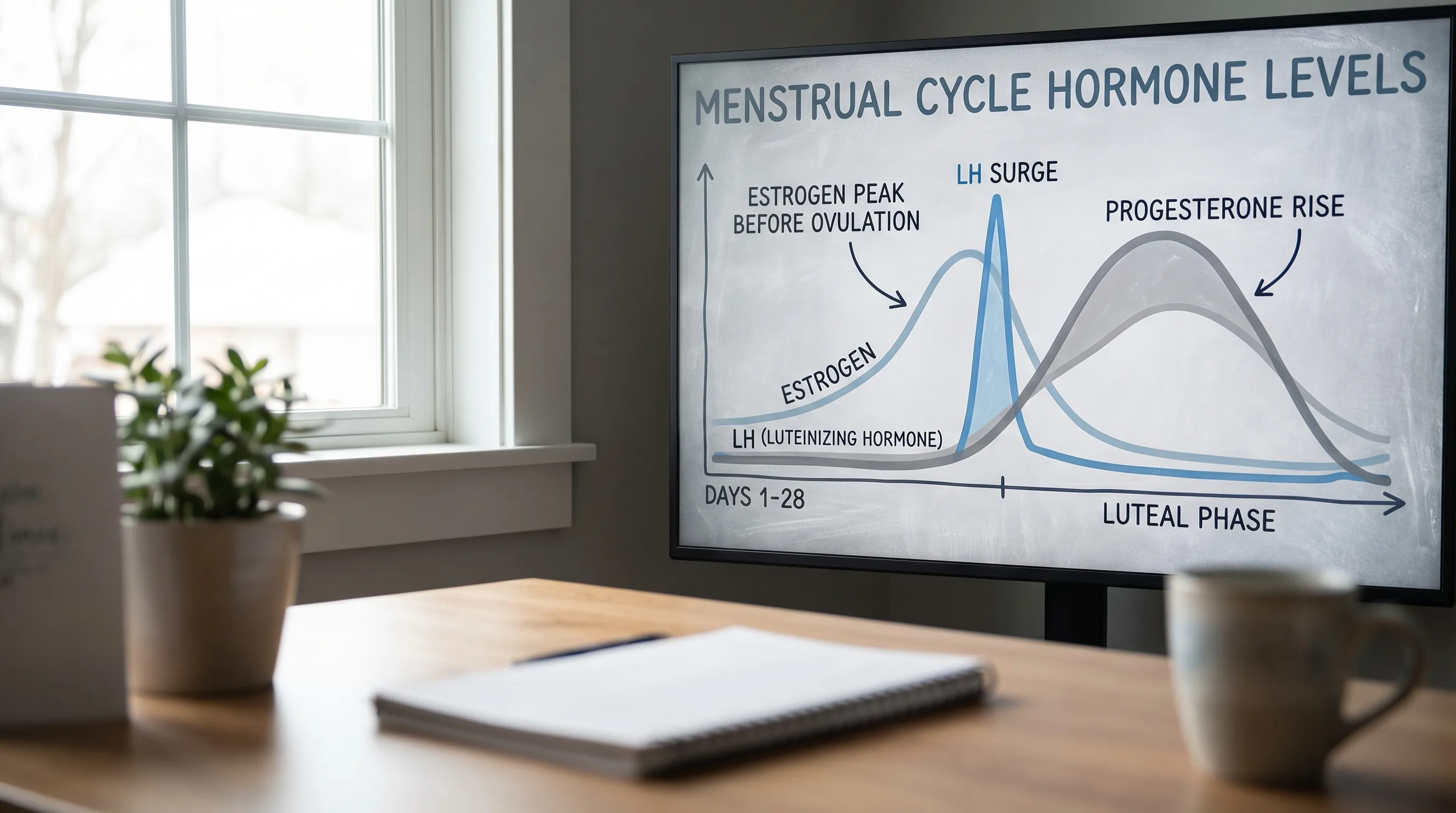
The LH Surge: Timing and Function in Ovulation
To answer how long LH stays elevated after ovulation, it’s important to first understand the LH surge and its timing:
- Rising Estrogen and the LH Surge: In the days leading up to ovulation, a dominant ovarian follicle produces more estrogen. When estrogen levels reach a certain threshold, it triggers the pituitary gland to release a large amount of LH—the “LH surge.”
- Timing of the LH Surge: The LH surge typically occurs midway through the menstrual cycle. Ovulation occurs about 24 to 36 hours after the LH surge begins, or roughly 10-12 hours after LH reaches its peak. This is why an LH surge is a strong indicator that ovulation is about to happen.
- Duration of the LH Surge: The LH surge is short-lived. In most women, elevated LH levels last about 24 to 48 hours. Some women may have a surge that lasts as little as 12-24 hours, while others might experience a surge that spans up to 48 hours.
- Why the Surge is Short: The body tightly controls the LH surge. Once ovulation has been triggered, the ruptured follicle (now called the corpus luteum) starts producing progesterone. High levels of progesterone signal the brain to stop releasing large amounts of LH (a negative feedback mechanism). As a result, LH levels drop soon after ovulation.
Key Point: In a normal menstrual cycle, LH does not stay elevated for long after ovulation. The surge is a brief spike. After triggering ovulation, LH levels fall back to low baseline levels, usually within a day or two.
How Long Does LH Stay Elevated After Ovulation?
Luteinizing Hormone levels peak just before ovulation and then decline rapidly. Typically, LH reaches its peak about 10-12 hours before ovulation occurs. After the egg is released, the stimulus for the LH surge diminishes. In most cases, LH remains elevated for only about 24 hours after ovulation. By about 24-48 hours post-ovulation, LH levels drop back to their normal baseline.
Here’s a typical timeline of LH levels around ovulation:
- Before Ovulation (Follicular Phase): LH levels are low but slowly rising.
- LH Surge Onset: Rapid increase in LH secretion, usually ~36 hours before ovulation.
- LH Peak: The highest level of LH occurs roughly 12-24 hours before ovulation.
- Ovulation Occurs: Usually about 24-36 hours after the LH surge begins.
- 24 Hours After Ovulation: LH levels are falling significantly. The surge has ended.
- 48 Hours After Ovulation: LH is generally back to baseline levels.
While every woman’s body is different, LH does not stay elevated throughout the entire luteal phase. Instead, it drops back down shortly after ovulation.
Table: Typical Luteinizing Hormone Levels During the Menstrual Cycle
| Menstrual Cycle Phase | Typical LH Level Range (IU/L)* |
|---|---|
| Early Follicular Phase (Period week) | 1.5 – 5 IU/L (low baseline) |
| Mid-Follicular (Before Surge) | 5 – 15 IU/L (gradually rising) |
| LH Surge (Peak) | 20 – 80+ IU/L (sharp mid-cycle peak) |
| Early Luteal Phase (just after ovulation) | ~10 – 20 IU/L (falling from peak) |
| Mid to Late Luteal Phase (post-ovulation) | 1 – 8 IU/L (returned to baseline) |
Ranges are approximate; individual values and units may vary.
Why Does LH Level Drop After Ovulation?
After the egg is released, a cascade of hormonal changes ensures the body either supports a potential pregnancy or resets for a new cycle.
- Shift to Progesterone Production: Once ovulation occurs, the follicle transforms into the corpus luteum, which produces progesterone. Progesterone prepares the uterine lining for a possible pregnancy.
- Negative Feedback Loop: Progesterone, along with estrogen, sends feedback signals to the brain to suppress the further release of LH. This hormonal switch is why LH levels drop quickly after ovulation.
- LH’s Job Is Done: The LH surge’s main job is to trigger ovulation. Afterward, high levels of LH are no longer needed. A low, baseline level of LH is still required to support the corpus luteum, but this is much lower than the surge level.
Tracking LH Levels with Ovulation Predictor Kits (OPKs)
At-home Ovulation Predictor Kits (OPKs) detect the surge in LH in urine.
- How OPKs Work: When the test detects a significant rise in LH, it shows a positive result.
- Timing of Testing: It's often recommended to test once or twice daily as you approach your expected ovulation date.
- Positive OPK and Ovulation Timing: A positive OPK indicates you are likely to ovulate within 24-36 hours. This is your most fertile window.
- How Long OPKs Stay Positive: You might see positive OPK results for one to two days in a row. After that, as LH levels fall, the test will return to negative.
What If LH Levels Seem High Even After Ovulation?
Under typical circumstances, LH does not stay elevated for long after ovulation. If your ovulation tests remain positive for several days, consider these possibilities:
- False Positives on OPKs: Certain fertility medications (like hCG trigger shots) can cause false positives. Some women also have naturally higher baseline LH levels.
- Multiple LH Surges: Occasionally, the body may attempt to ovulate, leading to an LH surge, but ovulation fails. This can cause a second LH surge later in the cycle.
- Polycystic Ovary Syndrome (PCOS): Women with PCOS often have elevated baseline LH levels or multiple "false" LH surges without actual ovulation, which can cause persistently positive OPK results.
- Menopause or Perimenopause: As women approach menopause, the pituitary gland may secrete more LH and FSH to stimulate the ovaries, leading to chronically elevated levels.
- Early Pregnancy and OPKs: The pregnancy hormone hCG (human chorionic gonadotropin) is chemically similar to LH. A sensitive ovulation test might detect hCG and show a positive result. However, OPKs are not reliable for detecting pregnancy; a dedicated pregnancy test should be used.
Confirming Ovulation: Beyond LH Tests
While an LH surge is a strong predictor, you can use other methods to confirm ovulation has occurred:
- Basal Body Temperature (BBT): Your resting body temperature increases slightly after ovulation due to the rise in progesterone. A sustained temperature shift confirms ovulation has happened.
- Progesterone Blood Test: A blood test measuring progesterone about 7 days after suspected ovulation can confirm if ovulation occurred.
- Ultrasound Monitoring: A transvaginal ultrasound can track follicle growth and directly confirm its rupture (ovulation).
- Symptoms of Ovulation: Physical signs like one-sided abdominal cramping (mittelschmerz) or changes in cervical mucus (becoming clear and stretchy like egg whites) can also indicate ovulation.
After Ovulation: The Luteal Phase Hormones
Once ovulation occurs and LH levels fall, the cycle enters the luteal phase.
- Progesterone Rises: Progesterone, produced by the corpus luteum, becomes the dominant hormone. It prepares the uterine lining for a potential pregnancy.
- Low LH and FSH: Both LH and FSH levels remain low during the luteal phase.
- If No Pregnancy Occurs: The corpus luteum breaks down after 10-14 days, progesterone levels fall, and menstruation begins.
- If Pregnancy Occurs: An implanted embryo produces hCG, which "rescues" the corpus luteum, telling it to keep producing progesterone to support the early pregnancy.
Key Takeaway: After ovulation, progesterone is the dominant hormone, not LH. LH quickly falls back to low levels. If your tests show high LH well beyond the typical surge window, consider talking with a healthcare provider.
Frequently Asked Questions (FAQs)
Q: How long does the LH surge typically last? A: The LH surge usually lasts about 24 to 48 hours in total. The peak of the surge itself is often short (less than a day).
Q: How soon after the LH surge do I ovulate? A: Ovulation usually occurs about 24-36 hours after the onset of the LH surge, or roughly 10-12 hours after LH reaches its peak.
Q: Should I keep testing with ovulation kits after I get a positive result? A: Once you get a clear positive on an OPK, you don’t need to continue testing in that cycle. A positive result indicates you will likely ovulate within the next day or so.
Q: Can I have a positive LH test after ovulation has already happened? A: It’s generally uncommon, but you might see a positive result on the day of ovulation or the day after as LH tapers down. Persistently positive tests could indicate high baseline LH, an anovulatory cycle, or pregnancy.
Q: What are normal LH levels after ovulation? A: In the luteal phase (after ovulation), blood LH levels typically return to a baseline range of roughly 1 to 14 IU/L.
Q: Can an ovulation test (OPK) detect pregnancy? A: Sometimes, but it is not a reliable method. The pregnancy hormone hCG is similar to LH and can trigger a positive result. Use a dedicated pregnancy test for confirmation.
Q: Why do women with PCOS have high LH levels? A: Many women with PCOS have a hormonal imbalance with higher baseline levels of LH relative to FSH. This can lead to multiple "false" surges and make OPKs less reliable.
Q: Can you have two LH surges in one cycle? A: It is possible, though not common. This can happen if the body’s first attempt at ovulation was unsuccessful.
Q: Does a longer LH surge mean a better chance of pregnancy? A: Not necessarily. The most important factor is ovulating a healthy egg and timing intercourse correctly. A normal LH surge, even a short one, is sufficient to trigger ovulation.
Conclusion
Luteinizing hormone levels rise rapidly to trigger ovulation but do not stay elevated for long afterward. The LH surge is a short 24-48 hour window. Once ovulation occurs, LH levels quickly drop back to baseline as the body shifts toward producing progesterone.
If you are using ovulation predictor kits, you will likely only get positive results for a day or two. A return to negative tests is normal and indicates the surge has passed. If you see high LH readings well after expected ovulation, consider potential factors like test errors, PCOS, or even pregnancy.
Individual hormonal patterns can vary. If you have concerns about your menstrual cycle, ovulation, or hormone levels, it’s always best to consult with a healthcare provider for personalized advice.
References
- American Pregnancy Association. Understanding Ovulation. https://americanpregnancy.org/getting-pregnant/understanding-ovulation/
- Cleveland Clinic. Luteinizing Hormone (LH). Luteinizing hormone (LH) test
- Mayo Clinic. How to get pregnant. https://www.mayoclinic.org/healthy-lifestyle/getting-pregnant/in-depth/how-to-get-pregnant/art-20047611
- American College of Obstetricians and Gynecologists (ACOG). Fertility Awareness-Based Methods of Family Planning. https://www.acog.org/womens-health/faqs/fertility-awareness-based-methods-of-family-planning
- National Health Service (NHS). Menopause. https://www.nhs.uk/conditions/menopause/
- Healthline. Can an Ovulation Test Detect Pregnancy? Ovulation predictor kits
How we work
Researched and drafted with AI assistance, then reviewed by a human editor against the cited sources.
This article is general health information, not medical advice. Consult a qualified healthcare professional about your own situation.