Agoraphobia vs Social Anxiety: Understanding the Key Differences, Symptoms, and Effective Treatments

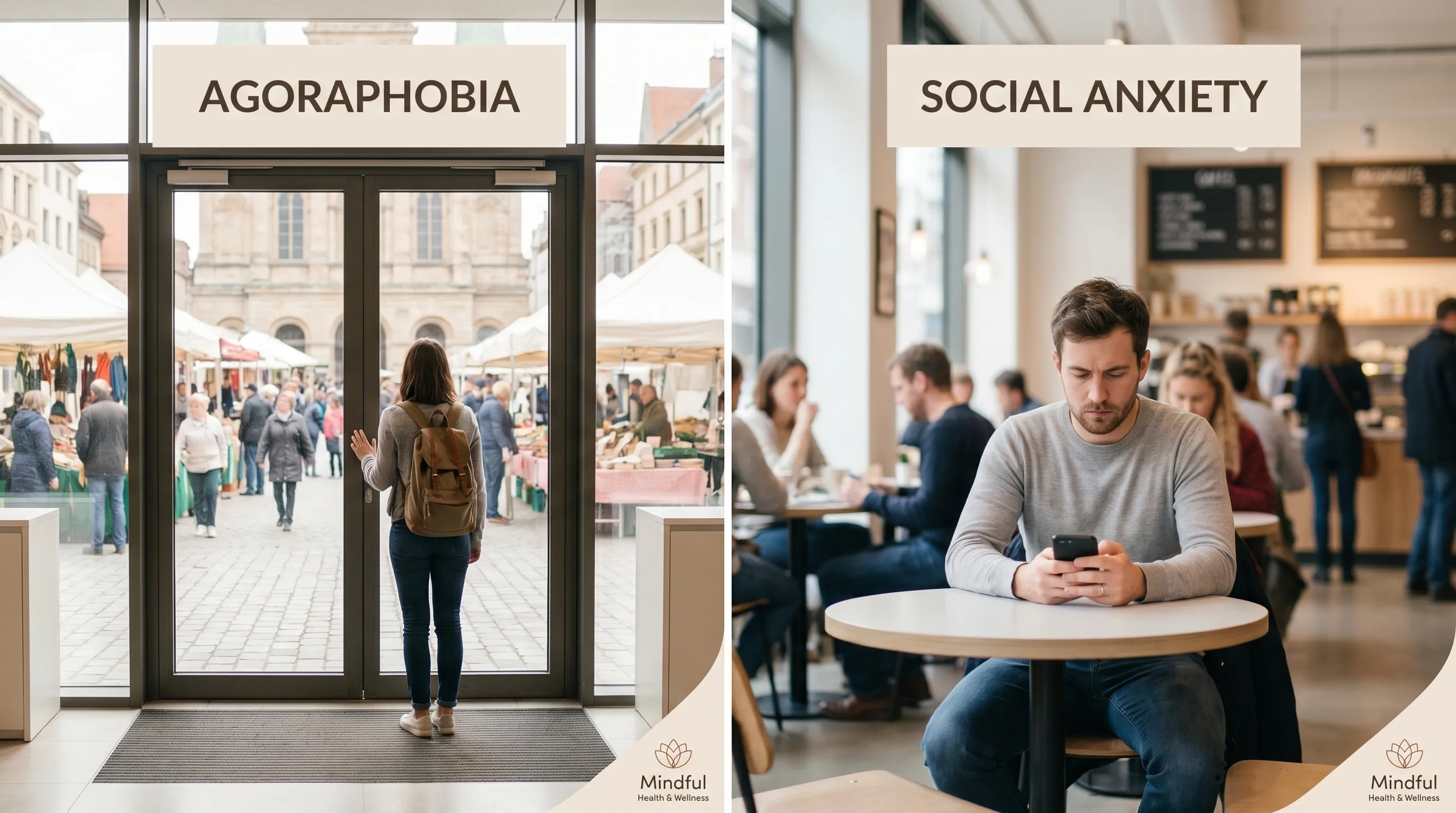
When navigating the complex landscape of mental health conditions, the distinction between various anxiety disorders often becomes blurred. Among the most frequently misunderstood pair is agoraphobia vs social anxiety. While both conditions share roots in fear-based avoidance and can significantly disrupt daily functioning, they stem from fundamentally different cognitive triggers and behavioral patterns. Recognizing whether you are experiencing agoraphobia vs social anxiety is not merely an academic exercise; it is a critical step toward accessing the most appropriate therapeutic interventions and reclaiming your quality of life.
Many individuals mistakenly assume these conditions are interchangeable because both involve avoidance of certain environments. However, the underlying psychological mechanisms, the specific triggers, and the optimal treatment protocols differ substantially. Agoraphobia primarily revolves around fear of panic-like symptoms and the perception that escape might be difficult or that help might not be readily available in certain situations. Social anxiety disorder, on the other hand, is deeply rooted in the fear of negative evaluation, scrutiny, or embarrassment in social or performance-based scenarios. Understanding these distinctions empowers individuals to seek targeted care rather than applying generalized coping strategies that may only offer temporary relief.
This comprehensive guide explores the clinical definitions, overlapping symptoms, neurobiological underpinnings, diagnostic processes, and evidence-based treatments for both conditions. By examining the nuances of agoraphobia vs social anxiety, readers will gain actionable insights, practical self-management techniques, and clear guidance on when to escalate to professional care. Whether you are seeking information for yourself, a loved one, or academic purposes, this resource is designed to bridge the gap between clinical research and everyday application.

Understanding the Core Differences
To properly navigate agoraphobia vs social anxiety, it is essential to first establish clear, clinically accurate definitions of each disorder. Both are classified under anxiety disorders in the Diagnostic and Statistical Manual of Mental Disorders, Fifth Edition, Text Revision (DSM-5-TR), yet their diagnostic criteria and symptom profiles are distinctly structured.
Free calculatorLab Values Reference ChartComplete reference chart for medical lab valuesOpen the calculatorWhat Is Social Anxiety Disorder?
Social anxiety disorder (SAD), previously known as social phobia, is characterized by an intense, persistent fear of social situations where an individual believes they may be closely observed, judged, or negatively evaluated. This fear extends beyond normal shyness or occasional nervousness before public speaking. It is a pervasive condition that can disrupt academic performance, career progression, and interpersonal relationships.
Individuals with social anxiety disorder often anticipate embarrassment, humiliation, or rejection. They may avoid speaking in meetings, eating in public, making phone calls, attending parties, or initiating conversations. The core cognitive distortion revolves around the belief that others are critically evaluating their behavior, appearance, or social competence. Physiological responses typically include blushing, trembling, rapid heartbeat, sweating, nausea, and difficulty speaking. Over time, these reactions can solidify into a self-fulfilling cycle of avoidance that reinforces the belief that social situations are inherently threatening.
According to clinical guidelines from the National Institute of Mental Health, social anxiety disorder affects approximately 12 percent of adults in the United States at some point in their lives. It often emerges during early to mid-adolescence and, if left untreated, can lead to secondary conditions such as depression, substance use disorders, and impaired occupational functioning.
What Is Agoraphobia?
Agoraphobia is characterized by an intense fear or anxiety regarding at least two of the following five situations: using public transportation, being in open spaces, being in enclosed places, standing in line or being in a crowd, or being outside of the home alone. The defining feature of agoraphobia is not necessarily the location itself, but the individual's perception that escaping or obtaining help would be extremely difficult if panic-like symptoms or embarrassing physical reactions occur.
Unlike social anxiety disorder, which centers on interpersonal judgment, agoraphobia centers on the fear of losing control, experiencing incapacitating symptoms, or being unable to reach safety. Many individuals with agoraphobia develop panic disorder as a precursor, and the condition often emerges as a maladaptive coping mechanism to prevent future panic attacks in unpredictable environments. The behavioral outcome is severe restriction of mobility. In advanced cases, individuals may become entirely housebound, relying on others for essential tasks like grocery shopping or medical appointments.
The American Psychological Association notes that agoraphobia affects approximately 1.3 percent of adults annually, with women being diagnosed more frequently than men. The onset typically occurs in late adolescence or early adulthood. Left untreated, agoraphobia can lead to profound isolation, financial dependency, and significant impairment in occupational and social domains.
Symptom Overlap and Key Distinctions
While the foundational triggers differ, the physiological and behavioral manifestations of these conditions often intersect, making the distinction between agoraphobia vs social anxiety particularly challenging without professional assessment. Both disorders activate the sympathetic nervous system, producing nearly identical autonomic arousal responses.
Cognitive and Emotional Symptoms
Cognitively, both conditions are driven by catastrophic thinking patterns. In social anxiety, the catastrophic thought typically follows this trajectory: I will say something awkward, they will laugh at me, I will be rejected, and I will prove I am incompetent. In agoraphobia, the thought pattern shifts toward physical catastrophe: My heart will race, I will lose control, I will faint, and no one will help me in time.
Despite these different cognitive narratives, the emotional experience shares common ground. Both involve intense anticipatory anxiety, hypervigilance to perceived threats, and a profound desire to avoid triggering situations. Individuals may experience a sense of dread before leaving home, difficulty concentrating due to mental rumination, and emotional exhaustion from constant threat scanning. Over time, this emotional burden can lead to secondary depressive symptoms, including hopelessness, low self-worth, and diminished interest in previously enjoyed activities.
Behavioral and Physical Manifestations
Physically, both disorders trigger the body's fight-or-flight response. Adrenaline and cortisol flood the bloodstream, causing rapid heart rate, shallow breathing, muscle tension, dizziness, and gastrointestinal distress. Behaviorally, avoidance becomes the primary coping mechanism. However, the type of avoidance differs significantly. A person with social anxiety may avoid job interviews, networking events, or group dinners while remaining comfortable in familiar, controlled environments like grocery stores or public parks. Conversely, a person with agoraphobia may avoid grocery stores, crowded malls, highways, or public transit but feel perfectly at ease in a quiet, structured social gathering with trusted friends.
| Feature | Agoraphobia | Social Anxiety Disorder |
|---|---|---|
| Core Fear | Panic symptoms, loss of control, inability to escape or get help | Negative evaluation, embarrassment, judgment from others |
| Typical Triggered Situations | Public transit, crowds, open spaces, enclosed spaces, being outside alone | Speaking in meetings, eating in public, parties, dating, interviews |
| Primary Avoidance Behavior | Staying home or limiting mobility to "safe zones" | Declining social invitations, avoiding eye contact, remaining silent |
| Common Physical Symptoms | Panic attacks, dizziness, chest tightness, trembling, derealization | Blushing, sweating, trembling, rapid speech, nausea, blushing |
| Cognitive Focus | "What if I can't escape?" | "What if they think I'm weird?" |
| Onset Pattern | Often follows panic attacks or traumatic events in unpredictable settings | Often emerges during adolescence with heightened self-consciousness |
Understanding this comparison table is crucial when evaluating agoraphobia vs social anxiety in yourself or others. The situational triggers and cognitive focus provide the clearest clinical differentiation.
Underlying Causes and Risk Factors
Neither condition develops in a vacuum. Both agoraphobia and social anxiety arise from a complex interplay of genetic predisposition, neurobiological factors, environmental stressors, and learned behavioral patterns. Recognizing these underlying mechanisms can reduce self-blame and highlight the importance of targeted intervention.
Genetic and Biological Factors
Twin and family studies consistently demonstrate a heritable component to anxiety disorders. Individuals with a first-degree relative who experiences agoraphobia, social anxiety, or panic disorder are two to three times more likely to develop similar conditions. Neuroimaging research reveals heightened amygdala reactivity in both disorders, indicating a hyperresponsive threat-detection system. Additionally, dysregulation in the hypothalamic-pituitary-adrenal (HPA) axis contributes to chronic stress reactivity and difficulty returning to baseline after perceived threats.
Neurotransmitter imbalances, particularly involving serotonin, gamma-aminobutyric acid (GABA), and norepinephrine, play a significant role. Serotonin modulates mood and social behavior, while GABA inhibits excessive neuronal firing. Deficits in these systems can lower the threshold for anxiety activation, making routine situations feel overwhelmingly threatening. For more detailed clinical insights, refer to the Mayo Clinic's overview of anxiety disorders.
Psychological and Environmental Triggers
Childhood experiences heavily shape anxiety vulnerability. Overprotective parenting, frequent criticism, bullying, or exposure to unpredictable environments can condition the developing brain to perceive the world as inherently dangerous. Individuals who experienced inconsistent caregiving often develop hypervigilance as a survival mechanism, which later manifests as chronic anxiety. Cultural factors also play a role; societies that emphasize conformity and performance may inadvertently heighten susceptibility to social anxiety, while regions with high trauma exposure may see elevated agoraphobia rates.
Acute stressors such as job loss, relationship breakdowns, financial instability, or sudden relocation can act as catalysts. In the case of agoraphobia, a single panic attack in a crowded mall or on an airplane can become classically conditioned, leading the brain to associate that environment with imminent danger. For social anxiety, a humiliating public speaking experience or peer rejection during formative years can embed deep-seated beliefs about personal inadequacy.
The Role of Trauma and Learned Behavior
Trauma, particularly interpersonal or public humiliation, significantly increases the risk for both conditions. Post-traumatic stress pathways often overlap with anxiety circuitry, meaning unresolved trauma can fuel avoidance behaviors long after the initial event. Learned avoidance is one of the most powerful reinforcing mechanisms in anxiety disorders. When an individual avoids a feared situation and experiences relief, the brain registers avoidance as a successful survival strategy. This negative reinforcement loop strengthens over time, making future exposure increasingly difficult without therapeutic intervention.
Behavioral conditioning explains why agoraphobia often expands geographically or situationally. What begins as a fear of one specific bus route can generalize to all public transportation, then to crowded streets, and eventually to any location outside the home. Similarly, social anxiety can generalize from one domain (public speaking) to multiple domains (eating in public, phone calls, casual conversations). Breaking this cycle requires deliberate, graduated exposure and cognitive restructuring.

Diagnosis: How Professionals Tell Them Apart
Differentiating between agoraphobia vs social anxiety requires a comprehensive clinical evaluation. While self-assessment tools can raise awareness, only a licensed mental health professional can provide an accurate diagnosis using standardized criteria and differential diagnostic techniques.
Clinical Assessment Criteria (DSM-5-TR)
Mental health professionals utilize the DSM-5-TR framework to evaluate symptom duration, functional impairment, and ruling out alternative explanations. For agoraphobia, clinicians assess whether the individual experiences marked fear or anxiety in two or more specific situations for at least six months, recognizing that the fear is out of proportion to actual danger. The diagnosis requires evidence that avoidance is active, that symptoms cause clinically significant distress or impairment, and that they cannot be better explained by another disorder such as separation anxiety, specific phobia, or obsessive-compulsive disorder.
For social anxiety disorder, the DSM-5-TR requires persistent fear of social or performance situations involving potential scrutiny, lasting at least six months. The fear must be recognized as excessive or unreasonable, and the avoidance must significantly interfere with routine activities, occupational functioning, or social life. Clinicians also specify whether the fear is generalized across most social situations or limited to performance-only scenarios.
Differential Diagnosis Challenges
The primary diagnostic challenge in agoraphobia vs social anxiety lies in symptom overlap and comorbidity. Many individuals present with mixed features, experiencing both fear of panic attacks in crowded spaces and intense fear of being judged by strangers in those same spaces. Professionals use structured interviews and validated assessment scales like the Liebowitz Social Anxiety Scale (LSAS) and the Panic and Agoraphobia Scale (PAS) to quantify symptom severity and clarify the primary diagnostic focus.
Clinicians also rule out medical conditions that mimic anxiety, such as hyperthyroidism, cardiac arrhythmias, vestibular disorders, and substance-induced anxiety. Medication reviews are essential, as stimulants, corticosteroids, and certain antidepressants can exacerbate anxiety symptoms. A thorough psychosocial history helps determine whether avoidance is primarily driven by interpersonal concerns or environmental safety perceptions.
Evidence-Based Treatment Approaches
Fortunately, both conditions are highly responsive to structured, evidence-based interventions. When evaluating treatment for agoraphobia vs social anxiety, clinicians typically recommend a combination of psychotherapy, pharmacotherapy, and lifestyle modifications tailored to individual needs.
Cognitive Behavioral Therapy (CBT)
CBT remains the first-line psychological treatment for anxiety disorders. It operates on the principle that thoughts, emotions, and behaviors are interconnected, and modifying one can positively influence the others. In social anxiety, CBT focuses on identifying and challenging cognitive distortions like mind reading, catastrophizing, and fortune telling. Patients learn to reframe negative self-perceptions, tolerate uncertainty, and gradually engage in avoided social scenarios. Behavioral experiments and role-playing help rebuild confidence in interpersonal settings.
For agoraphobia, CBT emphasizes psychoeducation about panic cycles and the role of misinterpretation of bodily sensations. Patients learn interoceptive exposure, which involves deliberately inducing mild physical sensations like increased heart rate or dizziness in a controlled setting. This process reduces fear of the sensations themselves, breaking the panic-avoidance loop. Research published by the Anxiety and Depression Association of America confirms that CBT produces long-lasting remission rates for both disorders when delivered by trained professionals.
Medication Options
Pharmacological interventions are often used alongside therapy, particularly for moderate to severe cases. Selective serotonin reuptake inhibitors (SSRIs) like sertraline, fluoxetine, and escitalopram are FDA-approved and widely prescribed due to their favorable safety profile and efficacy in reducing baseline anxiety. Serotonin-norepinephrine reuptake inhibitors (SNRIs) like venlafaxine and duloxetine offer alternative mechanisms for individuals who do not respond adequately to SSRIs.
Benzodiazepines may be prescribed short-term for acute symptom relief, but their long-term use is discouraged due to tolerance, dependence, and potential cognitive side effects. Beta-blockers like propranolol are occasionally used for performance-related social anxiety to manage physical symptoms like tremors and rapid heartbeat without affecting mental clarity. Medication management requires careful titration, regular monitoring, and open communication with a prescribing physician.
Exposure Therapy and Gradual Desensitization
Exposure therapy is the behavioral engine behind successful anxiety recovery. It involves systematic, controlled confrontation with feared stimuli while preventing avoidance or safety behaviors. For agoraphobia, exposure hierarchies typically begin with stepping outside for five minutes, progressing to walking down a quiet street, visiting a grocery store during off-peak hours, and eventually navigating crowded public spaces. For social anxiety, exposures might include making eye contact with strangers, asking questions in meetings, attending group dinners, or giving brief presentations.
The therapeutic power lies in habituation and inhibitory learning. As individuals repeatedly face triggers without catastrophic outcomes, the brain updates its threat database. Safety behaviors, such as carrying water bottles, gripping phones tightly, or rehearsing conversations, are gradually eliminated to ensure genuine fear extinction. Virtual reality exposure therapy has emerged as a highly effective adjunct, allowing patients to practice real-world scenarios in controlled digital environments before transitioning to in-person exposures.
Practical Self-Help Strategies for Daily Management
While professional treatment is essential, daily self-management practices significantly enhance recovery trajectories. Implementing structured, evidence-based strategies at home empowers individuals to regulate anxiety proactively rather than reactively.
Grounding and Mindfulness Techniques
Grounding techniques anchor attention to the present moment, interrupting the spiral of anticipatory anxiety. The 5-4-3-2-1 sensory exercise is highly effective: identify five things you can see, four you can touch, three you can hear, two you can smell, and one you can taste. This shifts neural resources from the amygdala to the prefrontal cortex, restoring cognitive control. Mindfulness meditation cultivates nonjudgmental awareness of thoughts and bodily sensations. Regular practice reduces baseline anxiety reactivity and improves emotional regulation.
Diaphragmatic breathing directly counters hyperventilation. Inhale slowly through the nose for four seconds, hold for two, exhale through pursed lips for six seconds. Repeat for three to five cycles. This stimulates the vagus nerve, activating the parasympathetic nervous system and lowering heart rate and muscle tension. Apps like Calm, Headspace, or Insight Timer offer guided protocols specifically designed for anxiety management.
Building a Supportive Routine
Anxiety thrives in unpredictability. Establishing a consistent daily routine provides structural stability that reduces cognitive load. Wake and sleep at the same time daily, incorporate balanced nutrition with adequate protein and complex carbohydrates, and engage in 30 minutes of moderate aerobic exercise most days. Physical activity increases endorphin levels, improves cardiovascular resilience, and enhances sleep quality, which directly correlates with emotional regulation.
Limit caffeine and alcohol intake. Caffeine stimulates the central nervous system, mimicking anxiety symptoms and triggering false alarms in the threat-detection system. Alcohol temporarily suppresses anxiety but disrupts sleep architecture and increases rebound anxiety the following day. Prioritizing sleep hygiene, reducing screen time before bed, and creating a wind-down ritual significantly improve emotional baseline stability.
Navigating Work, School, and Social Settings
Gradual exposure works best in real-world environments. Start by attending shorter meetings, sitting near exits initially (while practicing staying present), and using prepared talking points to reduce cognitive overload. Communicate needs when appropriate; many employers and educational institutions offer accommodations under disability and mental health policies. Requesting flexible schedules, remote work options, or quiet workspaces can bridge the gap between current functioning and full participation.
Social reentry requires deliberate pacing. Attend small gatherings with trusted friends before larger events. Set realistic goals: stay for 45 minutes, initiate one conversation, and leave before exhaustion sets in. Celebrate micro-victories. Progress in anxiety recovery is rarely linear, but consistent, manageable exposure yields compounding benefits over time.
When to Seek Professional Help
Self-management is valuable, but it is not a substitute for clinical care when symptoms significantly impair functioning. Recognizing warning signs and understanding when to transition to professional treatment can prevent condition escalation and chronic disability.
Red Flags and Complications
Seek immediate clinical evaluation if you experience panic attacks occurring more than twice weekly, complete avoidance of essential activities like grocery shopping or commuting, inability to maintain employment or academic enrollment, or thoughts of self-harm due to emotional exhaustion. Comorbid conditions like major depressive disorder, substance misuse, or eating disorders often develop when anxiety remains untreated for extended periods. Early intervention significantly reduces the risk of secondary complications and improves long-term prognosis.
Physical symptoms like chest pain, shortness of breath, or dizziness should first be medically evaluated to rule out cardiac, pulmonary, or neurological conditions. Once medical clearance is obtained, mental health professionals can safely implement targeted anxiety protocols without interference from undiagnosed physiological issues.
Finding the Right Therapist or Specialist
Not all clinicians specialize in anxiety disorders. Look for providers with training in CBT, Acceptance and Commitment Therapy (ACT), or trauma-informed care. Verify credentials through professional organizations like the Association for Behavioral and Cognitive Therapies (ABCT) or the Anxiety and Depression Association of America (ADAA). Many clinics now offer telehealth services, expanding access for individuals with mobility restrictions or geographic barriers.
During initial consultations, ask about the clinician's experience with agoraphobia vs social anxiety, their use of exposure techniques, and their approach to measuring progress. A competent therapist will provide clear treatment plans, set measurable goals, and adjust protocols based on your feedback. Therapeutic alliance is one of the strongest predictors of successful outcomes, so trust and open communication are essential.
Frequently Asked Questions
Can someone have both agoraphobia and social anxiety disorder?
Yes, comorbidity is highly common. Research indicates that approximately 30 to 40 percent of individuals diagnosed with one anxiety disorder meet criteria for another. When both conditions coexist, treatment typically prioritizes identifying the primary driver while using integrated protocols to address both environmental safety fears and interpersonal judgment concerns. Clinicians design customized exposure hierarchies that gradually target overlapping avoidance patterns.
How is agoraphobia diagnosed differently from social anxiety disorder?
Diagnosis relies on the DSM-5-TR criteria and clinical interviews. Agoraphobia focuses on fear of situations where escape might be difficult or help unavailable, typically linked to panic attacks or physical symptoms. Social anxiety centers on fear of negative evaluation, embarrassment, or scrutiny in social or performance contexts. Differential diagnosis examines the cognitive focus, situational triggers, and avoidance patterns to ensure accurate classification and targeted treatment planning.
What is the most effective treatment for both conditions?
Cognitive Behavioral Therapy, particularly exposure-based protocols, is the gold standard. SSRIs or SNRIs are frequently prescribed to reduce baseline physiological arousal and improve therapy engagement. Combination treatment yields higher remission rates than either modality alone. Lifestyle modifications, consistent sleep hygiene, and stress management practices serve as essential adjuncts that accelerate long-term recovery and reduce relapse risk.
Does medication cure agoraphobia or social anxiety disorder?
Medication does not cure these conditions but effectively manages symptoms by regulating neurotransmitter activity in the brain. SSRIs and SNRIs typically require four to eight weeks to reach full therapeutic effect. Medication should be viewed as a bridge that lowers anxiety intensity enough to actively engage in psychotherapy. Discontinuation should always be supervised by a prescribing physician to prevent withdrawal symptoms or relapse.
How long does recovery take with professional treatment?
Recovery timelines vary based on symptom severity, comorbidities, and treatment consistency. Most individuals experience meaningful symptom reduction within 12 to 20 weekly therapy sessions. Full remission and sustainable coping skills typically develop over six to twelve months of consistent practice, lifestyle adjustment, and clinical guidance. Relapse prevention planning and periodic booster sessions help maintain long-term stability.
Conclusion
Understanding the distinction between agoraphobia vs social anxiety is a foundational step toward effective mental health management. While both disorders share physiological arousal and avoidance behaviors, their cognitive triggers, situational sensitivities, and therapeutic pathways differ significantly. Recognizing whether your anxiety stems from fear of negative evaluation or fear of environmental entrapment allows you to pursue precise, evidence-based interventions rather than relying on generalized coping mechanisms that may offer only temporary relief.
Professional treatment combining cognitive behavioral therapy, exposure protocols, and appropriate medication consistently produces high remission rates. Daily self-care practices, including mindfulness, structured routines, and gradual real-world exposure, significantly enhance clinical outcomes and reduce relapse risk. Recovery is rarely linear, but with consistent effort, professional support, and compassionate self-awareness, individuals can reclaim their mobility, rebuild social confidence, and restore overall quality of life.
If you or someone you know is struggling with persistent avoidance, panic symptoms, or debilitating social fear, reaching out to a licensed mental health professional is the most impactful first step. Specialized care exists, treatment is highly effective, and long-term recovery is entirely achievable. The journey toward anxiety management begins with accurate understanding, intentional action, and unwavering commitment to sustainable healing.
How we work
Researched and drafted with AI assistance, then reviewed by a human editor against the cited sources.
This article is general health information, not medical advice. Consult a qualified healthcare professional about your own situation.